
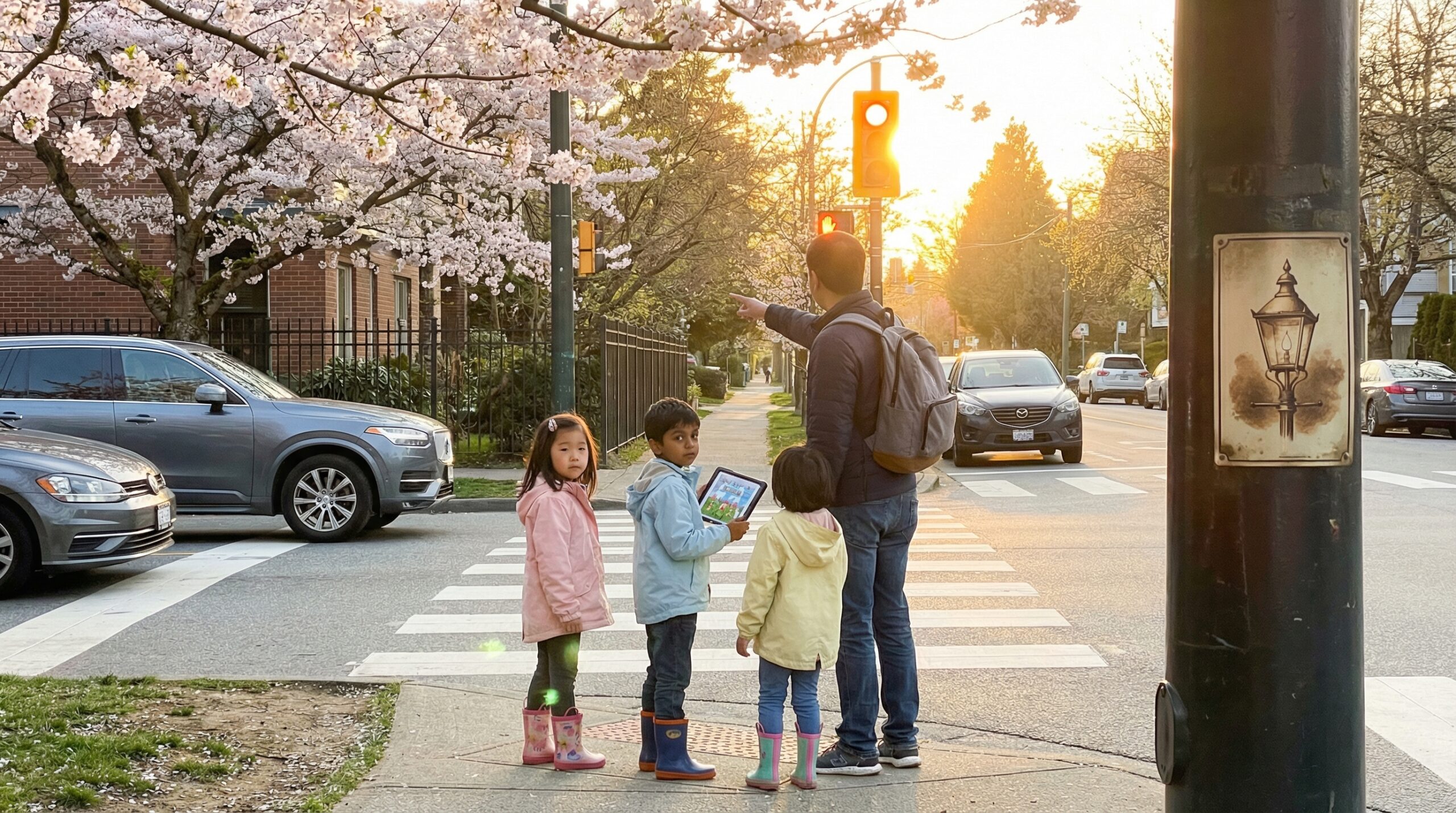
Traffic light safety for kids begins with a tiny spark in 1868 that grew into the three-color guardian we trust today. First, this guide explains what a traffic light is. Then, it shows how lights help families cross streets safely.
What is a traffic light?
A traffic light, or traffic signal, is the set of colored lights at intersections. It tells drivers, cyclists and pedestrians when to stop, get ready, and go. Think of it as a tiny but mighty orchestra conductor for streets. For kids, traffic light safety for kids turns into simple rules and friendly habits. In fact, in 2023, 27% of drivers in the United States admitted to running a red light in the past 30 days, despite 81% acknowledging that it is very or extremely dangerous. This highlights the need for traffic light safety education.
A short timeline
In 1868, a gas-lit semaphore stood outside the Houses of Parliament. Next, electric lights began to appear in the 1910s as cars became common. By the 1920s, red, yellow and green became the familiar standard. Today the three-color system still helps people stop, prepare, and move safely. Each year, approximately one-quarter of traffic fatalities and about one-half of all traffic injuries in the United States are attributed to intersections, emphasizing the critical role that traffic lights play in safety.
What each color means
Red means stop and stay. Teach children to stop at the curb and wait. Yellow means prepare to stop or finish crossing safely. Also tell kids not to start across on yellow. Green means go when safe. A cheerful green high five can work as a cue to look carefully and walk with an adult.
Traffic Light Safety for Kids: Quick rules
Keep rules short and clear. For example, use these simple steps on every walk:
- Hold an adult’s hand near roads to stay steady and seen.
- Stop at the curb and wait for the green walk signal.
- Look left, right, and left again before stepping off the curb.
- Use marked crosswalks and obey crossing guards.
Different signals you might see
You may spot vehicle lights, pedestrian signals with walking figures, and countdown timers. Also look for green arrows for protected turns and flashing lights for special situations. Flashing red means stop then go when safe. Flashing yellow means proceed with caution.
How traffic lights work today
Modern signals include a signal head, visors, a control cabinet, and detectors. For instance, detectors might be loops in the road, cameras, or radar. Engineers set timings to balance safety and flow. Many systems now use LEDs to save energy and adaptive controllers to change timing in real time. A recent emphasis from the Federal Highway Administration highlighted that providing adequate yellow signal time can significantly decrease the frequency of red light violations and reduce the risk of crashes.
Accessibility and inclusion
Some crossings have audible cues, tactile pushbuttons, and vibrating indicators for people with vision impairments. Point these features out on local walks so children notice how streets serve everyone. This practice helps kids learn empathy and awareness.
Make a walk into a lesson
Try a super simple game next time you walk. Ask your child to name red, yellow and green and say one safety rule for each. Next, do a scavenger hunt for a countdown timer, a green arrow, and a flashing light. Time how long a green light lasts and compare two intersections with adult supervision.
A gentle closing ritual
Praise small safe choices. A tiny ritual like a thumbs up at the curb makes crossing feel routine and calm. Traffic light safety for kids grows from short, repeated habits. Finally, remember that practice makes the habit stick. In 2023, 1,086 people were killed and more than 135,000 people were injured in crashes that involved red-light running, which further emphasizes the importance of adhering to traffic signals.
Read or listen to a story about Traffic Light now: For 3-5 year olds, For 6-8 year olds, For 8-10 year olds, and For 10-12 year olds. Or explore the main Traffic Light story page: Read or listen to a story about Traffic Light now.
Also, feel free to visit Storypie for more curious tales and gentle lessons: Storypie.