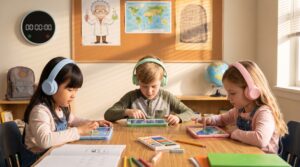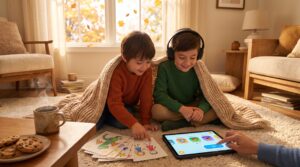
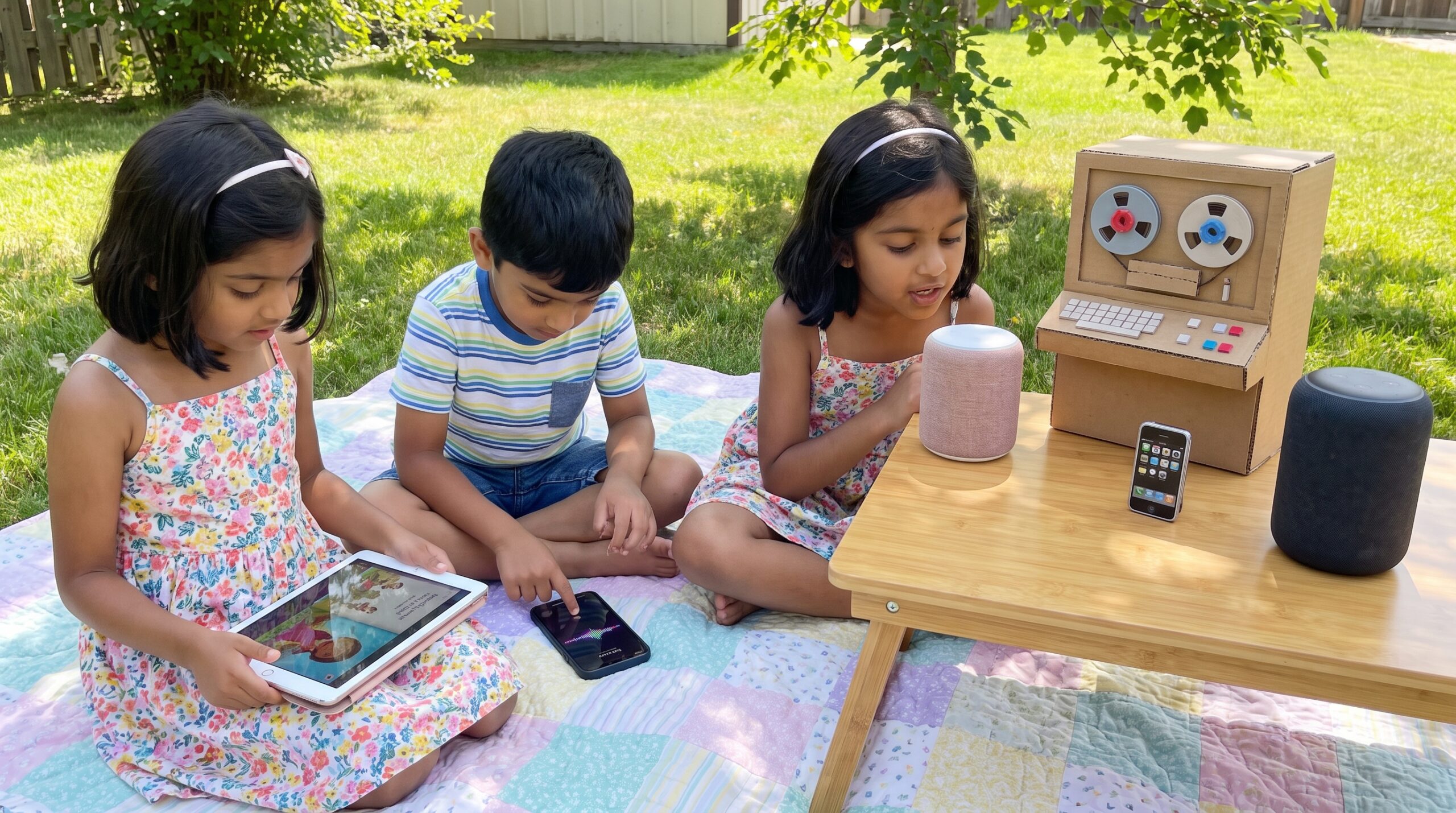
Voice assistant for kids are tools that listen, understand, and speak back. In simple terms, a voice assistant for kids answers questions, plays songs, and tells stories. In fact, by 2025, there were 8.4 billion voice assistants in use globally, surpassing the world’s total population, highlighting their significance in modern technology.
What is a voice assistant for kids?
A voice assistant for kids is software that hears spoken words. Then it turns sound into meaning and replies out loud. It works in three basic steps: listen, understand, and speak. Parents and teachers find them handy and playful. Moreover, research shows that by the end of 2026, the United States is projected to have 157.1 million voice assistant users, reflecting increasing reliance on this technology.
A short history, told like a tiny tale
Early speech systems began as lab curiosities. For example, Audrey at Bell Labs in 1952 could only recognize digits. Later came ELIZA in 1966, a text experiment that seemed to chat. Progress sped up when neural networks improved speech around 2010. Siri arrived in 2011, Alexa in 2014, and Google Assistant in 2016. Each step brought helpers closer to family life.
How it works, in parent-friendly terms
The technology stacks simple parts into one system. First, automatic speech recognition turns audio into text. Next, natural language understanding finds intent. Then a dialog manager decides what to do. Finally, text to speech talks back. Also, wake-word detection listens for phrases like Hey Siri.
Where you find them
You will spot voice assistants on phones, smart speakers, TVs, cars, watches, and toys. They are great for timers, music, simple facts, and bedtime stories. For families, they can be surprisingly useful daily helpers. In fact, 28.8 percent of internet users in the United States used voice assistants weekly in the fourth quarter of 2025, indicating their growing integration into daily life.
Everyday family uses
- Stories and songs for bedtime and playtime.
- Timers and alarms when hands are busy.
- Quick homework facts and language help.
- Smart-home control, like dimming lights for reading time.
- Accessibility help for family members with low vision.
Accuracy and children
Children often sound different from adults. Higher pitches and playful words can confuse systems. Therefore, speak in short phrases and keep rooms quiet for clearer replies. Also, try voice profiles if the device offers them.
A short safety checklist
Safety matters most. So use these simple settings before regular use.
- Create a kid profile when available.
- Disable voice purchases or require a PIN.
- Learn how to review and delete voice history.
- Use mute or unplug the microphone for privacy.
- Check family and privacy settings from the device maker.
Read or listen to a story about Voice Assistant now: For 3-5 year olds, For 6-8 year olds, For 8-10 year olds, and For 10-12 year olds.
Try this tonight
For a tiny experiment, ask your child what they would name a helper and why. Then record the answer and tuck it into your family library. It can be a bright, curious moment.
For more family-friendly stories and activities, visit Storypie. Explore the invention page on voice assistants for a short story and listening options: Read or listen to a story about Voice Assistant now.
Voice assistants are a bit of modern magic. With a few settings, they can be safe, fun, and surprisingly helpful. The global voice assistant market size reached USD 7.08 billion in 2024 and is projected to grow to USD 59.9 billion by 2033, indicating significant future investment and development in this technology.