
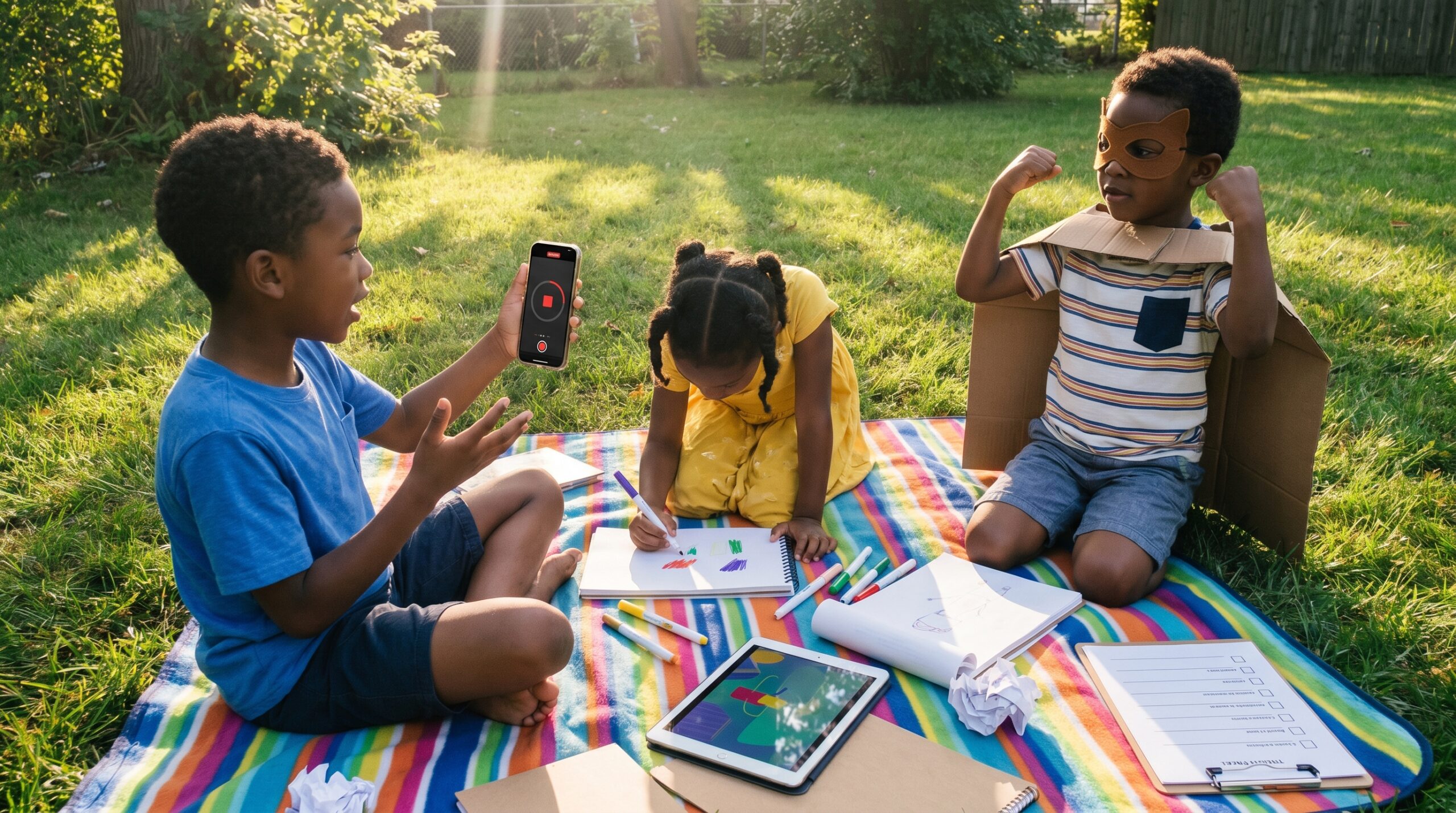
Weekend imagination challenge create your own hero invites families to invent a playful hero together in a short, sunny session. First, set a timer. Then pick a prompt. Finally, record a five minute voice note for practice. Engaging in these imaginative activities is particularly valuable because a 2025 study found that 98% of 5-year-old children score in the highly creative range on a creativity test, compared to only 2% in adulthood.
Quick plan for the challenge
This Weekend imagination challenge create your own hero works with little prep. Decide how long to play. Preschoolers benefit from 10 to 15 minutes with an adult. Ages 5 to 8 can take 15 to 25 minutes and include a five minute recording. Ages 9 to 13 can spend 20 to 40 minutes and add a deeper backstory. Additionally, research published in 2023 indicates that children aged 5–6 who use digital devices with siblings or peers exhibit significantly higher imagination flexibility scores than those who play alone or with an adult, highlighting the importance of collaborative play in this challenge.
Core elements to include
Keep the list small and sunny. Ask for short answers. Small details make a character feel real.
- Name
- Power or special ability
- Origin or backstory
- Look and tools
- Strengths and a weakness
- One simple mission
Materials, tech, and a little ritual
Low tech often feels best. Grab paper, crayons, and a small box for props. Also try a tablet to draw. Then use a simple recorder to save the voice note. The Storypie app makes prompts easy and keeps sharing private. Visit the Storypie app to get started.
How to run it together
Do this solo, in pairs, or as a group. First, choose a prompt. Next, give a short setting. Then set a timer for creative focus. Use object prompts like a glowing pebble. Or pick a role prompt such as a librarian who calms storms. Short, timed speaking exercises build confidence. A five minute recording is a sweet, doable target. Interestingly, a randomized laboratory study published in July 2023 found that children with high ‘superhero identification’ who pretended to be superheroes took significantly more risks on some behavioral tasks, reinforcing the developmental benefits of imaginative play.
Inclusion, privacy, and safety
Invite diverse heroes. Encourage different body types, cultures, and abilities. Also ask children to borrow family stories. Keep privacy simple. Use first names only and get parental consent before sharing recordings or images online. Storypie settings help families manage sharing choices. For tools and privacy tips, visit the Storypie homepage.
Why this challenge matters
Imaginative play grows language and narrative thinking. It also teaches empathy by asking children to imagine choices. Short recordings improve oral fluency and calm stage nerves. Prompt-based play keeps decisions easy. Research shows that a 2024 meta-analysis found a small but positive relation between pretend play and children’s social competence, supporting the idea that creating a hero can enhance social skills. Most of all, the activity is low cost and joyful. Delightful silliness is welcome.
Extensions and celebration ideas
After the main session, turn the hero into a comic, puppet show, or tiny stage play. Make a mini exhibit on the kitchen shelf. Give sticker awards for bravery and creativity. Rotate 12 to 20 heroes over weeks so each feels special. Finally, keep the ritual light and repeat often.
Final tips
Use short prompts and sensory cues like light, sound, and color. Try a tiny ritual before recording. If you want ready prompts and a simple recorder, try the Storypie app. The test is simple: your child comes back to the hero again and again. In addition, research by Francis & Gibson in 2023 reported significant correlations between measures of pretend play and complex executive function in children aged 4.8 years, illustrating how imaginative play can contribute to cognitive development, making it relevant for the hero creation theme.