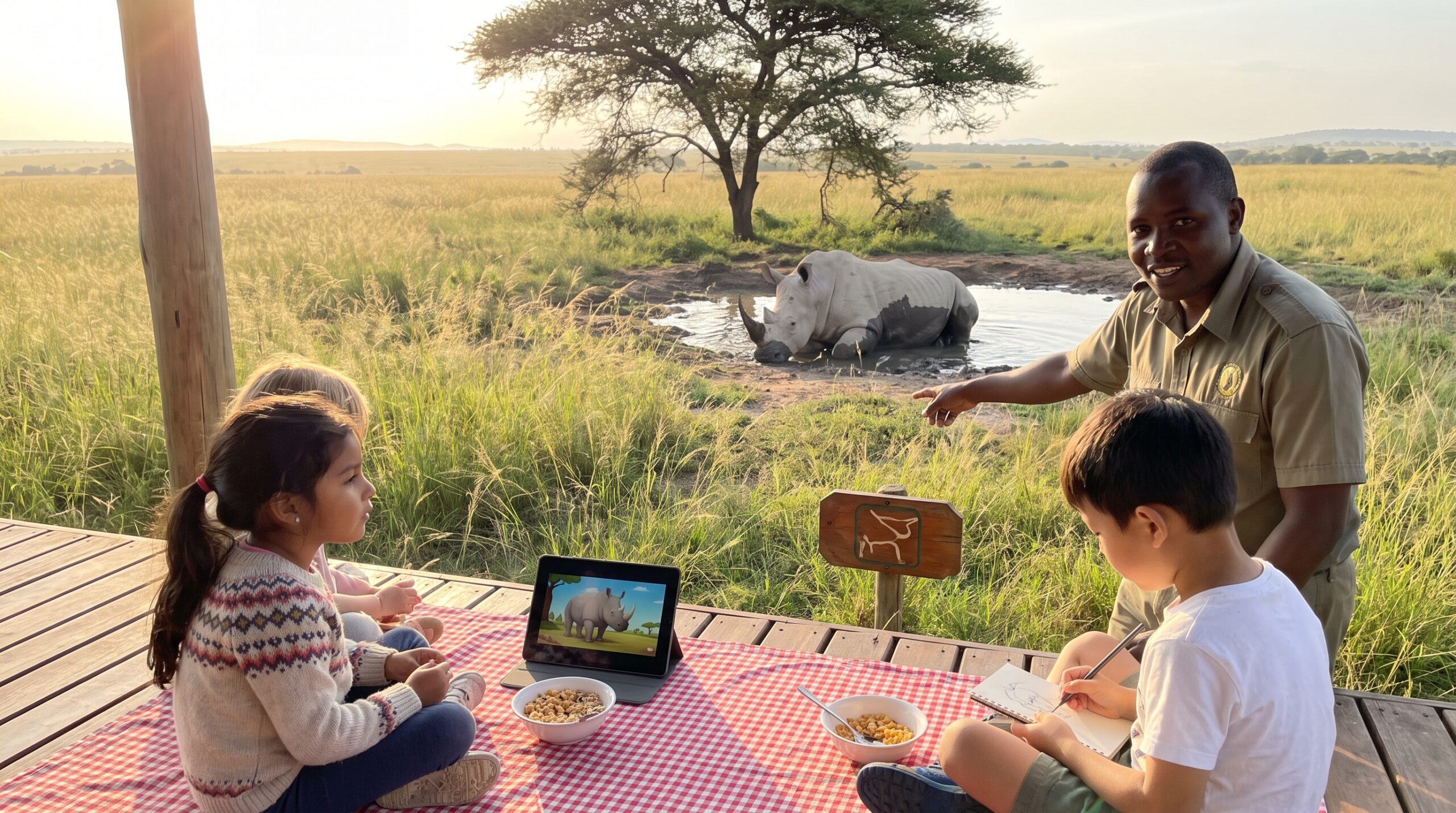
White rhinoceros for kids: these are big, gentle creatures on African grasslands. They have a broad, square mouth for grazing. The name white comes from a misread of the Afrikaans word ‘weit’, meaning ‘wide,’ which refers to their broad, square-shaped mouths. In truth, they are gray, not white.
White Rhinoceros for Kids: Where they live
Most white rhinos live in southern Africa. You will find them in parks and conservancies in South Africa, Namibia, Zimbabwe, Botswana, and Kenya. However, the northern white rhino is functionally extinct in the wild. The last male, Sudan, died in 2018. Meanwhile, southern white rhinos recovered to several thousand because of strong protection. As of August 2025, the global population of white rhinos is estimated at 15,752 individuals, a decrease from the previous estimate of 17,464 in 2023, representing an 11.2% decline from the prior year.
What they look like
Adults are massive and surprisingly graceful. They weigh about 1,700 to 2,300 kilograms, with males weighing between 2,000 to 2,400 kilograms (4,400 to 5,300 pounds). Their bodies measure roughly 3.5 to 4 meters long, with some reaching lengths of 3.7 to 4 meters (12 to 13 feet). Shoulder height ranges from 1.5 to 1.8 meters. They are the second largest land mammal after elephants. Also, they can sprint up to 40 to 50 kilometers per hour.
Two keratin horns sit on the snout. The front horn is larger and very noticeable. Their wide, square mouth helps them clip grass close to the ground. These features make the white rhinoceros easy to recognize.
Daily life and behavior
White rhinos are grazers. An adult may eat 30 to 50 kilograms of grass each day. They wallow in mud to cool off and protect their skin. They have poor eyesight but keen hearing and smell. Groups form sometimes, usually mothers and calves. A group is called a crash. Quiet and steady, these giants move slowly across the plain and seem to enjoy mud-splashing fun.
Reproduction and young
Gestation lasts about 15 to 16 months. Calves weigh roughly 40 to 65 kilograms at birth. Females mature at five to seven years. Calves stay near their mother for two to three years. In the wild, white rhinos often live 30 to 35 years in the wild and up to 40 years in captivity.
Quick facts
- Scientific name: Ceratotherium simum.
- Diet: grasses, about 30 to 50 kg per day.
- Horns: made of keratin.
- Speed: up to 40 to 50 km per hour.
- Lifespan: around 30 to 40 years.
Conservation, simply
Poaching for horn and habitat loss remain the main threats. Anti-poaching patrols, sniffer dogs, translocations, and community programs helped the southern subspecies rebound. However, the northern subspecies is functionally extinct in the wild and needs urgent science and care.
Families can help by supporting reputable charities, choosing ethical wildlife tourism, and teaching children that buying animal parts harms animals. Also, gentle conversations at home make a big difference for curious kids.
Short morning story (10 minutes)
A grazing rhino naps in a warm mud pool. A calf noses close and then settles beside her. They walk slowly across the grass. A bird hops on her horn. The calf follows like a happy shadow. Quiet and steady, they move together. Read this at breakfast to spark calm curiosity and quick smiles. For a drawing prompt, ask children to draw the big square mouth in five quick lines.
Safety tip for families
Always watch rhinos from a safe distance. Stay in vehicles or behind barriers. Stay quiet and follow park rules. This keeps people and rhinos safe.
Read or listen to a story about White Rhinoceros now: For 3-5 year olds, For 6-8 year olds, For 8-10 year olds, and For 10-12 year olds.
Read or listen to a story about White Rhinoceros now: https://mystorypie.com/learn/en/animal/white-rhinoceros/
Explore more animal stories at Storypie for gentle learning and fun.