World War I for kids is a short, human story of a huge event. I tell it simply and kindly. Fighting began in late July 1914 after the assassination of Archduke Franz Ferdinand on 28 June 1914. The guns fell silent with the armistice on 11 November 1918. The Treaty of Versailles followed on 28 June 1919.
Quick timeline of World War I for kids
First, the war started quickly and spread across Europe. Next, the main sides formed. The Allies included the United Kingdom and France. Russia fought until 1917. Later the United States joined. The Central Powers included Germany, Austria-Hungary, the Ottoman Empire, and Bulgaria.
Sides, places, and people
Also, Britain called people from across the Empire. Canada, Australia, New Zealand, India and others served. For example, the ANZACs are remembered for Gallipoli in 1915. Battles that stay in British memory include the Somme in 1916, Ypres and Passchendaele in 1917, Gallipoli in 1915, and Jutland at sea in 1916. On July 1, 1916—the first day of the Battle of the Somme—the British Army alone suffered over 57,000 casualties in a single day, highlighting the brutal nature of trench warfare.
Life on the fronts and new technology
The Western Front looked like long muddy lines of trenches. In fact, the trench systems on the Western Front stretched approximately 475 miles (about 765 km), running from the English Channel to the Swiss Alps. Trenches were cold and damp. Soldiers faced shelling, lice and rats. However, there were tiny bright moments. In December 1914 British and German soldiers stopped and sang carols. They exchanged food and even played football in the Christmas Truce. It shows shared humanity amid ruin.
Meanwhile, new technology changed the fighting. Machine guns and heavy artillery made battle deadly. Tanks first appeared in 1916. Aircraft moved from scouting to dogfights. Poison gas arrived from 1915 onward. Submarines challenged life at sea and affected Britain.
Human cost and long changes
The human cost was vast. Globally, World War I caused an estimated 15 to 22 million deaths (military and civilian), and about 23 million wounded military personnel. Around nine to ten million soldiers died. Millions of civilians also died. Countless families lived with loss and with wounded loved ones. For instance, Germany suffered approximately 1,773,700 military deaths, and Russia about 1,700,000 military deaths during World War I. Meanwhile, France lost 16% of its mobilized forces—the highest mortality rate relative to troops deployed. Back home, roles changed quickly. Women worked in factories and hospitals. Medicine advanced. Empires toppled and borders shifted. The League of Nations followed with mixed results.
Remembering and simple family activities
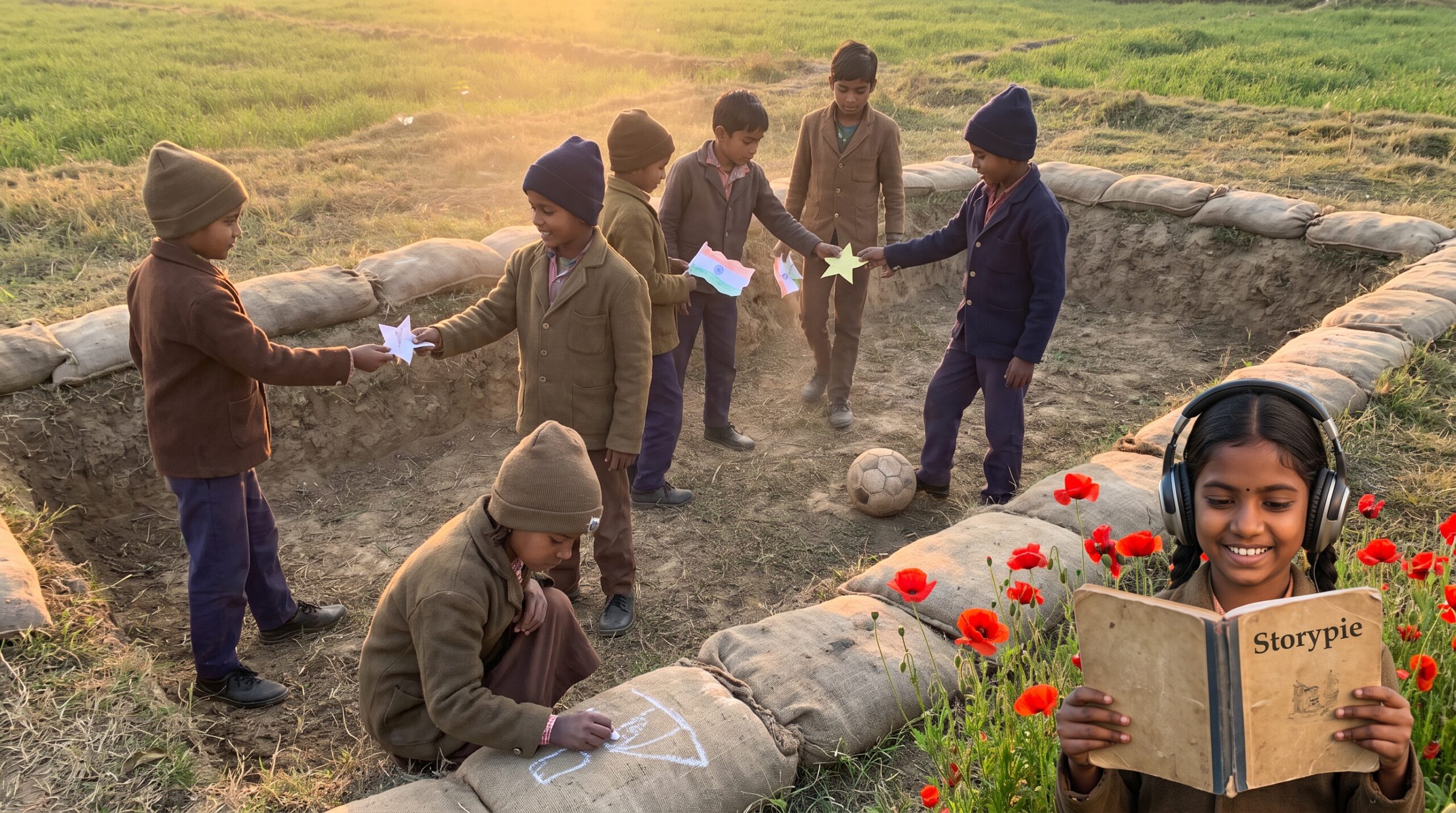
To remember, explain poppies and the two minute silence on 11 November. Try small hands-on activities like folding paper poppies or reading a short letter from the past. These are gentle ways to connect.
Read or listen to a story about World War I now: For 3-5 year olds, For 6-8 year olds, For 8-10 year olds, and For 10-12 year olds.
Finally, start with one small reading tonight. A ten minute listen and a five minute chat can open a big conversation. For more episodes and family listening, visit Storypie.