
Zeus for kids: a bright, bold introduction
Zeus for kids appears here as the great sky god of ancient Greece. He rules the sky and weather. He is a thunderer and a father figure. A little thunder can make a big gasp, wow! Zeus’ name appears 10,162 times in the Perseus corpus of Greek literature, showcasing his significance in mythology.
Origins and birth
His name comes from the Proto Indo European root Dyeus, meaning daylight sky. Linear B tablets at Mycenae show early forms like di-we and di-u-ja. The earliest attestation of Zeus’ name dates back to the 2nd millennium BC, indicating the presence of cult or reference to Zeus in Mycenaean times. Homer and Hesiod shaped much of our story. Their poems give the most familiar details.
Hesiod says Zeus was the youngest child of Cronus and Rhea. To save him, Rhea hid the infant. Crete plays a big part in these tales. The Idaean Cave and the Dictaean Cave both claim a role. The caves are small and cool, which makes a vivid image for children.
War with the Titans and rule of Olympus
Zeus led the Olympian gods in the Titanomachy, the long war that overthrew the older Titans. After the victory, the new divine order formed. Therefore, Zeus became king of the gods. He held the highest place on Olympus.
Symbols and signs
Zeus’ signature weapon is the thunderbolt. Myth says the Cyclopes forged it as a gift. Lightning and thunder mark his presence. The thunderbolt stands for sudden power and change.
The eagle is his emblem and shows watchful sight. The oak links him to oaths and to the oracle at Dodona. A sceptre and throne show rule. In art he often appears as a bearded, mature man.
Guardian of rules, guests and oaths
Zeus kept many duties beyond weather. He guarded law, hospitality and oaths. Titles such as Zeus Olympios, Zeus Xenios and Zeus Horkios name these roles. People called on Zeus when swearing oaths. Communities looked to him for justice and the safety of guests.
Family stories
Hera is his main wife. Zeus fathered many gods and heroes. Athena sprang fully armed from his head in one tale. Other divine children include Hermes, Apollo and Artemis. Mortal figures such as Europa and Io also appear in his myths. Many tales are old and layered, so choose gently for very young listeners.
Worship, places and famous images
Worship of Zeus spread across the Greek world. The Temple of Zeus at Olympia was constructed in the second quarter of the 5th century BC, serving as the model of the fully developed classical Greek Doric temple. Olympia held major games in his honor. The statue by Phidias at Olympia was famed and classed among the ancient wonders. Dodona had an oak oracle where priests listened to the leaves for signs.
Archaeology and art keep Zeus’ image alive. Vase painting, sculpture and inscriptions show steady symbols, even as styles changed. Museums hold many objects from Athens to London. Crete still points to the Idaean and Dictaean caves in the stories.
Explore Zeus stories on Storypie
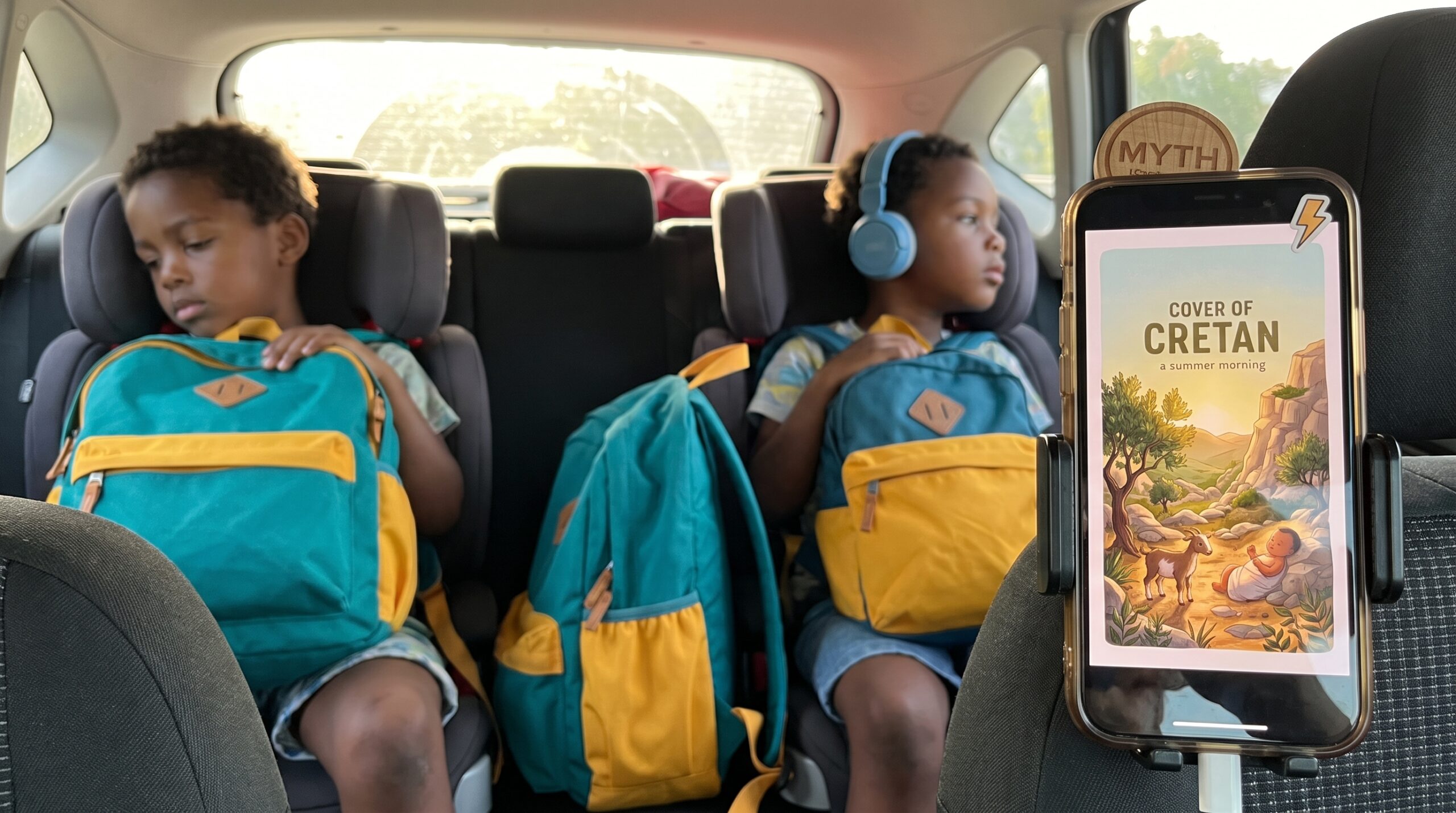
We turned Zeus’ wild origin on Crete into a short, brave Storypie episode. For a calm, curious school run, try a ten minute story. In addition, listening can spark questions and smiles.
Read or listen to a story about Zeus now: For 3-5 year olds, For 6-8 year olds, For 8-10 year olds, and For 10-12 year olds.
Quick facts to remember
- Focus: Zeus for kids as the Greek sky god and king of the gods.
- Symbols: thunderbolt, eagle, oak, sceptre, throne.
- Places: Crete, Olympia, Dodona and many local shrines.
For more stories and episodes, visit Storypie and enjoy calm, curious listening that keeps myths friendly and fun.