English

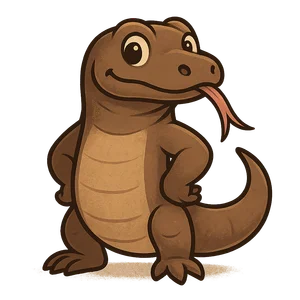
Komodo Dragon
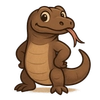
The Komodo dragon is the largest living species of lizard, found on a few Indonesian islands.
Reads at Grades 6–8 Listens at Grades 4–8
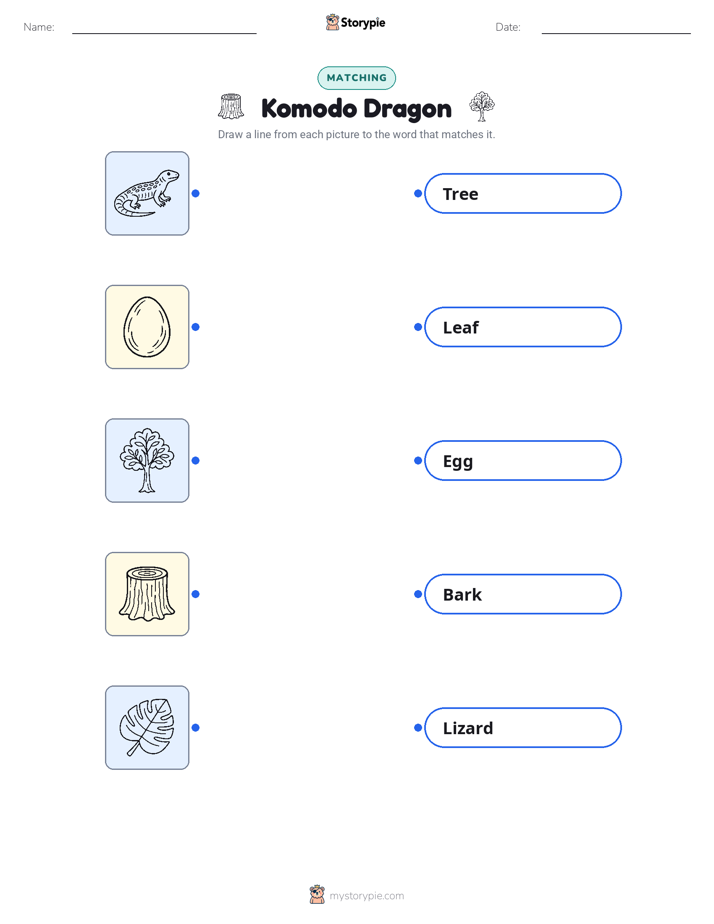
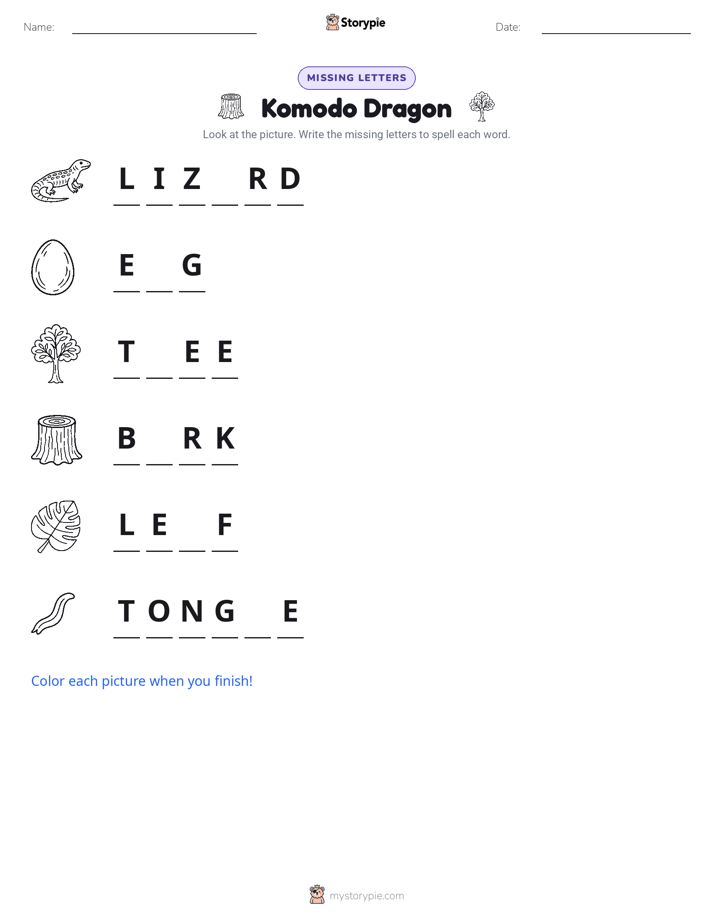
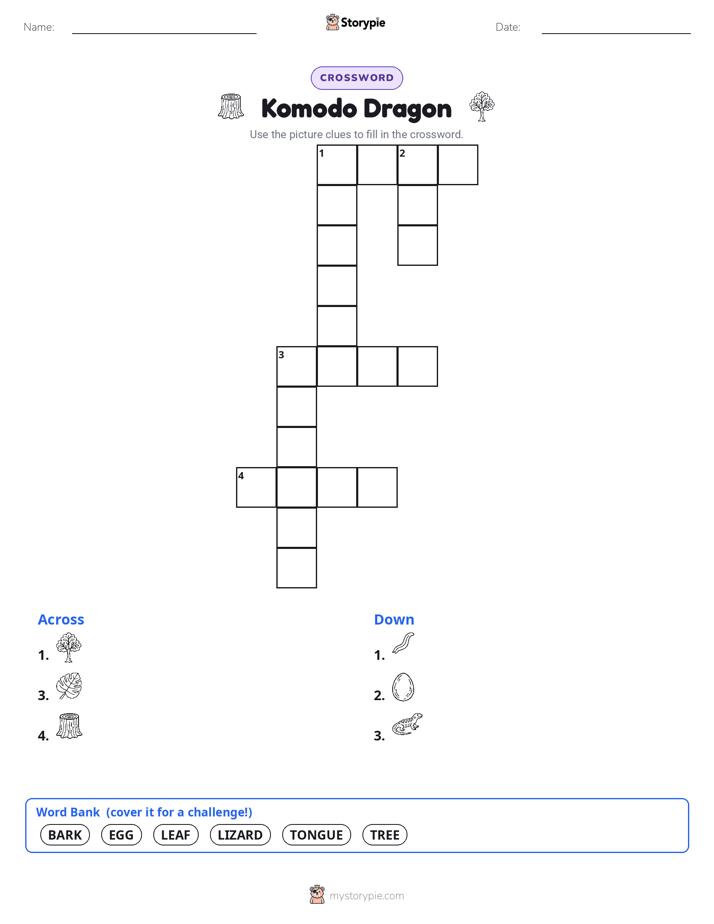
Print & create
Answer keys·No prep·Free with an account
28 worksheets · answer keys · full story · quiz · Ages 10-12 · CEFR B2
Plus adds 164,000+ more stories in 27 languages, audio for every one, and printables for all of them.
Just want Komodo Dragon?
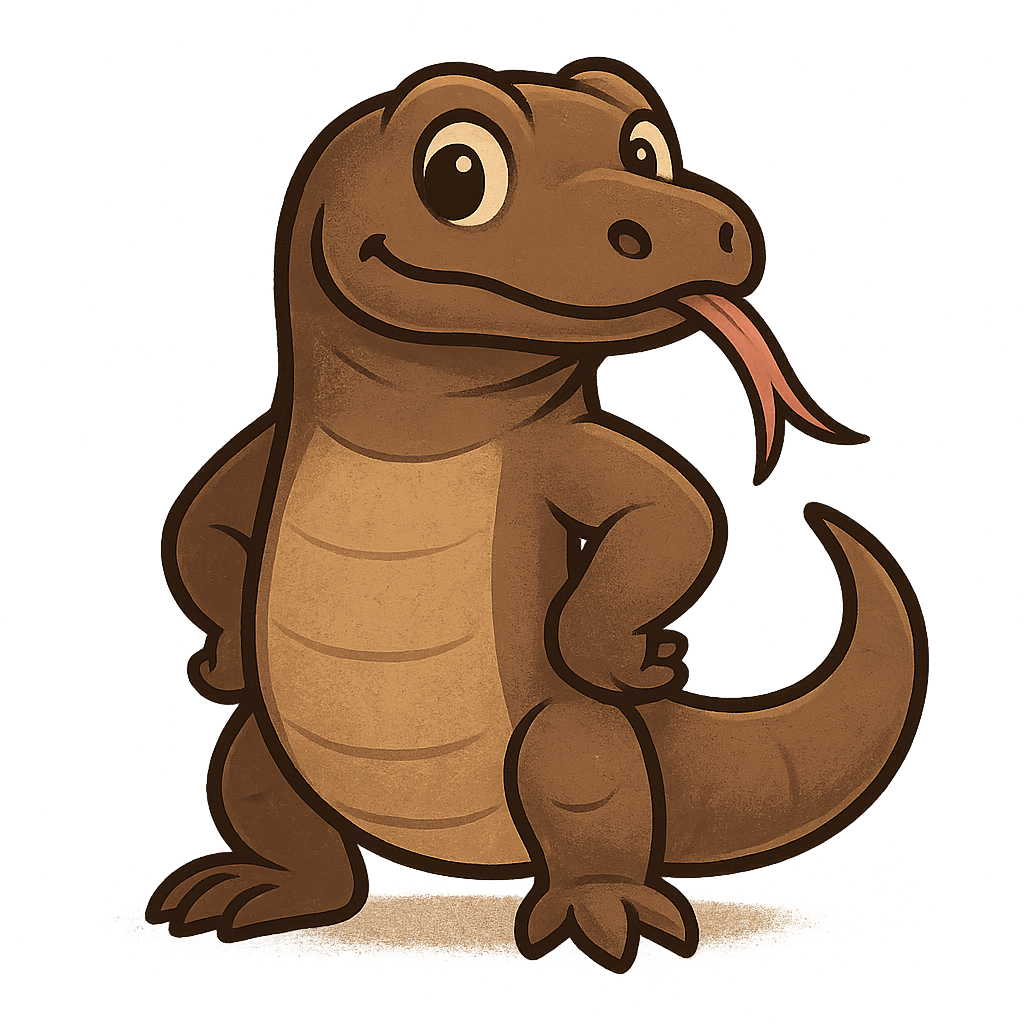
Hello. My name might sound like something from a myth, but I am very real. I am a Komodo dragon, the largest lizard living in the world today. My story began in the late 1990s when I hatched from a leathery egg on a warm, volcanic island in Indonesia. The world was a dangerous place for a small dragon like me. I had to be incredibly quick and clever to survive. My first instinct was to scramble up the nearest tree, where my spotted skin helped me blend in with the bark and leaves. This was my sanctuary, a place to hide from predators, including older, much larger Komodo dragons who wouldn't hesitate to make a meal out of a youngster. My kind has roamed these islands for millions of years, an ancient lineage of powerful reptiles. Yet, for most of human history, we were a secret. It wasn't until the year 1910 that explorers from Europe first documented our existence, finally introducing the 'land crocodile,' as they called us, to the rest of the world.
As I grew, the trees that once offered safety became too small for my powerful body. I descended to the forest floor to claim my place as an apex predator. My body is built for this role. My muscular legs can propel me in short, powerful bursts of speed, and my sharp, curved claws are perfect for gripping the earth, climbing rocky slopes, and digging burrows to rest in. But my most essential tools for hunting are the ones you cannot see so easily. I explore my world through scent, but not with my nose. I flick my long, yellow, forked tongue in and out, 'tasting' the particles in the air. This gives me a directional sense of smell, allowing me to track prey from miles away. When I find my target—perhaps a Timor deer or a massive water buffalo—I rely on my powerful bite. For a long time, people thought our mouths were just full of bacteria. But in 2009, scientists confirmed our biggest secret: our saliva contains venom. A single bite delivers this venom, which helps take down my prey. It is this incredible adaptation that allows a lizard like me to hunt animals many times my size.
My Life as a Komodo Dragon
Hello. My name might sound like something from a myth, but I am very real. I am a Komodo dragon, the largest lizard living in the world today. My story began in the late 1990s when I hatched from a leathery egg on a warm, volcanic island in Indonesia. The world was a dangerous place for a small dragon like me. I had to be incredibly quick and clever to survive. My first instinct was to scramble up the nearest tree, where my spotted skin helped me blend in with the bark and leaves. This was my sanctuary, a place to hide from predators, including older, much larger Komodo dragons who wouldn't hesitate to make a meal out of a youngster. My kind has roamed these islands for millions of years, an ancient lineage of powerful reptiles. Yet, for most of human history, we were a secret. It wasn't until the year 1910 that explorers from Europe first documented our existence, finally introducing the 'land crocodile,' as they called us, to the rest of the world.
As I grew, the trees that once offered safety became too small for my powerful body. I descended to the forest floor to claim my place as an apex predator. My body is built for this role. My muscular legs can propel me in short, powerful bursts of speed, and my sharp, curved claws are perfect for gripping the earth, climbing rocky slopes, and digging burrows to rest in. But my most essential tools for hunting are the ones you cannot see so easily. I explore my world through scent, but not with my nose. I flick my long, yellow, forked tongue in and out, 'tasting' the particles in the air. This gives me a directional sense of smell, allowing me to track prey from miles away. When I find my target—perhaps a Timor deer or a massive water buffalo—I rely on my powerful bite. For a long time, people thought our mouths were just full of bacteria. But in 2009, scientists confirmed our biggest secret: our saliva contains venom. A single bite delivers this venom, which helps take down my prey. It is this incredible adaptation that allows a lizard like me to hunt animals many times my size.
My life is ruled by the sun. Here on my island kingdom, which could be Komodo or Rinca, my day begins by finding a sunny spot to bask. As a cold-blooded reptile, I depend on the sun's warmth to give me the energy I need to hunt and move. Most of my days are spent alone. We Komodo dragons are solitary creatures, preferring our own territory. We don't form packs or family groups. The only time we gather is when the scent of a large kill draws us together. Then, we might share a meal, following a strict hierarchy where the largest dragons eat first. But we have another secret, one that showcases our remarkable ability to survive. In 2006, scientists observing dragons in captivity were stunned to see a female lay eggs that hatched without ever having been with a male. This process, called parthenogenesis, is a kind of virgin birth. It's a powerful survival tool, ensuring that even a lone female who finds herself on a new island could potentially start a new population all by herself. It proves just how resilient and adaptable my species truly is.
Though I am a powerful hunter, my world is becoming more fragile. For centuries, my kind lived in relative isolation, but now we face new and complex challenges. Humans have taken notice of our uniqueness, and in 1980, they established Komodo National Park, a protected area covering our island homes. This was a crucial step in ensuring our survival, giving us a sanctuary where we could live and hunt. However, our world is still changing in ways that are hard to control. The global climate is getting warmer, which affects the sea levels around our low-lying islands and can alter the entire ecosystem we depend on. Recognizing these growing threats, conservation groups officially updated our status in 2021. We were listed as 'Endangered.' This designation is a serious warning. It means that without continued and increased help, our ancient lineage, which has survived for millions of years, is at risk of disappearing.
My story is far from over. I am more than just the world's largest lizard; I am a keystone species. This means that my presence at the top of the food chain is essential for keeping my entire island ecosystem healthy and balanced. By hunting herbivores, I help manage their populations, which in turn protects the plant life on the islands. I am a living link to a prehistoric world, a modern-day dragon whose ancestors walked the earth long ago. My story is one of ultimate survival and adaptation, a testament to nature's ability to create magnificent and powerful creatures. When humans work to protect me and my island home, they are not just saving one species from extinction. They are preserving a unique and irreplaceable piece of our planet's natural history for future generations to marvel at.
Wow facts
About
The Komodo dragon is the largest living species of lizard, found on a few Indonesian islands. It is an apex predator, known for its size, venomous bite, and unique hunting strategies.
Take a Quiz
Question 1 of 5
The story mentions the word 'solitary'. What does this word mean, and how does the Komodo dragon show it?
Explore next



Want to do even more?
Go beyond exploring. Unlock tools that turn every story into real learning.

Storypie Plus for families
Full stories, quizzes, and printables. Nights and car rides, sorted.
- Unlimited audio stories
- Create Mode: your child stars in the story
- Offline downloads
- Printable worksheets & coloring pages

Why Storypie for Schools
Students engaged. Prep in seconds. Evenings back to you.
- Worksheets & Quizzes
- Classroom Management
- Formative Assessment
- Custom Curriculum & Lesson Plans
- 27 Languages

Why Storypie for Homeschool
Curriculum done. They'll ask for more. Hours back in your day.
- Worksheet Generator
- First-Person Audio Stories
- Built-in Comprehension Quizzes
- Custom Curriculum & Lesson Plans
- Print & Go Activities