English

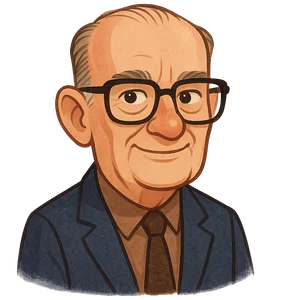
Arthur C. Clarke
A British science fiction writer, futurist, and inventor…
Reads at Grades 3–5 Listens at Grades 1–5
Print & create
Answer keys·No prep·Free with an account
28 worksheets · answer keys · full story · quiz · Ages 8-10 · CEFR B1
Plus adds 244,000+ more stories in 27 languages, audio for every one, and printables for all of them.
Just want Arthur C. Clarke?
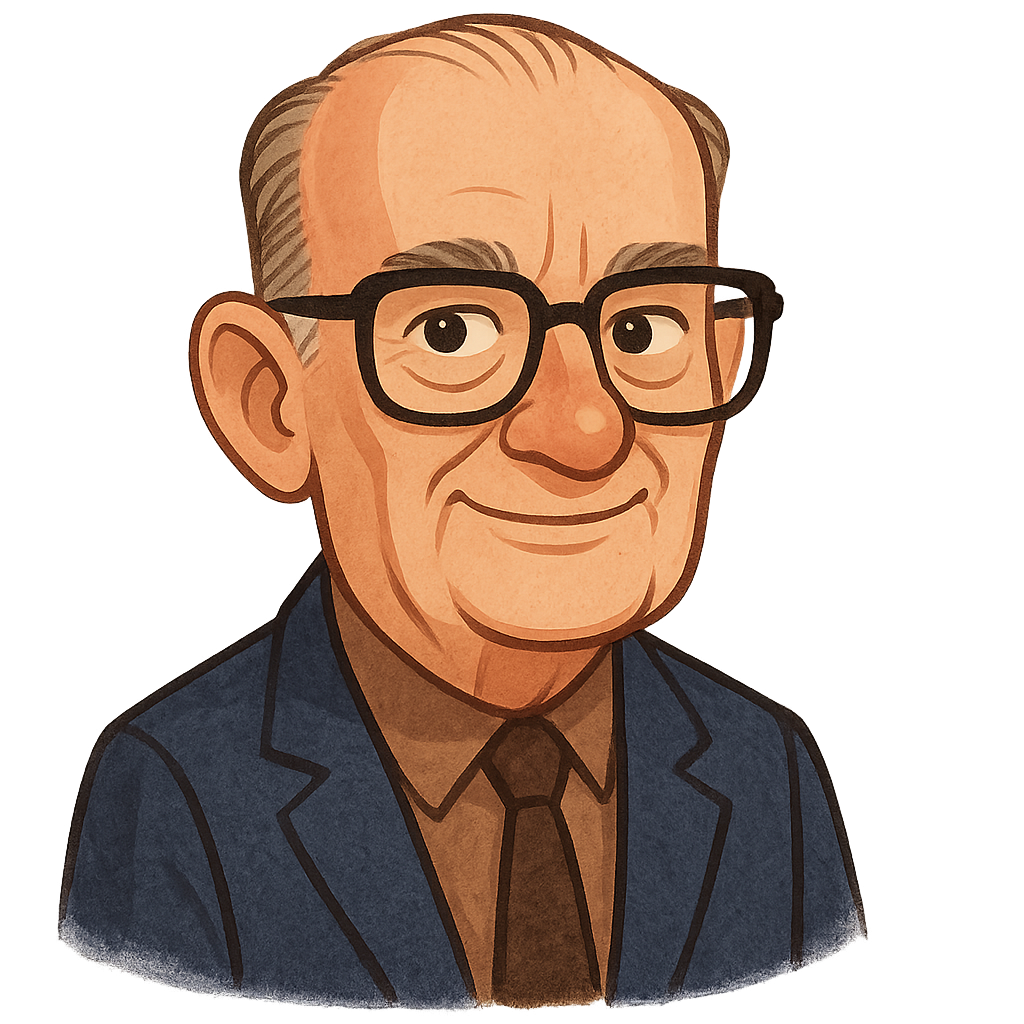
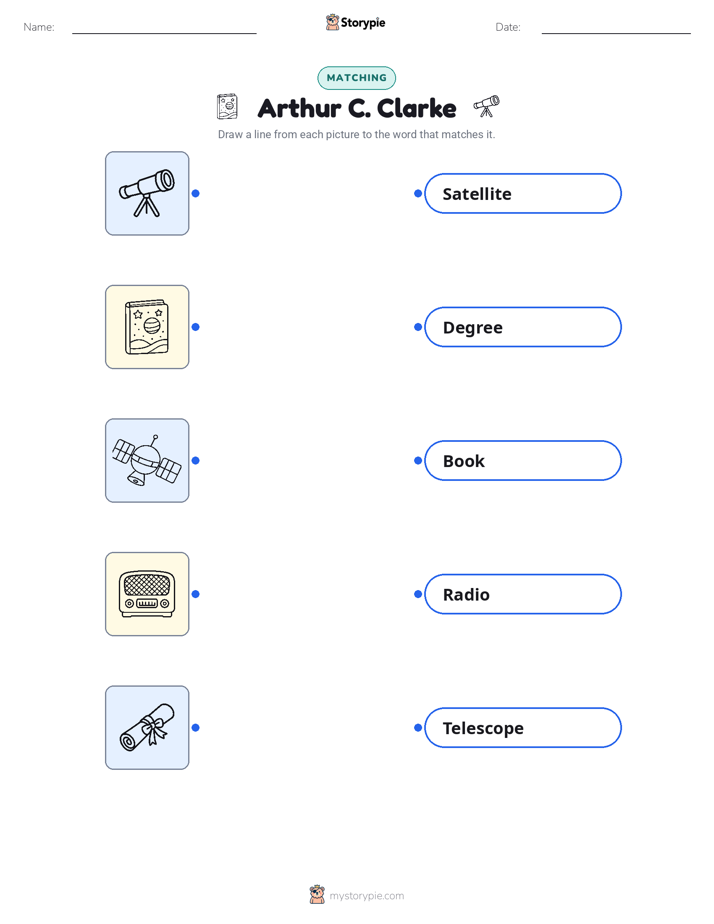
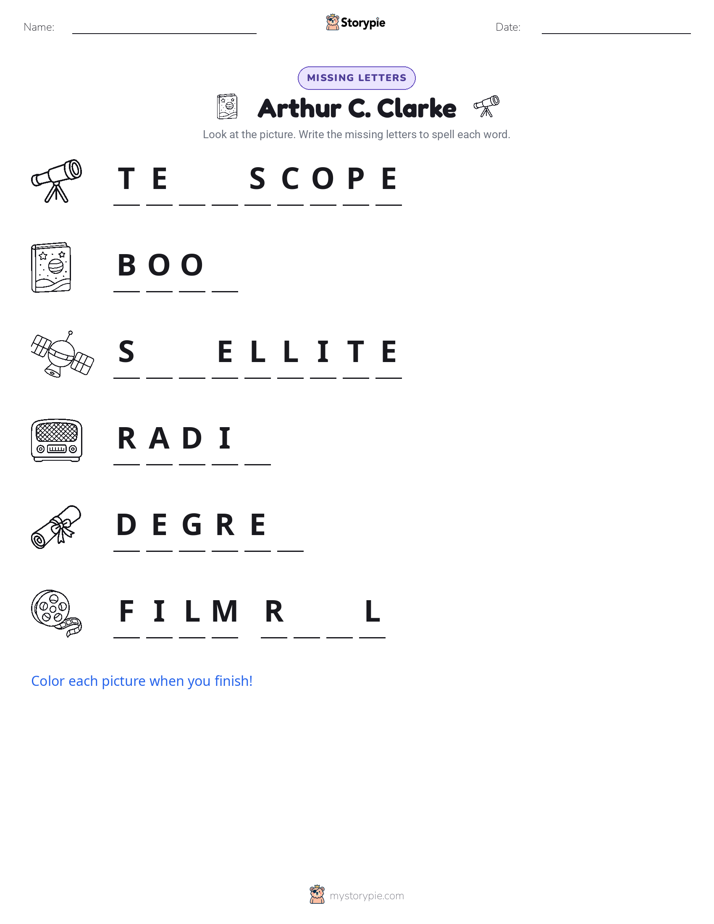
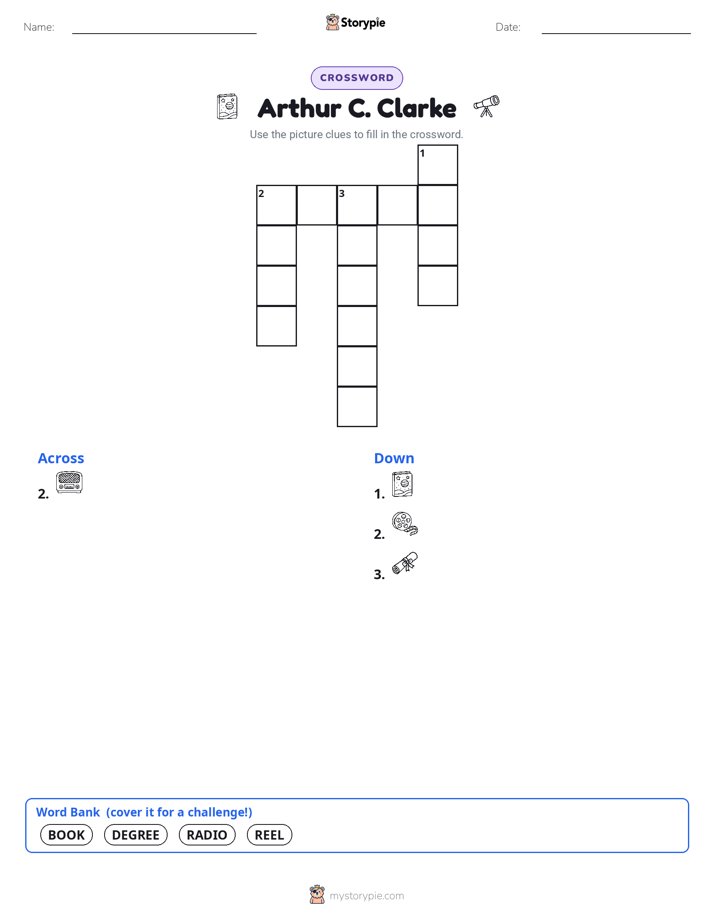
Hello there. My name is Arthur C. Clarke, and I spent my life dreaming about the future. It all began when I was a boy, born on December 16th, 1917, in a small seaside town in England. The world around me was full of wonders, but I was always looking up at the sky. From a very young age, I was completely fascinated by the stars. I loved collecting fossils, which felt like little pieces of ancient history, and I would spend hours reading amazing American science fiction magazines. These stories were filled with spaceships, distant planets, and incredible inventions that sparked my imagination. I wanted to see the universe for myself, so when I was a teenager, I decided to build my own telescope. Grinding the lenses and putting all the pieces together was hard work, but when I finally looked through it and saw the craters on the moon, I knew my future was connected to the stars.
As I grew older, my passion for space only became stronger. In 1936, I moved to the big city of London to find others who shared my dreams. I was thrilled to join a group called the British Interplanetary Society, where we would talk for hours about how humanity could one day travel to other worlds. But soon, the world changed when World War II began. I knew I had to help, so I joined the Royal Air Force. I didn't fly planes, though. Instead, I worked on a new and exciting technology called radar. My job was to use these invisible radio waves to help pilots land their planes safely, even in bad weather or at night. Working with this technology every day was fascinating, and it made me think. If we could use radio waves to see planes, what else could we do with them? This important work gave me a very big idea for the future.
Arthur C. Clarke: A Vision of the Future
Hello there. My name is Arthur C. Clarke, and I spent my life dreaming about the future. It all began when I was a boy, born on December 16th, 1917, in a small seaside town in England. The world around me was full of wonders, but I was always looking up at the sky. From a very young age, I was completely fascinated by the stars. I loved collecting fossils, which felt like little pieces of ancient history, and I would spend hours reading amazing American science fiction magazines. These stories were filled with spaceships, distant planets, and incredible inventions that sparked my imagination. I wanted to see the universe for myself, so when I was a teenager, I decided to build my own telescope. Grinding the lenses and putting all the pieces together was hard work, but when I finally looked through it and saw the craters on the moon, I knew my future was connected to the stars.
As I grew older, my passion for space only became stronger. In 1936, I moved to the big city of London to find others who shared my dreams. I was thrilled to join a group called the British Interplanetary Society, where we would talk for hours about how humanity could one day travel to other worlds. But soon, the world changed when World War II began. I knew I had to help, so I joined the Royal Air Force. I didn't fly planes, though. Instead, I worked on a new and exciting technology called radar. My job was to use these invisible radio waves to help pilots land their planes safely, even in bad weather or at night. Working with this technology every day was fascinating, and it made me think. If we could use radio waves to see planes, what else could we do with them? This important work gave me a very big idea for the future.
After the war ended, I finally had time to think about that idea. In 1945, I wrote an article for a magazine to explain it to the world. I imagined that we could place special satellites way up in space, in a very specific spot called a geostationary orbit. If we placed them just right, they would orbit the Earth at the exact same speed that the Earth spins. This would make them seem like they were floating in one fixed spot in the sky. From there, these satellites could act like tall towers in space, beaming television shows and telephone calls all around the globe in an instant! At the time, most people thought it sounded like pure science fiction, something straight out of the magazines I loved as a boy. But my idea turned out to be the foundation for how things like satellite TV and the GPS in our phones and cars work today.
Even though I was a scientist and an inventor, my greatest passion was always telling stories about the future. I loved writing books that explored what humanity might become and the incredible things we might achieve. I wrote many books and short stories, but I am probably most famous for a story I created with a talented film director named Stanley Kubrick. Together, we developed a book and a movie that came out in 1968 called 2001: A Space Odyssey. It was a journey into the future, exploring deep space travel, powerful and intelligent computers, and humanity's true place in the vast universe. The story made people everywhere stop and think about what the future might hold, and it inspired a new generation of scientists, engineers, and dreamers.
I spent much of my later life in the beautiful, warm country of Sri Lanka. There, I discovered a new world to explore right here on Earth—the ocean. I loved scuba diving and seeing the amazing life beneath the waves, which felt like another kind of final frontier. I lived to be 90 years old, and I feel so lucky that I was able to see some of my wildest science fiction ideas become a part of everyday reality. I hope my stories and ideas continue to inspire you to look up at the stars, ask big questions, and never stop dreaming about the amazing future that you will help create.
Wow facts
About
A British science fiction writer, futurist, and inventor, most famous for co-writing the screenplay for the 1968 film '2001: A Space Odyssey' and for proposing the concept of geostationary communication satellites.
Take a Quiz
Question 1 of 5
In the story, the word 'fascinated' is used to describe how Arthur C. Clarke felt about the stars. What does 'fascinated' mean?
Explore next






Want to do even more?
Go beyond exploring. Unlock tools that turn every story into real learning.

Storypie Plus for families
Full stories, quizzes, and printables. Nights and car rides, sorted.
- Unlimited audio stories
- Create Mode: your child stars in the story
- Offline downloads
- Printable worksheets & coloring pages

Why Storypie for Schools
Students engaged. Prep in seconds. Evenings back to you.
- Worksheets & Quizzes
- Classroom Management
- Formative Assessment
- Custom Curriculum & Lesson Plans
- 27 Languages

Why Storypie for Homeschool
Curriculum done. They'll ask for more. Hours back in your day.
- Worksheet Generator
- First-Person Audio Stories
- Built-in Comprehension Quizzes
- Custom Curriculum & Lesson Plans
- Print & Go Activities