English

B.F. Skinner
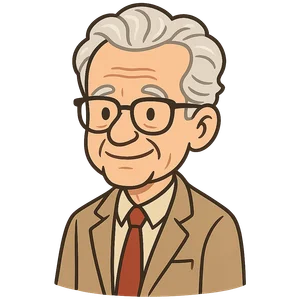
Burrhus Frederic Skinner was an American psychologist, behaviorist, author, inventor, and social philosopher.
Reads at Grades 3–5 Listens at Grades 1–5
 Screen-free speaker. Built for your kids.
No card, no commitment. One email when there is real news, and one click to stop.
Print & create
Answer keys·No prep·Free with an account
28 worksheets · answer keys · full story · quiz · Ages 8-10 · CEFR B1
Plus adds 102,000+ more stories in 27 languages, audio for every one, and printables for all of them.
Just want B.F. Skinner?
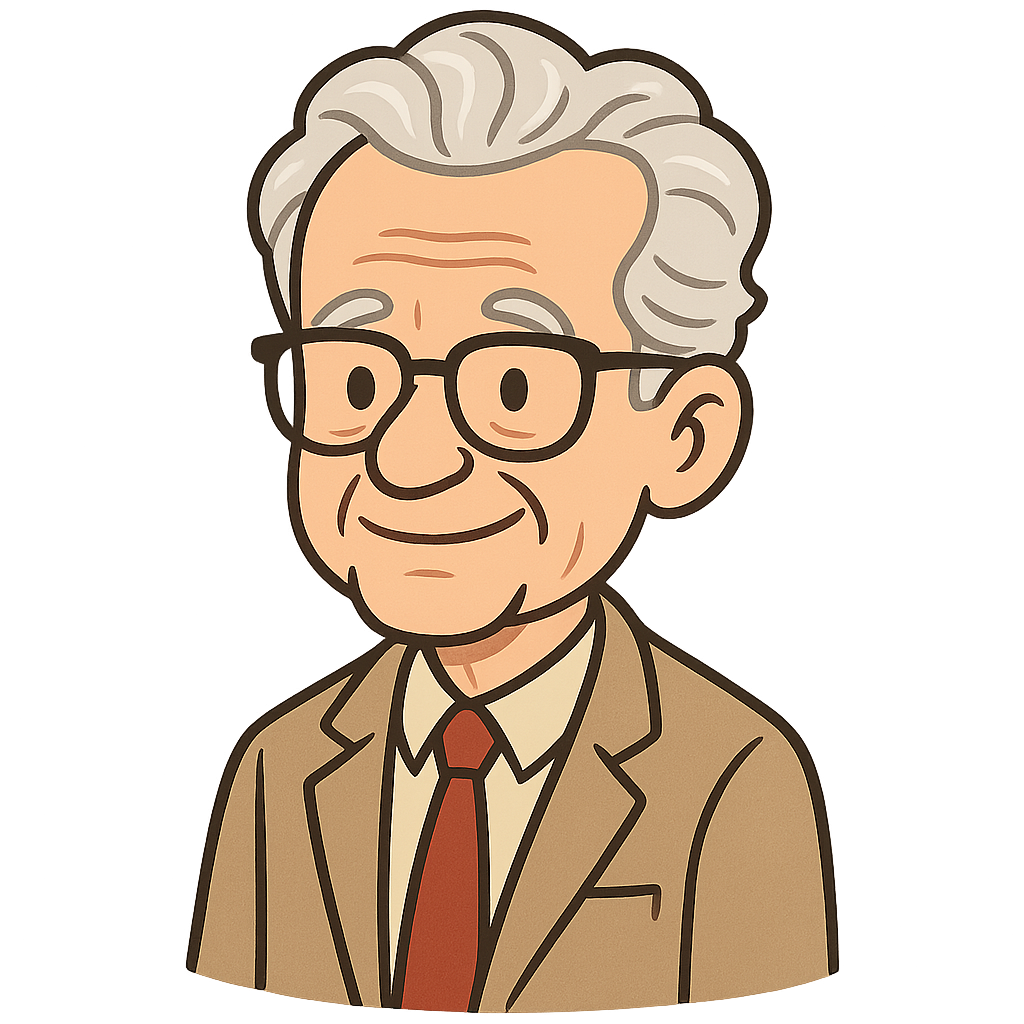
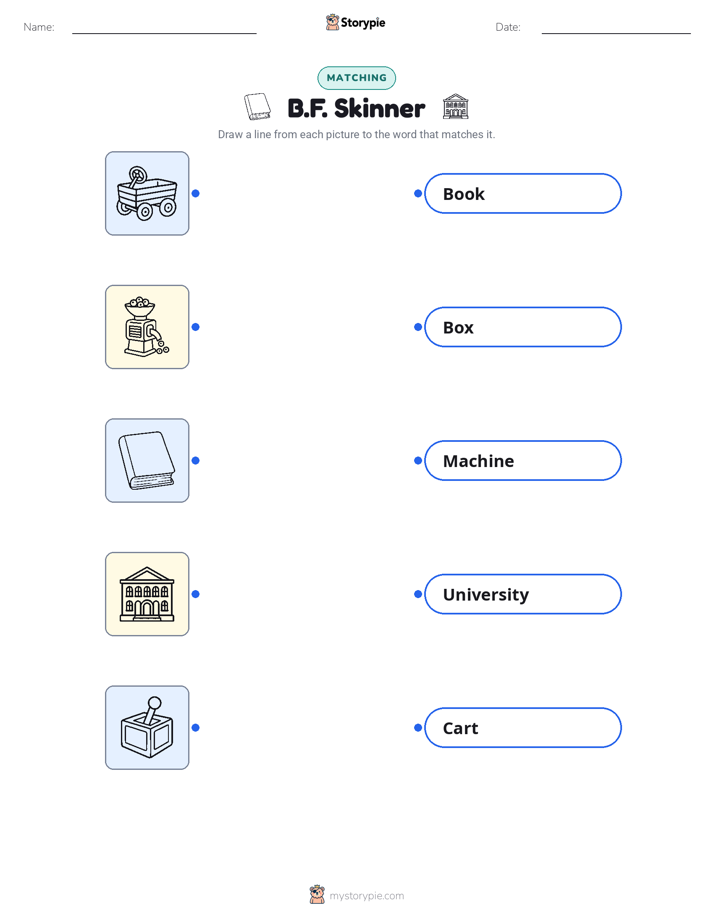
Hello! My name is Burrhus Frederic Skinner, but you can call me B.F. I was born on March 20th, 1904, in a small town in Pennsylvania. Even as a boy, I loved building things and figuring out how they worked. I would spend hours creating gadgets, like a cart with backwards steering and a machine to help me remember to hang up my pajamas. I was always watching, always wondering why people and animals did the things they did. This curiosity would guide me for the rest of my life.
When I went to Hamilton College, I thought I wanted to be a writer. I loved words and stories! After I graduated in 1926, I tried to write a great novel, but I soon realized that what truly fascinated me wasn't just making up stories about people, but understanding their real actions. Why do we make certain choices? How do we learn new things? These questions led me to a new path. In 1928, I enrolled at Harvard University to study psychology, the science of behavior and the mind. It was there that I found my true passion: exploring the hidden rules that guide our actions.
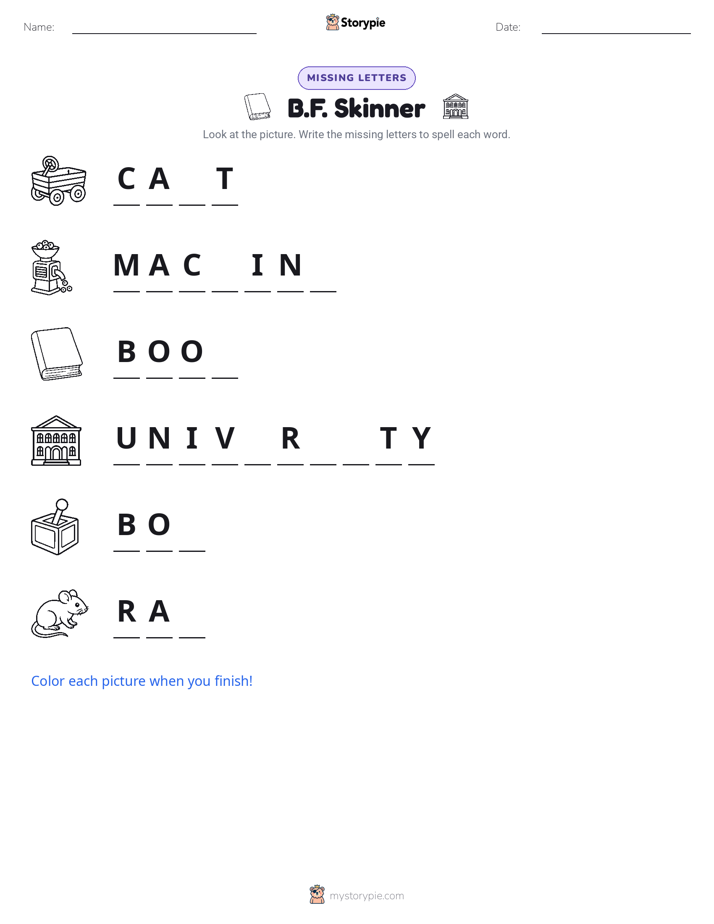
At Harvard, I developed a big idea I called 'operant conditioning.' It sounds complicated, but it's pretty simple: I believed that behavior is shaped by what happens right after we do something. If a good thing happens, like getting a treat, we are more likely to do that action again. I called this a 'reinforcement.' To test this, in the 1930s I invented a special enclosure that people later called the 'Skinner Box.' I could observe a rat or a pigeon inside, and when it pressed a lever or pecked a disk, it would receive a food reward. Just as I thought, the animals quickly learned the behavior that led to the reward! This showed that positive reinforcement was a powerful tool for learning.
B.F. Skinner: The Man Who Studied Behavior
Hello! My name is Burrhus Frederic Skinner, but you can call me B.F. I was born on March 20th, 1904, in a small town in Pennsylvania. Even as a boy, I loved building things and figuring out how they worked. I would spend hours creating gadgets, like a cart with backwards steering and a machine to help me remember to hang up my pajamas. I was always watching, always wondering why people and animals did the things they did. This curiosity would guide me for the rest of my life.
When I went to Hamilton College, I thought I wanted to be a writer. I loved words and stories! After I graduated in 1926, I tried to write a great novel, but I soon realized that what truly fascinated me wasn't just making up stories about people, but understanding their real actions. Why do we make certain choices? How do we learn new things? These questions led me to a new path. In 1928, I enrolled at Harvard University to study psychology, the science of behavior and the mind. It was there that I found my true passion: exploring the hidden rules that guide our actions.
At Harvard, I developed a big idea I called 'operant conditioning.' It sounds complicated, but it's pretty simple: I believed that behavior is shaped by what happens right after we do something. If a good thing happens, like getting a treat, we are more likely to do that action again. I called this a 'reinforcement.' To test this, in the 1930s I invented a special enclosure that people later called the 'Skinner Box.' I could observe a rat or a pigeon inside, and when it pressed a lever or pecked a disk, it would receive a food reward. Just as I thought, the animals quickly learned the behavior that led to the reward! This showed that positive reinforcement was a powerful tool for learning.
I always hoped my ideas could help people in their everyday lives. When my daughter Deborah was born in 1944, I built her a special temperature-controlled crib, called an 'Air-Crib,' to keep her comfortable and safe. Later, in the 1950s, I used my ideas about reinforcement to create a 'teaching machine.' It was a device that let students learn subjects like math and science at their own pace. It would ask a question, and if the student got it right, it would move on to the next one. It was an early version of the educational games and apps you might use today!
I lived a long life full of questions, experiments, and inventions. I lived to be 86 years old. Today, my ideas about behaviorism are still used all around the world. They help teachers create positive classrooms, animal trainers teach amazing skills, and therapists help people build better habits. I hope my story reminds you to stay curious and to always ask 'why?'
Wow facts
About
Burrhus Frederic Skinner was an American psychologist, behaviorist, author, inventor, and social philosopher. He was a leading figure in the school of psychology known as behaviorism, and developed the theory of operant conditioning.
Take a Quiz
Question 1 of 5
What invention did I create in the 1950s to help students learn at their own pace?
Explore next






Want to do even more?
Go beyond exploring. Unlock tools that turn every story into real learning.

Storypie Plus for families
Full stories, quizzes, and printables. Nights and car rides, sorted.
- Unlimited audio stories
- Create Mode: your child stars in the story
- Offline downloads
- Printable worksheets & coloring pages

Why Storypie for Schools
Students engaged. Prep in seconds. Evenings back to you.
- Worksheets & Quizzes
- Classroom Management
- Formative Assessment
- Custom Curriculum & Lesson Plans
- 27 Languages

Why Storypie for Homeschool
Curriculum done. They'll ask for more. Hours back in your day.
- Worksheet Generator
- First-Person Audio Stories
- Built-in Comprehension Quizzes
- Custom Curriculum & Lesson Plans
- Print & Go Activities