English

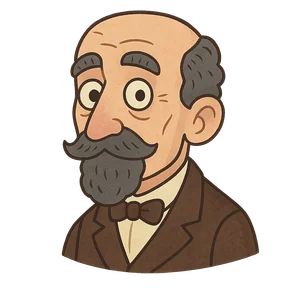
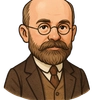
Camillo Golgi
Camillo Golgi was an Italian physician and scientist who won the Nobel Prize in 1906 for his groundbreaking…
Reads at Grades 6–8 Listens at Grades 4–8
Print & create
Answer keys·No prep·Free with an account
28 worksheets · answer keys · full story · quiz · Ages 10-12 · CEFR B2
Plus adds 279,000+ more stories in 27 languages, audio for every one, and printables for all of them.
Just want Camillo Golgi?
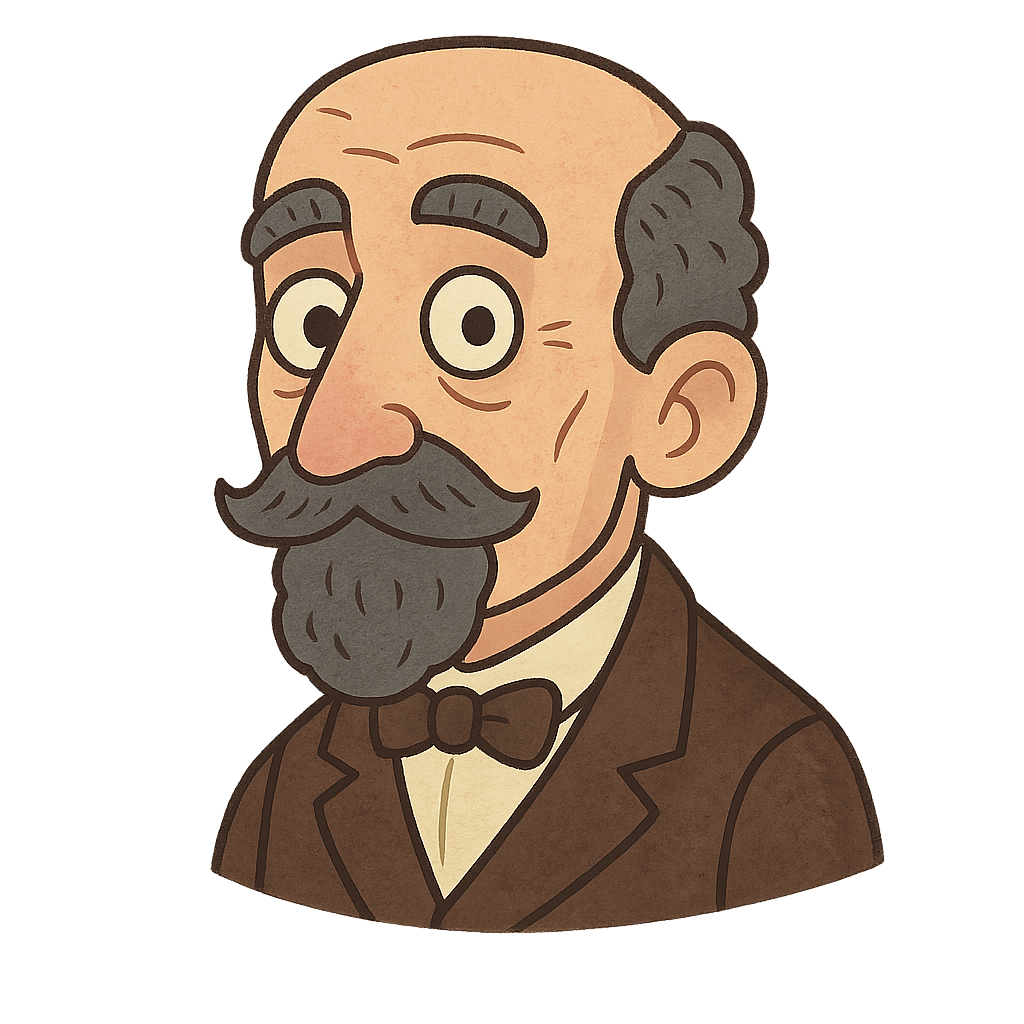
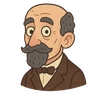
Hello, my name is Camillo Golgi, and my life was a journey into a world too small for the human eye to see. I was born on July 7th, 1843, in a small Italian village called Corteno. My father was a physician, and watching him care for people inspired me to follow in his footsteps. I enrolled at the University of Pavia, a very old and respected school, to study medicine. The world of science was fascinating, but I was most captivated by the human body and its intricate, microscopic parts. In 1865, I graduated, filled with a desire to understand the hidden structures that make us who we are. I knew that the biggest secrets were often found in the smallest places, and I was determined to find a way to see them.
After my studies, in 1872, I began working at the Hospital of the Chronically Ill in a town called Abbiategrasso. This hospital was not a modern research center; it lacked a proper laboratory for my experiments. But I was not discouraged. I found a small, unused kitchen and transformed it into my own personal research space. There, surrounded by simple equipment, I spent countless hours focused on a single, frustrating problem: how to see individual nerve cells, or neurons. Under a normal microscope, they were transparent and nearly invisible, like ghosts within the tissue. I experimented with different chemicals, hoping to find something that would make them stand out. Then, in 1873, I had a breakthrough. I developed a method using a chemical called silver nitrate. When I applied it to brain tissue, it magically stained a few neurons completely black, making them stand out in perfect detail against a pale yellow background. I called my discovery the 'reazione nera,' which means 'the black reaction' in Italian.
Camillo Golgi
Hello, my name is Camillo Golgi, and my life was a journey into a world too small for the human eye to see. I was born on July 7th, 1843, in a small Italian village called Corteno. My father was a physician, and watching him care for people inspired me to follow in his footsteps. I enrolled at the University of Pavia, a very old and respected school, to study medicine. The world of science was fascinating, but I was most captivated by the human body and its intricate, microscopic parts. In 1865, I graduated, filled with a desire to understand the hidden structures that make us who we are. I knew that the biggest secrets were often found in the smallest places, and I was determined to find a way to see them.
After my studies, in 1872, I began working at the Hospital of the Chronically Ill in a town called Abbiategrasso. This hospital was not a modern research center; it lacked a proper laboratory for my experiments. But I was not discouraged. I found a small, unused kitchen and transformed it into my own personal research space. There, surrounded by simple equipment, I spent countless hours focused on a single, frustrating problem: how to see individual nerve cells, or neurons. Under a normal microscope, they were transparent and nearly invisible, like ghosts within the tissue. I experimented with different chemicals, hoping to find something that would make them stand out. Then, in 1873, I had a breakthrough. I developed a method using a chemical called silver nitrate. When I applied it to brain tissue, it magically stained a few neurons completely black, making them stand out in perfect detail against a pale yellow background. I called my discovery the 'reazione nera,' which means 'the black reaction' in Italian.
For the first time in history, the complete structure of a neuron was visible. It was a thrilling moment. Through the lens of my microscope, I could see everything: the main cell body, the web of branching dendrites that receive signals, and the single, long axon that sends signals away. It was like seeing a detailed map of a previously unknown world. I spent the next several years of my life dedicated to this work. I would prepare tissue with my black reaction stain and then spend hours at my desk, meticulously drawing what I saw. My drawings were not just scientific records; they were beautiful illustrations of the brain’s hidden architecture. Based on these detailed observations, I proposed a theory called the 'reticular theory.' I believed that all the neurons in the brain were not separate cells but were physically connected to one another, forming one continuous, massive network, like a giant, intricate web.
In 1876, my work was recognized, and I was invited to return to the University of Pavia, this time as a professor. My scientific curiosity, however, was not limited to the brain. I continued to explore the microscopic world inside all types of cells. In 1898, while examining cells under my microscope, I noticed a peculiar and elegant structure within them that looked like a stack of flattened sacs and ribbons. It was a component of the cell that no one had ever described before. Years later, after my discovery was confirmed, scientists named this important organelle the 'Golgi apparatus' in my honor. My research also took me into the field of infectious diseases. Around 1886, I turned my attention to malaria, a terrible illness that affected many people. I was able to identify the different stages of the parasite's life cycle in human blood, which was a crucial step in understanding how the disease progressed and how it could be treated.
The greatest honor of my scientific career came in 1906, when I was awarded the Nobel Prize in Physiology or Medicine. It was a moment of immense pride, but it came with a fascinating scientific twist. I shared the prize with a brilliant Spanish scientist named Santiago Ramón y Cajal. The interesting part was that he had used my very own black reaction staining method to study the brain, but he had come to a completely different conclusion. He argued that neurons were not a continuous web, as my reticular theory proposed. Instead, he believed they were individual, separate cells that communicated with each other across tiny gaps. His idea became known as the 'neuron doctrine.' When we went to Stockholm to accept our shared prize, we both gave speeches. On that famous stage, we each presented our research and defended our opposing theories, showing the world how science moves forward through vigorous discussion, debate, and the careful testing of ideas.
I lived a long life dedicated to scientific discovery and also served my country as a senator. I lived to be 83 years old, passing away in 1926. In the end, Santiago Ramón y Cajal’s neuron doctrine was proven to be correct, and my reticular theory was set aside. However, the 'black reaction' staining method I developed in that little hospital kitchen was the key that unlocked the secrets of the nervous system for him and for all the neuroscientists who followed. Today, every student of biology learns about the Golgi apparatus, a fundamental piece of the cellular world I was so privileged to help reveal. My story shows that even when a theory is wrong, the tools and discoveries made along the way can pave the path for future generations to find the truth.
Wow facts
About
Camillo Golgi was an Italian physician and scientist who won the Nobel Prize in 1906 for his groundbreaking studies of the nervous system, including his invention of the 'black reaction' staining technique.
Take a Quiz
Question 1 of 5
What problem did Camillo Golgi solve with his 'black reaction' discovery?
Explore next



Want to do even more?
Go beyond exploring. Unlock tools that turn every story into real learning.

Storypie Plus for families
Full stories, quizzes, and printables. Nights and car rides, sorted.
- Unlimited audio stories
- Create Mode: your child stars in the story
- Offline downloads
- Printable worksheets & coloring pages

Why Storypie for Schools
Students engaged. Prep in seconds. Evenings back to you.
- Worksheets & Quizzes
- Classroom Management
- Formative Assessment
- Custom Curriculum & Lesson Plans
- 27 Languages

Why Storypie for Homeschool
Curriculum done. They'll ask for more. Hours back in your day.
- Worksheet Generator
- First-Person Audio Stories
- Built-in Comprehension Quizzes
- Custom Curriculum & Lesson Plans
- Print & Go Activities