English


Camillo Golgi
Camillo Golgi was an Italian physician and scientist who won the Nobel Prize in 1906 for his groundbreaking…
Reads at Grades K-2 Listens at K–3
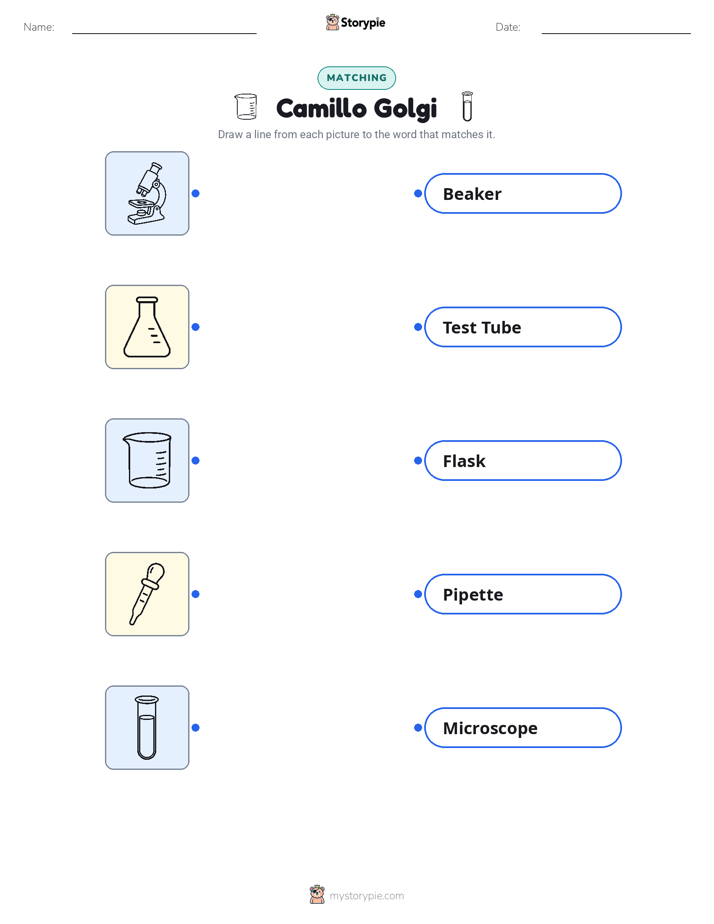
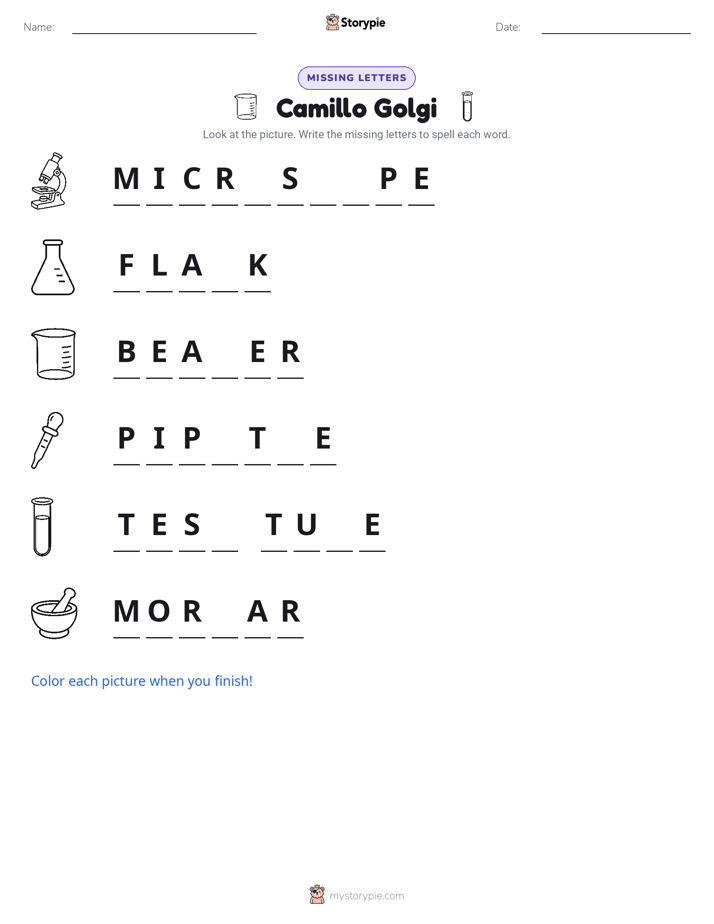
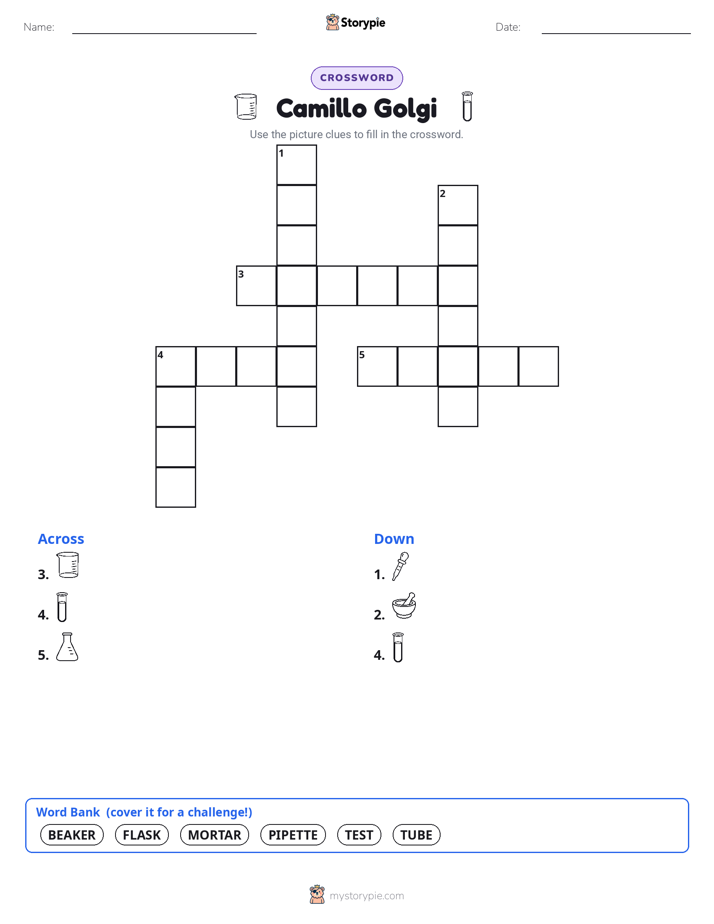
Print & create
Answer keys·No prep·Free with an account
28 worksheets · answer keys · full story · quiz · Ages 6-8 · CEFR A2
Plus adds 279,000+ more stories in 27 languages, audio for every one, and printables for all of them.
Just want Camillo Golgi?

Hello! My name is Camillo Golgi. I was born on July 7th, 1843, in a small town in the mountains of Italy. My father was a doctor, and I loved watching him help people. I was a very curious child and wanted to know how everything worked, especially the amazing human body. I decided that I would become a doctor and a scientist so I could look inside and find answers to my many questions.
When I became a scientist, I wanted to study the brain. But there was a big problem! The tiny parts of the brain, called nerve cells, were almost invisible under a microscope. It was like trying to see a drawing made with invisible ink. I worked for years in my small kitchen, which I turned into a laboratory. Then, in 1873, I found a solution! I discovered that if I soaked the cells in a special chemical called silver nitrate, they would turn black. I called it the 'black reaction.' For the first time, I could see a whole nerve cell, with all its long, stringy arms!
My black reaction helped me see many new things. As I looked closer at all kinds of cells, I noticed a part inside that no one had ever described before. It looked like a stack of tiny, folded ribbons. I discovered this part around 1897 and learned that it acts like the cell's post office! It takes packages of proteins, sorts them, and sends them where they need to go. Today, scientists call it the 'Golgi apparatus'—they named it after me!
My discoveries helped other scientists learn more about the brain than ever before. In 1906, I was given a very important award for my work, the Nobel Prize! I shared it with another scientist named Santiago Ramón y Cajal, who used my black reaction to make his own amazing discoveries. We didn't always agree on how the brain worked, but together, our ideas helped create a much bigger picture of the amazing nervous system.
Camillo Golgi: Seeing the Invisible
Hello! My name is Camillo Golgi. I was born on July 7th, 1843, in a small town in the mountains of Italy. My father was a doctor, and I loved watching him help people. I was a very curious child and wanted to know how everything worked, especially the amazing human body. I decided that I would become a doctor and a scientist so I could look inside and find answers to my many questions.
When I became a scientist, I wanted to study the brain. But there was a big problem! The tiny parts of the brain, called nerve cells, were almost invisible under a microscope. It was like trying to see a drawing made with invisible ink. I worked for years in my small kitchen, which I turned into a laboratory. Then, in 1873, I found a solution! I discovered that if I soaked the cells in a special chemical called silver nitrate, they would turn black. I called it the 'black reaction.' For the first time, I could see a whole nerve cell, with all its long, stringy arms!
My black reaction helped me see many new things. As I looked closer at all kinds of cells, I noticed a part inside that no one had ever described before. It looked like a stack of tiny, folded ribbons. I discovered this part around 1897 and learned that it acts like the cell's post office! It takes packages of proteins, sorts them, and sends them where they need to go. Today, scientists call it the 'Golgi apparatus'—they named it after me!
My discoveries helped other scientists learn more about the brain than ever before. In 1906, I was given a very important award for my work, the Nobel Prize! I shared it with another scientist named Santiago Ramón y Cajal, who used my black reaction to make his own amazing discoveries. We didn't always agree on how the brain worked, but together, our ideas helped create a much bigger picture of the amazing nervous system.
I lived a long and happy life filled with discovery. I lived to be 82 years old. Even today, scientists still use my staining method to study the brain, and every student who learns about cells learns about the 'Golgi apparatus' that I first saw in my little kitchen laboratory. It makes me happy to know that my curiosity helped people understand the tiny, secret world inside our own bodies.
Wow facts
About
Camillo Golgi was an Italian physician and scientist who won the Nobel Prize in 1906 for his groundbreaking studies of the nervous system, including his invention of the 'black reaction' staining technique.
Take a Quiz
Question 1 of 4
Why was it hard for Camillo Golgi to study the brain at first?
Explore next






Want to do even more?
Go beyond exploring. Unlock tools that turn every story into real learning.

Storypie Plus for families
Full stories, quizzes, and printables. Nights and car rides, sorted.
- Unlimited audio stories
- Create Mode: your child stars in the story
- Offline downloads
- Printable worksheets & coloring pages

Why Storypie for Schools
Students engaged. Prep in seconds. Evenings back to you.
- Worksheets & Quizzes
- Classroom Management
- Formative Assessment
- Custom Curriculum & Lesson Plans
- 27 Languages

Why Storypie for Homeschool
Curriculum done. They'll ask for more. Hours back in your day.
- Worksheet Generator
- First-Person Audio Stories
- Built-in Comprehension Quizzes
- Custom Curriculum & Lesson Plans
- Print & Go Activities