English

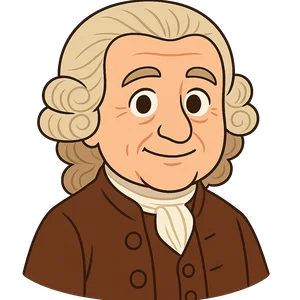
Carl Linnaeus
Carl Linnaeus was a Swedish botanist, zoologist, taxonomist…
Reads at Grades K-2 Listens at K–3
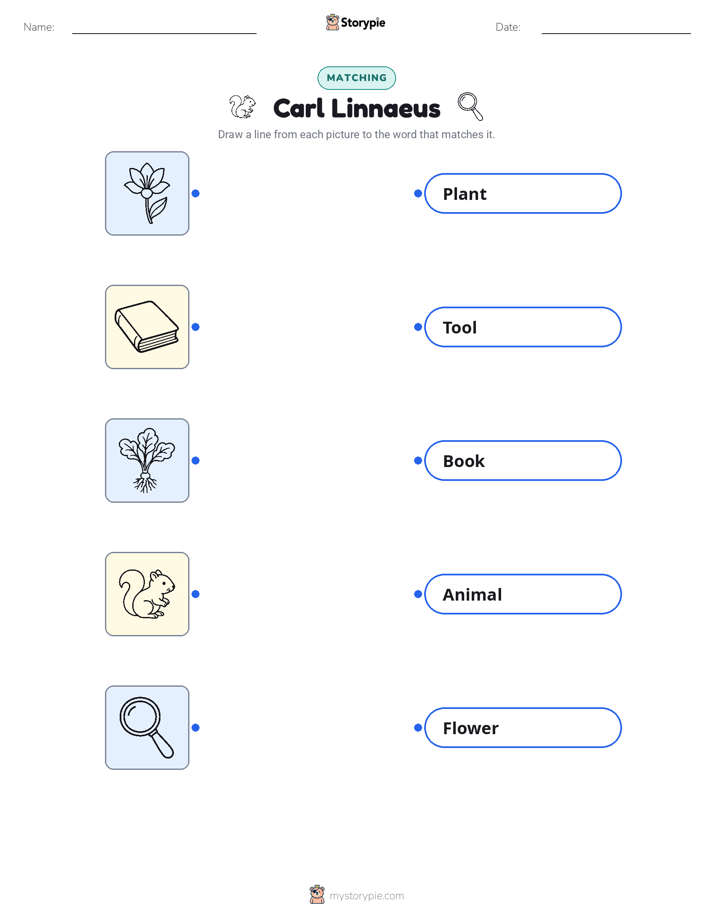
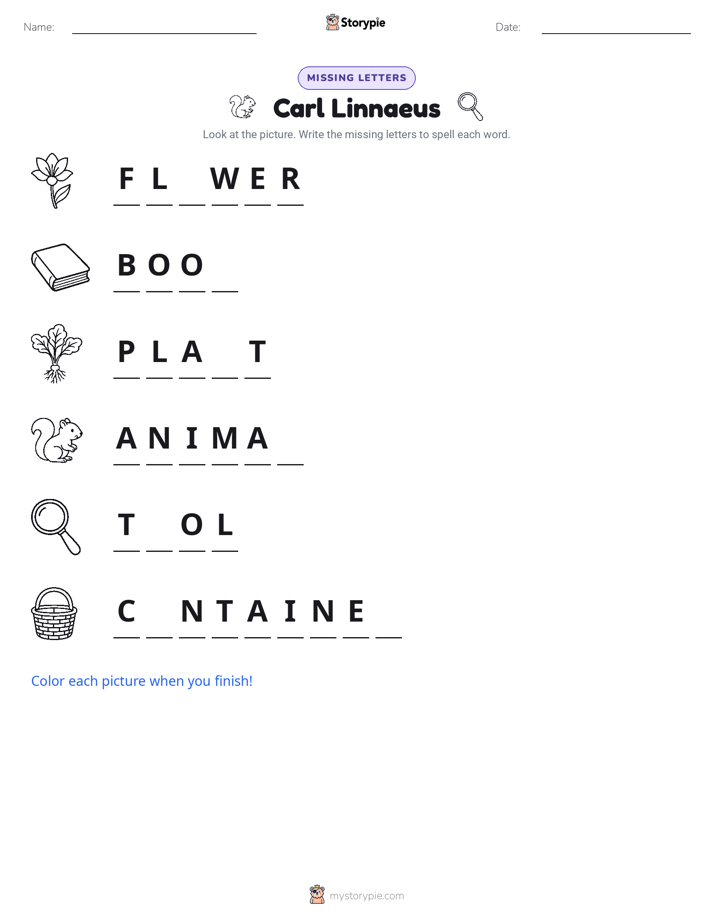
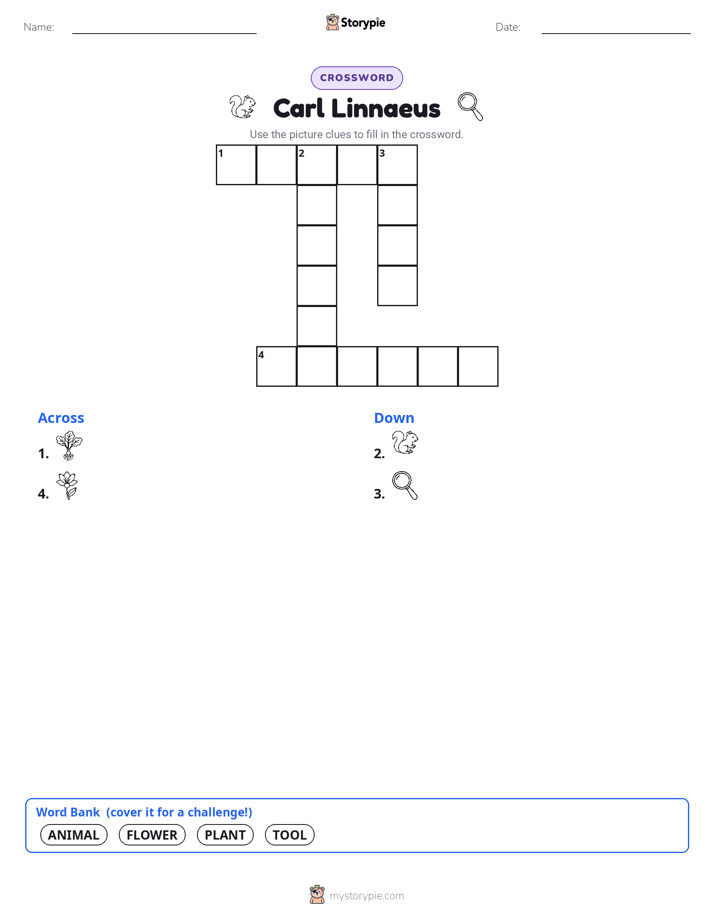
Print & create
Answer keys·No prep·Free with an account
28 worksheets · answer keys · full story · quiz · Ages 6-8 · CEFR A2
Plus adds 164,000+ more stories in 27 languages, audio for every one, and printables for all of them.
Just want Carl Linnaeus?
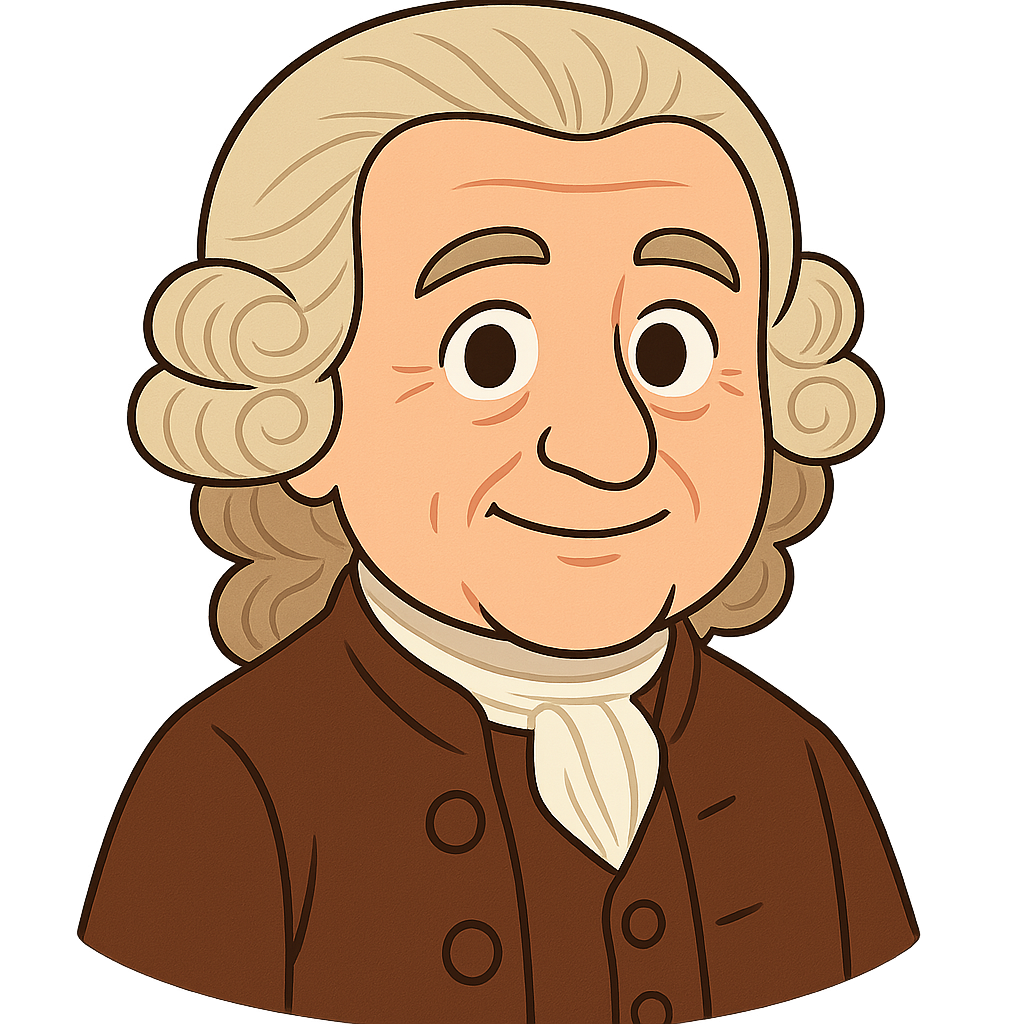
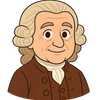
Hello! My name is Carl Linnaeus. I want to tell you the story of how I gave a special name to every plant and animal on Earth. I was born in a little house in Sweden way back on May 23rd, 1707. My father was a gardener, and our home was surrounded by the most beautiful flowers. Even when I was a tiny boy, I loved plants more than anything. My family called me the 'little botanist' because I was always exploring the garden, learning the names of all the flowers.
When I grew up, I went to a big school called Uppsala University to become a doctor. But I spent most of my time studying my favorite thing: plants! I traveled to faraway places like Lapland, a chilly land in the north, to find new kinds of flowers and animals. I noticed something very confusing. A scientist in one country would call a flower by one long, tricky name, while a scientist somewhere else would use a completely different name for the very same flower! It was a messy puzzle, and it made it hard for people to share what they learned.
I thought, 'There must be a better way!' So, I came up with a simple idea. What if every living thing had a two-part name, like a first name and a last name? The first name would tell you its group, and the second name would be special just for it. For example, we call humans 'Homo sapiens.' In 1735, I wrote a book called 'Systema Naturae,' which means 'The System of Nature,' to explain my idea. At first, it was a very thin book, but I kept adding more and more plants and animals to it as I discovered them.
Carl Linnaeus: The Boy Who Named Nature
Hello! My name is Carl Linnaeus. I want to tell you the story of how I gave a special name to every plant and animal on Earth. I was born in a little house in Sweden way back on May 23rd, 1707. My father was a gardener, and our home was surrounded by the most beautiful flowers. Even when I was a tiny boy, I loved plants more than anything. My family called me the 'little botanist' because I was always exploring the garden, learning the names of all the flowers.
When I grew up, I went to a big school called Uppsala University to become a doctor. But I spent most of my time studying my favorite thing: plants! I traveled to faraway places like Lapland, a chilly land in the north, to find new kinds of flowers and animals. I noticed something very confusing. A scientist in one country would call a flower by one long, tricky name, while a scientist somewhere else would use a completely different name for the very same flower! It was a messy puzzle, and it made it hard for people to share what they learned.
I thought, 'There must be a better way!' So, I came up with a simple idea. What if every living thing had a two-part name, like a first name and a last name? The first name would tell you its group, and the second name would be special just for it. For example, we call humans 'Homo sapiens.' In 1735, I wrote a book called 'Systema Naturae,' which means 'The System of Nature,' to explain my idea. At first, it was a very thin book, but I kept adding more and more plants and animals to it as I discovered them.
My two-name system made it so much easier for scientists everywhere to talk about the natural world. I spent the rest of my life teaching students and adding thousands of names to my system. I lived to be 70 years old, and my work helped organize all of nature into one big, beautiful family tree. Today, whenever you hear the scientific name for a dinosaur, a butterfly, or even the flowers in your own backyard, you are seeing my idea at work.
Wow facts
About
Carl Linnaeus was a Swedish botanist, zoologist, taxonomist, and physician who formalized binomial nomenclature, the modern system of naming organisms. He is known as the 'father of modern taxonomy'.
Take a Quiz
Question 1 of 4
Why was it confusing for scientists before Carl had his big idea?
Explore next



Want to do even more?
Go beyond exploring. Unlock tools that turn every story into real learning.

Storypie Plus for families
Full stories, quizzes, and printables. Nights and car rides, sorted.
- Unlimited audio stories
- Create Mode: your child stars in the story
- Offline downloads
- Printable worksheets & coloring pages

Why Storypie for Schools
Students engaged. Prep in seconds. Evenings back to you.
- Worksheets & Quizzes
- Classroom Management
- Formative Assessment
- Custom Curriculum & Lesson Plans
- 27 Languages

Why Storypie for Homeschool
Curriculum done. They'll ask for more. Hours back in your day.
- Worksheet Generator
- First-Person Audio Stories
- Built-in Comprehension Quizzes
- Custom Curriculum & Lesson Plans
- Print & Go Activities