English

Cyrus the Great
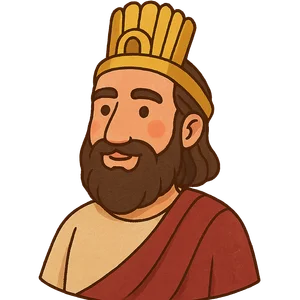
Cyrus the Great was the founder of the Achaemenid Empire, the first Persian Empire.
Reads at Grades 6–8 Listens at Grades 4–8
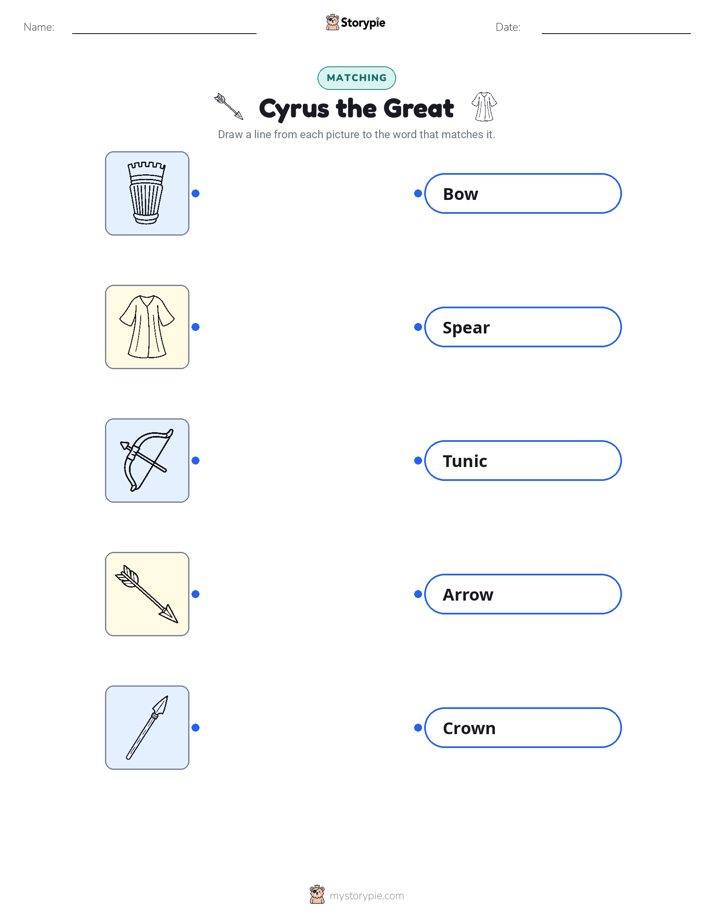
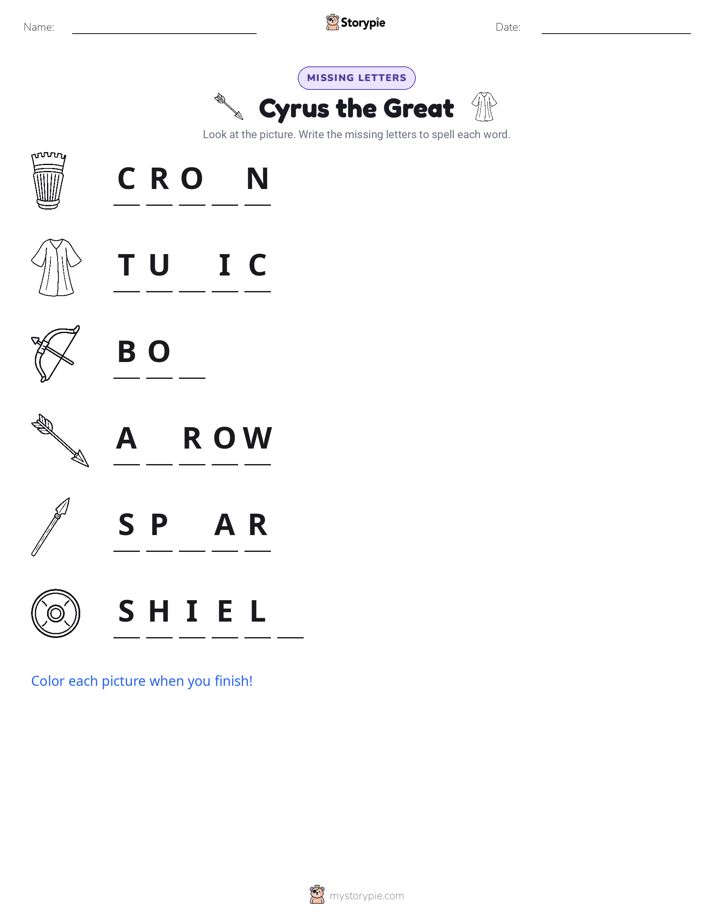
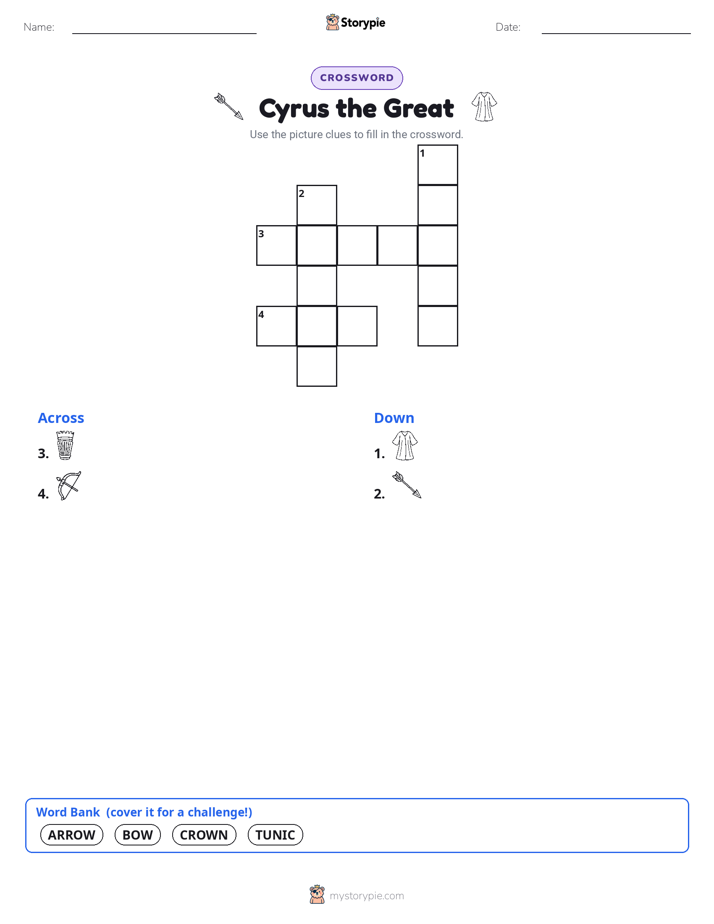
Print & create
Answer keys·No prep·Free with an account
28 worksheets · answer keys · full story · quiz · Ages 10-12 · CEFR B2
Plus adds 244,000+ more stories in 27 languages, audio for every one, and printables for all of them.
Just want Cyrus the Great?
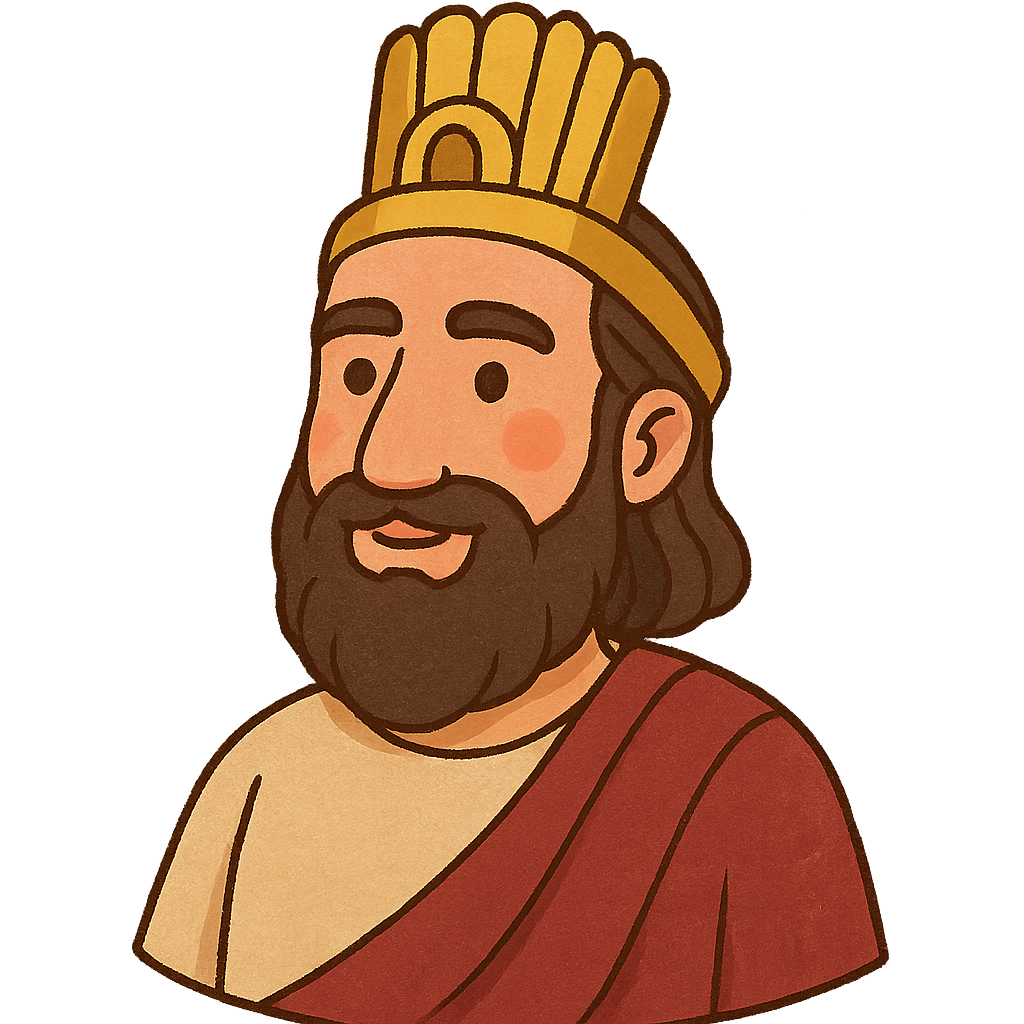
Hello, my name is Cyrus, and I am known to history as the founder of the first great Persian Empire. My story begins in a time of powerful kingdoms and shifting alliances, long before the world you know. I was born a prince of the Persians around the year 600 BCE in a land called Anshan. The world I grew up in was dominated by powerful empires, and my own people were not yet masters of their own destiny. My father was Cambyses I, a local king who ruled our people, but we were subjects of a much larger power. My grandfather, Astyages, was the mighty king of the Median Empire, which held authority over Persia. From a very young age, I was taught the arts of leadership and warfare. I watched the great kings and learned how they ruled, but I also felt a deep desire for my people, the Persians, to be free and to forge their own path. I dreamed of a future where Persia was not just a subject kingdom, but a great power in its own right, respected and strong.
My journey from prince to emperor began when I became the king of Anshan around 559 BCE. My first task was not to conquer foreign lands, but to bring my own people together. I worked to unite the various Persian tribes, convincing them that we were stronger together than we were apart. Once the Persians stood behind me as one, I knew the time had come to challenge the old order. This meant making a difficult decision: to rise up against my own grandfather, King Astyages of the Medes. It was a great risk, but it was necessary for the freedom of my people. A war followed, pitting the newly united Persians against the powerful Median army. For years, the conflict raged, but my soldiers fought with the courage of those who seek independence. In the year 550 BCE, we achieved our victory. I defeated the Median army, but I did not seek to punish them. Instead, I united our two peoples, the Medes and the Persians, into a single, powerful kingdom. This was the birth of what historians now call the Achaemenid Empire, the very first Persian Empire, built on a foundation of both conquest and cooperation.
Cyrus the Great: A King of Kings
Hello, my name is Cyrus, and I am known to history as the founder of the first great Persian Empire. My story begins in a time of powerful kingdoms and shifting alliances, long before the world you know. I was born a prince of the Persians around the year 600 BCE in a land called Anshan. The world I grew up in was dominated by powerful empires, and my own people were not yet masters of their own destiny. My father was Cambyses I, a local king who ruled our people, but we were subjects of a much larger power. My grandfather, Astyages, was the mighty king of the Median Empire, which held authority over Persia. From a very young age, I was taught the arts of leadership and warfare. I watched the great kings and learned how they ruled, but I also felt a deep desire for my people, the Persians, to be free and to forge their own path. I dreamed of a future where Persia was not just a subject kingdom, but a great power in its own right, respected and strong.
My journey from prince to emperor began when I became the king of Anshan around 559 BCE. My first task was not to conquer foreign lands, but to bring my own people together. I worked to unite the various Persian tribes, convincing them that we were stronger together than we were apart. Once the Persians stood behind me as one, I knew the time had come to challenge the old order. This meant making a difficult decision: to rise up against my own grandfather, King Astyages of the Medes. It was a great risk, but it was necessary for the freedom of my people. A war followed, pitting the newly united Persians against the powerful Median army. For years, the conflict raged, but my soldiers fought with the courage of those who seek independence. In the year 550 BCE, we achieved our victory. I defeated the Median army, but I did not seek to punish them. Instead, I united our two peoples, the Medes and the Persians, into a single, powerful kingdom. This was the birth of what historians now call the Achaemenid Empire, the very first Persian Empire, built on a foundation of both conquest and cooperation.
With my new empire established, I began a series of campaigns to expand its borders and secure its place in the world. But I was determined to be a new kind of conqueror. I did not believe that true strength came from cruelty or destruction. Around the year 547 BCE, my armies marched west and conquered the wealthy kingdom of Lydia, known for its vast riches. My most famous achievement, however, came in 539 BCE, when my forces arrived at the gates of Babylon, one of the greatest and most magnificent cities in the ancient world. The city was heavily fortified, and its people expected a long and brutal siege. But that is not how I chose to rule. Instead of launching a destructive assault, I managed to enter the city peacefully. I made a promise to the people of Babylon that I would not harm them or their city. I declared that I would honor their traditions, respect their gods, and allow them to continue their way of life. This was a radical idea for the time. Most conquerors would have plundered the city and enslaved its people, but I believed that an empire built on respect would be far stronger than one built on fear.
My beliefs about how to govern were so important to me that I had them recorded for all to see. After I took control of Babylon in 539 BCE, I commissioned a special object that is now known as the Cyrus Cylinder. It was not a crown or a sword, but a simple barrel-shaped piece of clay, covered in written script. On this cylinder, I had a declaration inscribed that explained my philosophy of rule. It stated that the people living within my empire should be free to live their own lives and worship their own gods without interference. This was more than just a promise; it was a policy I put into action. Many different groups of people had been held captive in Babylon by its previous rulers. I set them free. Among them were the Jewish people, who had been exiled from their homeland for decades. I not only gave them permission to return to their home in Jerusalem, but I also provided them with resources to help them rebuild their sacred Temple, which had been destroyed.
I spent the final years of my life working to secure the borders of the vast empire I had created. It stretched from the Mediterranean Sea to the mountains of India, the largest the world had ever seen. My life's journey came to an end during a military campaign in the east around the year 530 BCE. I lived to be about 70 years old. Though my reign ended, my ideas did not. I am remembered today not just for the size of my empire, but for the way I ruled it. My belief in tolerance, justice, and respect for different cultures became a revolutionary concept. This idea—that a ruler could be powerful yet merciful—has inspired leaders and thinkers for thousands of years, leaving a legacy of a more humane way to govern.
Wow facts
About
Cyrus the Great was the founder of the Achaemenid Empire, the first Persian Empire. He is remembered for his vast conquests, his just and tolerant rule, and for creating the Cyrus Cylinder, which is often referred to as an early charter of human rights because it talks about religious freedom and helping people who were forced to leave their homes.
Take a Quiz
Question 1 of 5
What does the word 'tolerance' mean in the context of Cyrus the Great's rule, and how did he demonstrate it?
Explore next





Want to do even more?
Go beyond exploring. Unlock tools that turn every story into real learning.

Storypie Plus for families
Full stories, quizzes, and printables. Nights and car rides, sorted.
- Unlimited audio stories
- Create Mode: your child stars in the story
- Offline downloads
- Printable worksheets & coloring pages

Why Storypie for Schools
Students engaged. Prep in seconds. Evenings back to you.
- Worksheets & Quizzes
- Classroom Management
- Formative Assessment
- Custom Curriculum & Lesson Plans
- 27 Languages

Why Storypie for Homeschool
Curriculum done. They'll ask for more. Hours back in your day.
- Worksheet Generator
- First-Person Audio Stories
- Built-in Comprehension Quizzes
- Custom Curriculum & Lesson Plans
- Print & Go Activities