English

Gregor Mendel
Gregor Mendel was an Augustinian friar and scientist who…
Reads at Grades 6–8 Listens at Grades 4–8
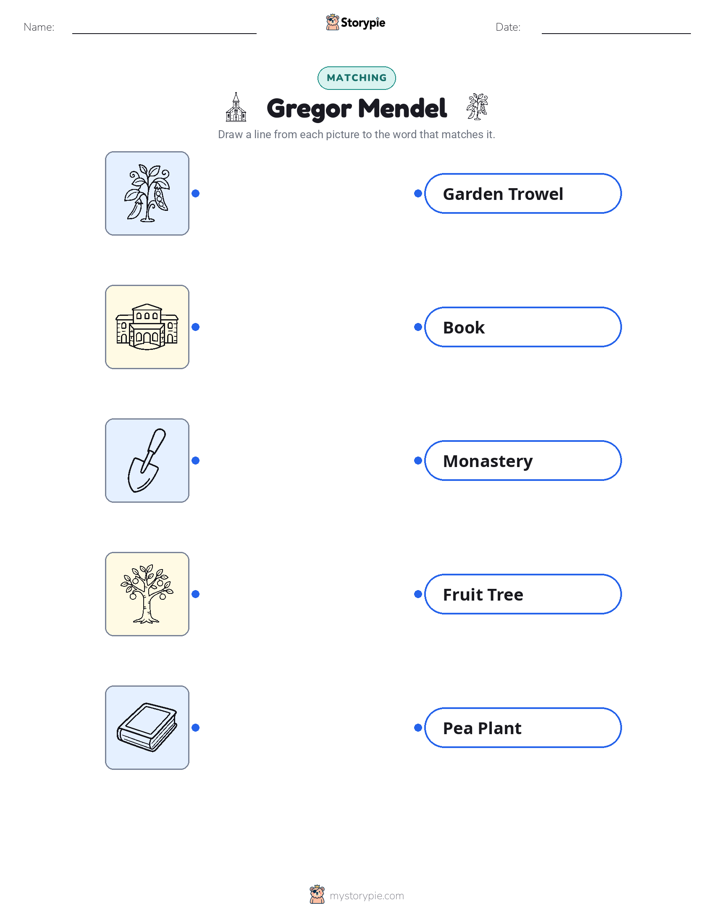
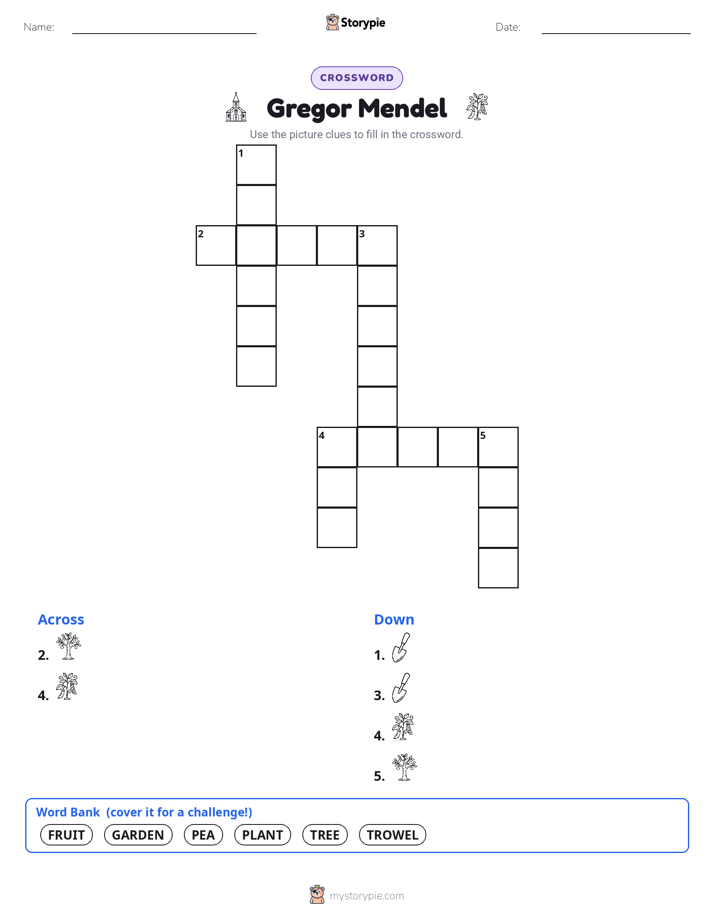
Print & create
Answer keys·No prep·Free with an account
28 worksheets · answer keys · full story · quiz · Ages 10-12 · CEFR B2
Plus adds 208,000+ more stories in 27 languages, audio for every one, and printables for all of them.
Just want Gregor Mendel?
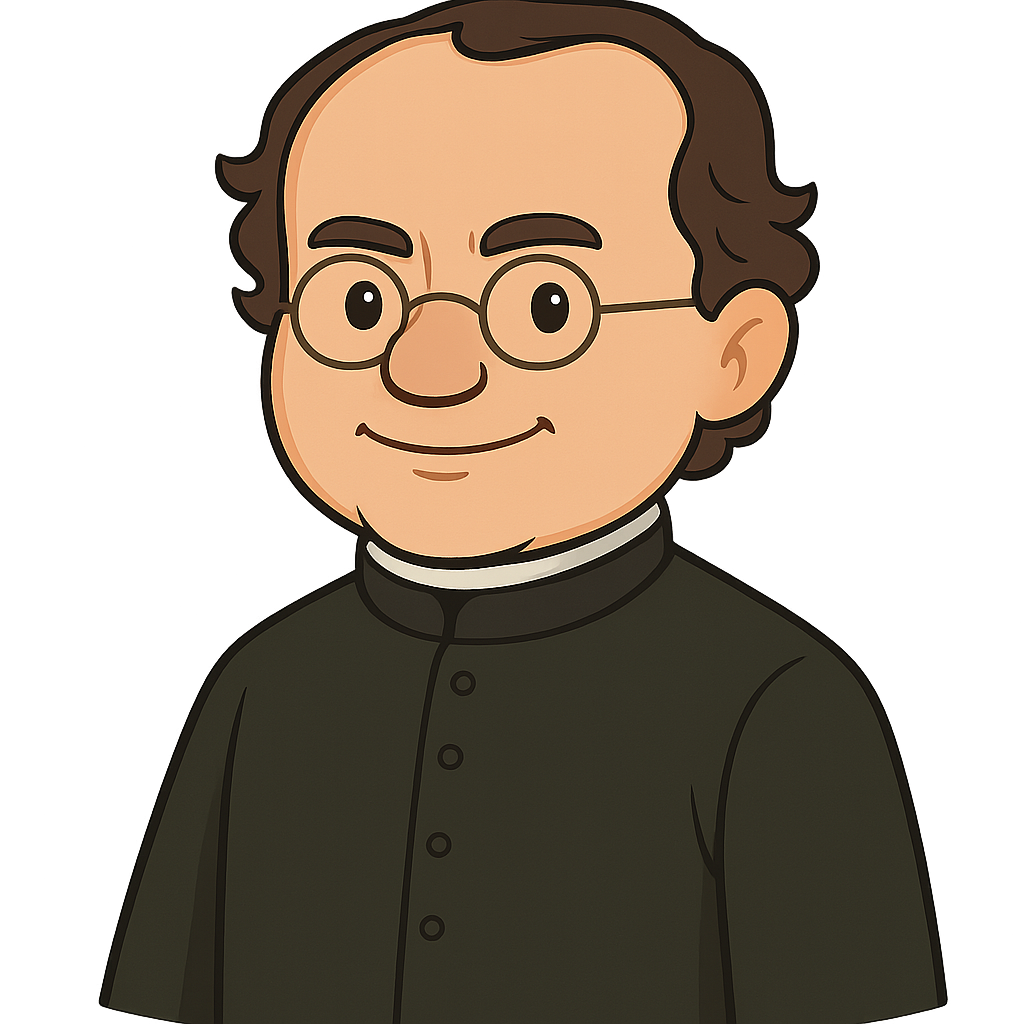
Hello! My name is Gregor Mendel, though when I was a boy, everyone called me Johann. I was born on July 20th, 1822, in a small village called Hynčice, which was then part of the Austrian Empire. I grew up on my family's farm, surrounded by nature. From a very young age, I was fascinated by how things grew. I loved helping my father in our garden, especially grafting fruit trees, which is a special way to join parts of two plants so they grow as one. I was full of questions about the world, and I knew that to find the answers, I needed a good education, something that was quite difficult for a farm boy like me to get at that time.
To continue my studies, I made a life-changing decision in 1843. I joined the Augustinian St. Thomas's Abbey in a city called Brno. It was there I was given my new name, Gregor. Life in the monastery wasn't just about prayer and quiet reflection; it was a center of learning, with a wonderful library and beautiful gardens that reminded me of my childhood. The abbey supported my love of learning and even sent me to the University of Vienna from 1851 to 1853. There, I studied physics, mathematics, and biology. Learning how to use math to understand and explain the patterns of the natural world gave me the precise tools I would need for my most important work.
When I returned to the monastery, I began my most famous experiments around 1856. I wanted to solve the puzzle of heredity—the mystery of how traits are passed down from parents to their children. I chose to study the common garden pea plant because it grew quickly and had many different, easy-to-see traits. For about eight years, I worked patiently in my small garden, carefully cross-pollinating thousands of plants. This meant I was transferring pollen from one plant to another to control which plants bred together. I tracked seven different traits, like the color of the flowers which could be purple or white, the shape of the peas which were either round or wrinkled, and the height of the plants, which were tall or short. I kept very detailed records, counting every single plant and using mathematics to find patterns in my results.
Gregor Mendel
Hello! My name is Gregor Mendel, though when I was a boy, everyone called me Johann. I was born on July 20th, 1822, in a small village called Hynčice, which was then part of the Austrian Empire. I grew up on my family's farm, surrounded by nature. From a very young age, I was fascinated by how things grew. I loved helping my father in our garden, especially grafting fruit trees, which is a special way to join parts of two plants so they grow as one. I was full of questions about the world, and I knew that to find the answers, I needed a good education, something that was quite difficult for a farm boy like me to get at that time.
To continue my studies, I made a life-changing decision in 1843. I joined the Augustinian St. Thomas's Abbey in a city called Brno. It was there I was given my new name, Gregor. Life in the monastery wasn't just about prayer and quiet reflection; it was a center of learning, with a wonderful library and beautiful gardens that reminded me of my childhood. The abbey supported my love of learning and even sent me to the University of Vienna from 1851 to 1853. There, I studied physics, mathematics, and biology. Learning how to use math to understand and explain the patterns of the natural world gave me the precise tools I would need for my most important work.
When I returned to the monastery, I began my most famous experiments around 1856. I wanted to solve the puzzle of heredity—the mystery of how traits are passed down from parents to their children. I chose to study the common garden pea plant because it grew quickly and had many different, easy-to-see traits. For about eight years, I worked patiently in my small garden, carefully cross-pollinating thousands of plants. This meant I was transferring pollen from one plant to another to control which plants bred together. I tracked seven different traits, like the color of the flowers which could be purple or white, the shape of the peas which were either round or wrinkled, and the height of the plants, which were tall or short. I kept very detailed records, counting every single plant and using mathematics to find patterns in my results.
By 1865, after years of careful observation and counting, I was ready to share what I had learned. I presented my findings to the Natural History Society of Brno, a group of local scientists and thinkers. I explained that traits were not simply blended together from the parents. Instead, they were passed on by what I called 'factors'—what we now call genes. I showed that some factors were 'dominant,' meaning they would show up more often, while others were 'recessive,' and could be hidden for a generation. I published my work in a scientific paper in 1866, but sadly, the world of science wasn't ready for my ideas. My paper was mostly ignored by other scientists. Then, in 1868, I was elected abbot of the monastery, and my new duties left me with very little time to continue my scientific research.
I lived to be 61 years old. It wasn't until the early 1900s, many years after my time, that scientists rediscovered my work on pea plants. They realized that my careful experiments had uncovered the fundamental laws of inheritance, which explain how traits are passed from one generation to the next. My discoveries became the foundation for a whole new field of science called genetics. It all started with simple curiosity in a quiet monastery garden, and today I am often called the 'Father of Modern Genetics' because of the secrets those pea plants helped me reveal.
Wow facts
About
Gregor Mendel was an Augustinian friar and scientist who, through his experiments with pea plants between 1856 and 1863, discovered the fundamental laws of inheritance. He is posthumously known as the 'Father of Modern Genetics'.
Take a Quiz
Question 1 of 5
In your own words, summarize the main idea of Gregor Mendel's story.
Explore next


Want to do even more?
Go beyond exploring. Unlock tools that turn every story into real learning.

Storypie Plus for families
Full stories, quizzes, and printables. Nights and car rides, sorted.
- Unlimited audio stories
- Create Mode: your child stars in the story
- Offline downloads
- Printable worksheets & coloring pages

Why Storypie for Schools
Students engaged. Prep in seconds. Evenings back to you.
- Worksheets & Quizzes
- Classroom Management
- Formative Assessment
- Custom Curriculum & Lesson Plans
- 27 Languages

Why Storypie for Homeschool
Curriculum done. They'll ask for more. Hours back in your day.
- Worksheet Generator
- First-Person Audio Stories
- Built-in Comprehension Quizzes
- Custom Curriculum & Lesson Plans
- Print & Go Activities