English

Gregor Mendel
Gregor Mendel was an Augustinian friar and scientist who…
Reads at Grades 3–5 Listens at Grades 1–5
Print & create
Answer keys·No prep·Free with an account
28 worksheets · answer keys · full story · quiz · Ages 8-10 · CEFR B1
Plus adds 208,000+ more stories in 27 languages, audio for every one, and printables for all of them.
Just want Gregor Mendel?
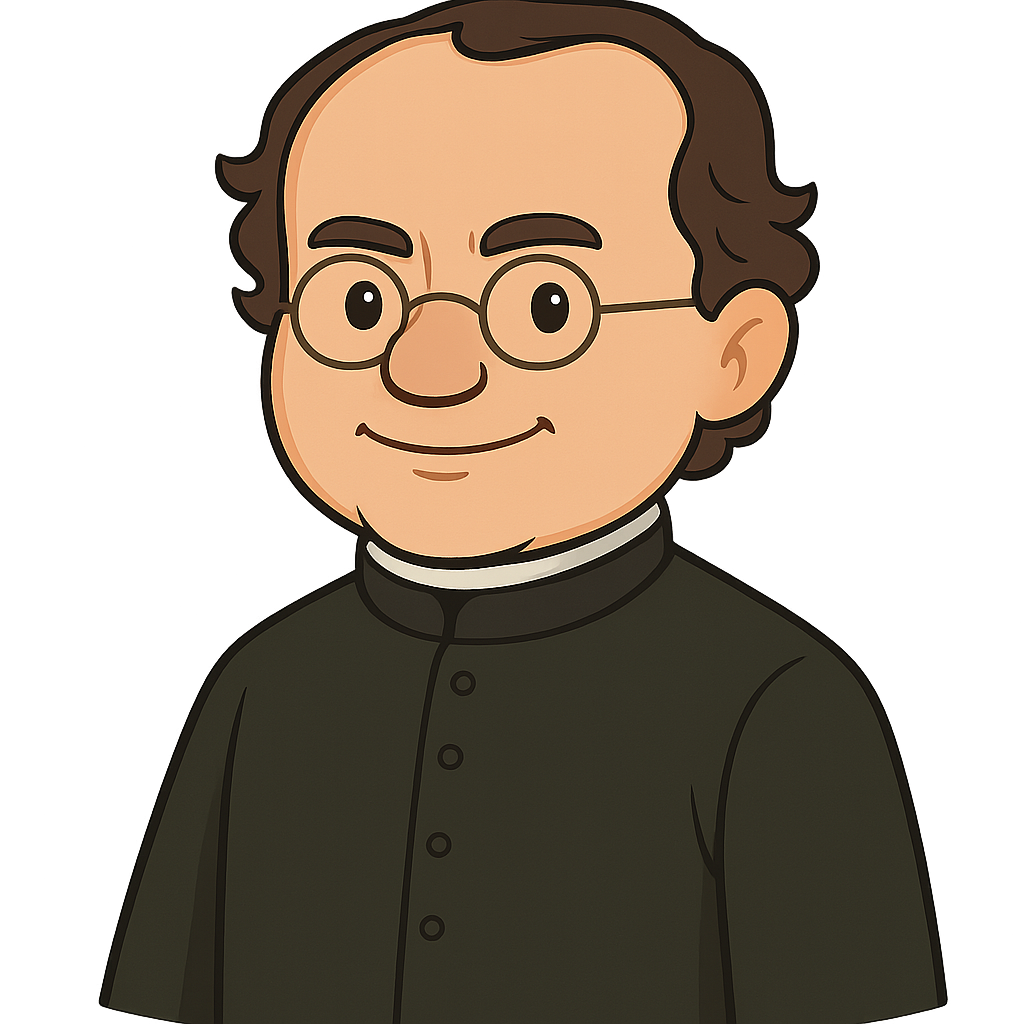
Hello! My name is Gregor Mendel. I want to tell you the story of how my curiosity about plants in my garden helped change the world. I was born on July 20th, 1822, in a small village in what was then the Austrian Empire. Growing up on my family's farm, I was surrounded by nature, and I loved it! I was fascinated by the fruit trees my father cared for and was always asking questions about why plants had certain features and how they grew. This early curiosity set me on a path of discovery.
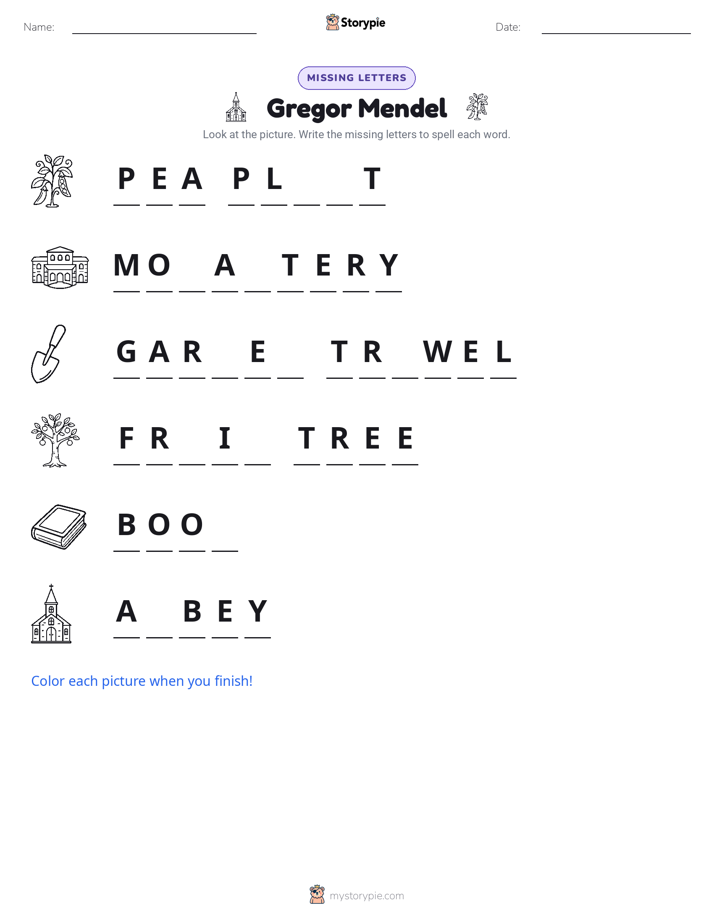
I loved school more than anything, especially my science and math classes. But my family didn't have much money, and it was very difficult for me to continue my education. So, in 1843, when I was 21 years old, I made a big decision. I joined a monastery called the Abbey of St. Thomas in a city named Brünn. Living in the abbey meant I could become a teacher and a scientist without having to worry about money for school or living expenses. The abbey supported my love of learning and even sent me to the University of Vienna in 1851. There, I learned all about physics, mathematics, and the best ways to design scientific experiments to get clear results.
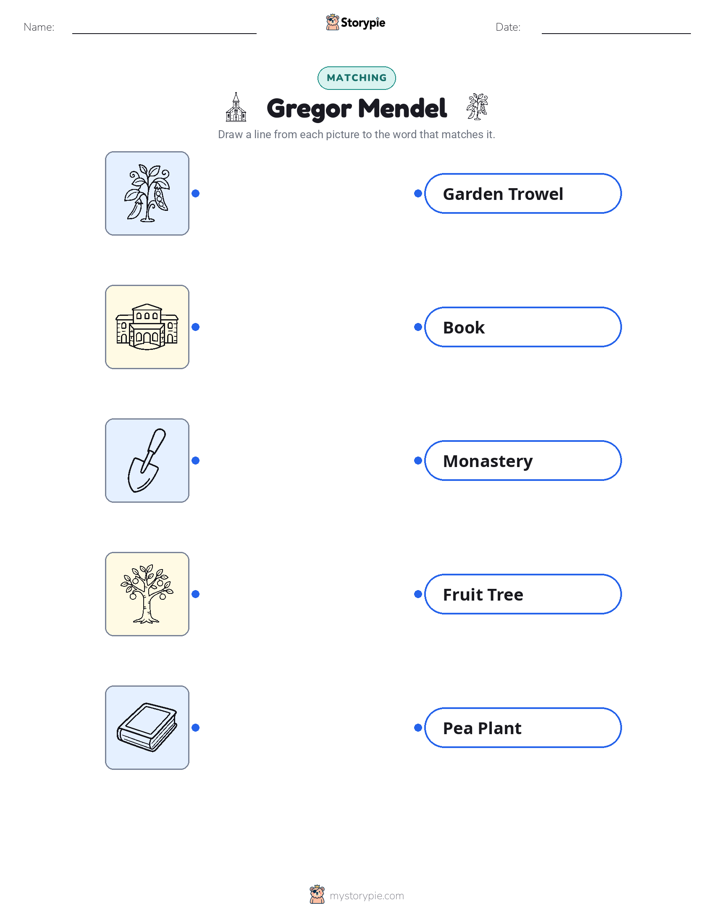
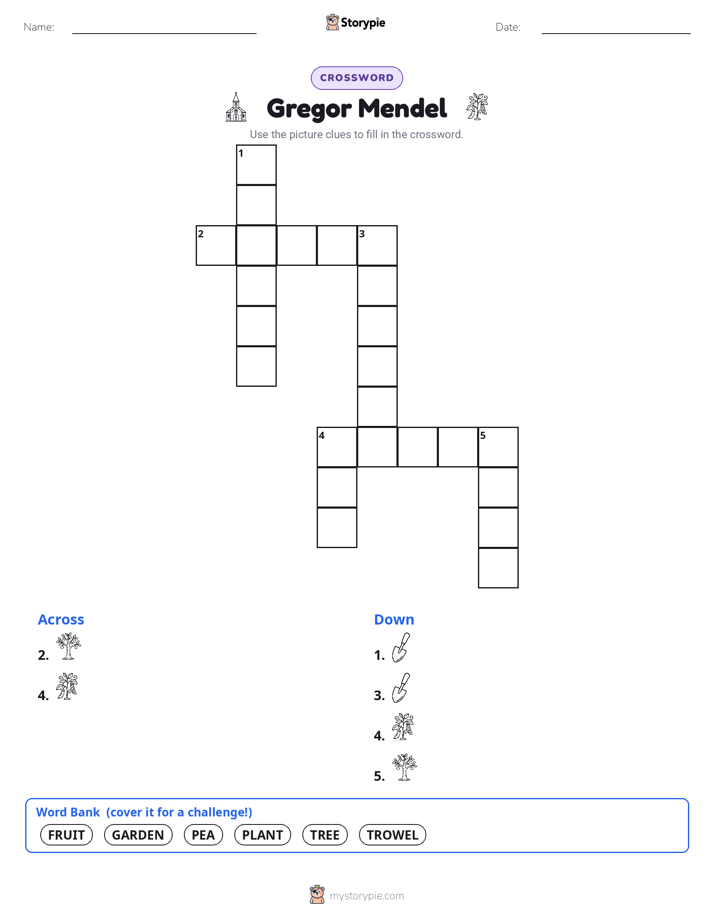
When I returned to the monastery, I had a very big question buzzing in my mind: How do parents—whether they're people, animals, or plants—pass their features, or 'traits,' to their children? To find the answer, I decided to turn a part of the monastery garden into my very own science laboratory. I began my famous experiments between the years 1856 and 1863. For my research, I chose to work with pea plants. I picked them for a few important reasons: they grow quickly, and they have lots of easy-to-see traits, like being tall or short, having purple or white flowers, or growing peas that were either round or wrinkled.
Gregor Mendel
Hello! My name is Gregor Mendel. I want to tell you the story of how my curiosity about plants in my garden helped change the world. I was born on July 20th, 1822, in a small village in what was then the Austrian Empire. Growing up on my family's farm, I was surrounded by nature, and I loved it! I was fascinated by the fruit trees my father cared for and was always asking questions about why plants had certain features and how they grew. This early curiosity set me on a path of discovery.
I loved school more than anything, especially my science and math classes. But my family didn't have much money, and it was very difficult for me to continue my education. So, in 1843, when I was 21 years old, I made a big decision. I joined a monastery called the Abbey of St. Thomas in a city named Brünn. Living in the abbey meant I could become a teacher and a scientist without having to worry about money for school or living expenses. The abbey supported my love of learning and even sent me to the University of Vienna in 1851. There, I learned all about physics, mathematics, and the best ways to design scientific experiments to get clear results.
When I returned to the monastery, I had a very big question buzzing in my mind: How do parents—whether they're people, animals, or plants—pass their features, or 'traits,' to their children? To find the answer, I decided to turn a part of the monastery garden into my very own science laboratory. I began my famous experiments between the years 1856 and 1863. For my research, I chose to work with pea plants. I picked them for a few important reasons: they grow quickly, and they have lots of easy-to-see traits, like being tall or short, having purple or white flowers, or growing peas that were either round or wrinkled.
For almost eight years, I carefully worked with thousands and thousands of pea plants. I used a tiny brush to move pollen from one plant to another, acting like a busy bee to control which plants were parents to the new seeds. I kept very careful notes, tracking every single plant and counting all of the results. Through this hard work, I discovered that some traits were 'dominant' and would show up more often, while others were 'recessive' and would seem to hide for a generation. I realized that living things inherit these traits in pairs, getting one from each parent. I presented my findings to other scientists in 1865, but at the time, not many people understood how important my discoveries were. A few years later, in 1868, I became the leader, or abbot, of my monastery, which kept me very busy with new duties.
I lived to be 61 years old, and I spent my later years leading the monastery. It wasn't until long after my time, around the year 1900, that other scientists found my work again. Suddenly, everyone realized that my experiments with pea plants had uncovered the secret rules of how traits are passed down, a science we call heredity! Today, my discoveries are the foundation for the science of genetics. That is why people often call me the 'Father of Modern Genetics.' My work helps us understand everything from why you have your family's eye color to how we can grow healthier food for the world.
Wow facts
About
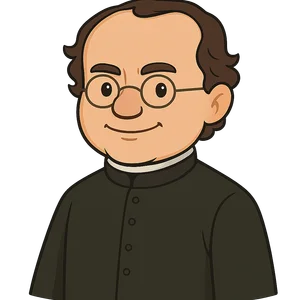
Gregor Mendel was an Augustinian friar and scientist who, through his experiments with pea plants between 1856 and 1863, discovered the fundamental laws of inheritance. He is posthumously known as the 'Father of Modern Genetics'.
Take a Quiz
Question 1 of 5
What does the word 'traits' mean in this story?
Explore next



Want to do even more?
Go beyond exploring. Unlock tools that turn every story into real learning.

Storypie Plus for families
Full stories, quizzes, and printables. Nights and car rides, sorted.
- Unlimited audio stories
- Create Mode: your child stars in the story
- Offline downloads
- Printable worksheets & coloring pages

Why Storypie for Schools
Students engaged. Prep in seconds. Evenings back to you.
- Worksheets & Quizzes
- Classroom Management
- Formative Assessment
- Custom Curriculum & Lesson Plans
- 27 Languages

Why Storypie for Homeschool
Curriculum done. They'll ask for more. Hours back in your day.
- Worksheet Generator
- First-Person Audio Stories
- Built-in Comprehension Quizzes
- Custom Curriculum & Lesson Plans
- Print & Go Activities