English

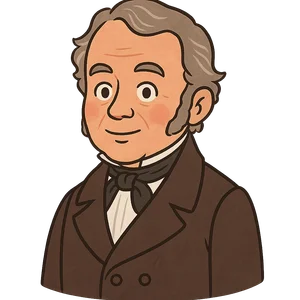
Hans Christian Ørsted
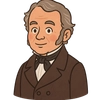
Hans Christian Ørsted was a Danish physicist and chemist who discovered in 1820 that electric currents create…
Reads at Grades 6–8 Listens at Grades 4–8
Print & create
Answer keys·No prep·Free with an account
28 worksheets · answer keys · full story · quiz · Ages 10-12 · CEFR B2
Plus adds 164,000+ more stories in 27 languages, audio for every one, and printables for all of them.
Just want Hans Christian Ørsted?
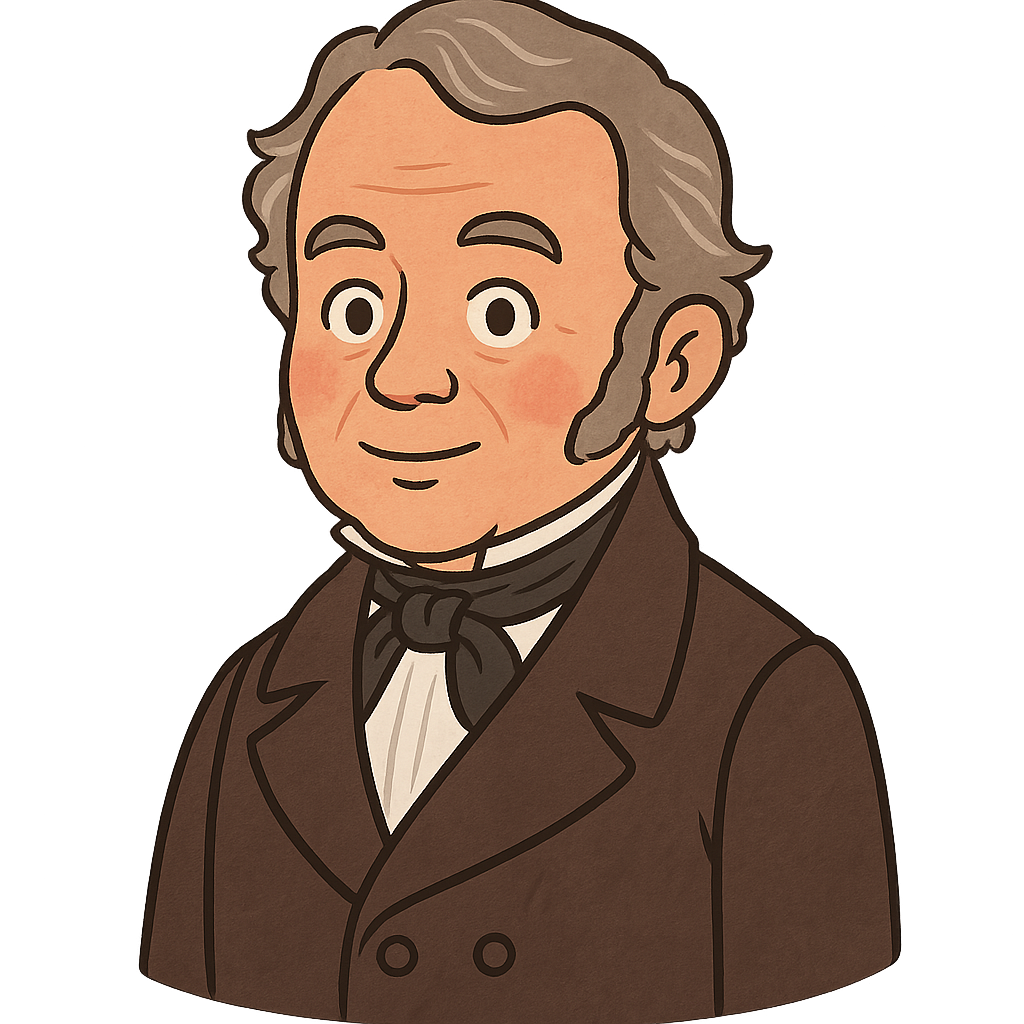
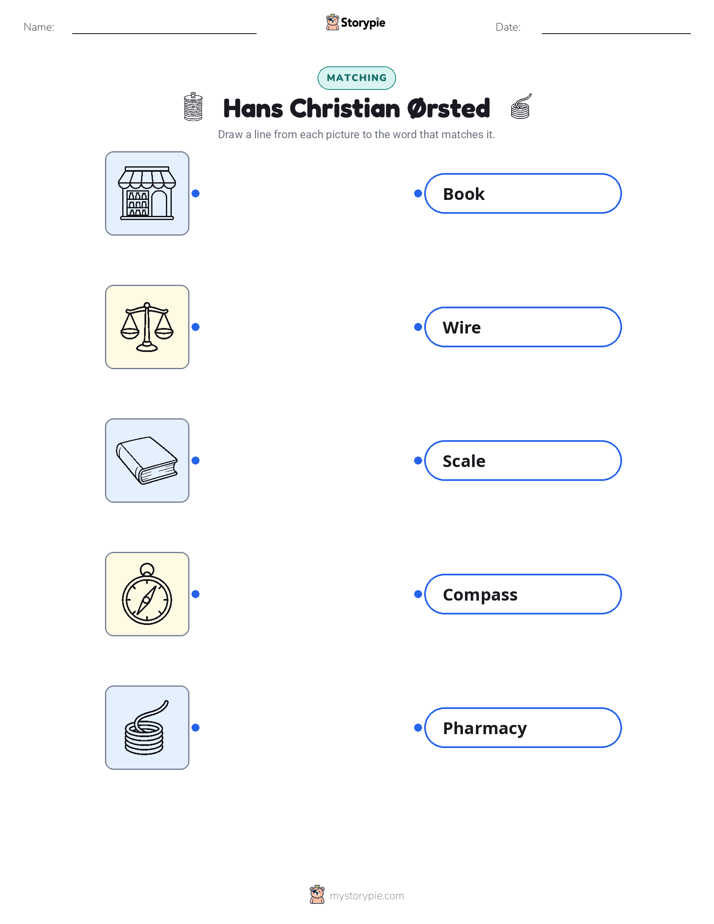
Hello, my name is Hans Christian Ørsted, and my story is about how a curious observation connected two of the world's most mysterious forces. I was born on August 14th, 1777, in the small town of Rudkøbing, Denmark. My world began in my father’s pharmacy, which was less a shop and more a laboratory to my young eyes. Surrounded by chemicals, scales, and strange glass containers, I discovered a deep love for experiments. I wasn't alone in my curiosity; my younger brother, Anders, was my constant companion. We didn't attend a formal school at first. Instead, we educated ourselves, reading every book we could find and discussing our ideas late into the night. This shared passion for learning built a strong bond between us and set me on a path to explore the hidden workings of the natural world. Our home was our first classroom, and the world outside was a puzzle we were determined to solve together. The pharmacy taught me to be precise and observant, skills that would one day lead me to a discovery that would change science forever.
My hunger for knowledge grew with me, and in 1793, I was thrilled to enroll at the University of Copenhagen. For me, the world was not a collection of separate subjects but a single, interconnected masterpiece. I held a strong belief that all parts of nature were linked, a philosophy that guided my studies. This is why I didn't just focus on science; I also immersed myself in philosophy, wanting to understand the deep principles that govern our universe. In 1799, I earned my doctorate, but my education was far from over. In the early 1800s, I embarked on a journey across Europe. Traveling was my university after university. I met with some of the greatest scientific minds of my time, debating ideas about chemistry, electricity, and the nature of force. These conversations were incredibly valuable, challenging my assumptions and helping me refine my own theories about the unity of nature. Each new city and every new scientist I met added a piece to the puzzle I was trying to assemble, pushing me closer to the questions that would define my career.
Hans Christian Ørsted: A Force of Nature
Hello, my name is Hans Christian Ørsted, and my story is about how a curious observation connected two of the world's most mysterious forces. I was born on August 14th, 1777, in the small town of Rudkøbing, Denmark. My world began in my father’s pharmacy, which was less a shop and more a laboratory to my young eyes. Surrounded by chemicals, scales, and strange glass containers, I discovered a deep love for experiments. I wasn't alone in my curiosity; my younger brother, Anders, was my constant companion. We didn't attend a formal school at first. Instead, we educated ourselves, reading every book we could find and discussing our ideas late into the night. This shared passion for learning built a strong bond between us and set me on a path to explore the hidden workings of the natural world. Our home was our first classroom, and the world outside was a puzzle we were determined to solve together. The pharmacy taught me to be precise and observant, skills that would one day lead me to a discovery that would change science forever.
My hunger for knowledge grew with me, and in 1793, I was thrilled to enroll at the University of Copenhagen. For me, the world was not a collection of separate subjects but a single, interconnected masterpiece. I held a strong belief that all parts of nature were linked, a philosophy that guided my studies. This is why I didn't just focus on science; I also immersed myself in philosophy, wanting to understand the deep principles that govern our universe. In 1799, I earned my doctorate, but my education was far from over. In the early 1800s, I embarked on a journey across Europe. Traveling was my university after university. I met with some of the greatest scientific minds of my time, debating ideas about chemistry, electricity, and the nature of force. These conversations were incredibly valuable, challenging my assumptions and helping me refine my own theories about the unity of nature. Each new city and every new scientist I met added a piece to the puzzle I was trying to assemble, pushing me closer to the questions that would define my career.
After my travels, I returned to the University of Copenhagen and became a professor in 1806. I loved teaching and sharing the wonders of science with my students. My lectures were often filled with live demonstrations, as I believed seeing science in action was the best way to learn. One fateful day during a lecture in the spring of 1820, I was demonstrating the heating effects of an electric current running through a wire. On my lecture table, among other equipment, was a simple magnetic compass. As I connected the circuit to a battery, something remarkable happened. Out of the corner of my eye, I saw the needle of the compass twitch and move. This was completely unexpected. At the time, the worlds of electricity and magnetism were considered entirely separate. No one believed one could affect the other. I paused, unsure of what I had just witnessed. Did the students see it? I repeated the action, and again, the needle danced, turning to point away from its usual north. In that quiet, astonishing moment, I realized I had stumbled upon something that defied everything we thought we knew. It was a crack in the foundation of physics, and I knew I had to understand what it meant.
That brief, accidental observation in my classroom sparked an intense period of investigation. For the next three months, I dedicated myself to careful experimentation, determined to prove that what I had seen was not a fluke. I worked tirelessly in my laboratory, testing the effect from every angle. I moved the wire above the compass, below it, and to the side. I changed the direction of the electric current. Every single time, the magnetic needle reacted, its movement directly related to the position and flow of the electricity. It was clear and undeniable: an electric current creates a magnetic field around it. In July 1820, after confirming my results again and again, I published my findings in a short paper and sent it to scientists across Europe. The news created a wave of excitement throughout the scientific community. My discovery proved a direct link between electricity and magnetism, two forces previously thought to be unrelated. This revelation launched an entirely new field of science we now call electromagnetism. My work immediately inspired other great minds, like André-Marie Ampère and Michael Faraday, who built upon my foundation to unlock even more secrets of the universe.
My curiosity was not satisfied with just one major discovery. While the world of electromagnetism was taking off, I continued my work in other areas of science, particularly chemistry. In 1825, I achieved another significant breakthrough when I became the first person to isolate the element aluminum. At the time, aluminum was incredibly rare and valuable because it was so difficult to separate from its ore. My process was an important first step toward making this lightweight and useful metal available to the world. Beyond my own research, I held a deep conviction that science should be accessible to everyone, not just university scholars. I believed that a nation's progress depended on its people's understanding of science and technology. This passion for public education led me to campaign for the creation of a new kind of school. In 1829, my dream became a reality when I helped found the institution that is now known as the Technical University of Denmark, creating a place where practical science and engineering could flourish for generations to come.
I spent my life chasing the connections I believed existed throughout nature, and my work revealed a fundamental truth about our universe. I lived to be 73 years old before passing away on March 9th, 1851. The principle of electromagnetism that I discovered in my classroom that day became the foundation for countless modern technologies, from the electric motors that power our world to the generators that provide our light. My legacy is woven into the very fabric of our electrical age. To honor my contribution, the scientific community named the unit of magnetic field strength the "oersted." It serves as a permanent reminder that even the most powerful forces in the universe can be revealed by a moment of quiet observation and fearless curiosity.
Wow facts
About
Hans Christian Ørsted was a Danish physicist and chemist who discovered in 1820 that electric currents create magnetic fields, a fundamental principle of electromagnetism.
Take a Quiz
Question 1 of 5
What is the central theme of this story about Hans Christian Ørsted's life?
Explore next


Want to do even more?
Go beyond exploring. Unlock tools that turn every story into real learning.

Storypie Plus for families
Full stories, quizzes, and printables. Nights and car rides, sorted.
- Unlimited audio stories
- Create Mode: your child stars in the story
- Offline downloads
- Printable worksheets & coloring pages

Why Storypie for Schools
Students engaged. Prep in seconds. Evenings back to you.
- Worksheets & Quizzes
- Classroom Management
- Formative Assessment
- Custom Curriculum & Lesson Plans
- 27 Languages

Why Storypie for Homeschool
Curriculum done. They'll ask for more. Hours back in your day.
- Worksheet Generator
- First-Person Audio Stories
- Built-in Comprehension Quizzes
- Custom Curriculum & Lesson Plans
- Print & Go Activities