English

Henri Becquerel
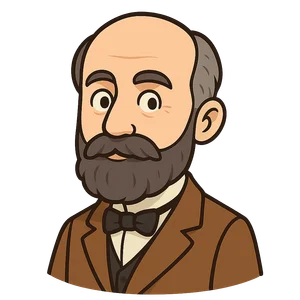
Henri Becquerel was a French physicist who discovered spontaneous radioactivity in 1896.
Reads at Grades 6–8 Listens at Grades 4–8
Print & create
Answer keys·No prep·Free with an account
28 worksheets · answer keys · full story · quiz · Ages 10-12 · CEFR B2
Plus adds 244,000+ more stories in 27 languages, audio for every one, and printables for all of them.
Just want Henri Becquerel?
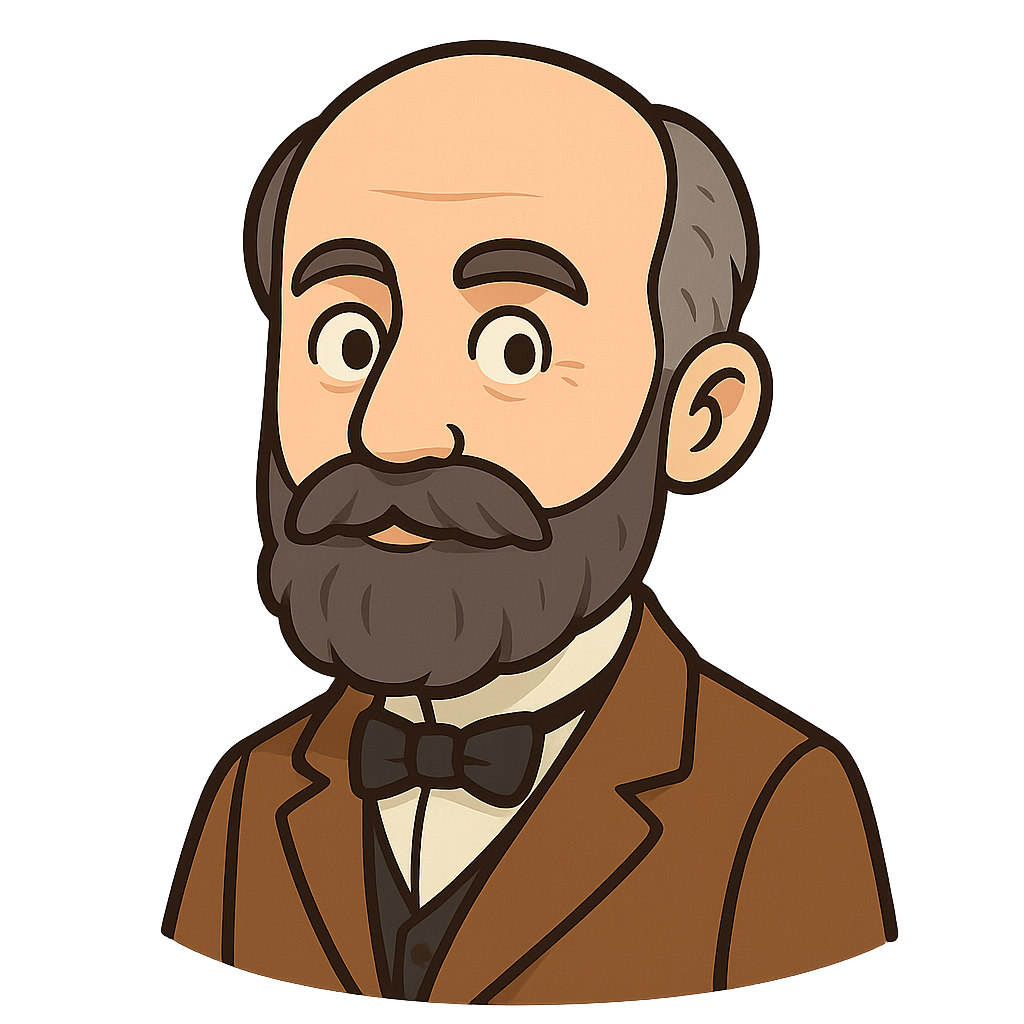
Hello! My name is Henri Becquerel, and I’d like to tell you a story about a surprising discovery. I was born in Paris, France, on December 15th, 1852, into a family where science was everything. My grandfather, Antoine, and my father, Alexandre-Edmond, were both famous physicists who studied the natural world. Our home was always filled with fascinating experiments and conversations about light, electricity, and other mysteries. Following in their footsteps felt like the most natural thing to do, and in 1892, I was honored to become a professor at the same museum where they had both worked, the Muséum National d'Histoire Naturelle. This position allowed me to continue my family's legacy of scientific inquiry.
My father had studied things that glow in the dark, a property called phosphorescence, and I was fascinated by this phenomenon, too. I wanted to understand how some materials could soak up sunlight and then release it slowly as a gentle glow. Around this time, in 1895, a German scientist named Wilhelm Röntgen made an astonishing discovery: invisible rays that could pass through solid objects. He called them X-rays, and this news electrified the scientific world. I began to wonder if there was a connection between these two ideas. Could the glowing, phosphorescent materials I studied also be creating these mysterious X-rays when they were exposed to the sun?
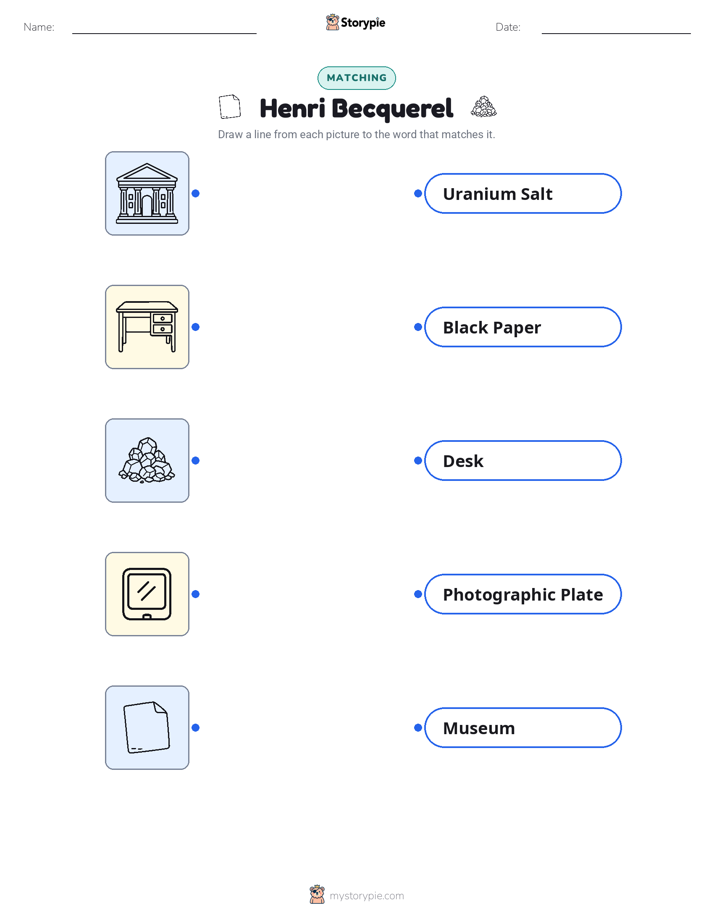
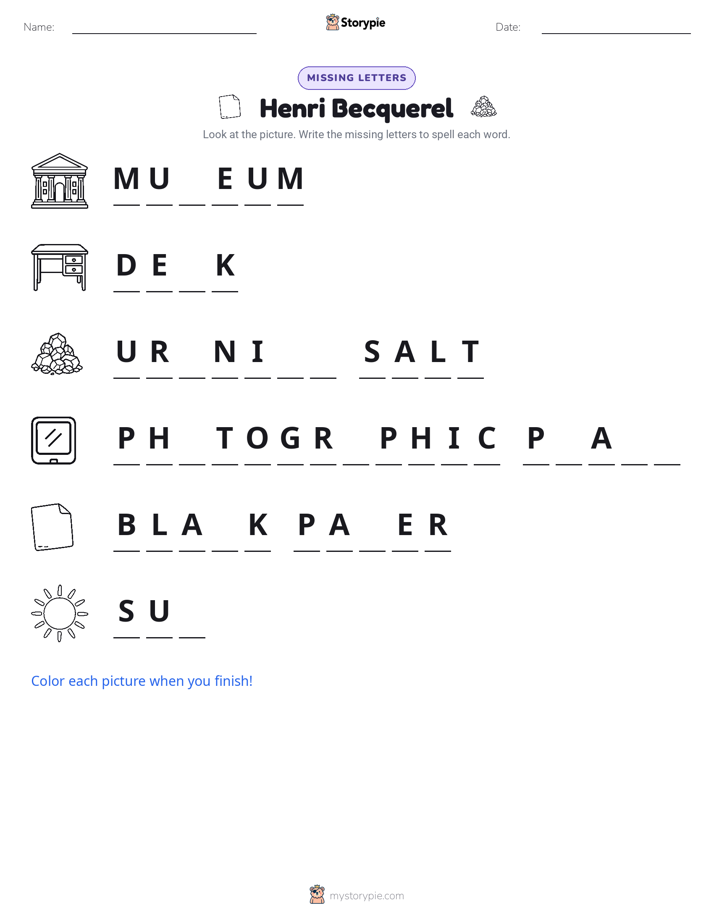
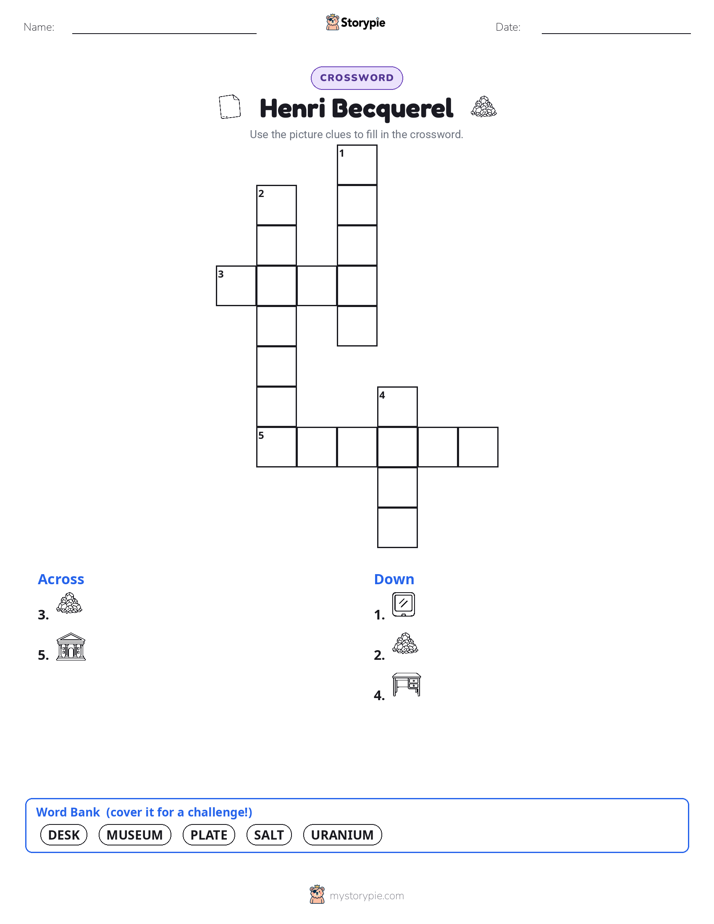
In February of 1896, I designed an experiment to test my hypothesis. I took some uranium salts, which I knew were strongly phosphorescent, and placed them on top of a photographic plate. This plate was wrapped tightly in thick, black paper to ensure no light could get in. My plan was to leave the entire setup in the bright Paris sun. I believed the sunlight would energize the uranium, causing it to release X-rays that would pass through the paper and leave an image on the plate inside. But science does not always go according to plan. The weather turned cloudy and gray for several days, making my experiment impossible. Disappointed, I put my entire experiment—the uranium salts and the wrapped plate—away in a dark desk drawer to wait for a sunny day.
Henri Becquerel: A Discovery in the Dark
Hello! My name is Henri Becquerel, and I’d like to tell you a story about a surprising discovery. I was born in Paris, France, on December 15th, 1852, into a family where science was everything. My grandfather, Antoine, and my father, Alexandre-Edmond, were both famous physicists who studied the natural world. Our home was always filled with fascinating experiments and conversations about light, electricity, and other mysteries. Following in their footsteps felt like the most natural thing to do, and in 1892, I was honored to become a professor at the same museum where they had both worked, the Muséum National d'Histoire Naturelle. This position allowed me to continue my family's legacy of scientific inquiry.
My father had studied things that glow in the dark, a property called phosphorescence, and I was fascinated by this phenomenon, too. I wanted to understand how some materials could soak up sunlight and then release it slowly as a gentle glow. Around this time, in 1895, a German scientist named Wilhelm Röntgen made an astonishing discovery: invisible rays that could pass through solid objects. He called them X-rays, and this news electrified the scientific world. I began to wonder if there was a connection between these two ideas. Could the glowing, phosphorescent materials I studied also be creating these mysterious X-rays when they were exposed to the sun?
In February of 1896, I designed an experiment to test my hypothesis. I took some uranium salts, which I knew were strongly phosphorescent, and placed them on top of a photographic plate. This plate was wrapped tightly in thick, black paper to ensure no light could get in. My plan was to leave the entire setup in the bright Paris sun. I believed the sunlight would energize the uranium, causing it to release X-rays that would pass through the paper and leave an image on the plate inside. But science does not always go according to plan. The weather turned cloudy and gray for several days, making my experiment impossible. Disappointed, I put my entire experiment—the uranium salts and the wrapped plate—away in a dark desk drawer to wait for a sunny day.
After a few days, on March 1st, 1896, I decided to develop the photographic plate anyway. I didn't expect to see anything significant, perhaps a very faint blur at most, since it had not been exposed to the sun. But when I pulled the plate from the chemical bath, I was stunned. There was a sharp, clear image of the uranium crystals! How was this possible? The experiment had been sitting in a pitch-black drawer, completely shielded from any light. The only conclusion was that the uranium had emitted powerful, penetrating rays all on its own, with no energy from the sun at all. This was not phosphorescence, and it wasn't the same as Röntgen's X-rays. It was something entirely new, a property coming from deep within the uranium itself. I had accidentally discovered what we now call radioactivity.
My discovery opened up a whole new field of physics and changed our understanding of the world. It caught the attention of two brilliant scientists, Marie and Pierre Curie. They took my findings and expanded on them, discovering other radioactive elements like polonium and radium, and it was Marie who gave the phenomenon its name: radioactivity. Our combined work was very exciting, and in 1903, the three of us were awarded the Nobel Prize in Physics for our research. It was one of the proudest moments of my life. My discovery showed that atoms were not simple, solid balls but had complex, powerful energy hidden inside them. I lived to be 55 years old, passing away in 1908. I am so proud that my accidental discovery in a dark drawer helped to unlock the secrets of the atom and change our understanding of the universe forever.
Wow facts
About
Henri Becquerel was a French physicist who discovered spontaneous radioactivity in 1896. He shared the 1903 Nobel Prize in Physics with Marie and Pierre Curie for this groundbreaking work.
Take a Quiz
Question 1 of 5
Why did Henri Becquerel put his experiment away in a drawer in February 1896?
Explore next






Want to do even more?
Go beyond exploring. Unlock tools that turn every story into real learning.

Storypie Plus for families
Full stories, quizzes, and printables. Nights and car rides, sorted.
- Unlimited audio stories
- Create Mode: your child stars in the story
- Offline downloads
- Printable worksheets & coloring pages

Why Storypie for Schools
Students engaged. Prep in seconds. Evenings back to you.
- Worksheets & Quizzes
- Classroom Management
- Formative Assessment
- Custom Curriculum & Lesson Plans
- 27 Languages

Why Storypie for Homeschool
Curriculum done. They'll ask for more. Hours back in your day.
- Worksheet Generator
- First-Person Audio Stories
- Built-in Comprehension Quizzes
- Custom Curriculum & Lesson Plans
- Print & Go Activities