English

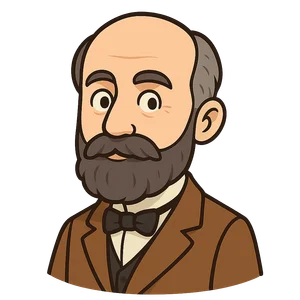
Henri Becquerel
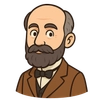
Henri Becquerel was a French physicist who discovered spontaneous radioactivity in 1896.
Reads at Grades 3–5 Listens at Grades 1–5
Print & create
Answer keys·No prep·Free with an account
28 worksheets · answer keys · full story · quiz · Ages 8-10 · CEFR B1
Plus adds 244,000+ more stories in 27 languages, audio for every one, and printables for all of them.
Just want Henri Becquerel?
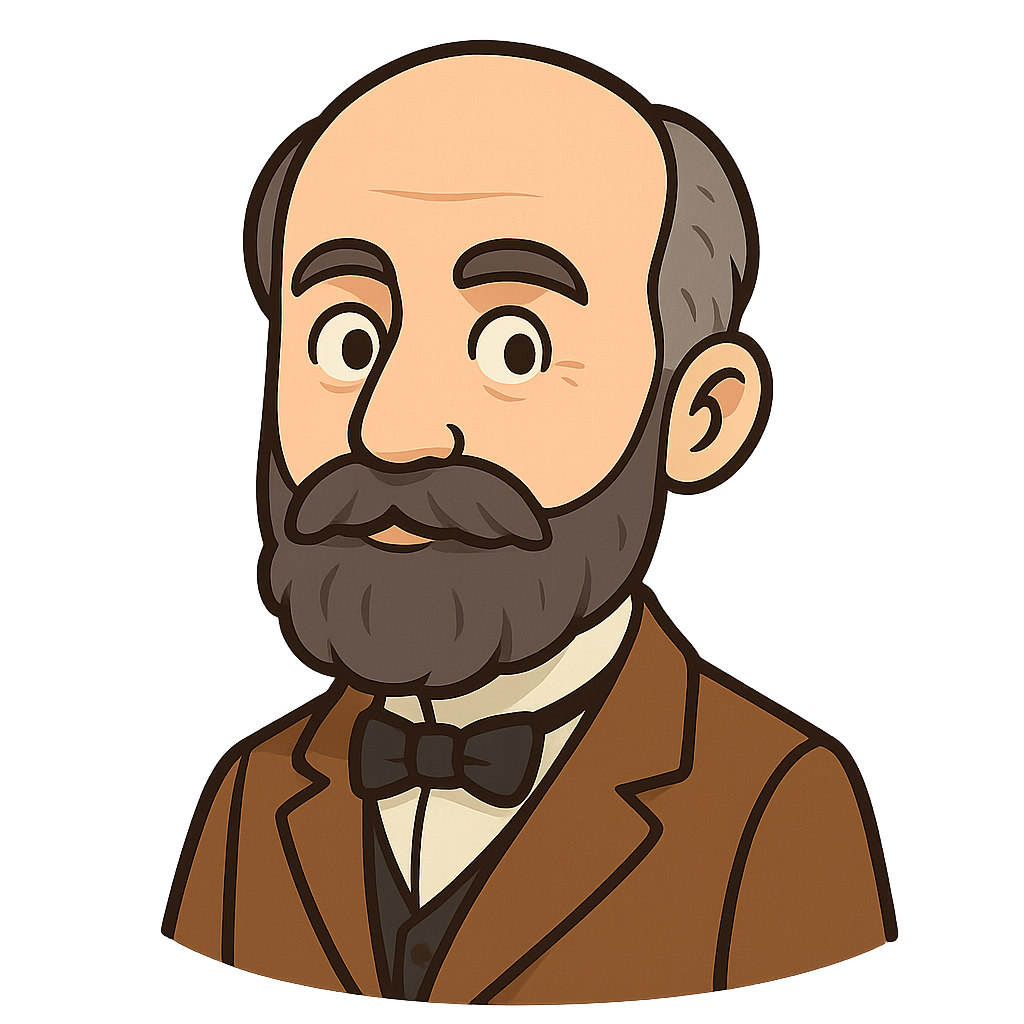
Hello! My name is Antoine Henri Becquerel, but you can call me Henri. I was born in Paris, France, on December 15th, 1852. Science was the family business! My grandfather, Antoine César, and my father, Alexandre-Edmond, were both very famous physicists. Our house was filled with interesting experiments and conversations about how the world worked. Growing up, I loved learning about light and how some special materials, called minerals, could glow in the dark after soaking up sunlight. It was like they held a secret light inside them! This magic was called 'phosphorescence', and my father was an expert on it. I knew from a very young age that I wanted to follow in their footsteps and uncover my own scientific secrets.
I studied hard in school and became an engineer in 1877. But my heart was always in pure science and research. I soon began working at the Muséum National d'Histoire Naturelle, the same place where my father and grandfather had worked. It felt like coming home. In 1892, I became a professor there, which was a great honor. I spent my days studying crystals and the fascinating ways they interacted with light. I was particularly interested in the glowing minerals my father had studied. I wanted to understand exactly what was happening when they absorbed sunlight and then glowed with their own beautiful colors. I had no idea that this curiosity would lead me to one of the biggest discoveries of my time.
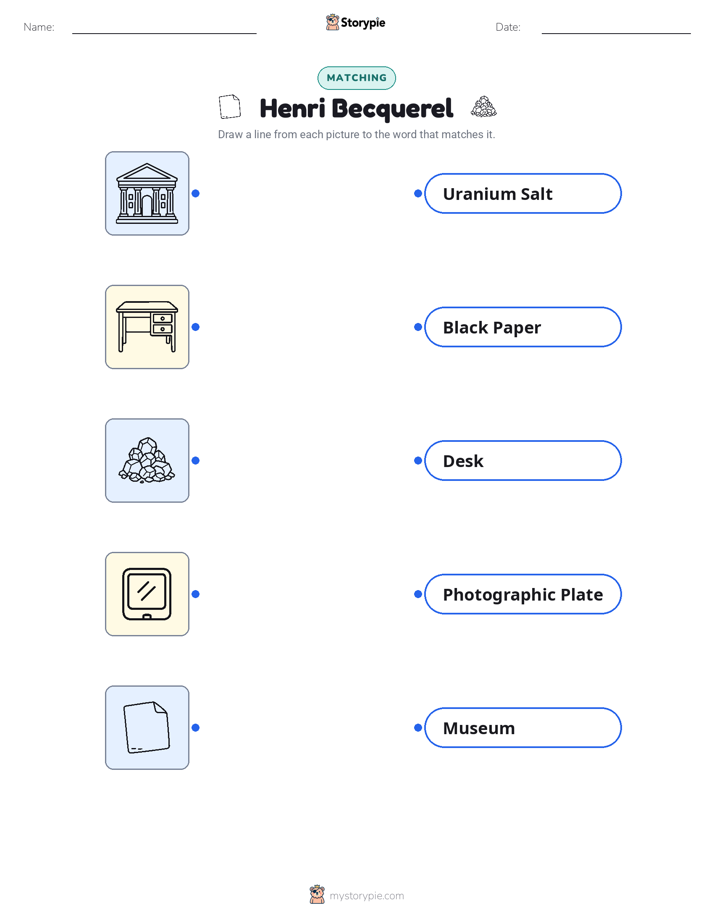
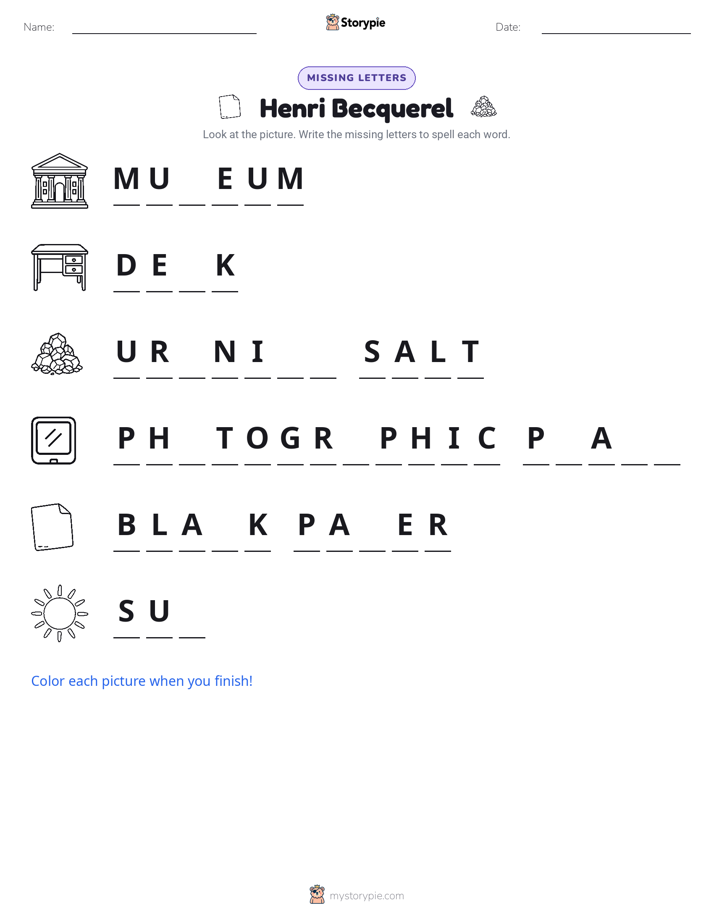
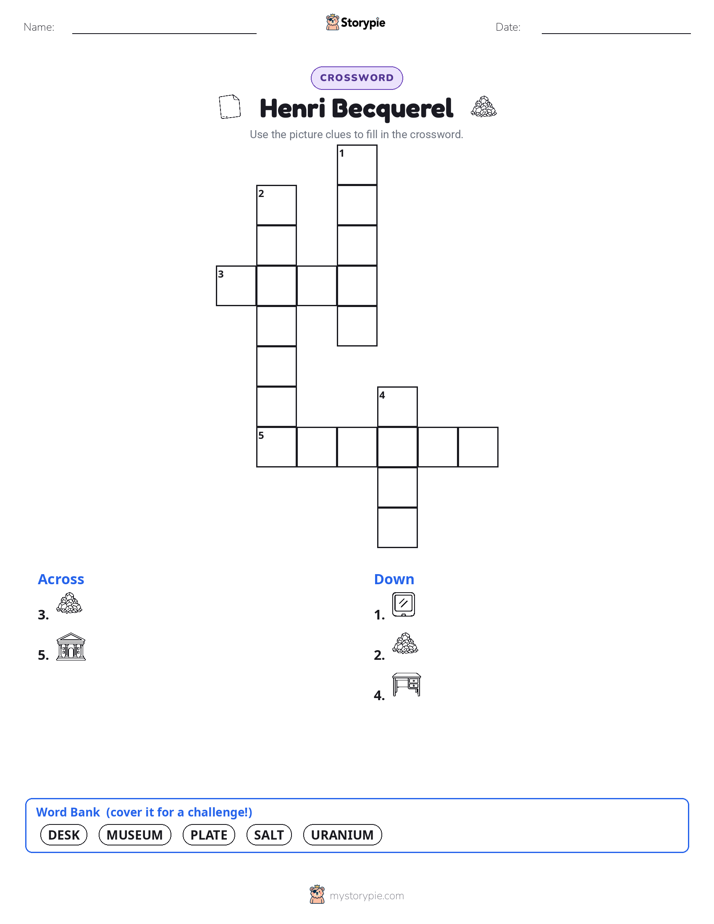
My research took an exciting turn in 1895, when a scientist named Wilhelm Röntgen discovered something amazing called X-rays—invisible rays that could pass through solid objects! This made me wonder if my glowing minerals might produce X-rays when they were energized by the sun. So, in February of 1896, I set up an experiment. I took a mineral called uranium salt, which I knew glowed brightly after being in the sun. I placed it on top of a photographic plate that was carefully wrapped in thick, black paper so no light could get in. My plan was to leave it in the sun, then see if the mineral had emitted rays that passed through the paper and made a mark on the plate. But something funny happened: the Paris sky was gray and cloudy for days! I couldn't do my experiment, so I put the whole setup—the uranium salt still sitting on the wrapped plate—into a dark desk drawer. On March 1st, 1896, I decided to develop the plate anyway. I didn't expect to see anything. But when I looked, I was stunned! There was a perfectly clear, dark shape of the mineral on the plate. The uranium had emitted powerful rays all on its own, without any sunlight! It was a completely new kind of energy, coming from inside the uranium itself. I had discovered spontaneous radioactivity!
Henri Becquerel: A Glowing Discovery
Hello! My name is Antoine Henri Becquerel, but you can call me Henri. I was born in Paris, France, on December 15th, 1852. Science was the family business! My grandfather, Antoine César, and my father, Alexandre-Edmond, were both very famous physicists. Our house was filled with interesting experiments and conversations about how the world worked. Growing up, I loved learning about light and how some special materials, called minerals, could glow in the dark after soaking up sunlight. It was like they held a secret light inside them! This magic was called 'phosphorescence', and my father was an expert on it. I knew from a very young age that I wanted to follow in their footsteps and uncover my own scientific secrets.
I studied hard in school and became an engineer in 1877. But my heart was always in pure science and research. I soon began working at the Muséum National d'Histoire Naturelle, the same place where my father and grandfather had worked. It felt like coming home. In 1892, I became a professor there, which was a great honor. I spent my days studying crystals and the fascinating ways they interacted with light. I was particularly interested in the glowing minerals my father had studied. I wanted to understand exactly what was happening when they absorbed sunlight and then glowed with their own beautiful colors. I had no idea that this curiosity would lead me to one of the biggest discoveries of my time.
My research took an exciting turn in 1895, when a scientist named Wilhelm Röntgen discovered something amazing called X-rays—invisible rays that could pass through solid objects! This made me wonder if my glowing minerals might produce X-rays when they were energized by the sun. So, in February of 1896, I set up an experiment. I took a mineral called uranium salt, which I knew glowed brightly after being in the sun. I placed it on top of a photographic plate that was carefully wrapped in thick, black paper so no light could get in. My plan was to leave it in the sun, then see if the mineral had emitted rays that passed through the paper and made a mark on the plate. But something funny happened: the Paris sky was gray and cloudy for days! I couldn't do my experiment, so I put the whole setup—the uranium salt still sitting on the wrapped plate—into a dark desk drawer. On March 1st, 1896, I decided to develop the plate anyway. I didn't expect to see anything. But when I looked, I was stunned! There was a perfectly clear, dark shape of the mineral on the plate. The uranium had emitted powerful rays all on its own, without any sunlight! It was a completely new kind of energy, coming from inside the uranium itself. I had discovered spontaneous radioactivity!
My discovery caused a huge stir in the scientific world. Two of my brilliant friends, Marie and Pierre Curie, were especially fascinated. They began their own experiments to see if other materials had this same mysterious power. Their hard work led them to discover two new radioactive elements, polonium and radium. We were all working together to understand this incredible new force of nature. In 1903, the three of us—Marie, Pierre, and I—were awarded the Nobel Prize in Physics for our work. It was one of the proudest moments of my life to share that honor with my friends.
I lived to be 55 years old, passing away in 1908. My accidental discovery in that dark drawer opened up a whole new world for science. It helped us understand atoms, the tiny building blocks of everything, in a way no one had before. The science of radioactivity has since been used for many good things, from creating clean energy to developing new ways for doctors to see inside the human body and treat diseases. To honor my work, scientists even named the official unit for measuring radioactivity the 'becquerel.' My story shows that sometimes, the greatest discoveries happen when you least expect them. All you need is a curious mind and a willingness to look closer at a surprising result.
Wow facts
About
Henri Becquerel was a French physicist who discovered spontaneous radioactivity in 1896. He shared the 1903 Nobel Prize in Physics with Marie and Pierre Curie for this groundbreaking work.
Take a Quiz
Question 1 of 5
In the story, I mention that my family studied 'phosphorescence.' Based on the story, what does this word mean?
Explore next




Want to do even more?
Go beyond exploring. Unlock tools that turn every story into real learning.

Storypie Plus for families
Full stories, quizzes, and printables. Nights and car rides, sorted.
- Unlimited audio stories
- Create Mode: your child stars in the story
- Offline downloads
- Printable worksheets & coloring pages

Why Storypie for Schools
Students engaged. Prep in seconds. Evenings back to you.
- Worksheets & Quizzes
- Classroom Management
- Formative Assessment
- Custom Curriculum & Lesson Plans
- 27 Languages

Why Storypie for Homeschool
Curriculum done. They'll ask for more. Hours back in your day.
- Worksheet Generator
- First-Person Audio Stories
- Built-in Comprehension Quizzes
- Custom Curriculum & Lesson Plans
- Print & Go Activities