English

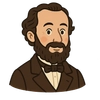
Henri Becquerel
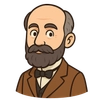
Henri Becquerel was a French physicist who discovered spontaneous radioactivity in 1896.
Reads at Grades K-2 Listens at K–3
Print & create
Answer keys·No prep·Free with an account
28 worksheets · answer keys · full story · quiz · Ages 6-8 · CEFR A2
Plus adds 244,000+ more stories in 27 languages, audio for every one, and printables for all of them.
Just want Henri Becquerel?
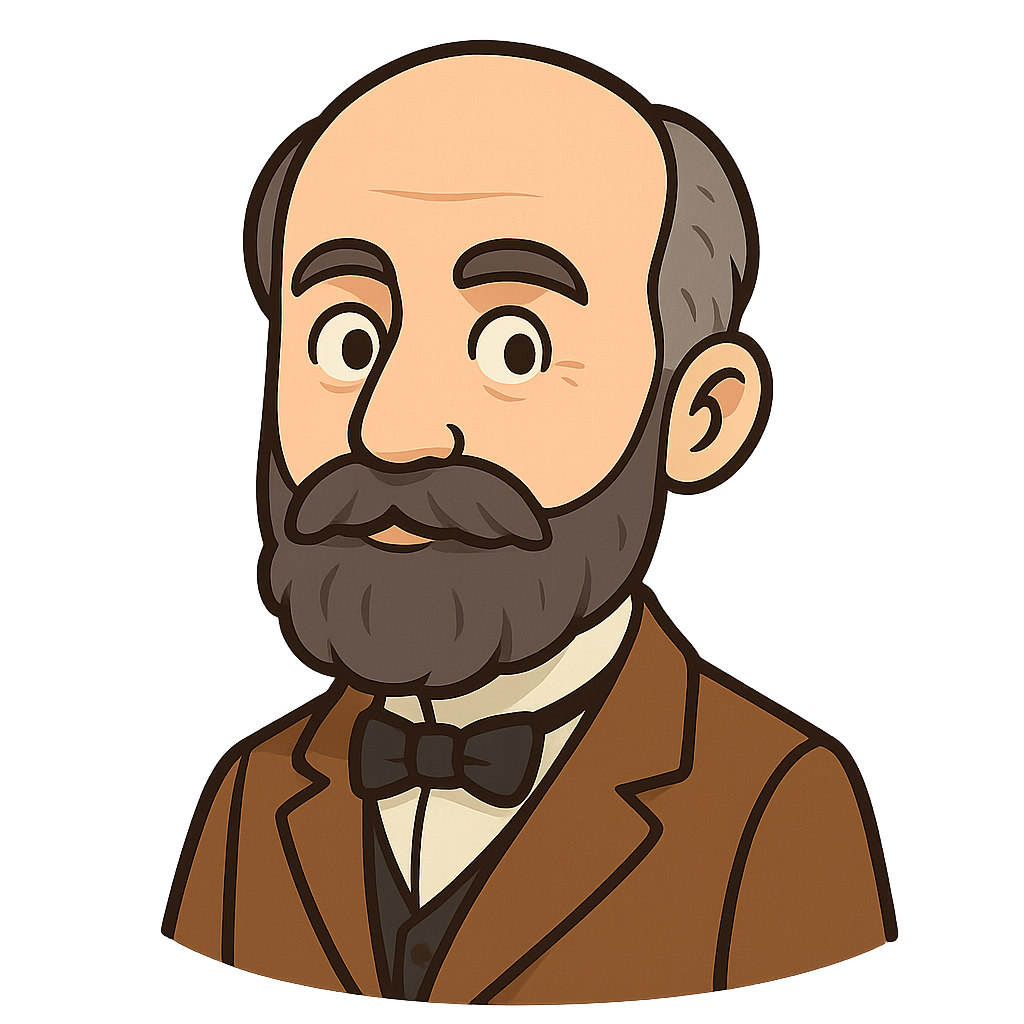
Hello! My name is Henri Becquerel. I was born in Paris, France, on December 15th, 1852. My whole family loved science! My grandfather was a scientist, and so was my father. Growing up, our house was like a giant laboratory, full of interesting gadgets and glowing rocks. I knew from a young age that I wanted to be a scientist, just like them, and solve amazing puzzles about the world.
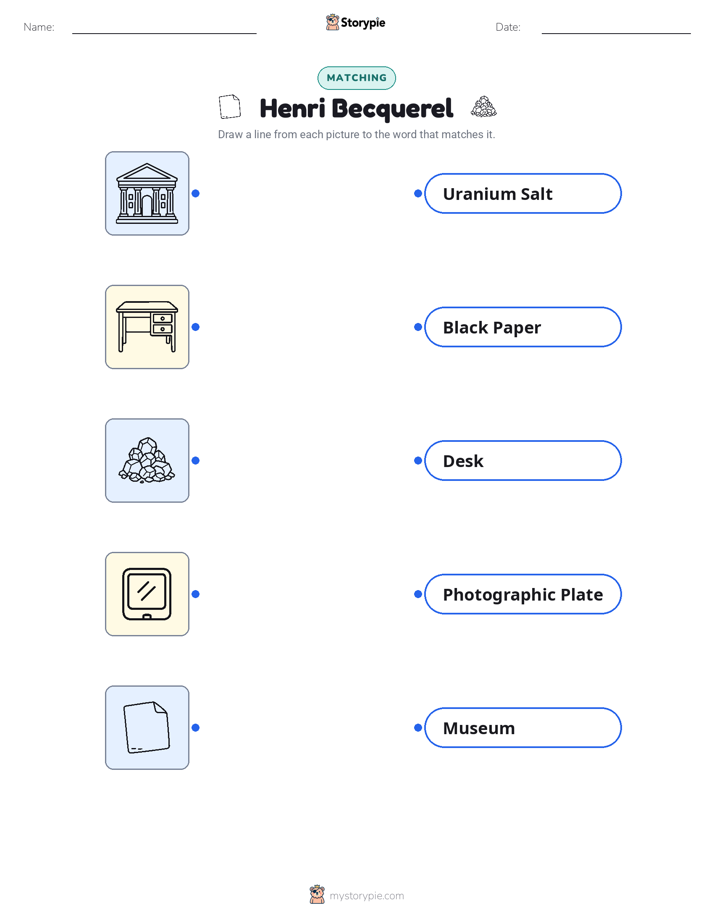
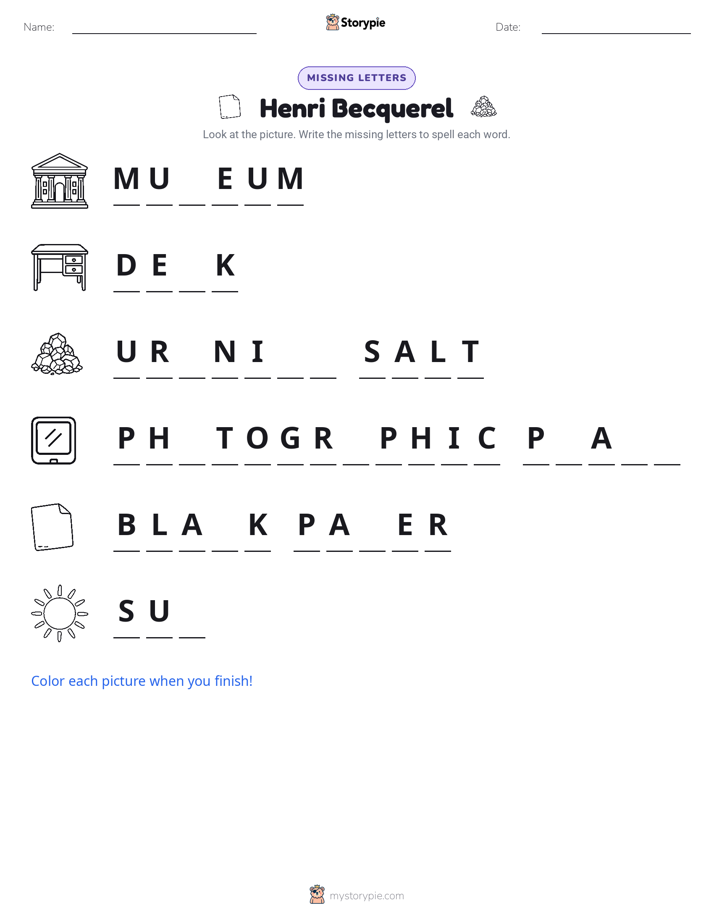
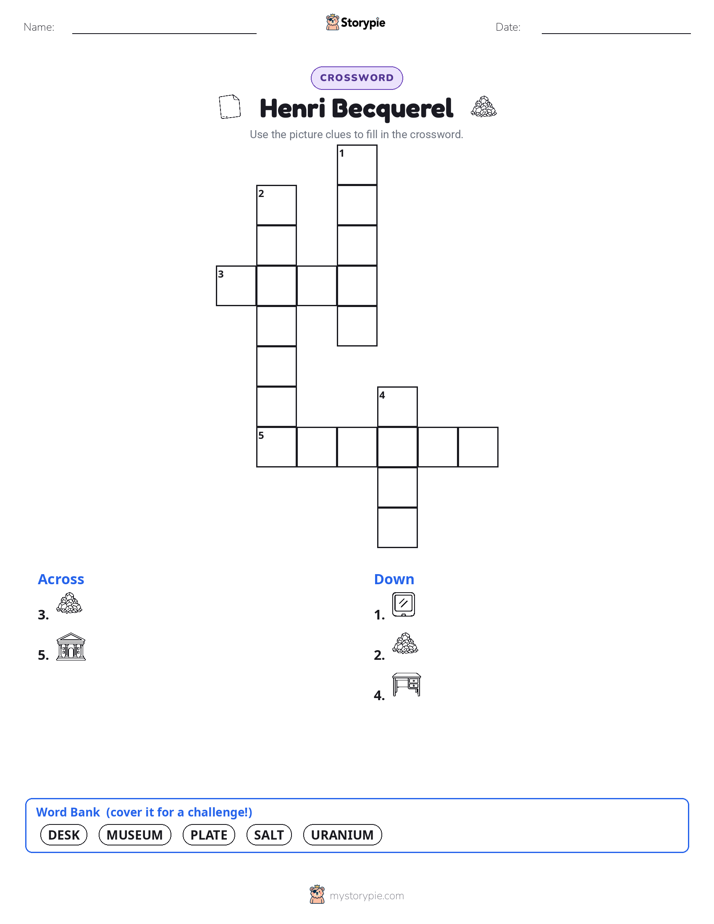
When I grew up, I became a professor in 1892. I was fascinated by things that glowed. Some special rocks, called minerals, could soak up sunlight and then glow in the dark. This is called fluorescence. I wanted to know if these glowing rocks also gave off a special kind of invisible light, like X-rays, which had just been discovered. I decided to do an experiment with a mineral called uranium salt. My plan was to let it sit in the bright sunshine and then see if it left a picture on a special piece of paper called a photographic plate.
One day in 1896, I was all ready to do my experiment, but the sky was gray and cloudy. There was no sun! I felt a little disappointed. I wrapped my uranium salt and the photographic plate together in a black cloth and put them away in a dark drawer to wait for a sunny day. A few days later, I decided to develop the plate anyway, just to see if anything happened. I was so surprised! Even without any sunlight, the uranium had left a strong, clear image on the paper. It was like magic! The rock was making its own energy, all by itself, without any help from the sun.
I realized I had found something brand new! This invisible energy was coming from inside the uranium itself. I told my friends, Marie and Pierre Curie, about my discovery. They were very excited and started doing their own experiments. It was Marie who gave this new power a name: 'radioactivity.' For our work, the three of us shared a very important award called the Nobel Prize in Physics in 1903. It was wonderful to be celebrated for being curious.
Henri Becquerel: The Accidental Discovery
Hello! My name is Henri Becquerel. I was born in Paris, France, on December 15th, 1852. My whole family loved science! My grandfather was a scientist, and so was my father. Growing up, our house was like a giant laboratory, full of interesting gadgets and glowing rocks. I knew from a young age that I wanted to be a scientist, just like them, and solve amazing puzzles about the world.
When I grew up, I became a professor in 1892. I was fascinated by things that glowed. Some special rocks, called minerals, could soak up sunlight and then glow in the dark. This is called fluorescence. I wanted to know if these glowing rocks also gave off a special kind of invisible light, like X-rays, which had just been discovered. I decided to do an experiment with a mineral called uranium salt. My plan was to let it sit in the bright sunshine and then see if it left a picture on a special piece of paper called a photographic plate.
One day in 1896, I was all ready to do my experiment, but the sky was gray and cloudy. There was no sun! I felt a little disappointed. I wrapped my uranium salt and the photographic plate together in a black cloth and put them away in a dark drawer to wait for a sunny day. A few days later, I decided to develop the plate anyway, just to see if anything happened. I was so surprised! Even without any sunlight, the uranium had left a strong, clear image on the paper. It was like magic! The rock was making its own energy, all by itself, without any help from the sun.
I realized I had found something brand new! This invisible energy was coming from inside the uranium itself. I told my friends, Marie and Pierre Curie, about my discovery. They were very excited and started doing their own experiments. It was Marie who gave this new power a name: 'radioactivity.' For our work, the three of us shared a very important award called the Nobel Prize in Physics in 1903. It was wonderful to be celebrated for being curious.
I lived to be 55 years old, and my accidental discovery opened up a whole new world for scientists. People learned how to use radioactivity to help doctors see inside the body and even to create clean energy. Today, the special unit used to measure radioactivity is called a 'becquerel' in my honor. It all goes to show that sometimes, the most amazing discoveries happen when you least expect them!
Wow facts
About
Henri Becquerel was a French physicist who discovered spontaneous radioactivity in 1896. He shared the 1903 Nobel Prize in Physics with Marie and Pierre Curie for this groundbreaking work.
Take a Quiz
Question 1 of 4
Why did Henri put his experiment away in a drawer?
Explore next



Want to do even more?
Go beyond exploring. Unlock tools that turn every story into real learning.

Storypie Plus for families
Full stories, quizzes, and printables. Nights and car rides, sorted.
- Unlimited audio stories
- Create Mode: your child stars in the story
- Offline downloads
- Printable worksheets & coloring pages

Why Storypie for Schools
Students engaged. Prep in seconds. Evenings back to you.
- Worksheets & Quizzes
- Classroom Management
- Formative Assessment
- Custom Curriculum & Lesson Plans
- 27 Languages

Why Storypie for Homeschool
Curriculum done. They'll ask for more. Hours back in your day.
- Worksheet Generator
- First-Person Audio Stories
- Built-in Comprehension Quizzes
- Custom Curriculum & Lesson Plans
- Print & Go Activities