English


Howard Carter
Howard Carter was a British archaeologist and Egyptologist who became world-famous after discovering the…
Reads at Grades 6–8 Listens at Grades 4–8
Print & create
Answer keys·No prep·Free with an account
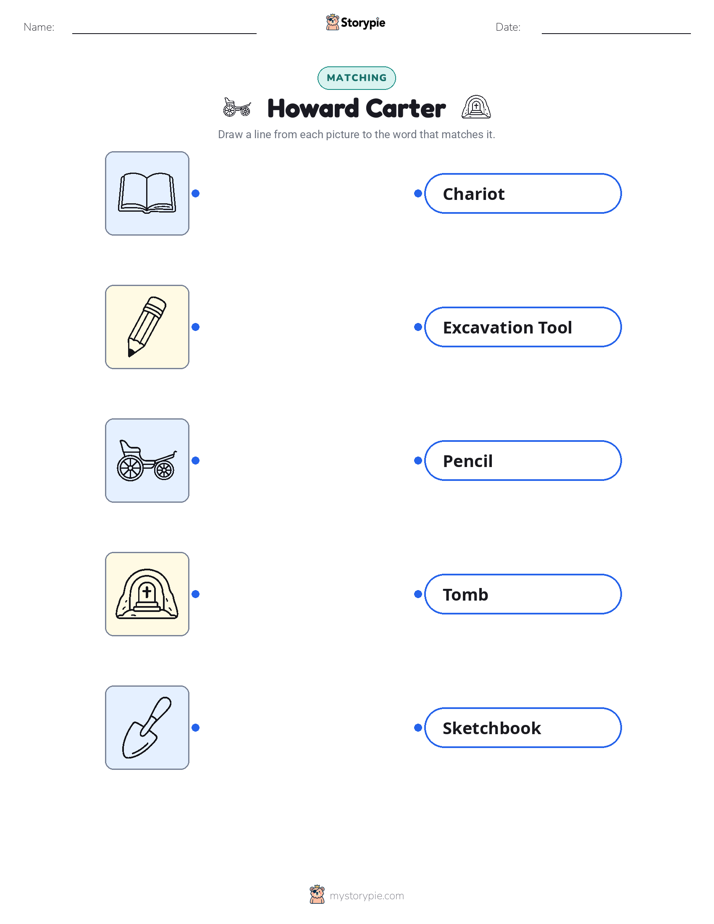
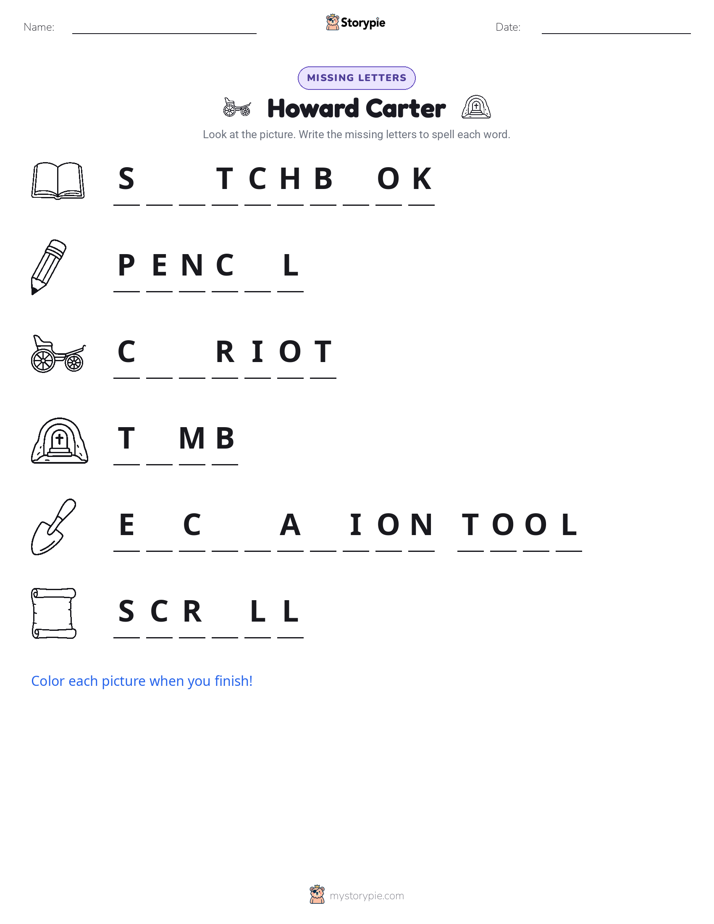
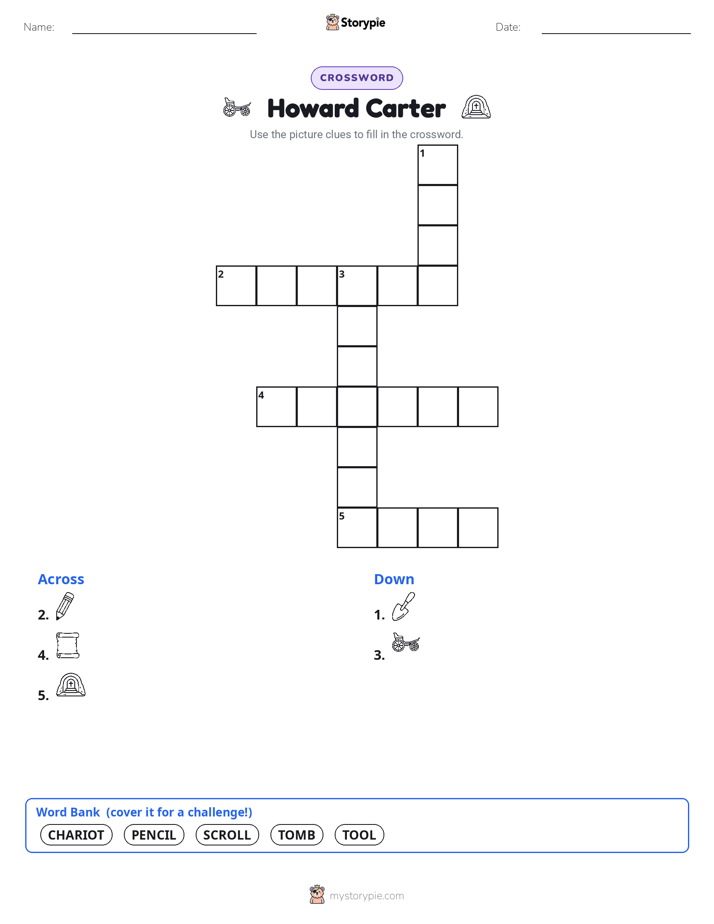
28 worksheets · answer keys · full story · quiz · Ages 10-12 · CEFR B2
Plus adds 164,000+ more stories in 27 languages, audio for every one, and printables for all of them.
Just want Howard Carter?
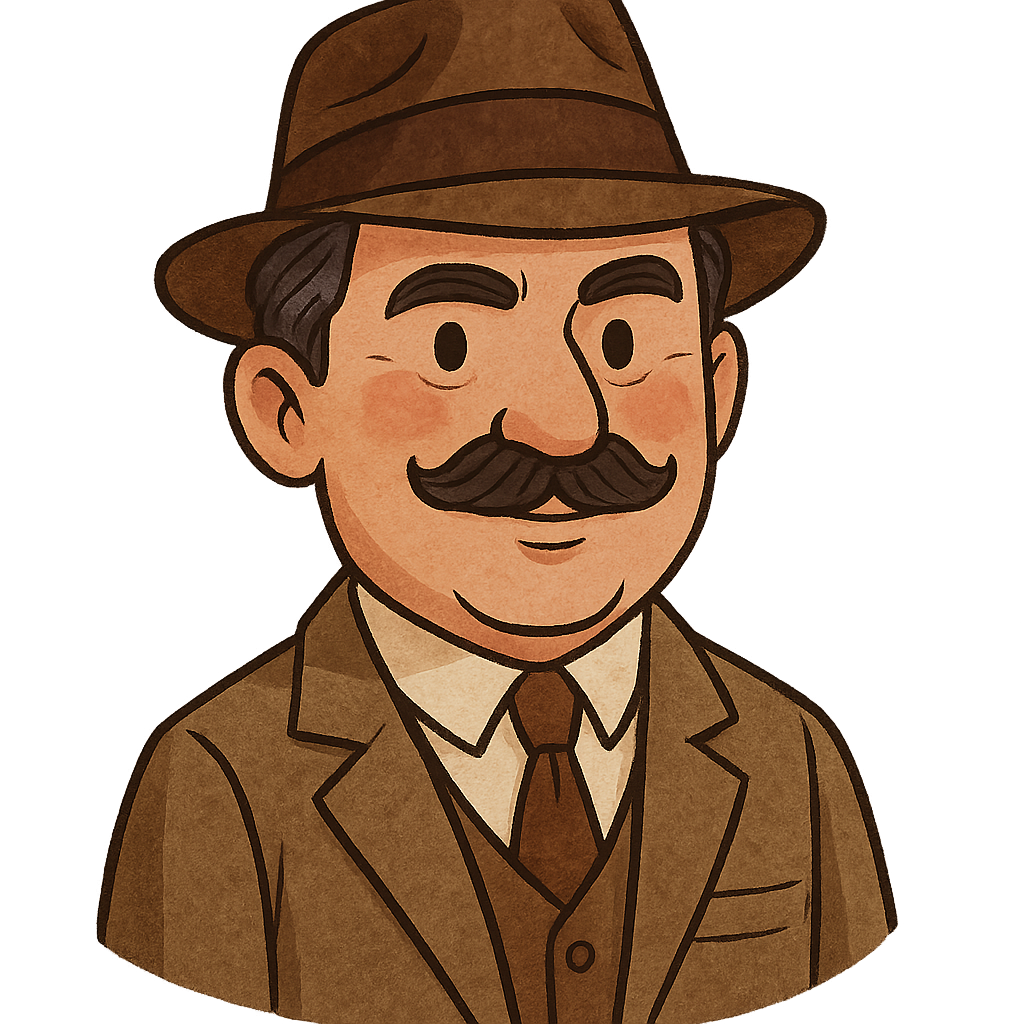
Hello, my name is Howard Carter, and I am the man who found the most famous pharaoh’s tomb in history. My story begins on May 9th, 1874, when I was born in London, England. My father was a talented artist, and from him, I learned to love drawing and painting. I spent much of my childhood sketching the world around me. Not far from my home was a grand mansion called Didlington Hall, which was filled with fascinating artifacts from ancient Egypt. I would spend hours there, carefully drawing the mysterious statues and objects. These sketches weren't just a hobby; they ignited a powerful dream inside me. I became determined that one day, I would travel to Egypt and see the great pyramids, temples, and hidden tombs with my own eyes. Little did I know, this childhood passion would shape my entire life's work.
My dream became a reality much sooner than I expected. In 1891, when I was only 17 years old, I was hired for my artistic skills and sent to Egypt. My first job was to copy the beautiful, colorful paintings and hieroglyphs found on the walls of ancient tombs. It was careful, detailed work, and it allowed me to study the art and history of the pharaohs up close. While in Egypt, I had the great fortune to learn from a famous archaeologist named Flinders Petrie. He taught me the scientific methods of excavation—how to dig carefully, record everything, and understand the stories the objects told. Under his guidance, I transitioned from an artist into an archaeologist. I later began working for the Egyptian Antiquities Service, which gave me even more experience exploring ancient sites. My passion for Egypt's hidden past grew deeper with every discovery.
Howard Carter and the Lost Tomb
Hello, my name is Howard Carter, and I am the man who found the most famous pharaoh’s tomb in history. My story begins on May 9th, 1874, when I was born in London, England. My father was a talented artist, and from him, I learned to love drawing and painting. I spent much of my childhood sketching the world around me. Not far from my home was a grand mansion called Didlington Hall, which was filled with fascinating artifacts from ancient Egypt. I would spend hours there, carefully drawing the mysterious statues and objects. These sketches weren't just a hobby; they ignited a powerful dream inside me. I became determined that one day, I would travel to Egypt and see the great pyramids, temples, and hidden tombs with my own eyes. Little did I know, this childhood passion would shape my entire life's work.
My dream became a reality much sooner than I expected. In 1891, when I was only 17 years old, I was hired for my artistic skills and sent to Egypt. My first job was to copy the beautiful, colorful paintings and hieroglyphs found on the walls of ancient tombs. It was careful, detailed work, and it allowed me to study the art and history of the pharaohs up close. While in Egypt, I had the great fortune to learn from a famous archaeologist named Flinders Petrie. He taught me the scientific methods of excavation—how to dig carefully, record everything, and understand the stories the objects told. Under his guidance, I transitioned from an artist into an archaeologist. I later began working for the Egyptian Antiquities Service, which gave me even more experience exploring ancient sites. My passion for Egypt's hidden past grew deeper with every discovery.
My greatest ambition was to find something that most people believed was impossible: the lost tomb of a young pharaoh named Tutankhamun. To fund such a massive undertaking, I partnered with a sponsor, Lord Carnarvon, who shared my passion and belief that the tomb could still be found. We began our search in 1917 in the Valley of the Kings, a royal burial ground that had been excavated for over a century. Many other archaeologists were certain that the valley had no more secrets to reveal. For five long and frustrating seasons, my team and I dug under the hot Egyptian sun. We moved thousands of tons of sand and rock, but we found very little. The years of difficult work with no reward were discouraging, and by 1922, Lord Carnarvon was ready to give up our quest.
Just as our hope was beginning to fade, our luck dramatically changed. On November 4th, 1922, one of our workers uncovered something unexpected while clearing away rubble—a single step cut into the rock. My heart pounded with excitement as we worked to clear away the debris. The step led to a full staircase, which descended to a sealed doorway. The ancient clay seals on the door bore the royal name of Tutankhamun. We had found it. After carefully clearing the passage, we came to a second sealed door. On November 26th, 1922, with Lord Carnarvon standing anxiously behind me, I made a small hole in the top corner of the doorway. I held up a candle and peered into the darkness. The air inside, untouched for millennia, rushed out, extinguishing the flame. After letting the air settle, I tried again. Lord Carnarvon could not stand the suspense any longer and asked, 'Can you see anything?' I could only manage to reply, 'Yes, wonderful things.'
What I saw in the flickering candlelight was beyond my wildest dreams. The first room, the antechamber, was filled with treasures. There were gleaming golden chariots, ornate furniture, statues of strange animals, and beautifully carved couches. Everything was piled together, just as the ancient Egyptians had left it more than 3,000 years before. The tomb itself was quite small for a pharaoh, but it was packed with over 5,000 priceless artifacts. The world was stunned that a royal burial had been found almost completely intact. My team and I faced an enormous task. It took us nearly a decade to meticulously catalogue, photograph, and carefully remove every single object from the four small rooms. The most magnificent discovery of all was the solid gold burial mask that covered the face of King Tut himself, a masterpiece of ancient art.
Our discovery of Tutankhamun's tomb in 1922 sparked a worldwide fascination with ancient Egypt that continues to this day. It provided an unprecedented glimpse into the life and death of a pharaoh, teaching historians more than they ever thought possible. I dedicated the rest of my professional life to the careful preservation of the treasures we had uncovered. I lived to be 64 years old and passed away in 1939. My story serves as a reminder that with patience, perseverance, and a firm belief in your dreams, you can uncover wonders hidden just beneath the surface, waiting to be found.
Wow facts
About
Howard Carter was a British archaeologist and Egyptologist who became world-famous after discovering the intact tomb of the 18th Dynasty Pharaoh, Tutankhamun, in November 1922.
Take a Quiz
Question 1 of 5
In your own words, retell the key events that happened in November 1922.
Explore next

Want to do even more?
Go beyond exploring. Unlock tools that turn every story into real learning.

Storypie Plus for families
Full stories, quizzes, and printables. Nights and car rides, sorted.
- Unlimited audio stories
- Create Mode: your child stars in the story
- Offline downloads
- Printable worksheets & coloring pages

Why Storypie for Schools
Students engaged. Prep in seconds. Evenings back to you.
- Worksheets & Quizzes
- Classroom Management
- Formative Assessment
- Custom Curriculum & Lesson Plans
- 27 Languages

Why Storypie for Homeschool
Curriculum done. They'll ask for more. Hours back in your day.
- Worksheet Generator
- First-Person Audio Stories
- Built-in Comprehension Quizzes
- Custom Curriculum & Lesson Plans
- Print & Go Activities