English


Ibn al-Haytham
A pioneering Arab scientist and mathematician from the Islamic Golden Age…
Reads at Grades K-2 Listens at K–3
Print & create
Answer keys·No prep·Free with an account
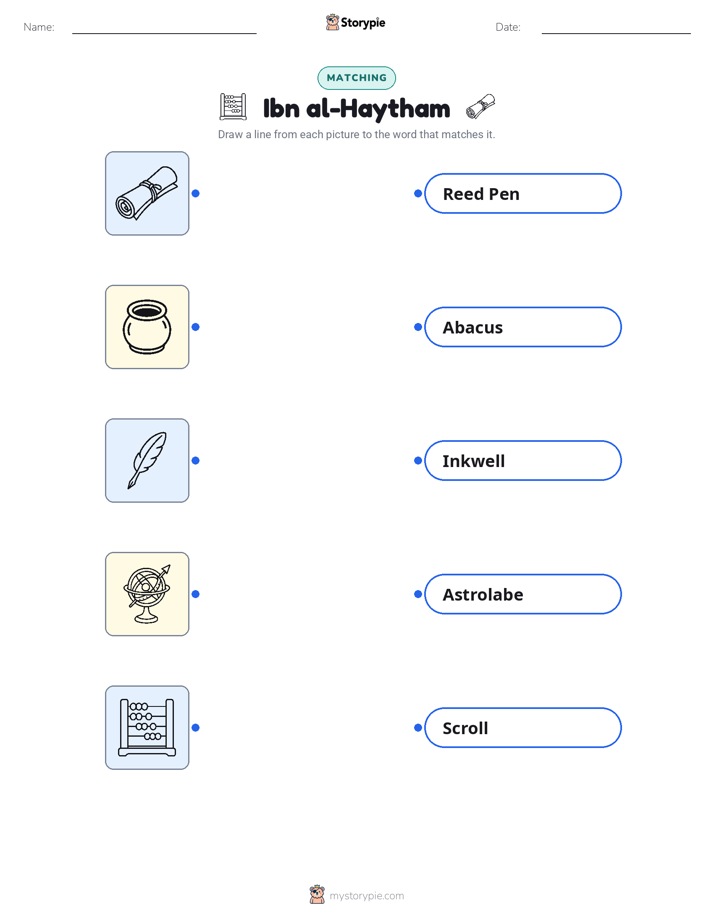
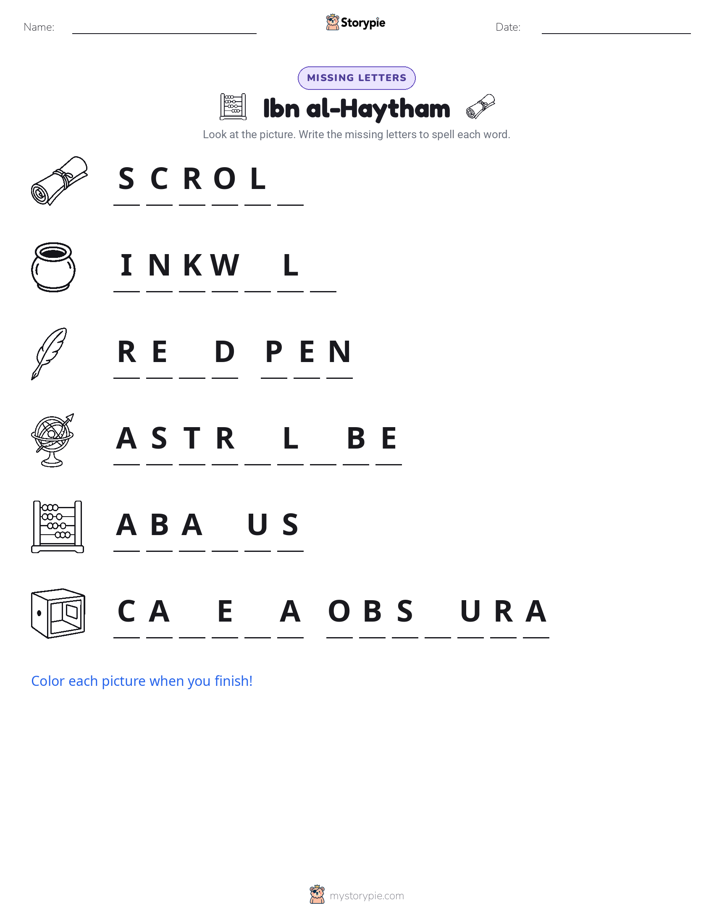
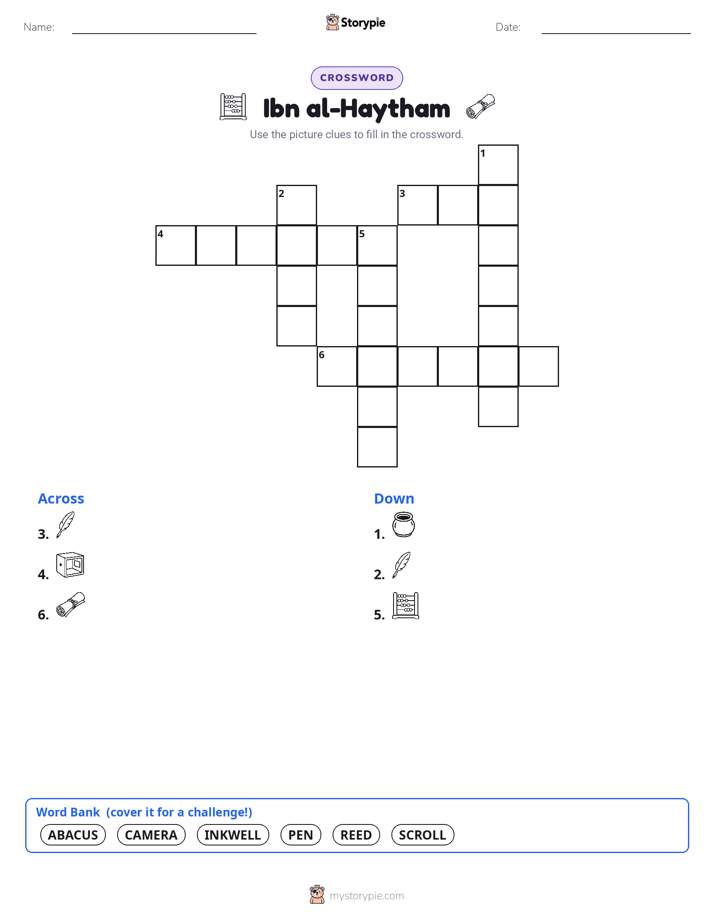
28 worksheets · answer keys · full story · quiz · Ages 6-8 · CEFR A2
Plus adds 164,000+ more stories in 27 languages, audio for every one, and printables for all of them.
Just want Ibn al-Haytham?
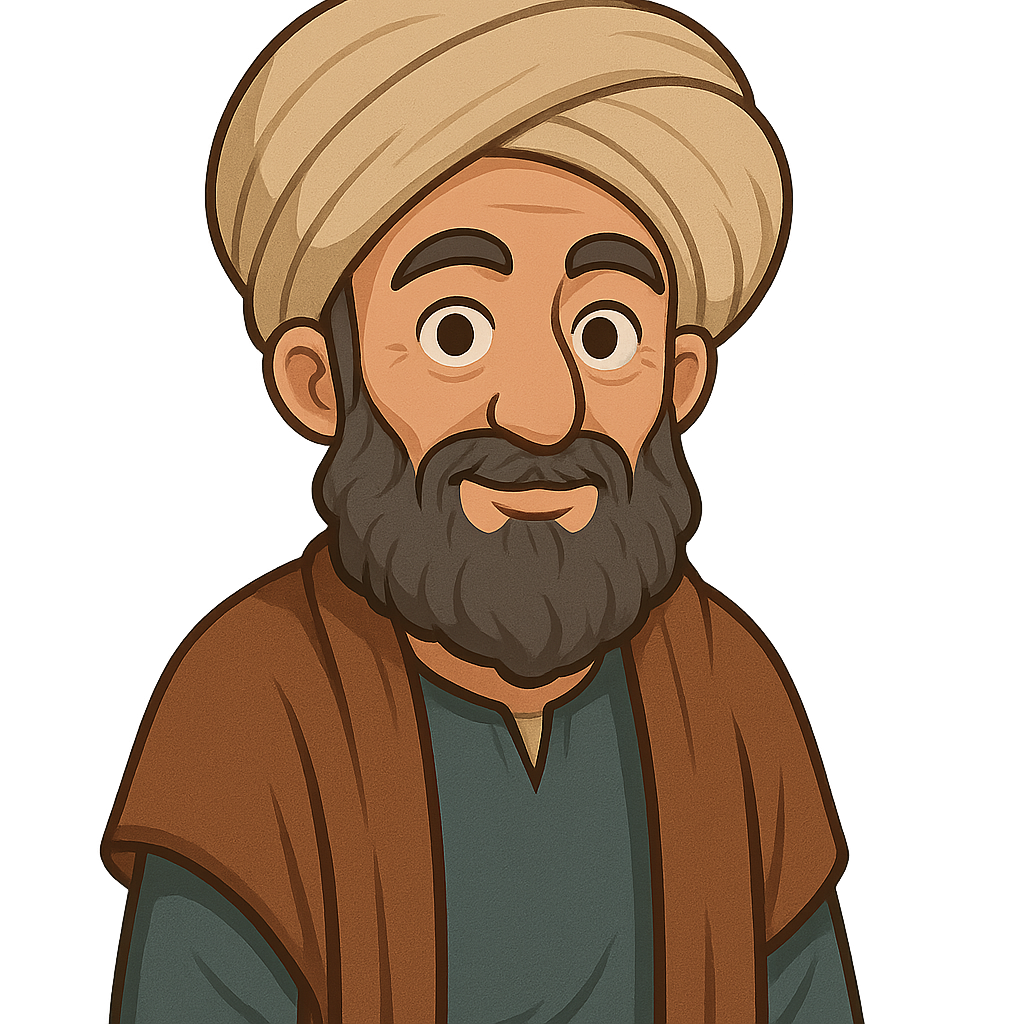
Hello! My name is Ibn al-Haytham, and I was a scientist who loved to learn about the world. I was born a very long time ago, around the year 965, in a city called Basra. Even when I was a little boy, my head was always full of questions. I would look up at the bright sun and the twinkling stars and wonder about light. How did it work? Where did it come from? I knew that if I wanted to find the answers, I would have to look very closely at the world around me and ask lots of questions.
One of the biggest puzzles I wanted to solve was about our eyes. How do we see things? In my time, most people believed a very strange idea. They thought that our eyes sent out invisible rays, like tiny laser beams, that touched objects to let us see them. This didn't seem right to me. I thought about it a lot and came up with a new idea. I believed that light from the sun or a candle first travels to an object, like an apple. Then, the light bounces off the apple and travels straight into our eyes. That is how we see the apple! It wasn't our eyes sending light out, but taking light in.
To prove my idea was correct, I needed to do experiments. One of my favorite experiments used a special room called a camera obscura, which means 'dark room' in another language. I made a room completely dark and then made one tiny little hole in a wall. When the sun was shining outside, something amazing happened. A picture of the world outside appeared on the wall opposite the hole! But the picture was upside down. This showed me that light travels in straight lines. The light from the top of a tree traveled through the hole and landed on the bottom of the wall, and the light from the bottom of the tree landed on the top. It was like magic, but it was science!
Ibn al-Haytham: The Father of Optics
Hello! My name is Ibn al-Haytham, and I was a scientist who loved to learn about the world. I was born a very long time ago, around the year 965, in a city called Basra. Even when I was a little boy, my head was always full of questions. I would look up at the bright sun and the twinkling stars and wonder about light. How did it work? Where did it come from? I knew that if I wanted to find the answers, I would have to look very closely at the world around me and ask lots of questions.
One of the biggest puzzles I wanted to solve was about our eyes. How do we see things? In my time, most people believed a very strange idea. They thought that our eyes sent out invisible rays, like tiny laser beams, that touched objects to let us see them. This didn't seem right to me. I thought about it a lot and came up with a new idea. I believed that light from the sun or a candle first travels to an object, like an apple. Then, the light bounces off the apple and travels straight into our eyes. That is how we see the apple! It wasn't our eyes sending light out, but taking light in.
To prove my idea was correct, I needed to do experiments. One of my favorite experiments used a special room called a camera obscura, which means 'dark room' in another language. I made a room completely dark and then made one tiny little hole in a wall. When the sun was shining outside, something amazing happened. A picture of the world outside appeared on the wall opposite the hole! But the picture was upside down. This showed me that light travels in straight lines. The light from the top of a tree traveled through the hole and landed on the bottom of the wall, and the light from the bottom of the tree landed on the top. It was like magic, but it was science!
After many years of studying, I moved to a big city in Egypt called Cairo. It was a wonderful place where I had a lot of quiet time to think, experiment, and write. I wanted to share everything I had learned with other people so they could understand light, too. So, I wrote all of my discoveries down in a very important book. I called it the 'Book of Optics.' In its pages, I explained how light works and how our eyes see the world. I hoped my book would help future scientists make even more amazing discoveries.
I lived a long and curious life for about 75 years. I am so happy that my ideas and experiments helped other scientists hundreds of years later. Because of my work on how light travels, people were able to invent amazing things like eyeglasses to help people see better and cameras to take pictures. I am remembered for showing the world that asking questions and testing your ideas is the very best way to learn the secrets of our amazing universe.
Wow facts
About
A pioneering Arab scientist and mathematician from the Islamic Golden Age, often called the 'father of modern optics' for his revolutionary work on light and vision and for making important contributions to the scientific method by focusing on experiments and evidence.
Take a Quiz
Question 1 of 4
Why did Ibn al-Haytham use a dark room for his experiment?
Explore next






Want to do even more?
Go beyond exploring. Unlock tools that turn every story into real learning.

Storypie Plus for families
Full stories, quizzes, and printables. Nights and car rides, sorted.
- Unlimited audio stories
- Create Mode: your child stars in the story
- Offline downloads
- Printable worksheets & coloring pages

Why Storypie for Schools
Students engaged. Prep in seconds. Evenings back to you.
- Worksheets & Quizzes
- Classroom Management
- Formative Assessment
- Custom Curriculum & Lesson Plans
- 27 Languages

Why Storypie for Homeschool
Curriculum done. They'll ask for more. Hours back in your day.
- Worksheet Generator
- First-Person Audio Stories
- Built-in Comprehension Quizzes
- Custom Curriculum & Lesson Plans
- Print & Go Activities