English

Jean Piaget
Jean Piaget was a Swiss psychologist known for his pioneering work in child development and his theory of…
Reads at Grades 6–8 Listens at Grades 4–8
Print & create
Answer keys·No prep·Free with an account
28 worksheets · answer keys · full story · quiz · Ages 10-12 · CEFR B2
Plus adds 208,000+ more stories in 27 languages, audio for every one, and printables for all of them.
Just want Jean Piaget?
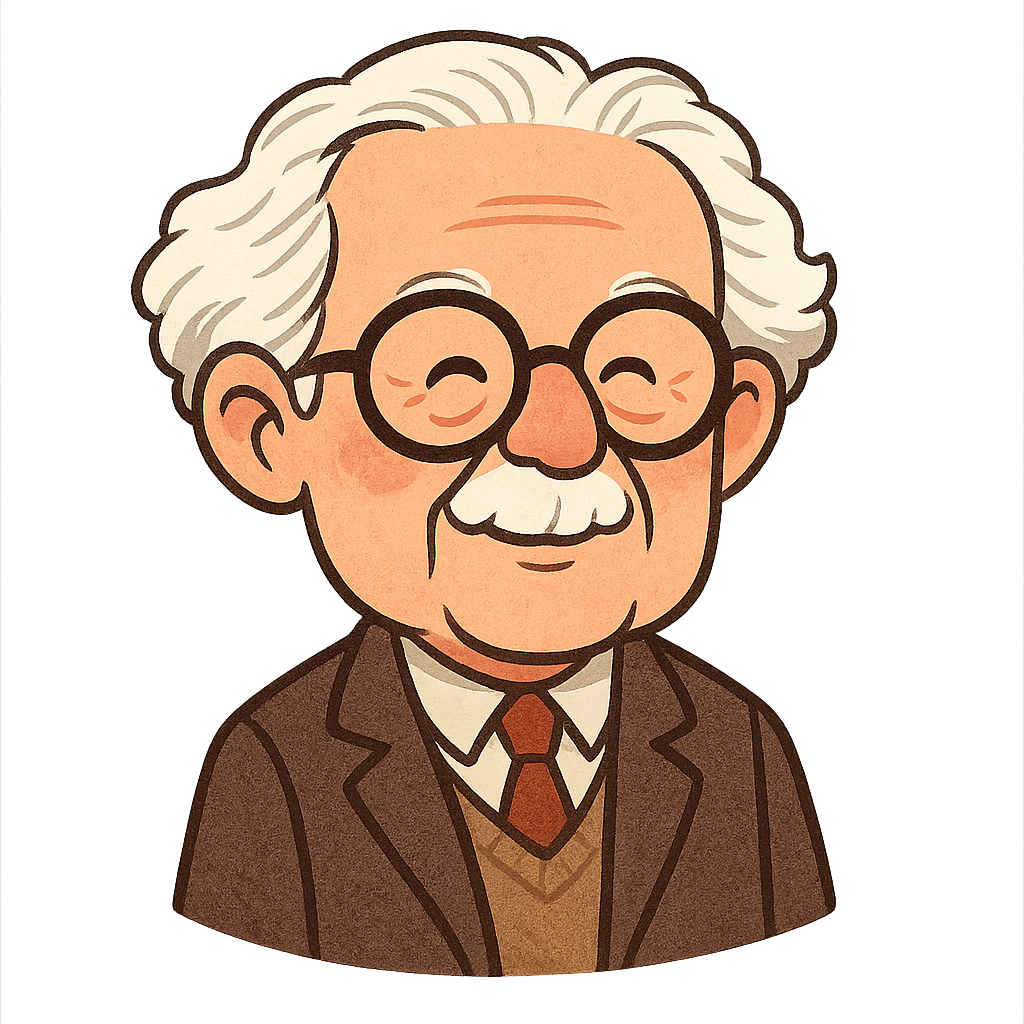
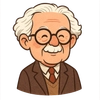
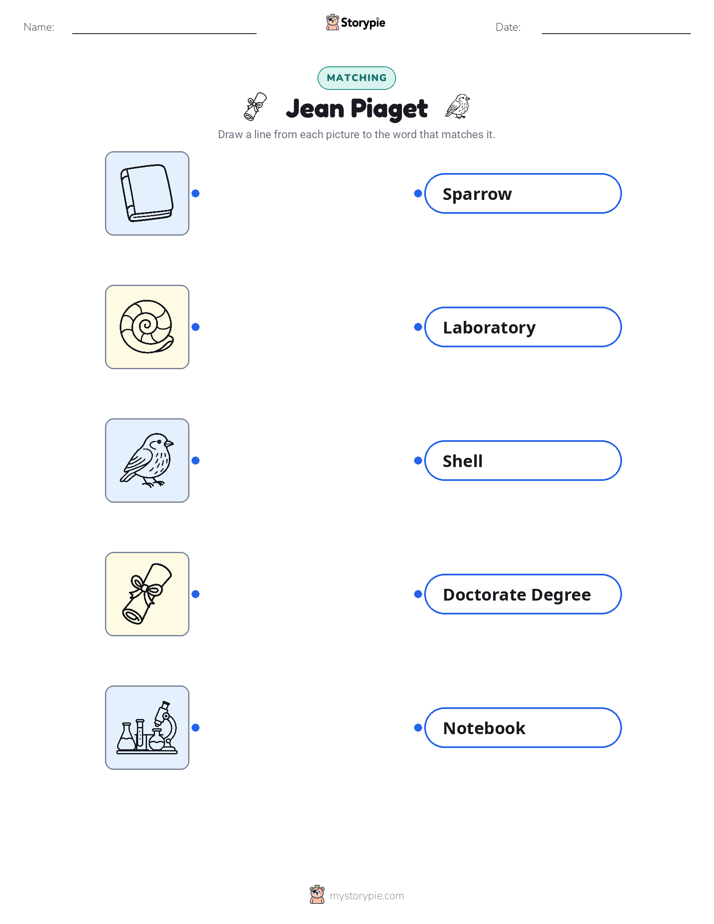
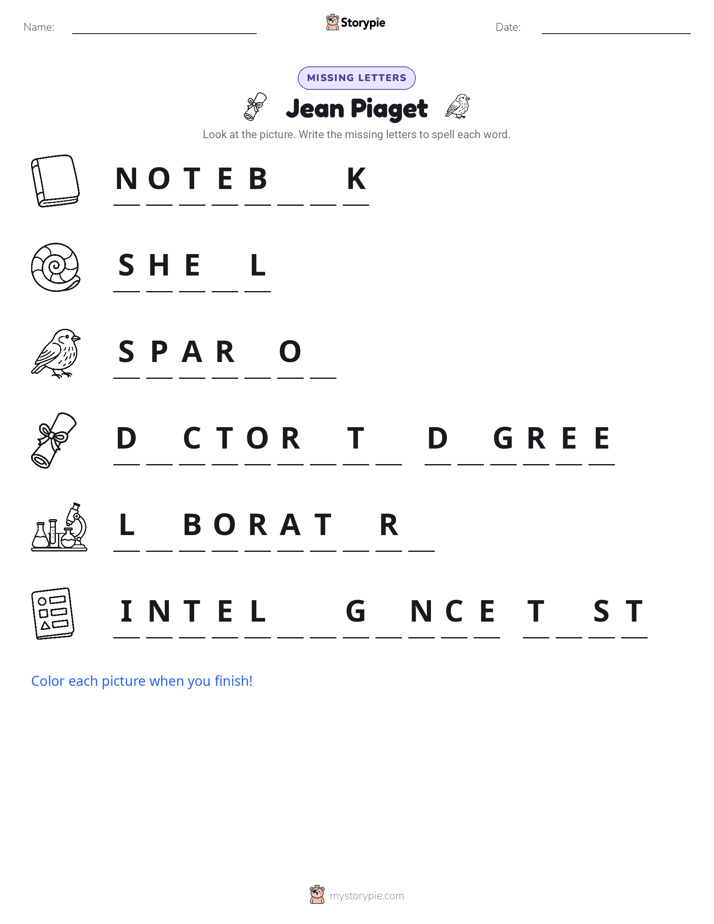
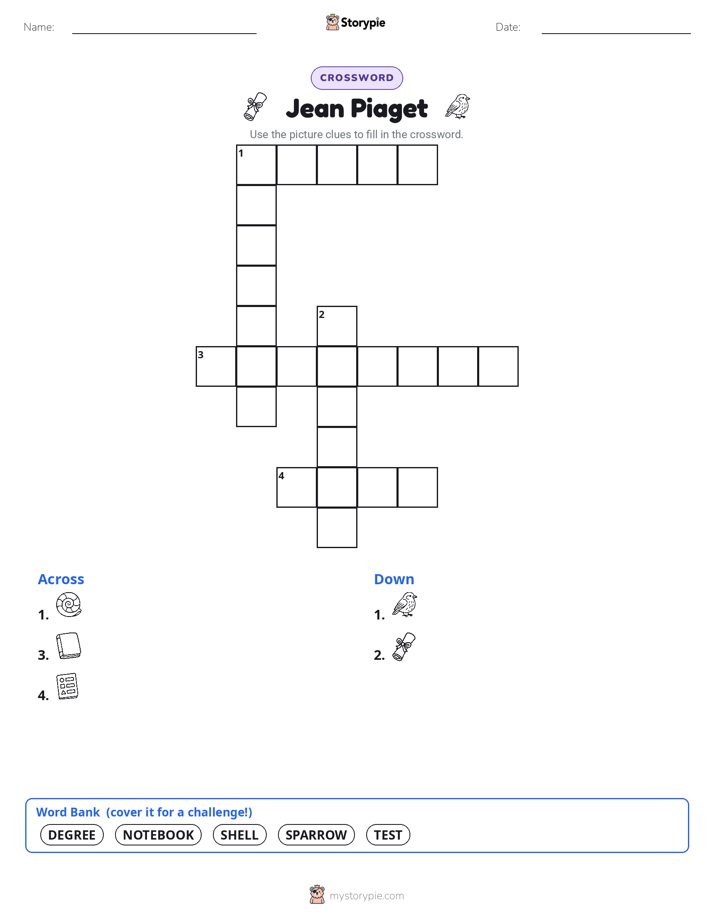
Hello! My name is Jean Piaget, and I want to tell you the story of how my curiosity about the world led to some big ideas about how we think. I was born on August 9th, 1896, in a lovely town called Neuchâtel, Switzerland. As a boy, I wasn't that interested in toys; I was fascinated by the natural world. I spent hours exploring the fields and lakes, observing birds, and collecting shells. I was especially curious about mollusks, like snails and clams. I kept detailed notebooks of my observations. In fact, I was so serious about my studies that when I was only eleven years old, in 1907, I wrote my very first scientific paper about an albino sparrow I had seen. That early love for careful observation would become the most important tool in my life's work.
My passion for science continued, and in 1918, I earned my doctorate degree in zoology. I had become an expert on mollusks, but a new question began to bubble up in my mind. I was curious not just about the bodies of animals, but about the minds of people. How do we learn? How does knowledge grow inside our heads? To find answers, I moved to Paris around 1919 and began working in a laboratory run by a man named Théodore Simon. My job was to help give intelligence tests, originally designed by Alfred Binet, to children. It was supposed to be simple—just mark the answers right or wrong. But I noticed something much more interesting. I saw that children of the same age often gave the same *kind* of wrong answers! It was a pattern. I realized their mistakes weren't random. They were clues that showed children didn't just know less than adults; they thought in a completely different way.
Jean Piaget
Hello! My name is Jean Piaget, and I want to tell you the story of how my curiosity about the world led to some big ideas about how we think. I was born on August 9th, 1896, in a lovely town called Neuchâtel, Switzerland. As a boy, I wasn't that interested in toys; I was fascinated by the natural world. I spent hours exploring the fields and lakes, observing birds, and collecting shells. I was especially curious about mollusks, like snails and clams. I kept detailed notebooks of my observations. In fact, I was so serious about my studies that when I was only eleven years old, in 1907, I wrote my very first scientific paper about an albino sparrow I had seen. That early love for careful observation would become the most important tool in my life's work.
My passion for science continued, and in 1918, I earned my doctorate degree in zoology. I had become an expert on mollusks, but a new question began to bubble up in my mind. I was curious not just about the bodies of animals, but about the minds of people. How do we learn? How does knowledge grow inside our heads? To find answers, I moved to Paris around 1919 and began working in a laboratory run by a man named Théodore Simon. My job was to help give intelligence tests, originally designed by Alfred Binet, to children. It was supposed to be simple—just mark the answers right or wrong. But I noticed something much more interesting. I saw that children of the same age often gave the same kind of wrong answers! It was a pattern. I realized their mistakes weren't random. They were clues that showed children didn't just know less than adults; they thought in a completely different way.
This exciting idea brought me back to Switzerland in 1921, where I began my own research at the Jean-Jacques Rousseau Institute in Geneva. A few years later, in 1923, I married a wonderful woman named Valentine Châtenay, who was one of my students and shared my curiosity. Soon, we had our own little research team: our three children, Jacqueline, Lucienne, and Laurent. They became the center of my studies. I didn't just play with my children; I observed them like a scientist. I would watch them for hours, taking careful notes. For example, I might hide a rattle under a blanket to see if my baby daughter knew it was still there even when she couldn't see it. This helped me understand a concept I called 'object permanence.' I would pour juice from a short, wide glass into a tall, skinny one and ask my children which one had more. Their answers gave me incredible insights into how their understanding of the world was being built, piece by piece, right before my eyes.
From these thousands of observations, I developed my most famous idea: the theory of cognitive development. I proposed that as children grow, their minds develop through four major stages, like climbing a staircase. I believed that children are not empty vessels waiting to be filled with information. Instead, they are active builders—little scientists—who construct their own knowledge about the world. The first stage is the 'sensorimotor stage,' where babies learn through their senses and actions. Next is the 'preoperational stage,' where young children use symbols and imagination but tend to see the world only from their own point of view. Then comes the 'concrete operational stage,' when school-aged children start to think logically about real, concrete things they can see and touch. Finally, around age twelve, they enter the 'formal operational stage,' where they can think about abstract ideas, form hypotheses, and consider the future. I wrote over 50 books, including one of my first, 'The Language and Thought of the Child' in 1923, to share these ideas with the world.
I spent my entire life trying to answer the big question, 'How do we know what we know?' In 1955, I founded a special place in Geneva called the International Center for Genetic Epistemology, where scientists from all over the world could come together to study how knowledge grows. My work continued for many, many years. I lived to be 84 years old and passed away on September 16th, 1980. Today, people remember me for changing the way we see children. My work showed that a child's mind is not just a smaller version of an adult's, but a wonderfully unique and developing world. My ideas have helped teachers create classrooms where students can explore and discover for themselves, reminding everyone that children are the clever, curious architects of their own understanding.
Wow facts
About
Jean Piaget was a Swiss psychologist known for his pioneering work in child development and his theory of cognitive development, which changed how we understand children's learning.
Take a Quiz
Question 1 of 5
What key insight did Piaget gain from the children's wrong answers on the intelligence tests?
Explore next






Want to do even more?
Go beyond exploring. Unlock tools that turn every story into real learning.

Storypie Plus for families
Full stories, quizzes, and printables. Nights and car rides, sorted.
- Unlimited audio stories
- Create Mode: your child stars in the story
- Offline downloads
- Printable worksheets & coloring pages

Why Storypie for Schools
Students engaged. Prep in seconds. Evenings back to you.
- Worksheets & Quizzes
- Classroom Management
- Formative Assessment
- Custom Curriculum & Lesson Plans
- 27 Languages

Why Storypie for Homeschool
Curriculum done. They'll ask for more. Hours back in your day.
- Worksheet Generator
- First-Person Audio Stories
- Built-in Comprehension Quizzes
- Custom Curriculum & Lesson Plans
- Print & Go Activities