English

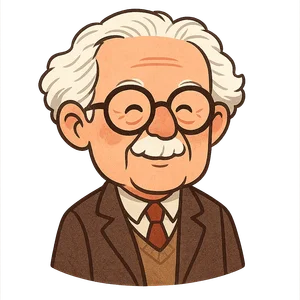
Jean Piaget
Jean Piaget was a Swiss psychologist known for his pioneering work in child development and his theory of…
Reads at Grades 3–5 Listens at Grades 1–5
Print & create
Answer keys·No prep·Free with an account
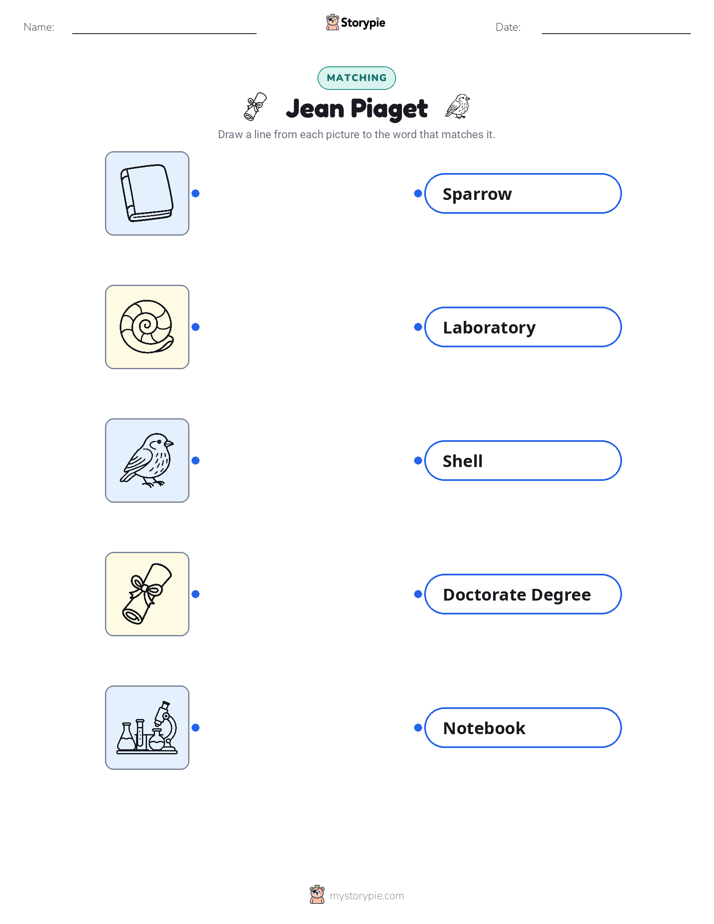
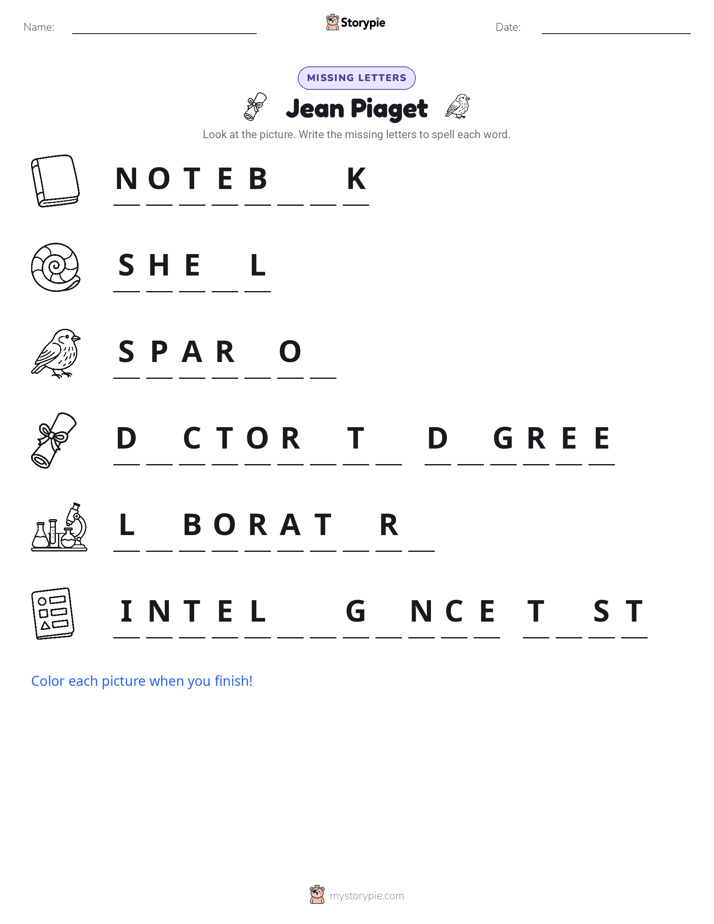
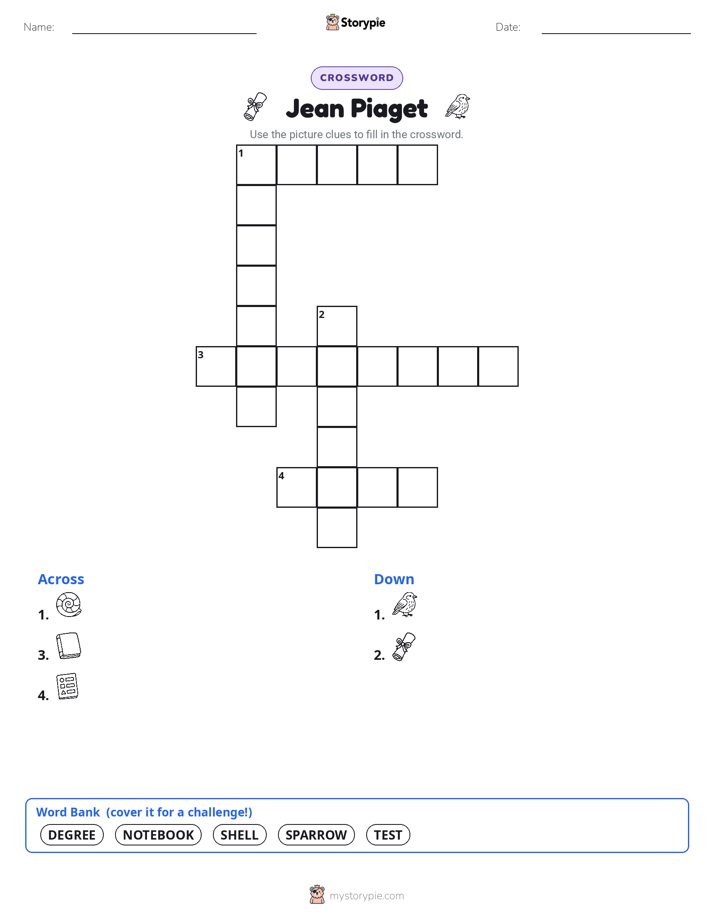
28 worksheets · answer keys · full story · quiz · Ages 8-10 · CEFR B1
Plus adds 208,000+ more stories in 27 languages, audio for every one, and printables for all of them.
Just want Jean Piaget?
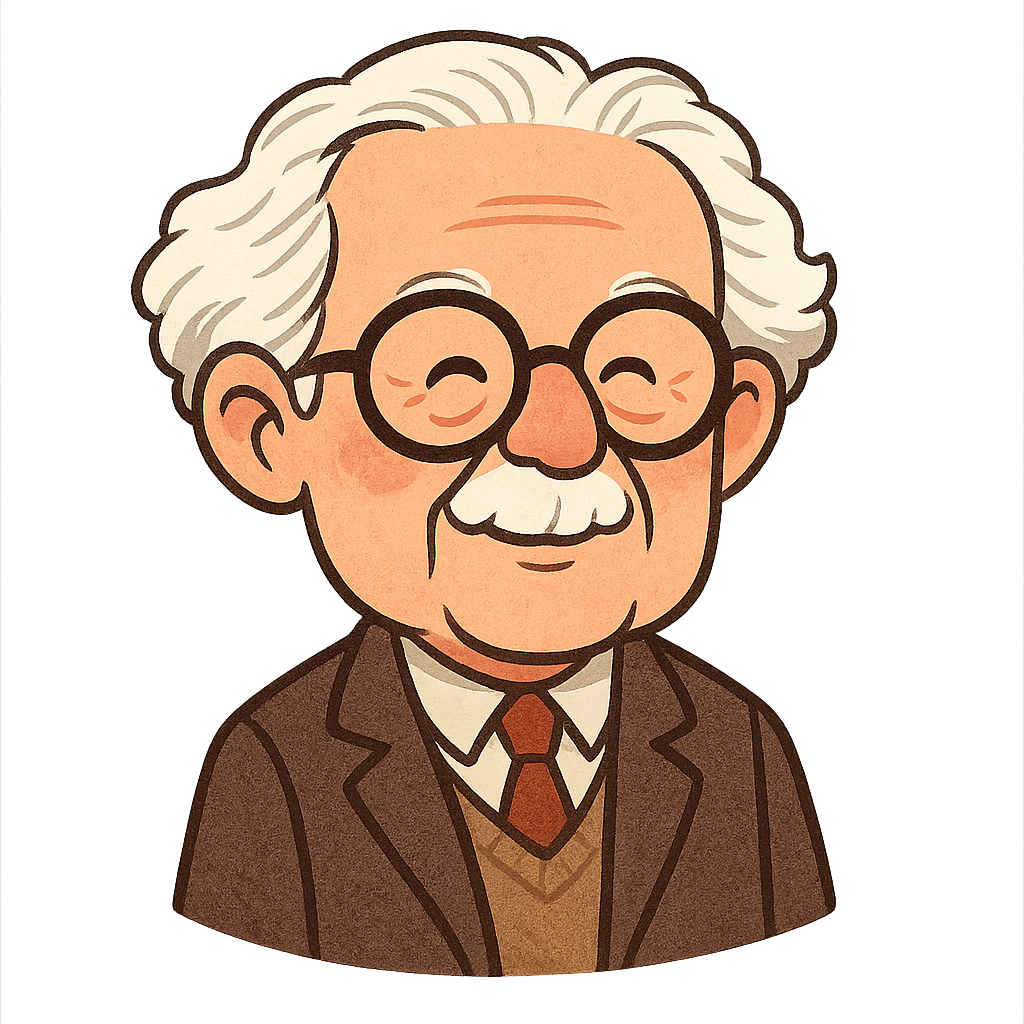
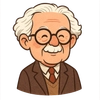
Hello, my name is Jean Piaget, and I spent my life exploring one of the most fascinating places in the world: a child’s mind. My story begins in a lovely town called Neuchâtel, in Switzerland, where I was born on August 9th, 1896. From my earliest days, I was completely fascinated by the natural world. Instead of playing with toys, you would often find me outdoors, carefully studying birds in the trees or collecting shells along the shores of the lake. This deep curiosity for nature was more than just a hobby. In 1907, when I was only 11 years old, I spotted a very special albino sparrow, which is a sparrow that is all white. I studied it so carefully that I wrote my very first scientific paper about it. It was then I knew I wanted to spend my life asking questions and searching for answers.
My love for science stayed with me as I grew up. I went to university and earned my doctorate degree in natural sciences in 1918. After my studies, I decided to move to Paris around the year 1920. There, I began working with a man named Théodore Simon at a school that had been started by the famous Alfred Binet. My job was to help give intelligence tests to children. We would ask them questions to see what they knew. But very quickly, I discovered something that puzzled me. I wasn't interested in the children's correct answers. Instead, I was fascinated by their mistakes. I noticed a curious pattern: children of the same age often made the exact same kinds of wrong answers. This made me wonder, could it be that children don't just know less than adults, but that they think in a completely different way?
Jean Piaget
Hello, my name is Jean Piaget, and I spent my life exploring one of the most fascinating places in the world: a child’s mind. My story begins in a lovely town called Neuchâtel, in Switzerland, where I was born on August 9th, 1896. From my earliest days, I was completely fascinated by the natural world. Instead of playing with toys, you would often find me outdoors, carefully studying birds in the trees or collecting shells along the shores of the lake. This deep curiosity for nature was more than just a hobby. In 1907, when I was only 11 years old, I spotted a very special albino sparrow, which is a sparrow that is all white. I studied it so carefully that I wrote my very first scientific paper about it. It was then I knew I wanted to spend my life asking questions and searching for answers.
My love for science stayed with me as I grew up. I went to university and earned my doctorate degree in natural sciences in 1918. After my studies, I decided to move to Paris around the year 1920. There, I began working with a man named Théodore Simon at a school that had been started by the famous Alfred Binet. My job was to help give intelligence tests to children. We would ask them questions to see what they knew. But very quickly, I discovered something that puzzled me. I wasn't interested in the children's correct answers. Instead, I was fascinated by their mistakes. I noticed a curious pattern: children of the same age often made the exact same kinds of wrong answers. This made me wonder, could it be that children don't just know less than adults, but that they think in a completely different way?
That one question changed my life. I realized that children's minds were not just smaller, emptier versions of adult minds. They were unique and grew in amazing ways. To understand this better, I began to carefully observe my own three children: Jacqueline, Lucienne, and Laurent. I watched how they played, how they solved problems, and how they learned about the world. I saw that a baby learns by touching and seeing things, using their senses to understand what an object is. But as that baby grows into an older child, they can start to think logically, almost like a detective solving a case. I developed a theory that children learn in different stages as they grow up. I gave my work a special name: 'genetic epistemology.' It sounds complicated, but it's just a way of saying I studied how knowledge grows, right from the very beginning of a person's life.
I was so excited by my discoveries that I wanted to share them with the world. I wrote many books and articles to explain my ideas about how children think and learn. In 1929, I was given a very important job as the director of the International Bureau of Education, where I could help shape how children were taught in schools. Through all my work, I wanted everyone to understand one simple but powerful idea: children are like 'little scientists.' They don't learn best by sitting still and listening. They learn best by doing things—by actively exploring, experimenting, and playing. This is how they figure out how the world works, one discovery at a time.
I lived a long and busy life, filled with questions and discoveries. I lived to be 84 years old and passed away in 1980. Looking back, I am so glad I followed my curiosity about those children's wrong answers in Paris. My ideas are still used today by teachers and parents all around the world. My legacy lives on in every classroom where students are encouraged to build, create, and ask their own questions to find the answers for themselves.
Wow facts
About
Jean Piaget was a Swiss psychologist known for his pioneering work in child development and his theory of cognitive development, which changed how we understand children's learning.
Take a Quiz
Question 1 of 5
What was the topic of my first scientific paper, which I wrote in 1907 when I was 11 years old?
Explore next





Want to do even more?
Go beyond exploring. Unlock tools that turn every story into real learning.

Storypie Plus for families
Full stories, quizzes, and printables. Nights and car rides, sorted.
- Unlimited audio stories
- Create Mode: your child stars in the story
- Offline downloads
- Printable worksheets & coloring pages

Why Storypie for Schools
Students engaged. Prep in seconds. Evenings back to you.
- Worksheets & Quizzes
- Classroom Management
- Formative Assessment
- Custom Curriculum & Lesson Plans
- 27 Languages

Why Storypie for Homeschool
Curriculum done. They'll ask for more. Hours back in your day.
- Worksheet Generator
- First-Person Audio Stories
- Built-in Comprehension Quizzes
- Custom Curriculum & Lesson Plans
- Print & Go Activities