English

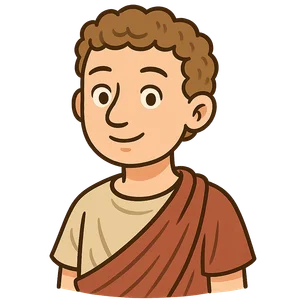
Pliny the Younger
Pliny the Younger was a Roman lawyer, author, and magistrate known for his collection of letters…
Reads at Grades 6–8 Listens at Grades 4–8
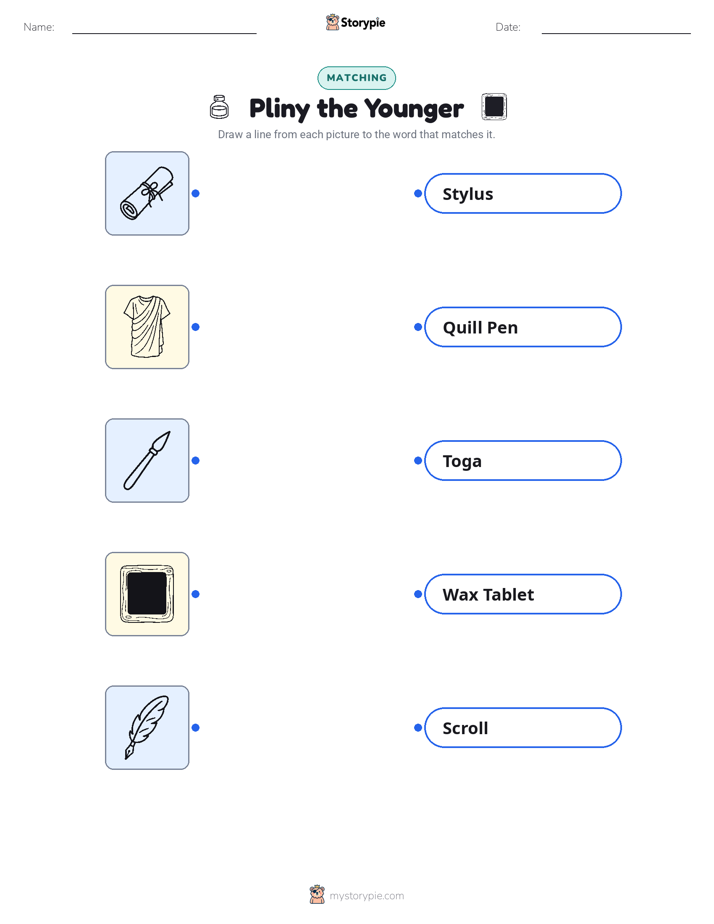
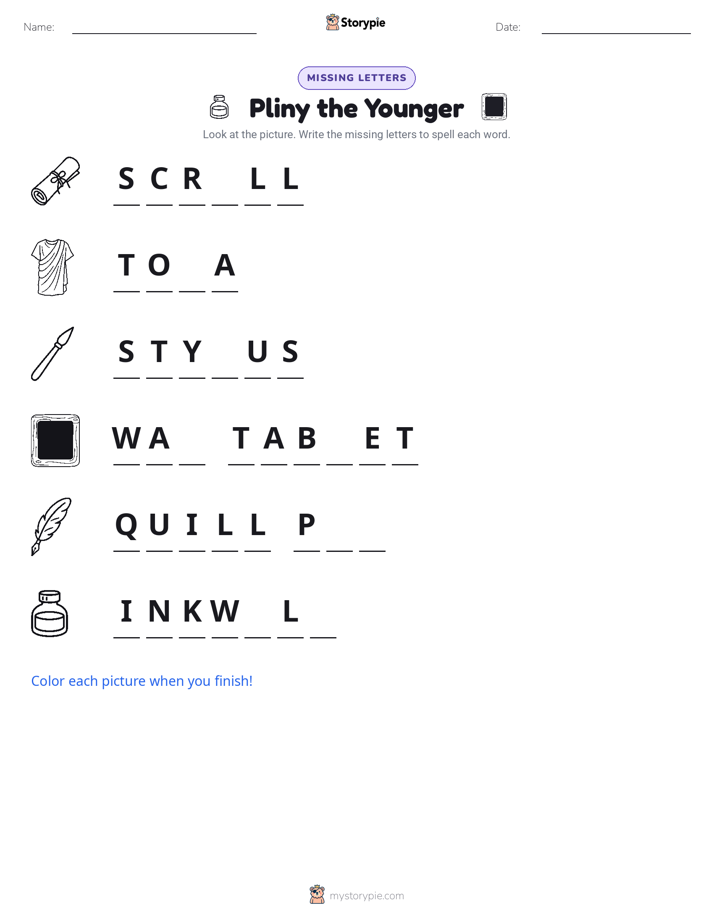
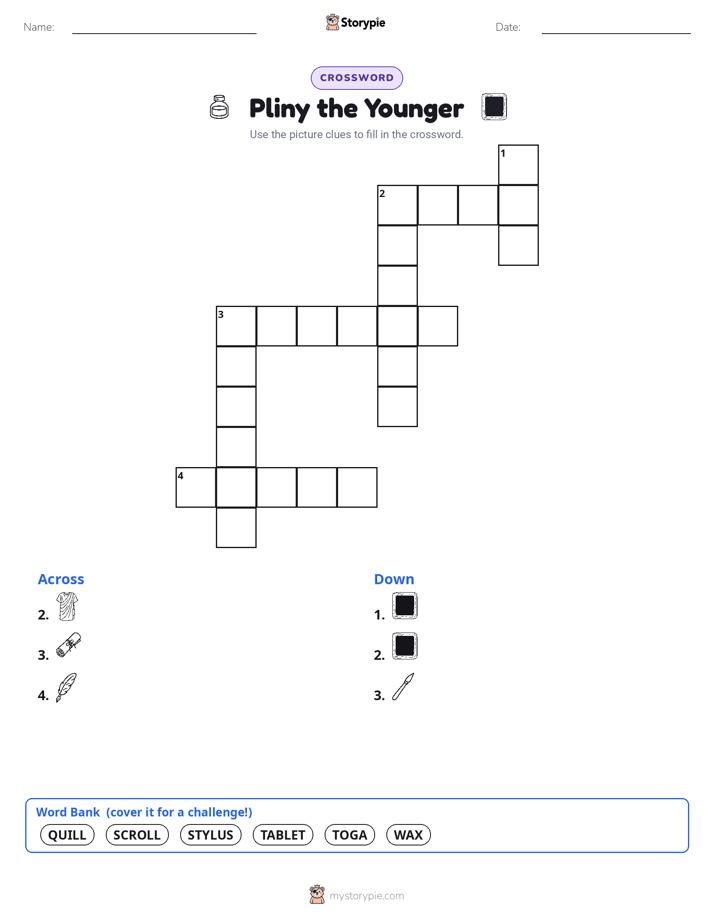
Print & create
Answer keys·No prep·Free with an account
28 worksheets · answer keys · full story · quiz · Ages 10-12 · CEFR B2
Plus adds 208,000+ more stories in 27 languages, audio for every one, and printables for all of them.
Just want Pliny the Younger?
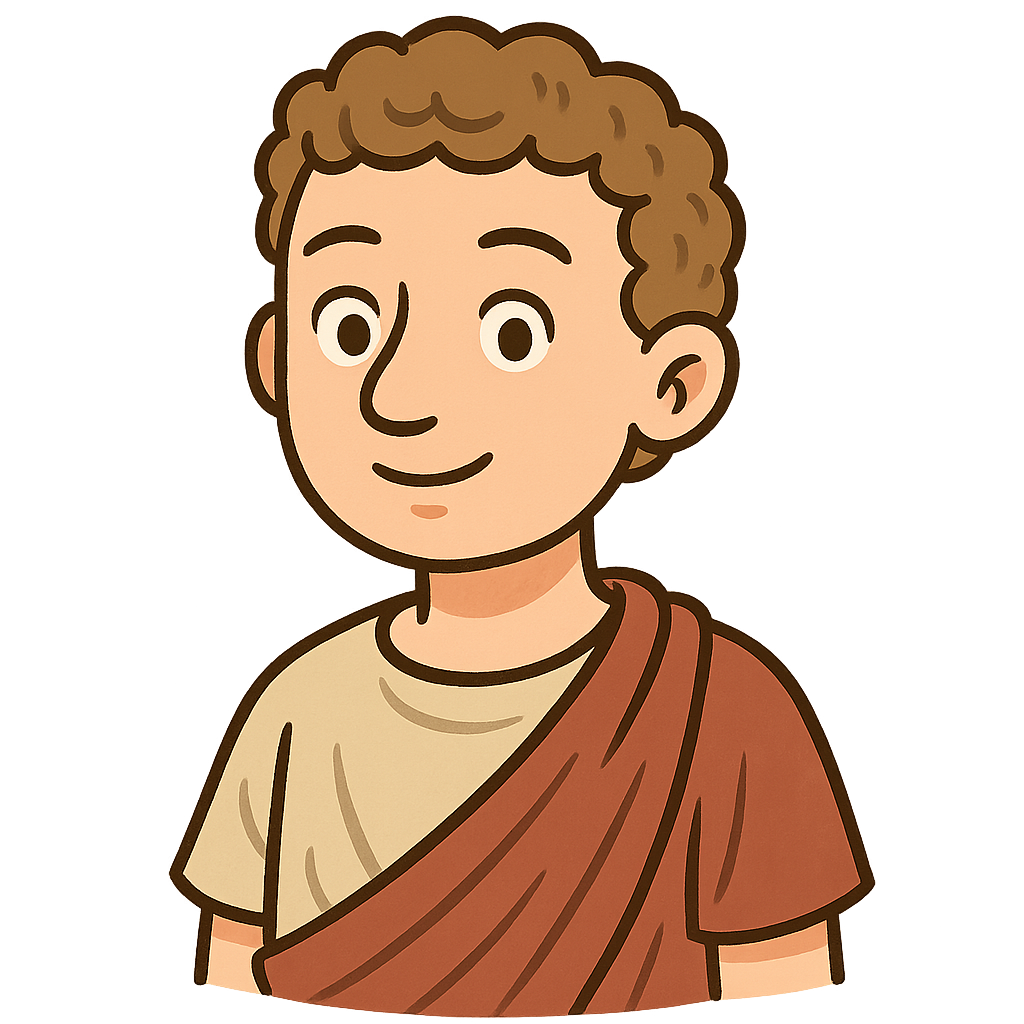
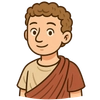
Hello, my name is Gaius Plinius Caecilius Secundus, but you can call me Pliny. I was born in the year 61 CE in the beautiful town of Comum, located by a large lake in northern Italy. My life began with a challenge, as my father passed away when I was just a boy. I was fortunate to be raised by my mother and my remarkable uncle, who shared my name, Gaius Plinius Secundus. To tell us apart, people called him Pliny the Elder, and I became known as Pliny the Younger. My uncle was a true inspiration—a celebrated author, a keen scientist, and the commander of a Roman fleet. He eventually adopted me as his son, and I admired him deeply. He instilled in me a powerful curiosity about the world and a profound respect for knowledge. Seeking the finest education possible, I was sent to Rome. There, I had the honor of studying with some of the greatest minds, including a man named Quintilian. He taught me the art of rhetoric, which is effective public speaking, a vital skill for any Roman aspiring to a life of public service.
An event that shaped my entire life occurred when I was 18 years old. On August 24th, 79 CE, I was with my uncle at Misenum, a town across the Bay of Naples. That day, we witnessed an astonishing sight: a strange and massive cloud, shaped like a pine tree, rising from the nearby Mount Vesuvius. My uncle, ever the scientist, was determined to study this phenomenon up close. As the commander of the Roman fleet stationed there, he also felt a deep duty to rescue the people living near the base of the mountain. He ordered his ships to be launched and sailed directly into the heart of the danger. I, however, stayed behind to continue with my studies. The hours that followed were filled with terror. The ground trembled violently, a thick layer of ash rained down from the sky, and the world was plunged into complete darkness. We later received the devastating news that my brave uncle had not survived; he was overcome by the poisonous gases released by the volcano. Many years later, my friend, the great historian Tacitus, asked me to describe what I had seen. I wrote him two detailed letters about the eruption that tragically buried the cities of Pompeii and Herculaneum. It is through these letters that people today have such a clear account of that fateful day.
Pliny the Younger
Hello, my name is Gaius Plinius Caecilius Secundus, but you can call me Pliny. I was born in the year 61 CE in the beautiful town of Comum, located by a large lake in northern Italy. My life began with a challenge, as my father passed away when I was just a boy. I was fortunate to be raised by my mother and my remarkable uncle, who shared my name, Gaius Plinius Secundus. To tell us apart, people called him Pliny the Elder, and I became known as Pliny the Younger. My uncle was a true inspiration—a celebrated author, a keen scientist, and the commander of a Roman fleet. He eventually adopted me as his son, and I admired him deeply. He instilled in me a powerful curiosity about the world and a profound respect for knowledge. Seeking the finest education possible, I was sent to Rome. There, I had the honor of studying with some of the greatest minds, including a man named Quintilian. He taught me the art of rhetoric, which is effective public speaking, a vital skill for any Roman aspiring to a life of public service.
An event that shaped my entire life occurred when I was 18 years old. On August 24th, 79 CE, I was with my uncle at Misenum, a town across the Bay of Naples. That day, we witnessed an astonishing sight: a strange and massive cloud, shaped like a pine tree, rising from the nearby Mount Vesuvius. My uncle, ever the scientist, was determined to study this phenomenon up close. As the commander of the Roman fleet stationed there, he also felt a deep duty to rescue the people living near the base of the mountain. He ordered his ships to be launched and sailed directly into the heart of the danger. I, however, stayed behind to continue with my studies. The hours that followed were filled with terror. The ground trembled violently, a thick layer of ash rained down from the sky, and the world was plunged into complete darkness. We later received the devastating news that my brave uncle had not survived; he was overcome by the poisonous gases released by the volcano. Many years later, my friend, the great historian Tacitus, asked me to describe what I had seen. I wrote him two detailed letters about the eruption that tragically buried the cities of Pompeii and Herculaneum. It is through these letters that people today have such a clear account of that fateful day.
In the wake of that tragedy, I committed myself to serving Rome, following the path my uncle had forged. I began my career as a lawyer, defending citizens in court, and started my journey up the 'cursus honorum,' the traditional sequence of political offices in the Roman Empire. My service led me to become a senator, and in the year 100 CE, I achieved one of the highest honors in Rome when I was elected consul. Throughout my career, I was privileged to work alongside the wise Emperor Trajan. However, my life was not solely defined by politics. I was also a dedicated writer. I held a strong belief that writing letters was a powerful way to connect with others and to create a lasting record of our lives. I carefully gathered hundreds of my letters to friends and family and compiled them into books. In these letters, I wrote about all aspects of my life: my experiences as a lawyer, the books I was reading, ghost stories I'd heard, advice on managing a country villa, and my deep love for my wife, Calpurnia. My goal was to paint a vivid portrait of my time for future generations to discover.
Around the year 110 CE, Emperor Trajan entrusted me with a significant responsibility. He appointed me as the governor of a distant province named Bithynia-Pontus, which is located in modern-day Turkey. The province was facing several challenges, and Trajan had confidence that I could restore order and improve its administration. As governor, my duties were vast, ranging from overseeing building projects and managing local finances to presiding over the courts. I often found myself uncertain about the best course of action, so I maintained a constant correspondence with the emperor, seeking his guidance. I wrote to him about building a new aqueduct, the best way to organize a fire brigade, and even how to handle a new religious group known as the Christians. Our letters, which have remarkably survived to this day, provide a fascinating and direct glimpse into the practical realities of managing the Roman Empire and the types of problems a provincial governor encountered daily.
I lived to be about 52 years old, and my life's work concluded around the year 113 CE, while I was still serving as the governor of Bithynia-Pontus. I am not remembered for commanding great armies in battle or for constructing massive monuments. Instead, my legacy is preserved through my words. My collection of letters has endured for nearly two thousand years, offering a personal and detailed window into what life was truly like in the Roman Empire. Through them, you can learn about the daily concerns, the friendships, and the values that shaped my world. I hope that by reading my words, you feel as though you have met me and have come to see my world a little more clearly.
Wow facts
About
Pliny the Younger was a Roman lawyer, author, and magistrate known for his collection of letters, which provide a detailed account of Roman life, and for his eyewitness description of the eruption of Mount Vesuvius in 79 CE.
Take a Quiz
Question 1 of 5
In your own words, retell the events of August 24th, 79 CE, from Pliny's perspective, focusing on the main events.
Explore next


Want to do even more?
Go beyond exploring. Unlock tools that turn every story into real learning.

Storypie Plus for families
Full stories, quizzes, and printables. Nights and car rides, sorted.
- Unlimited audio stories
- Create Mode: your child stars in the story
- Offline downloads
- Printable worksheets & coloring pages

Why Storypie for Schools
Students engaged. Prep in seconds. Evenings back to you.
- Worksheets & Quizzes
- Classroom Management
- Formative Assessment
- Custom Curriculum & Lesson Plans
- 27 Languages

Why Storypie for Homeschool
Curriculum done. They'll ask for more. Hours back in your day.
- Worksheet Generator
- First-Person Audio Stories
- Built-in Comprehension Quizzes
- Custom Curriculum & Lesson Plans
- Print & Go Activities