English

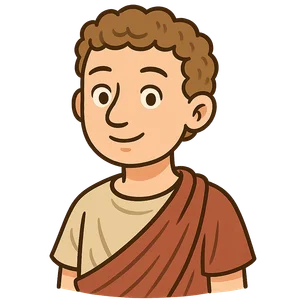
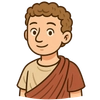
Pliny the Younger
An ancient Roman lawyer, author…
Reads at Grades 3–5 Listens at Grades 1–5
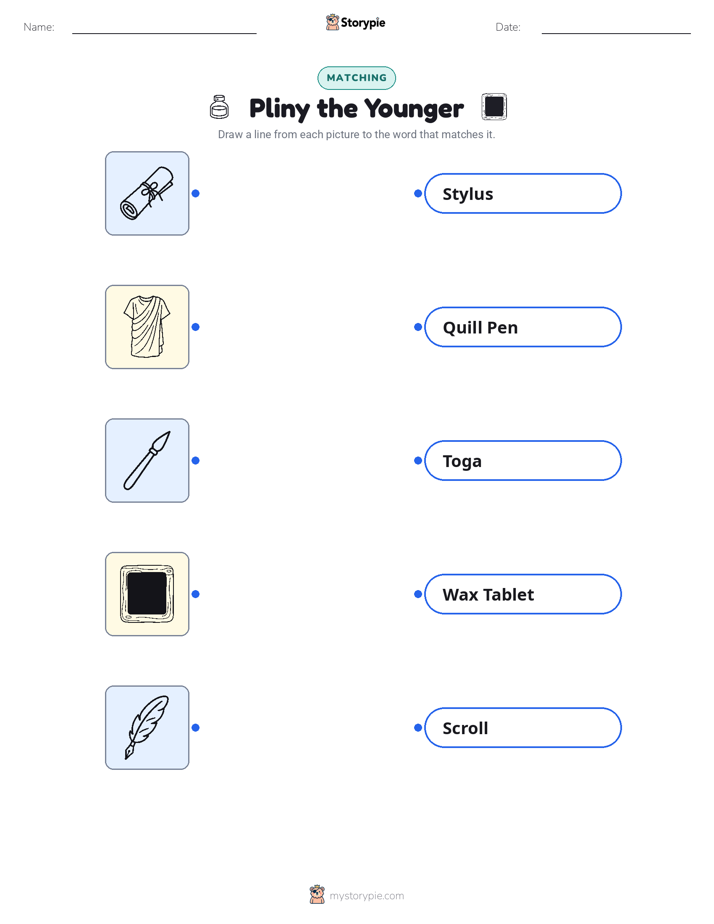
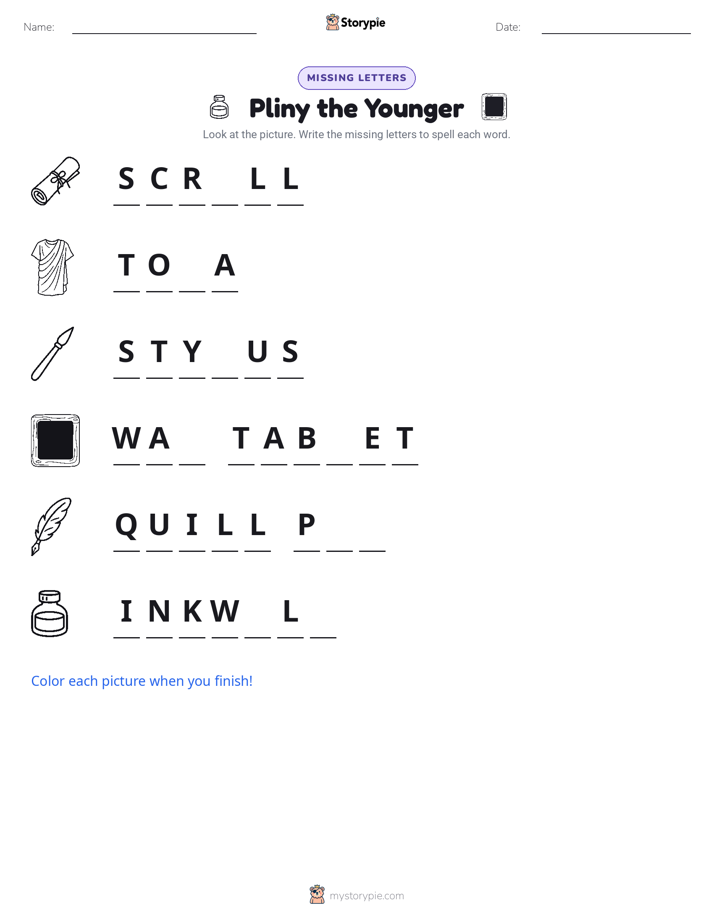
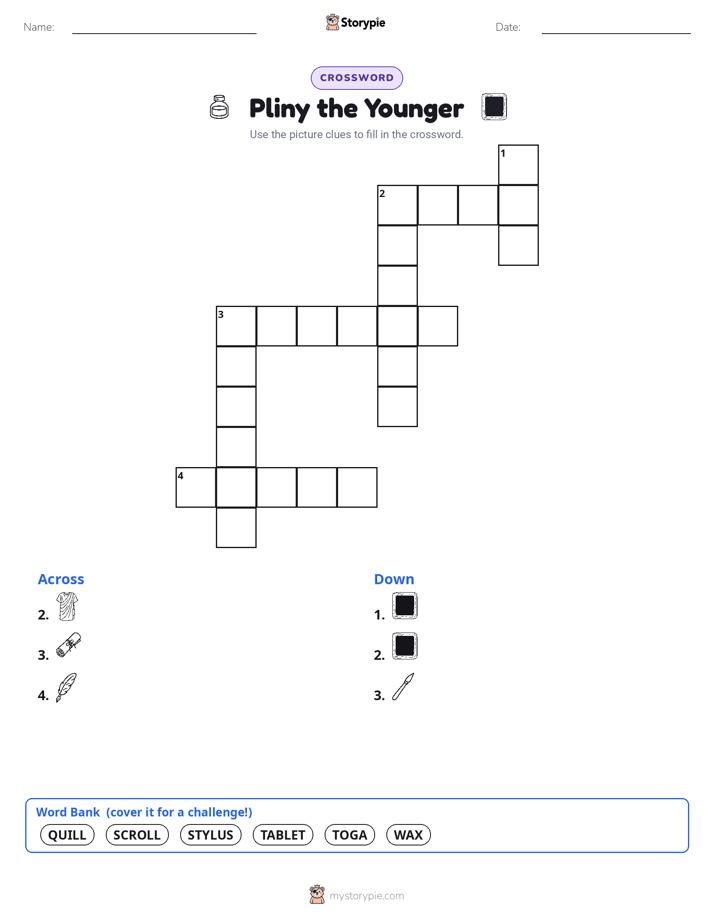
Print & create
Answer keys·No prep·Free with an account
28 worksheets · answer keys · full story · quiz · Ages 8-10 · CEFR B1
Plus adds 208,000+ more stories in 27 languages, audio for every one, and printables for all of them.
Just want Pliny the Younger?
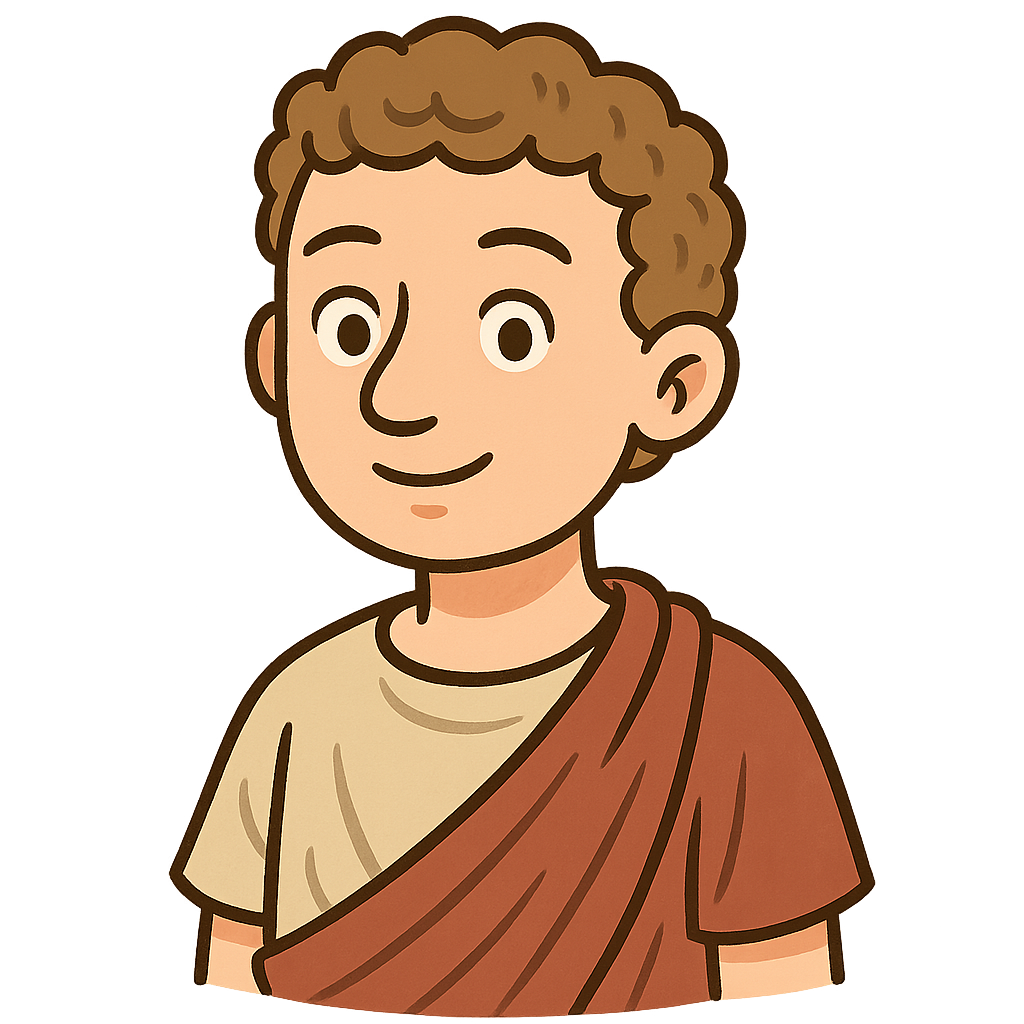
Hello! My name is Gaius Plinius Caecilius Secundus, but you can call me Pliny. I was born in the year 61 in a beautiful town called Comum in northern Italy. It was a lovely place to grow up, with sparkling lakes and green hills. My father passed away when I was young, which was a very sad time for my family. But I was lucky because I was adopted by my wonderful uncle, who was also named Pliny! To avoid confusion, people today call him Pliny the Elder and me, Pliny the Younger. My uncle was a famous author and a commander in the Roman navy. He was very wise and taught me to love learning and writing more than anything. I spent my childhood with my nose buried in every scroll I could find, preparing for a life of public service in the great city of Rome.
When I was about 18 years old, in the year 79, something terrifying and unforgettable happened. I was staying with my uncle and my mother near the Bay of Naples when the great volcano, Mount Vesuvius, erupted! From across the bay where we were, I saw a giant cloud of ash, stone, and smoke shoot into the sky. It was enormous and dark, shaped just like a tall pine tree. My brave uncle, Pliny the Elder, was the commander of the Roman fleet there. As soon as he saw the danger, he decided to sail his ships toward the volcano to rescue people who were trapped. It was a very sad day for me, as he did not return from that brave mission. I wrote down everything I saw in two long letters to my friend, the historian Tacitus. I wanted to make sure that no one would ever forget the awesome power of the volcano and the great courage of those who, like my uncle, tried to help others.
A Story from Ancient Rome: Pliny the Younger
Hello! My name is Gaius Plinius Caecilius Secundus, but you can call me Pliny. I was born in the year 61 in a beautiful town called Comum in northern Italy. It was a lovely place to grow up, with sparkling lakes and green hills. My father passed away when I was young, which was a very sad time for my family. But I was lucky because I was adopted by my wonderful uncle, who was also named Pliny! To avoid confusion, people today call him Pliny the Elder and me, Pliny the Younger. My uncle was a famous author and a commander in the Roman navy. He was very wise and taught me to love learning and writing more than anything. I spent my childhood with my nose buried in every scroll I could find, preparing for a life of public service in the great city of Rome.
When I was about 18 years old, in the year 79, something terrifying and unforgettable happened. I was staying with my uncle and my mother near the Bay of Naples when the great volcano, Mount Vesuvius, erupted! From across the bay where we were, I saw a giant cloud of ash, stone, and smoke shoot into the sky. It was enormous and dark, shaped just like a tall pine tree. My brave uncle, Pliny the Elder, was the commander of the Roman fleet there. As soon as he saw the danger, he decided to sail his ships toward the volcano to rescue people who were trapped. It was a very sad day for me, as he did not return from that brave mission. I wrote down everything I saw in two long letters to my friend, the historian Tacitus. I wanted to make sure that no one would ever forget the awesome power of the volcano and the great courage of those who, like my uncle, tried to help others.
After my studies, I moved to Rome to begin my career as a lawyer and a senator. My biggest goal was to help people and make the Roman Empire a better and fairer place for everyone. I spent many hours giving speeches in the busy law courts, defending people who needed my help. I also spoke in the Senate, where important decisions were made for all of Rome. I worked very hard to be honest and just, and because of this, I was respected by many people, including the Emperor Trajan himself. In the year 100, I was given one of the highest honors a Roman could receive: I was elected consul. It was a very proud moment for me. This important job meant that I was one of the two main leaders of the entire Roman Republic for that year.
Even though my work as a senator and lawyer kept me very busy, I always made time for my greatest passion: writing. I wrote hundreds of letters to my friends and family about everything you can imagine. In my letters, I described the exciting, noisy life in the bustling city of Rome and contrasted it with the peace and quiet of my countryside villas. I shared ghost stories I had heard, my thoughts on government and justice, and details about the people I met. Later in my life, around the year 110, I was appointed governor of a province called Bithynia-Pontus. During that time, I wrote many official letters to Emperor Trajan, asking for his advice on how to rule fairly. These letters give us a special peek into what life was like almost two thousand years ago.
My work as a governor was my final role in service to Rome. I lived to be about 52 years old, passing away around the year 113. While I was proud of my career as a senator and lawyer, my true legacy is my collection of letters. Because they were carefully saved and copied for centuries, people today can read my words and learn exactly what it was like to be a Roman living during the height of the Empire. My detailed description of the Vesuvius eruption is still studied by scientists to understand how volcanoes work. Most importantly, my letters show that even though we lived long ago, we had many of the same worries, friendships, and hopes that people still have today.
Wow facts
About
An ancient Roman lawyer, author, and magistrate whose letters provide a unique and detailed account of Roman society in the 1st century CE, including a famous eyewitness description of the eruption of Mount Vesuvius, which is traditionally said to have happened on August 24, 79 CE, but some experts think it might have occurred in October instead.
Take a Quiz
Question 1 of 5
In what year did Pliny the Younger witness the eruption of Mount Vesuvius?
Explore next


Want to do even more?
Go beyond exploring. Unlock tools that turn every story into real learning.

Storypie Plus for families
Full stories, quizzes, and printables. Nights and car rides, sorted.
- Unlimited audio stories
- Create Mode: your child stars in the story
- Offline downloads
- Printable worksheets & coloring pages

Why Storypie for Schools
Students engaged. Prep in seconds. Evenings back to you.
- Worksheets & Quizzes
- Classroom Management
- Formative Assessment
- Custom Curriculum & Lesson Plans
- 27 Languages

Why Storypie for Homeschool
Curriculum done. They'll ask for more. Hours back in your day.
- Worksheet Generator
- First-Person Audio Stories
- Built-in Comprehension Quizzes
- Custom Curriculum & Lesson Plans
- Print & Go Activities