English

Sir Leonard Woolley
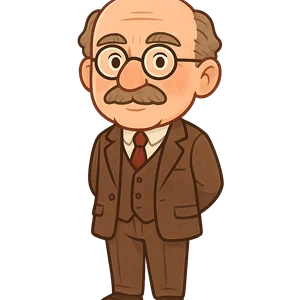
Sir Leonard Woolley was a British archaeologist renowned for his excavations at the ancient Sumerian city of…
Reads at Grades 6–8 Listens at Grades 4–8
Print & create
Answer keys·No prep·Free with an account
28 worksheets · answer keys · full story · quiz · Ages 10-12 · CEFR B2
Plus adds 280,000+ more stories in 27 languages, audio for every one, and printables for all of them.
Just want Sir Leonard Woolley?
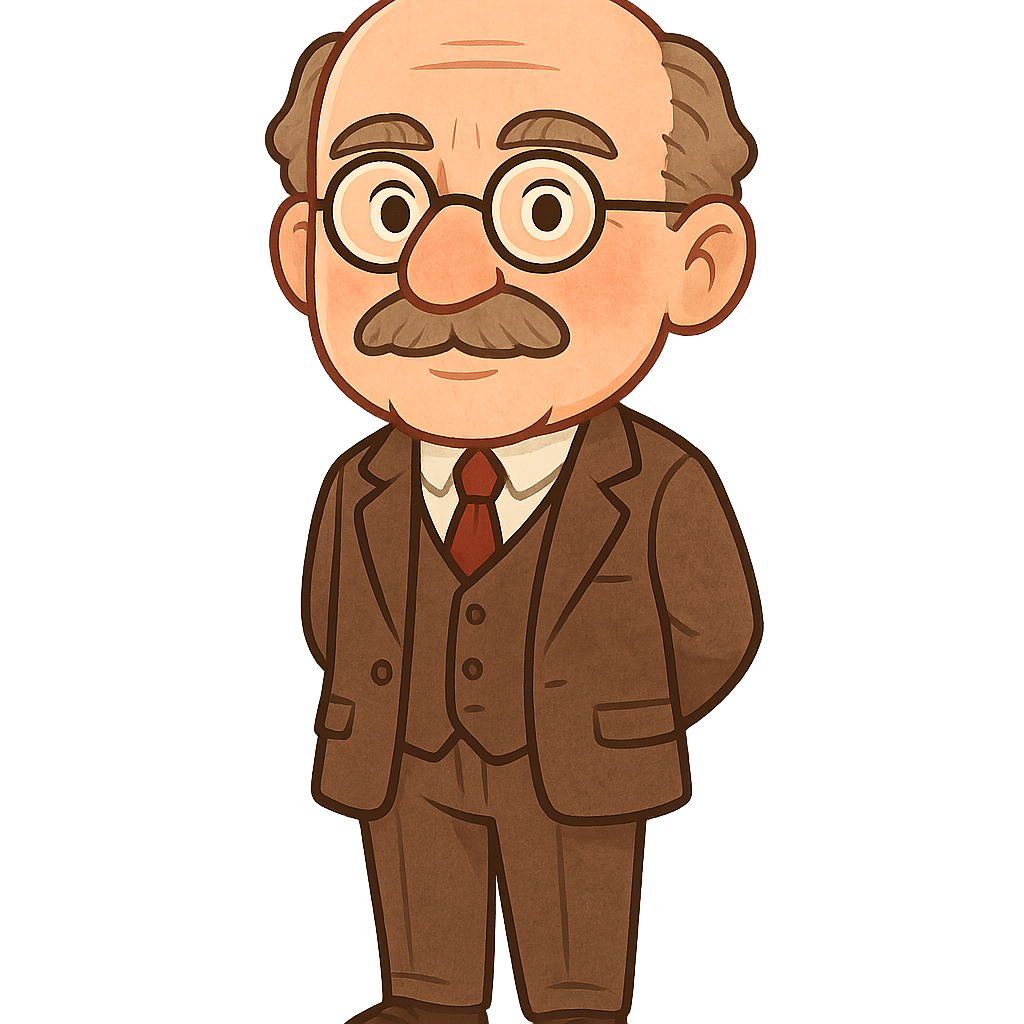
Hello, my name is Sir Leonard Woolley, and I was an archaeologist who helped uncover some of the world's greatest ancient secrets. I was born on April 17th, 1880, in London, England. My father was a clergyman, and growing up, I never imagined I would spend my life digging in the desert. When I attended Oxford University, the head of my college suggested I should become an archaeologist. It sounded like an adventure, so I decided to give it a try. In 1905, I began working at the Ashmolean Museum in Oxford, where I was surrounded by incredible objects from the past. My first real taste of fieldwork came in 1906, when I helped excavate a Roman site in England called Corbridge. It was there I learned how to carefully uncover history, piece by piece, from the earth.
My work soon took me far from England. I traveled to Nubia, in Africa, and then to a very important ancient city called Carchemish in what is now Syria. Starting in 1912, I led the excavation there. I even had a brilliant young assistant named T.E. Lawrence, who would later become famous as 'Lawrence of Arabia.' We were uncovering the secrets of the ancient Hittite empire when our work was suddenly stopped in 1914 by the start of the First World War. I joined the British Army as an intelligence officer. It was a difficult time, and I was even captured and held as a prisoner of war in Turkey for two years. When the war finally ended in 1918, I was more determined than ever to return to the field and continue my search for the past.
Sir Leonard Woolley: Uncovering Ancient Ur
Hello, my name is Sir Leonard Woolley, and I was an archaeologist who helped uncover some of the world's greatest ancient secrets. I was born on April 17th, 1880, in London, England. My father was a clergyman, and growing up, I never imagined I would spend my life digging in the desert. When I attended Oxford University, the head of my college suggested I should become an archaeologist. It sounded like an adventure, so I decided to give it a try. In 1905, I began working at the Ashmolean Museum in Oxford, where I was surrounded by incredible objects from the past. My first real taste of fieldwork came in 1906, when I helped excavate a Roman site in England called Corbridge. It was there I learned how to carefully uncover history, piece by piece, from the earth.
My work soon took me far from England. I traveled to Nubia, in Africa, and then to a very important ancient city called Carchemish in what is now Syria. Starting in 1912, I led the excavation there. I even had a brilliant young assistant named T.E. Lawrence, who would later become famous as 'Lawrence of Arabia.' We were uncovering the secrets of the ancient Hittite empire when our work was suddenly stopped in 1914 by the start of the First World War. I joined the British Army as an intelligence officer. It was a difficult time, and I was even captured and held as a prisoner of war in Turkey for two years. When the war finally ended in 1918, I was more determined than ever to return to the field and continue my search for the past.
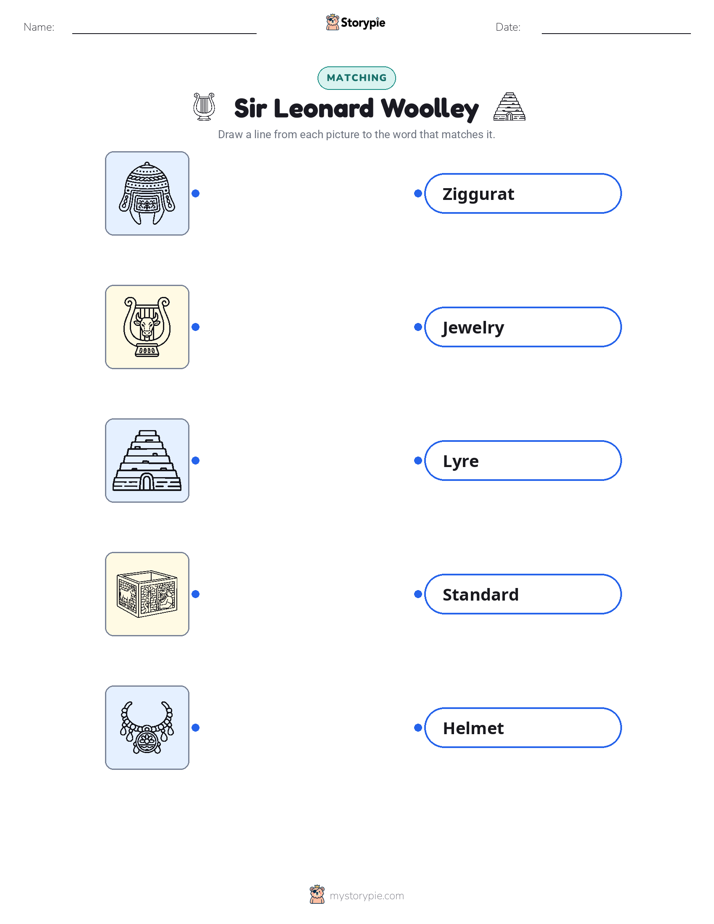
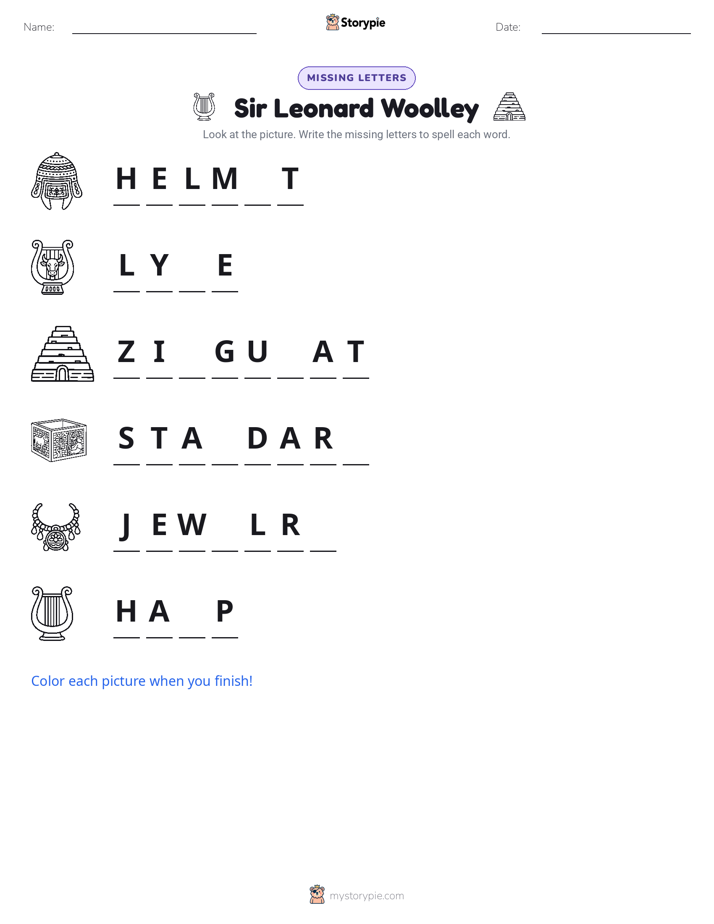
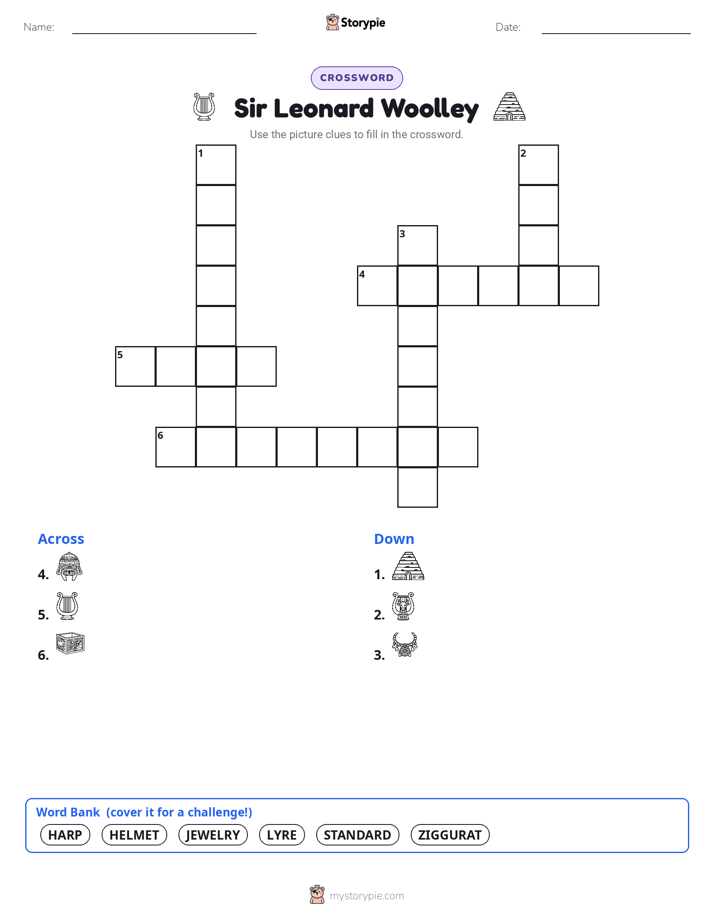
In 1922, I was given the opportunity of a lifetime. I was asked to lead a major expedition to Mesopotamia, in modern-day Iraq, to excavate the ancient city of Ur. This was a legendary place, known as the home of the biblical figure Abraham. For twelve long seasons, from 1922 to 1934, my team and I worked under the hot sun. We uncovered the city's massive ziggurat—a giant stepped temple reaching for the sky—and the houses where people lived over 4,000 years ago. Then, in 1926, we stumbled upon our most spectacular find: the Royal Cemetery of Ur. It was a vast burial ground with over 2,000 graves. Sixteen of them were 'royal tombs,' filled with unimaginable treasures. We found beautiful jewelry, golden helmets, and musical instruments like the Lyres of Ur, decorated with a bull's head made of gold. One of the most amazing objects was the 'Standard of Ur,' a box with detailed mosaic pictures showing scenes of war and peace in the ancient Sumerian world. These discoveries gave us a window into a lost civilization.
Uncovering these treasures was delicate work. Many objects were thousands of years old and could crumble to dust if we weren't careful. I had to invent new methods to preserve them. For example, we found the imprints of wooden harps in the soil, but the wood itself was gone. I carefully poured liquid plaster into the hollow spaces left behind. When the plaster hardened, it perfectly recreated the shape of the ancient instrument. My talented wife, Katharine, who was an artist, joined me at the dig in 1927. She meticulously drew the objects we found and helped reconstruct the delicate golden headdresses. We wanted the whole world to see what we had found, so I wrote books and gave lectures about our work. In 1935, in recognition of these discoveries, I was knighted by the King and became Sir Leonard Woolley.
I continued my work for many years, even helping protect important art and artifacts during the Second World War. I lived a full and exciting life to be 79 years old. The discoveries my team and I made at Ur changed history. We showed the world how advanced and artistic the ancient Sumerians were and proved that Mesopotamia was truly a 'cradle of civilization.' The incredible treasures we carefully brought out of the ground can be seen in museums today, where they continue to tell the amazing story of one of the world's first great cultures.
Wow facts
About
Sir Leonard Woolley was a British archaeologist renowned for his excavations at the ancient Sumerian city of Ur in Mesopotamia, where he discovered the Royal Cemetery.
Take a Quiz
Question 1 of 5
What is the main idea of the story about Sir Leonard Woolley's life?
Explore next






Want to do even more?
Go beyond exploring. Unlock tools that turn every story into real learning.

Storypie Plus for families
Full stories, quizzes, and printables. Nights and car rides, sorted.
- Unlimited audio stories
- Create Mode: your child stars in the story
- Offline downloads
- Printable worksheets & coloring pages

Why Storypie for Schools
Students engaged. Prep in seconds. Evenings back to you.
- Worksheets & Quizzes
- Classroom Management
- Formative Assessment
- Custom Curriculum & Lesson Plans
- 27 Languages

Why Storypie for Homeschool
Curriculum done. They'll ask for more. Hours back in your day.
- Worksheet Generator
- First-Person Audio Stories
- Built-in Comprehension Quizzes
- Custom Curriculum & Lesson Plans
- Print & Go Activities