English

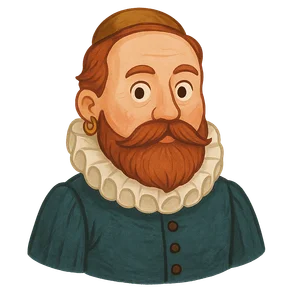
Tycho Brahe
Tycho Brahe was a Danish astronomer whose precise and comprehensive astronomical observations laid the…
Reads at Grades 6–8 Listens at Grades 4–8
Print & create
Answer keys·No prep·Free with an account
28 worksheets · answer keys · full story · quiz · Ages 10-12 · CEFR B2
Plus adds 164,000+ more stories in 27 languages, audio for every one, and printables for all of them.
Just want Tycho Brahe?
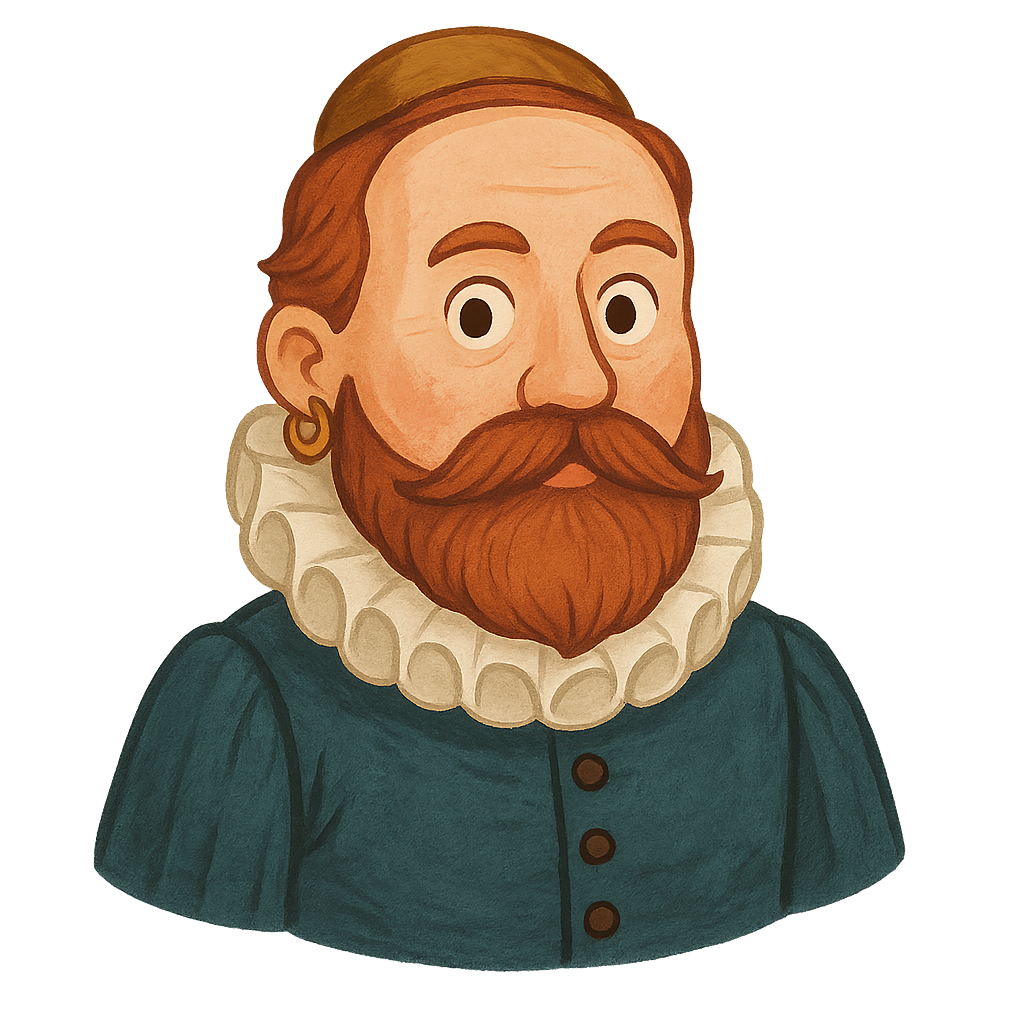
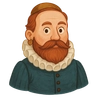
Hello, my name is Tycho Brahe, and I spent my life looking up at the night sky. I was born into a noble family in Denmark on December 14th, 1546. My family had big plans for me; they expected I would study law and become a powerful politician. But the universe had a different path in mind for me. On August 21st, 1560, when I was just a boy, I witnessed a total solar eclipse. I was completely amazed that astronomers could predict such a magnificent event to the very day. This moment ignited a passion inside me to understand the heavens. While I was sent to universities in Copenhagen and Leipzig to study law, I secretly spent my nights learning about the stars. My passion sometimes led to trouble. In 1566, I got into a duel with another student over who was the better mathematician. I lost part of my nose in the fight and for the rest of my life, I wore a prosthetic one made of brass.
My life changed forever on the night of November 11th, 1572. While gazing at the constellation Cassiopeia, I saw something impossible: a new star, shining more brilliantly than any other. In my time, everyone believed that the heavens were perfect and unchanging, a divine creation that never varied. But my discovery proved this long-held belief was wrong. The sky was not static; it could change. I carefully observed this new star, which we now call a supernova, and documented its appearance and gradual fading. In 1573, I published a book about my findings called 'De nova stella,' which means 'On the New Star.' This book made me famous across Europe and brought my work to the attention of the King of Denmark, Frederick II, who was very impressed with my discovery.
Tycho Brahe: The Man Who Mapped the Stars
Hello, my name is Tycho Brahe, and I spent my life looking up at the night sky. I was born into a noble family in Denmark on December 14th, 1546. My family had big plans for me; they expected I would study law and become a powerful politician. But the universe had a different path in mind for me. On August 21st, 1560, when I was just a boy, I witnessed a total solar eclipse. I was completely amazed that astronomers could predict such a magnificent event to the very day. This moment ignited a passion inside me to understand the heavens. While I was sent to universities in Copenhagen and Leipzig to study law, I secretly spent my nights learning about the stars. My passion sometimes led to trouble. In 1566, I got into a duel with another student over who was the better mathematician. I lost part of my nose in the fight and for the rest of my life, I wore a prosthetic one made of brass.
My life changed forever on the night of November 11th, 1572. While gazing at the constellation Cassiopeia, I saw something impossible: a new star, shining more brilliantly than any other. In my time, everyone believed that the heavens were perfect and unchanging, a divine creation that never varied. But my discovery proved this long-held belief was wrong. The sky was not static; it could change. I carefully observed this new star, which we now call a supernova, and documented its appearance and gradual fading. In 1573, I published a book about my findings called 'De nova stella,' which means 'On the New Star.' This book made me famous across Europe and brought my work to the attention of the King of Denmark, Frederick II, who was very impressed with my discovery.
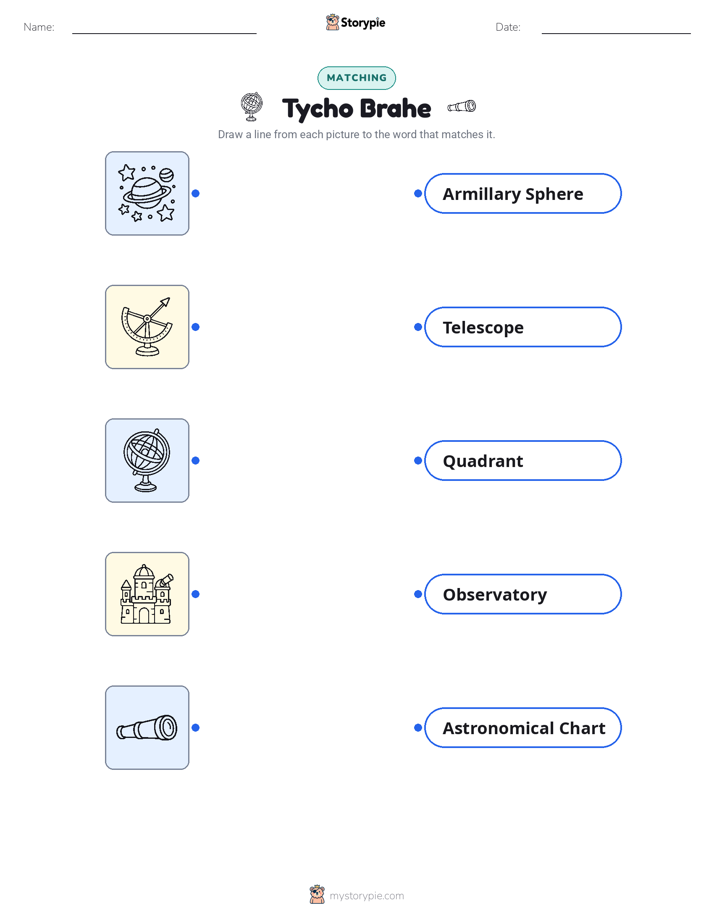
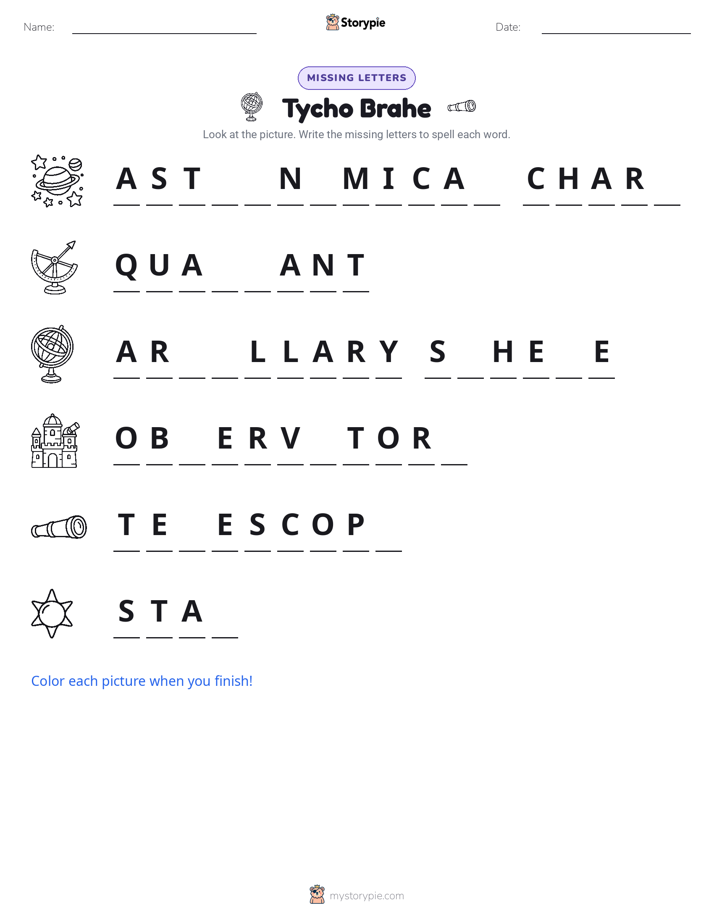
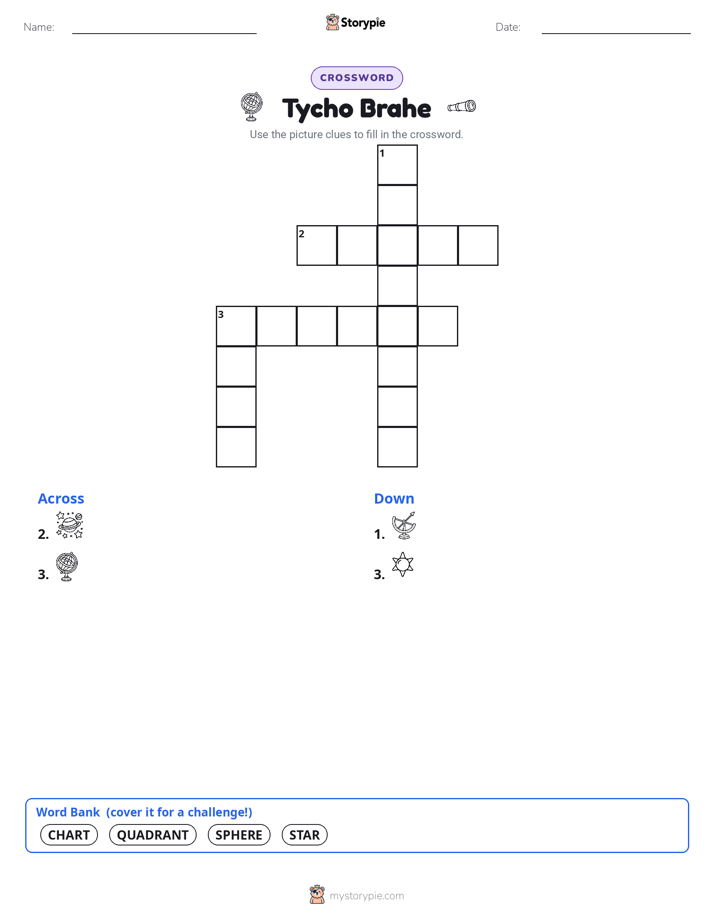
King Frederick II saw the importance of my work and wanted to support it. In 1576, he gave me a truly incredible gift: the entire island of Hven and the funding to build the finest observatory in the world. I named my grand castle-observatory Uraniborg, or 'Castle of the Heavens.' Later, I built a second observatory, Stjerneborg, which was mostly underground to protect my delicate instruments from the wind. Before my time, astronomers would only look at the sky on occasion, but I knew that to truly understand the universe, I needed to watch it constantly. For more than 20 years, I conducted systematic, nightly observations of the stars and planets. I designed and built giant instruments, like massive quadrants and armillary spheres, to measure their positions with incredible accuracy. All of this was done without a telescope, which had not yet been invented. My work resulted in a catalog of the stars that was more precise than any that had ever existed.
My wonderful time on Hven could not last forever. My great patron, King Frederick II, passed away in 1588, and the new king, Christian IV, did not share his father's enthusiasm for astronomy. My funding was cut, and it became difficult to continue my work. In 1597, I made the difficult decision to leave my beloved island and my observatories behind. I traveled through Europe looking for a new home for my research. Fortunately, in 1599, I received an invitation from the Holy Roman Emperor, Rudolf II. He asked me to come to Prague and serve as the official imperial astronomer. It was here that I hoped to use my years of data to prove my own model of the universe, which I called the Tychonic system. I believed it was a better description of the cosmos than the old Ptolemaic system or the new one proposed by Copernicus.
In Prague, I knew I needed help. My strength was in observation, but I needed a brilliant mathematician to make sense of the mountains of data I had collected. In 1600, a gifted young man named Johannes Kepler came to work as my assistant. He had a genius for mathematics that was exactly what I was looking for. I saw his potential and gave him the most difficult puzzle I had: to determine the true orbit of the planet Mars. For centuries, astronomers had struggled to predict its path, but their models never quite matched reality. I knew that my precise observations held the secret, and I trusted that Kepler's mathematical mind was the key that could finally unlock it.
My time working with Kepler in Prague was short, as my life came to an end in 1601. I lived to be 54 years old. Before I passed on, I entrusted all of my precious data, the work of my entire life, to Johannes Kepler. Though I did not live to see it, he used my detailed observations of Mars to discover the laws of planetary motion, which completely revolutionized our understanding of the solar system. I am remembered today not for the Tychonic system I tried to prove, but for something far more important: my dedication to careful, precise, and tireless observation. My data became the solid foundation upon which modern astronomy was built.
Wow facts
About
Tycho Brahe was a Danish astronomer whose precise and comprehensive astronomical observations laid the foundation for Johannes Kepler's laws of planetary motion.
Take a Quiz
Question 1 of 5
Why was Tycho's discovery of a new star, or supernova, in 1572 so shocking and important?
Explore next




Want to do even more?
Go beyond exploring. Unlock tools that turn every story into real learning.

Storypie Plus for families
Full stories, quizzes, and printables. Nights and car rides, sorted.
- Unlimited audio stories
- Create Mode: your child stars in the story
- Offline downloads
- Printable worksheets & coloring pages

Why Storypie for Schools
Students engaged. Prep in seconds. Evenings back to you.
- Worksheets & Quizzes
- Classroom Management
- Formative Assessment
- Custom Curriculum & Lesson Plans
- 27 Languages

Why Storypie for Homeschool
Curriculum done. They'll ask for more. Hours back in your day.
- Worksheet Generator
- First-Person Audio Stories
- Built-in Comprehension Quizzes
- Custom Curriculum & Lesson Plans
- Print & Go Activities