English

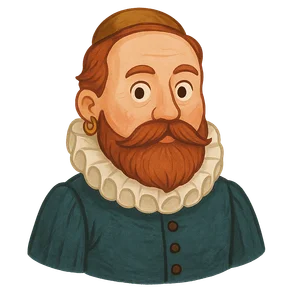
Tycho Brahe
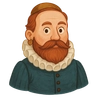
Tycho Brahe was a Danish astronomer whose precise and comprehensive astronomical observations laid the…
Reads at Grades K-2 Listens at K–3
Print & create
Answer keys·No prep·Free with an account
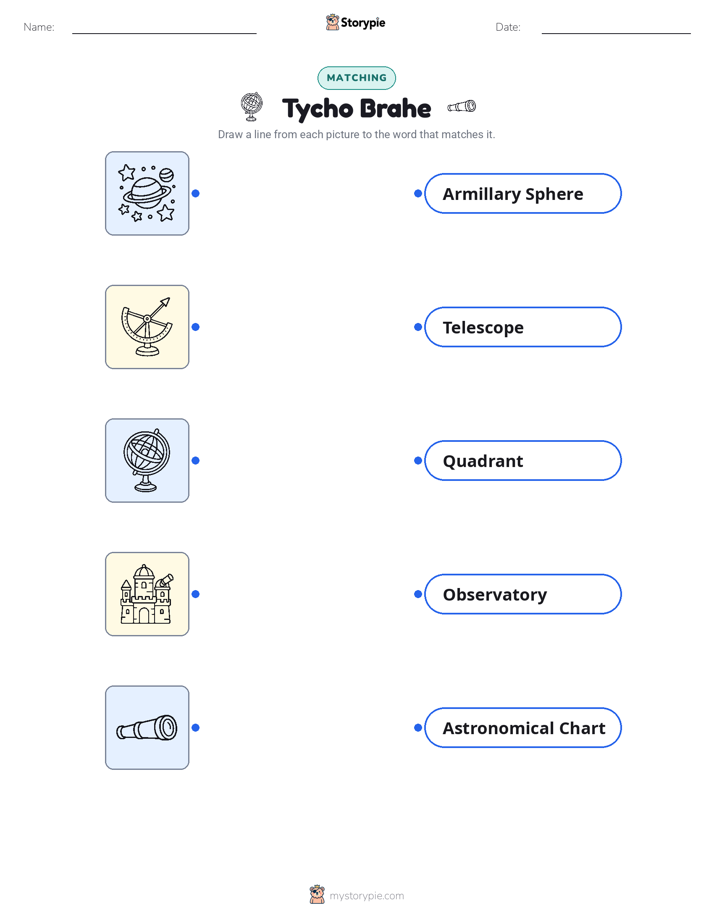
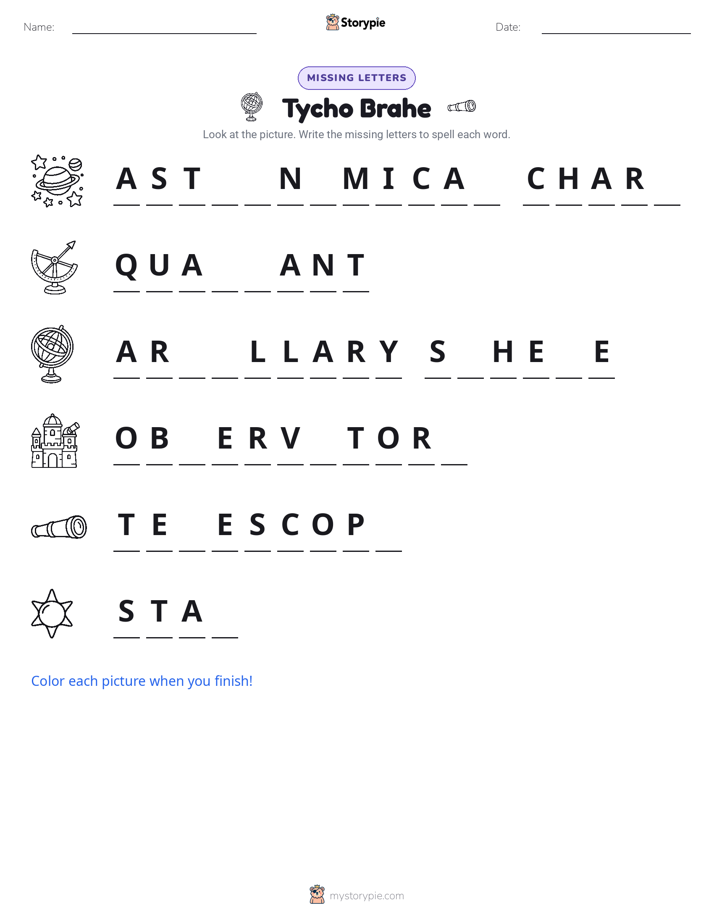
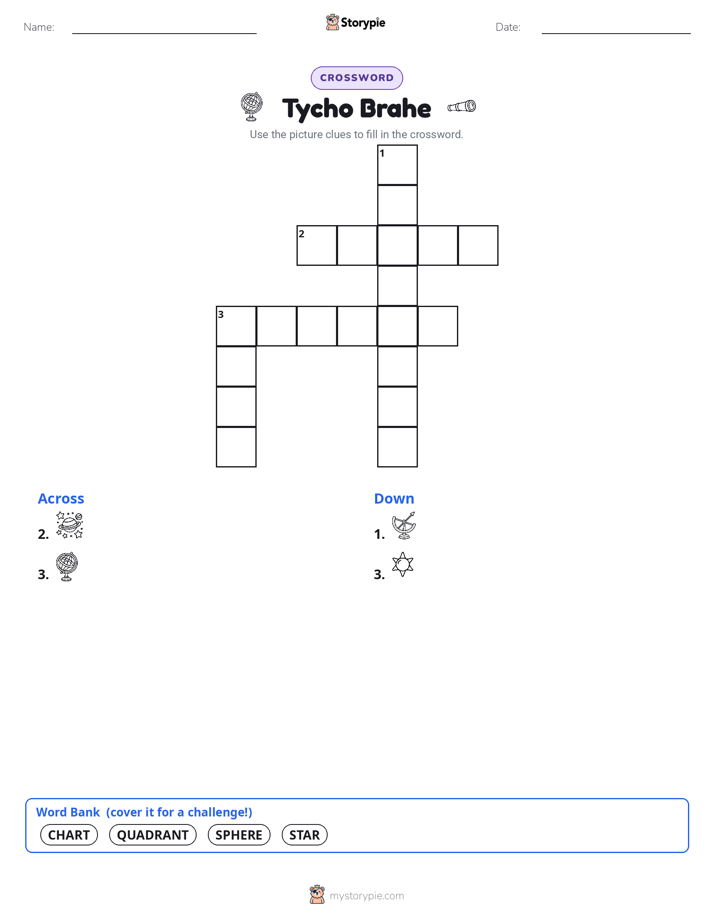
28 worksheets · answer keys · full story · quiz · Ages 6-8 · CEFR A2
Plus adds 164,000+ more stories in 27 languages, audio for every one, and printables for all of them.
Just want Tycho Brahe?
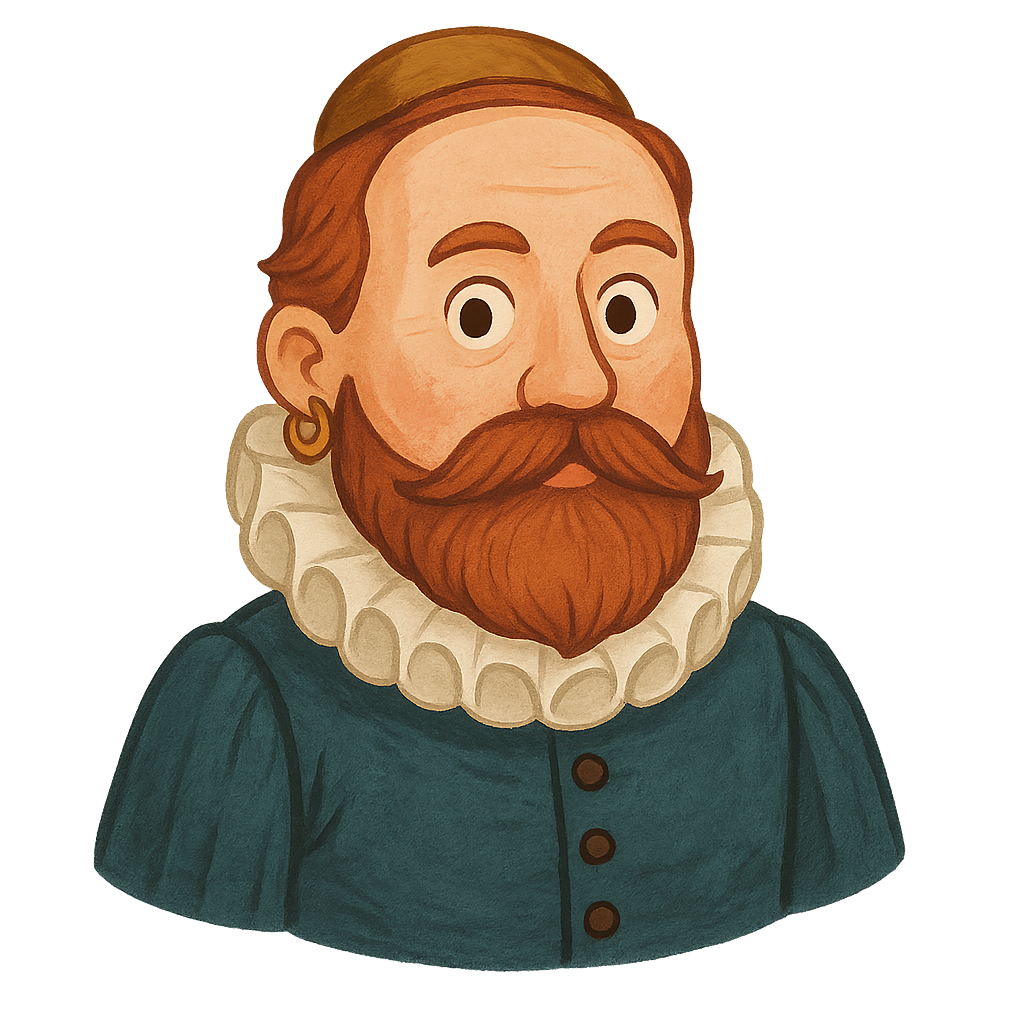
Hello! My name is Tycho Brahe, and I was a stargazer. I was born a very long time ago, on December 14th, 1546, in a castle in a country called Denmark. Even when I was a young boy, I loved looking up at the night sky. When I was 13 years old, in 1560, I saw something amazing—a solar eclipse, where the Moon blocked out the sun! It was predicted to happen, and it did, right on time. I thought that was the most wonderful thing in the world, and from that day on, I knew I wanted to spend my life studying the stars.
When I was a student, something funny happened. I got into a silly argument about math and ended up in a sword duel in 1566. A piece of my nose was cut off! But I did not let that stop me. I made myself a new nose tip out of metal and wore it proudly. While I was studying, I noticed that the charts everyone used to predict where the planets would be were often wrong. I decided I would make my own charts—the most accurate ones anyone had ever seen!
In 1572, I saw a brand-new star appear in the sky where there was not one before! It was so bright. This discovery made me famous. The king of Denmark, Frederick II, was so impressed that in 1576 he gave me my very own island called Hven. There, I built a fantastic observatory—a special building for watching the stars. I called it Uraniborg, which means 'Castle of the Heavens.' It was not just a castle; it was filled with giant instruments that I designed myself to measure the positions of stars and planets more precisely than ever before. It was the best place in the world for stargazing.
Tycho Brahe
Hello! My name is Tycho Brahe, and I was a stargazer. I was born a very long time ago, on December 14th, 1546, in a castle in a country called Denmark. Even when I was a young boy, I loved looking up at the night sky. When I was 13 years old, in 1560, I saw something amazing—a solar eclipse, where the Moon blocked out the sun! It was predicted to happen, and it did, right on time. I thought that was the most wonderful thing in the world, and from that day on, I knew I wanted to spend my life studying the stars.
When I was a student, something funny happened. I got into a silly argument about math and ended up in a sword duel in 1566. A piece of my nose was cut off! But I did not let that stop me. I made myself a new nose tip out of metal and wore it proudly. While I was studying, I noticed that the charts everyone used to predict where the planets would be were often wrong. I decided I would make my own charts—the most accurate ones anyone had ever seen!
In 1572, I saw a brand-new star appear in the sky where there was not one before! It was so bright. This discovery made me famous. The king of Denmark, Frederick II, was so impressed that in 1576 he gave me my very own island called Hven. There, I built a fantastic observatory—a special building for watching the stars. I called it Uraniborg, which means 'Castle of the Heavens.' It was not just a castle; it was filled with giant instruments that I designed myself to measure the positions of stars and planets more precisely than ever before. It was the best place in the world for stargazing.
For over 20 years at Uraniborg, my assistants and I watched the sky every single clear night. We did not have telescopes yet, so we used our giant instruments to carefully measure where everything was. We watched comets, like the Great Comet of 1577, and proved they were flying through space far away, not just in Earth’s air. We wrote down thousands and thousands of measurements in big books. It was like creating a giant, super-accurate map of the entire night sky. Every dot and number had to be perfect.
Later in my life, I moved to a city called Prague and worked with a brilliant young astronomer named Johannes Kepler. I lived to be 54 years old, and after I was gone, I left all of my precious star charts to him. The information I gathered over all those years helped Johannes figure out exactly how the planets move around the sun. People remember me today because my careful, patient work of looking at the sky night after night helped change the way we understand our whole universe.
Wow facts
About
Tycho Brahe was a Danish astronomer whose precise and comprehensive astronomical observations laid the foundation for Johannes Kepler's laws of planetary motion.
Take a Quiz
Question 1 of 4
Why did Tycho Brahe first want to study the stars?
Explore next




Want to do even more?
Go beyond exploring. Unlock tools that turn every story into real learning.

Storypie Plus for families
Full stories, quizzes, and printables. Nights and car rides, sorted.
- Unlimited audio stories
- Create Mode: your child stars in the story
- Offline downloads
- Printable worksheets & coloring pages

Why Storypie for Schools
Students engaged. Prep in seconds. Evenings back to you.
- Worksheets & Quizzes
- Classroom Management
- Formative Assessment
- Custom Curriculum & Lesson Plans
- 27 Languages

Why Storypie for Homeschool
Curriculum done. They'll ask for more. Hours back in your day.
- Worksheet Generator
- First-Person Audio Stories
- Built-in Comprehension Quizzes
- Custom Curriculum & Lesson Plans
- Print & Go Activities