English

Tycho Brahe
Tycho Brahe was a Danish astronomer whose precise and comprehensive astronomical observations laid the…
Reads at Grades 3–5 Listens at Grades 1–5
Print & create
Answer keys·No prep·Free with an account
28 worksheets · answer keys · full story · quiz · Ages 8-10 · CEFR B1
Plus adds 164,000+ more stories in 27 languages, audio for every one, and printables for all of them.
Just want Tycho Brahe?
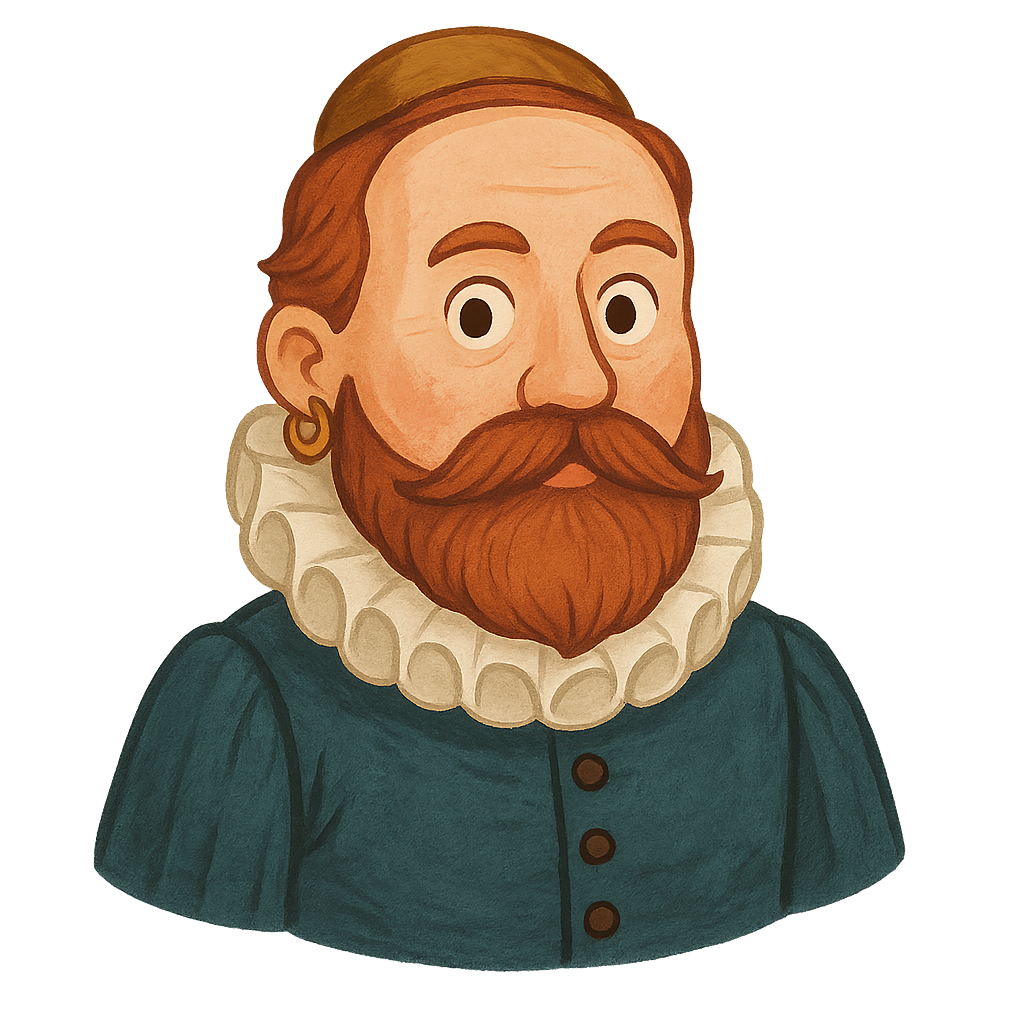
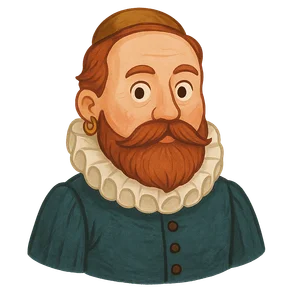
Hello, my name is Tycho Brahe. I was born a long time ago, on December 14th, 1546, in a country called Denmark. My family was noble, which meant they were important and had high hopes for me. They wanted me to study law and become a statesman. But from a young age, my eyes were always turned upward, toward the stars. I wasn't interested in dusty law books; I was fascinated by the vast, mysterious sky. Everything changed for me on August 21st, 1560. On that day, I witnessed a total solar eclipse. The moon passed perfectly in front of the sun, turning day into twilight. I was amazed that astronomers had predicted this incredible event so precisely. From that moment on, I knew I had to learn the secrets of the heavens. I wanted to be able to understand and predict the movements of the stars and planets myself.
I dove into my studies of the sky with all my energy. I was very serious about my learning, and sometimes my passion got me into trouble. When I was a student, I got into an argument with another young man about who was the better mathematician. We decided to settle it with a sword duel. During the fight, I lost the bridge of my nose. For the rest of my life, I wore a replacement nose made of metal, which was quite a sight. But the most incredible moment of my early career happened in the year 1572. One evening, while looking at the constellation Cassiopeia, I saw something impossible—a bright, new star where there had been none before. In those days, everyone believed that the heavens were perfect and could never change. My discovery, which we now know was a supernova or an exploding star, proved that this long-held belief was wrong. The 'new star' shone brightly for months, and news of my observation traveled all across Europe, making me a very famous astronomer.
Tycho Brahe: The Man Who Mapped the Stars
Hello, my name is Tycho Brahe. I was born a long time ago, on December 14th, 1546, in a country called Denmark. My family was noble, which meant they were important and had high hopes for me. They wanted me to study law and become a statesman. But from a young age, my eyes were always turned upward, toward the stars. I wasn't interested in dusty law books; I was fascinated by the vast, mysterious sky. Everything changed for me on August 21st, 1560. On that day, I witnessed a total solar eclipse. The moon passed perfectly in front of the sun, turning day into twilight. I was amazed that astronomers had predicted this incredible event so precisely. From that moment on, I knew I had to learn the secrets of the heavens. I wanted to be able to understand and predict the movements of the stars and planets myself.
I dove into my studies of the sky with all my energy. I was very serious about my learning, and sometimes my passion got me into trouble. When I was a student, I got into an argument with another young man about who was the better mathematician. We decided to settle it with a sword duel. During the fight, I lost the bridge of my nose. For the rest of my life, I wore a replacement nose made of metal, which was quite a sight. But the most incredible moment of my early career happened in the year 1572. One evening, while looking at the constellation Cassiopeia, I saw something impossible—a bright, new star where there had been none before. In those days, everyone believed that the heavens were perfect and could never change. My discovery, which we now know was a supernova or an exploding star, proved that this long-held belief was wrong. The 'new star' shone brightly for months, and news of my observation traveled all across Europe, making me a very famous astronomer.
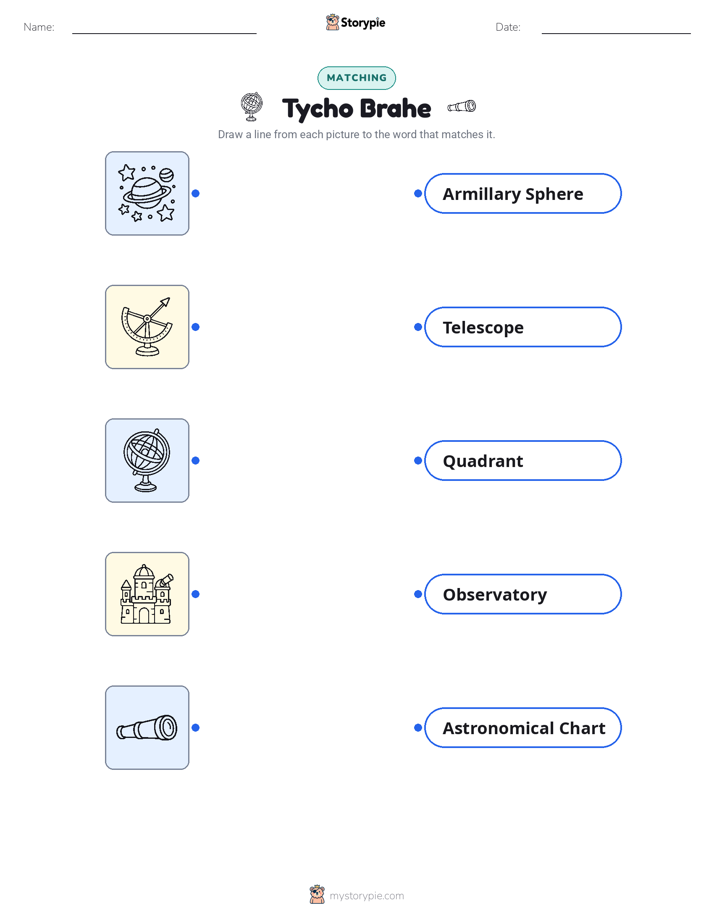
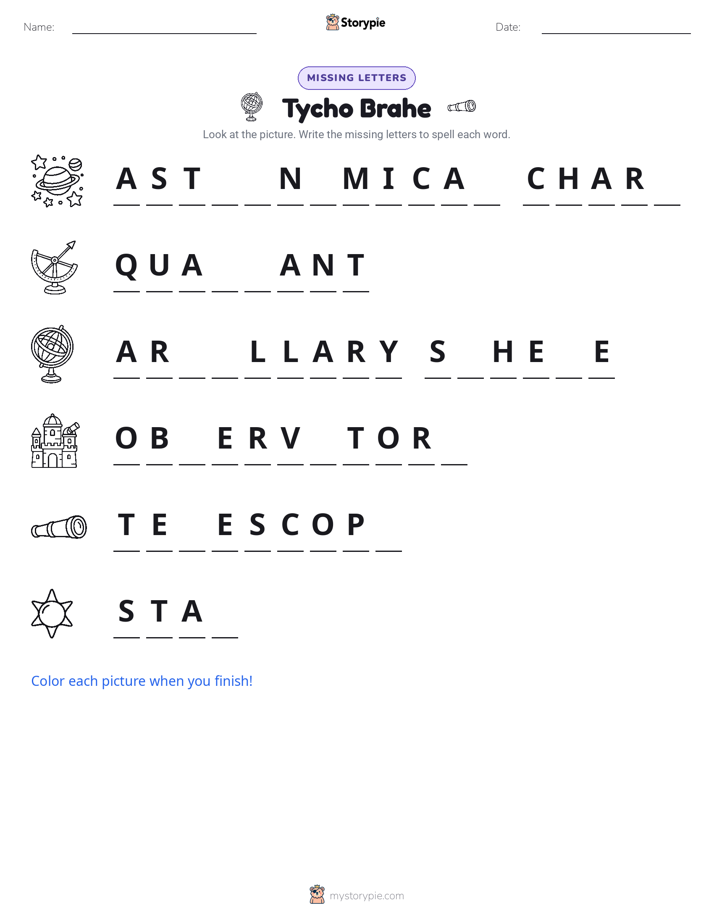
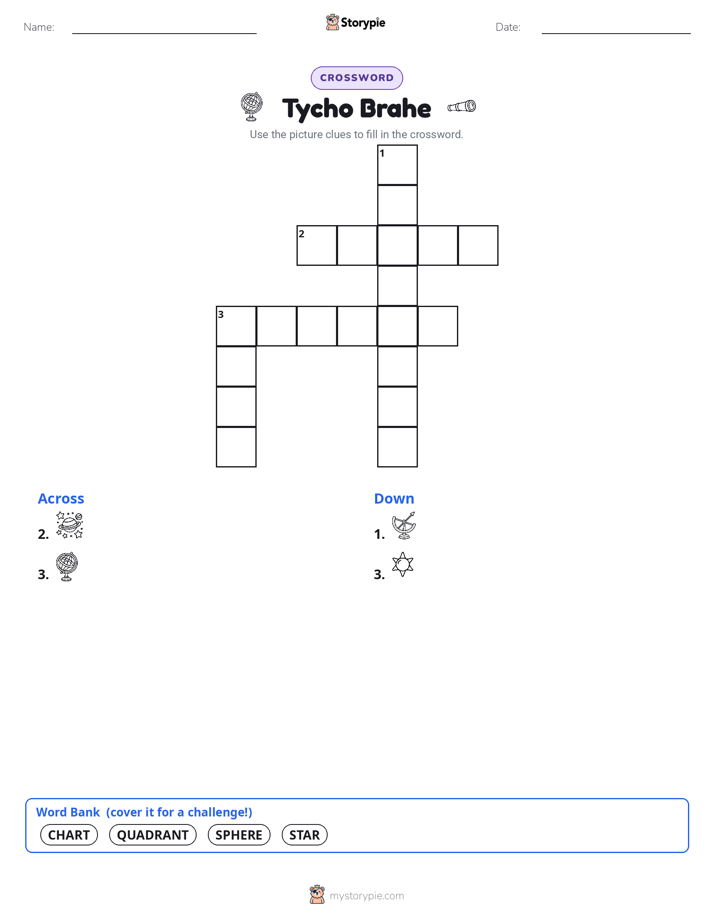
My discovery of the new star impressed many important people, including the King of Denmark, Frederick II. The king believed in my work and wanted to help me make even more discoveries. So, in 1576, he gave me a wonderful gift: my very own island, named Hven. On this island, I built a magnificent observatory called Uraniborg, which means 'Castle of the Heavens.' It was more than just a building; it was a grand palace for science, complete with laboratories, a library, and even my own printing press to publish my findings. It quickly became the finest observatory in the entire world. I knew that to truly understand the universe, I needed better tools. Since telescopes hadn't been invented yet, I designed and built my own enormous instruments. Imagine giant half-circles made of metal, called quadrants, and intricate globes with rings, called armillary spheres. They were so large and carefully crafted that I could measure the positions of stars and planets with a precision no one had ever achieved before. The wind on the island could sometimes shake my delicate instruments, affecting my measurements. To solve this, I built a second observatory, Stjerneborg, or 'Castle of the Stars,' mostly underground. This clever design protected my most important equipment from the weather, allowing my observations to be the most accurate in the world.
For more than 20 years, my island of Hven was the center of the astronomical world. My team of assistants and I worked tirelessly on every single clear night. We made thousands upon thousands of careful observations, writing everything down in large, detailed logbooks. We didn't just look at stars; we tracked everything that moved in the sky. When the Great Comet of 1577 appeared, it caused a lot of fear among people, but I saw it as an opportunity for science. By carefully measuring its position, I was able to prove that it was not an object in Earth's atmosphere, as many believed, but was actually far beyond the Moon. My most important work during this time was creating a new, incredibly detailed catalog of the stars. The star charts that existed before were full of errors. My goal was to fix that. I wasn't just looking at the stars for their beauty; I was on a mission to measure and record their exact locations with perfect accuracy.
Near the end of my life, I moved to Prague and became the official imperial astronomer. There, I began working with a brilliant young mathematician named Johannes Kepler. I lived to be 54 years old and passed away in 1601. I left all my precious books of data, the work of my life, to Johannes. He used my thousands of careful measurements to figure out the laws of how planets move, which changed science forever. My observations provided the foundation he needed. I am remembered for my dedication to accuracy and for creating the data that helped unlock the secrets of our solar system.
Wow facts
About
Tycho Brahe was a Danish astronomer whose precise and comprehensive astronomical observations laid the foundation for Johannes Kepler's laws of planetary motion.
Take a Quiz
Question 1 of 5
What event in 1560 made Tycho Brahe want to study astronomy?
Explore next





Want to do even more?
Go beyond exploring. Unlock tools that turn every story into real learning.

Storypie Plus for families
Full stories, quizzes, and printables. Nights and car rides, sorted.
- Unlimited audio stories
- Create Mode: your child stars in the story
- Offline downloads
- Printable worksheets & coloring pages

Why Storypie for Schools
Students engaged. Prep in seconds. Evenings back to you.
- Worksheets & Quizzes
- Classroom Management
- Formative Assessment
- Custom Curriculum & Lesson Plans
- 27 Languages

Why Storypie for Homeschool
Curriculum done. They'll ask for more. Hours back in your day.
- Worksheet Generator
- First-Person Audio Stories
- Built-in Comprehension Quizzes
- Custom Curriculum & Lesson Plans
- Print & Go Activities