English

Xenophon
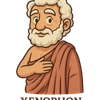
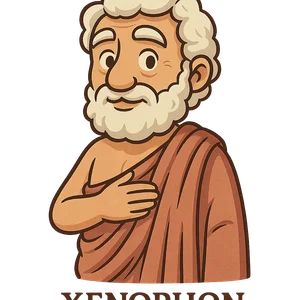
Xenophon was an ancient Greek historian, soldier, and student of Socrates…
Reads at Grades 6–8 Listens at Grades 4–8
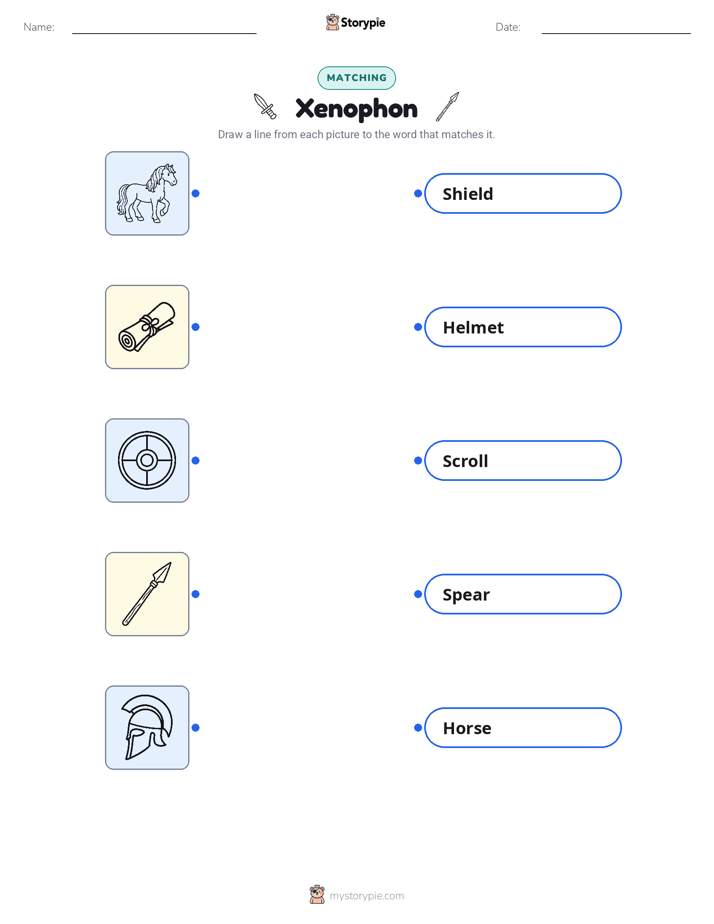
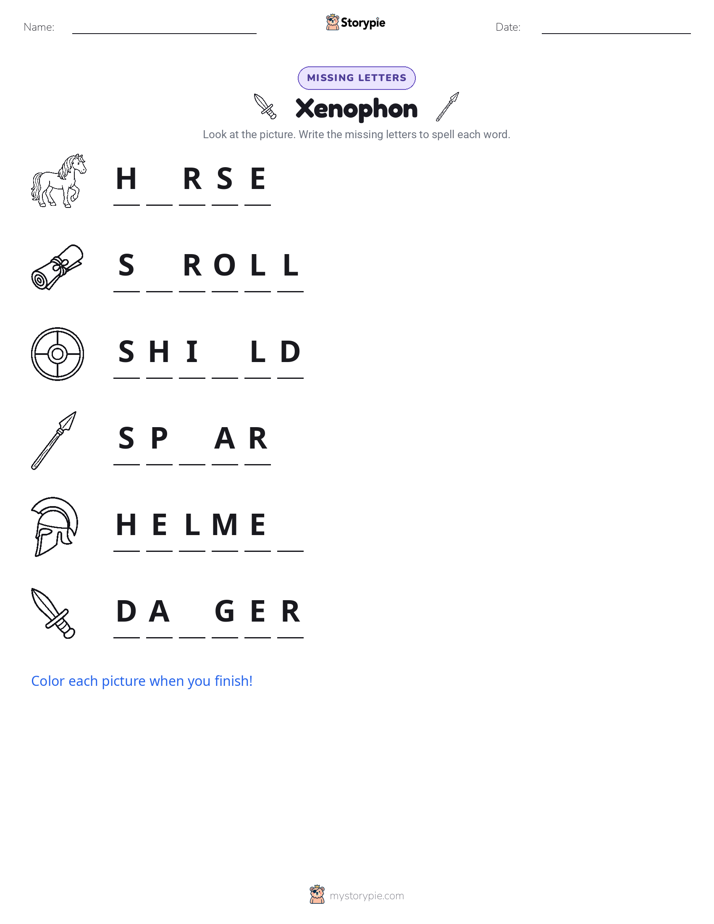
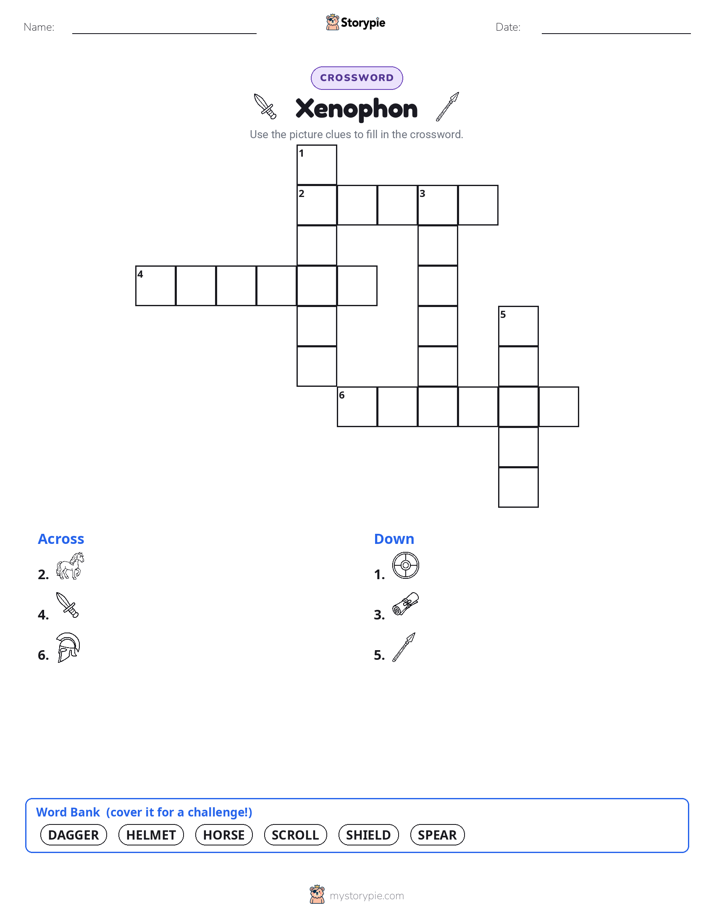
Print & create
Answer keys·No prep·Free with an account
28 worksheets · answer keys · full story · quiz · Ages 10-12 · CEFR B2
Plus adds 244,000+ more stories in 27 languages, audio for every one, and printables for all of them.
Just want Xenophon?
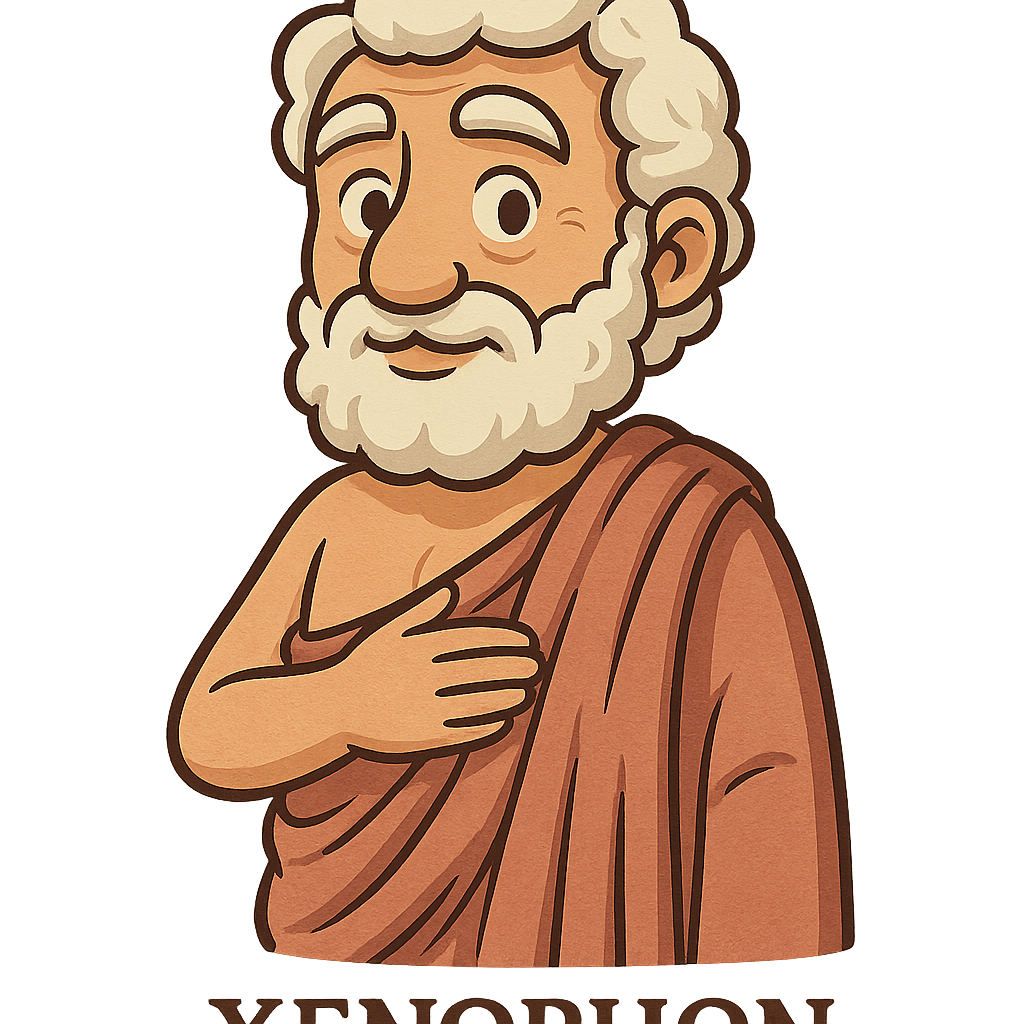
Hello, my name is Xenophon, and my story is one of adventure, leadership, and the power of asking questions. I was born around 430 BCE in the great city-state of Athens, during a time of incredible art, ideas, and conflict. My family was wealthy, and we had a special love for horses. Raising them taught me from a young age about discipline, patience, and the importance of careful training. These were lessons I would carry with me my entire life. But the most important event of my youth was meeting the philosopher Socrates. He wasn't like other teachers. Instead of giving answers, he taught me and other young men to ask questions—big questions about what it means to be brave, what makes a person good, and how to live a just life. Spending time with Socrates was the foundation of everything I would become. He taught my mind to be as strong and disciplined as the horses I trained, and this preparation would soon be put to the ultimate test.
As I grew into a young man, an opportunity for a grand adventure presented itself. In the year 401 BCE, a friend invited me to join a military expedition. A Persian prince, Cyrus the Younger, was assembling a large army of Greek soldiers, known as mercenaries, to help him take the throne from his older brother, King Artaxerxes II. It sounded like the chance of a lifetime, a way to see the world and prove my courage. I accepted the invitation and joined the force. We marched for months, traveling deeper and deeper into the vast Persian Empire than most Greeks had ever gone before. The journey was long and difficult, but our army was strong and confident. Finally, we met the king's army at a place called Cunaxa. The battle was fierce and chaotic. For a moment, it seemed as if we might win, but then disaster struck. In the middle of the fighting, our leader, Cyrus, was killed. Just like that, our mission was over. We were an army of ten thousand Greek soldiers, stranded more than a thousand miles from home, with no leader, no purpose, and surrounded on all sides by the king's forces.
Xenophon: The Soldier Who Wrote
Hello, my name is Xenophon, and my story is one of adventure, leadership, and the power of asking questions. I was born around 430 BCE in the great city-state of Athens, during a time of incredible art, ideas, and conflict. My family was wealthy, and we had a special love for horses. Raising them taught me from a young age about discipline, patience, and the importance of careful training. These were lessons I would carry with me my entire life. But the most important event of my youth was meeting the philosopher Socrates. He wasn't like other teachers. Instead of giving answers, he taught me and other young men to ask questions—big questions about what it means to be brave, what makes a person good, and how to live a just life. Spending time with Socrates was the foundation of everything I would become. He taught my mind to be as strong and disciplined as the horses I trained, and this preparation would soon be put to the ultimate test.
As I grew into a young man, an opportunity for a grand adventure presented itself. In the year 401 BCE, a friend invited me to join a military expedition. A Persian prince, Cyrus the Younger, was assembling a large army of Greek soldiers, known as mercenaries, to help him take the throne from his older brother, King Artaxerxes II. It sounded like the chance of a lifetime, a way to see the world and prove my courage. I accepted the invitation and joined the force. We marched for months, traveling deeper and deeper into the vast Persian Empire than most Greeks had ever gone before. The journey was long and difficult, but our army was strong and confident. Finally, we met the king's army at a place called Cunaxa. The battle was fierce and chaotic. For a moment, it seemed as if we might win, but then disaster struck. In the middle of the fighting, our leader, Cyrus, was killed. Just like that, our mission was over. We were an army of ten thousand Greek soldiers, stranded more than a thousand miles from home, with no leader, no purpose, and surrounded on all sides by the king's forces.
What followed was the most famous and challenging chapter of my life. With Cyrus gone, the Persian king tricked our highest-ranking generals into a meeting and treacherously captured them. We were truly leaderless and lost. But instead of surrendering, the soldiers gathered and decided to elect new commanders to lead them home. To my surprise, they chose me as one of their new leaders. The task before us seemed impossible. We had to lead 10,000 men on a grueling march north, back to the sea and to Greece. Our journey took us across scorching deserts, over freezing, snow-covered mountains, and through swift, dangerous rivers. We were constantly attacked by hostile tribes who did not want us passing through their lands. It took all the courage and discipline I had to keep the army moving forward, day after day. After many months of hardship, we climbed a mountain and saw something that made our hearts soar. In the distance was a dark, shimmering line—the Black Sea. The men at the front began to shout, and the cry spread through the ranks: 'Thalatta! Thalatta!' It means 'The Sea! The Sea!'. It was a sound of pure joy and relief, for we knew that if we could reach the sea, we could find ships to take us home. I later wrote a book about this incredible journey, which I called 'Anabasis,' so that the story of the Ten Thousand would never be forgotten.
After our return to the Greek world, my life as a soldier was not over. I went on to serve with the Spartans, who were the great rivals of my home city, Athens. Because of this friendship with Sparta, the Athenians voted to exile me, meaning I could not return to my home. Though it was sad to be banished, the Spartans were generous to me. Around 392 BCE, they gave me a beautiful estate at a place called Scillus, in the countryside of southern Greece. For nearly twenty years, I lived a peaceful life there. I raised my family, managed my farm, and had the time to dedicate myself to another passion: writing. It was during this time that I wrote most of my books. I wrote 'Anabasis' to tell the story of our great march, and I also wrote a history of Greece called 'Hellenica.' I wrote down my memories of my teacher in works about Socrates, and I even wrote practical guides on subjects I knew well, like horsemanship and how to manage a household.
My peaceful life at Scillus came to an end after a major battle changed the balance of power in Greece in 371 BCE, and I had to leave my home. I spent the final years of my life in the city of Corinth. I lived to be about 76 years old, passing away around the year 354 BCE. I hope that when people remember me, they think of me not just as a soldier who led a daring escape, but also as a historian who carefully recorded the world around him. More than anything, I hope I am remembered as a philosopher who tried his best to live a good and thoughtful life, guided by the lessons my great teacher, Socrates, had taught me so many years ago. My books, especially 'Anabasis,' are still read by students and leaders today, sharing a timeless story of leadership, perseverance, and the long, difficult journey home.
Wow facts
About
Xenophon was an ancient Greek historian, soldier, and student of Socrates, famous for leading the 'Ten Thousand' Greek mercenaries out of Persia and for his numerous written works, including the Anabasis.
Take a Quiz
Question 1 of 5
What was the main problem the Greek army faced immediately after the Battle of Cunaxa?
Explore next


Want to do even more?
Go beyond exploring. Unlock tools that turn every story into real learning.

Storypie Plus for families
Full stories, quizzes, and printables. Nights and car rides, sorted.
- Unlimited audio stories
- Create Mode: your child stars in the story
- Offline downloads
- Printable worksheets & coloring pages

Why Storypie for Schools
Students engaged. Prep in seconds. Evenings back to you.
- Worksheets & Quizzes
- Classroom Management
- Formative Assessment
- Custom Curriculum & Lesson Plans
- 27 Languages

Why Storypie for Homeschool
Curriculum done. They'll ask for more. Hours back in your day.
- Worksheet Generator
- First-Person Audio Stories
- Built-in Comprehension Quizzes
- Custom Curriculum & Lesson Plans
- Print & Go Activities