English

Yongle Emperor
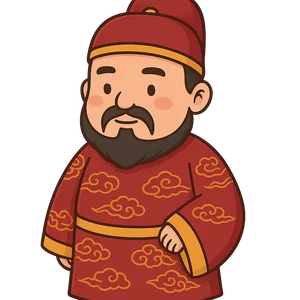
The third emperor of China's Ming dynasty, reigning from 1402 to 1424.
Reads at Grades 6–8 Listens at Grades 4–8
Print & create
Answer keys·No prep·Free with an account
28 worksheets · answer keys · full story · quiz · Ages 10-12 · CEFR B2
Plus adds 244,000+ more stories in 27 languages, audio for every one, and printables for all of them.
Just want Yongle Emperor?
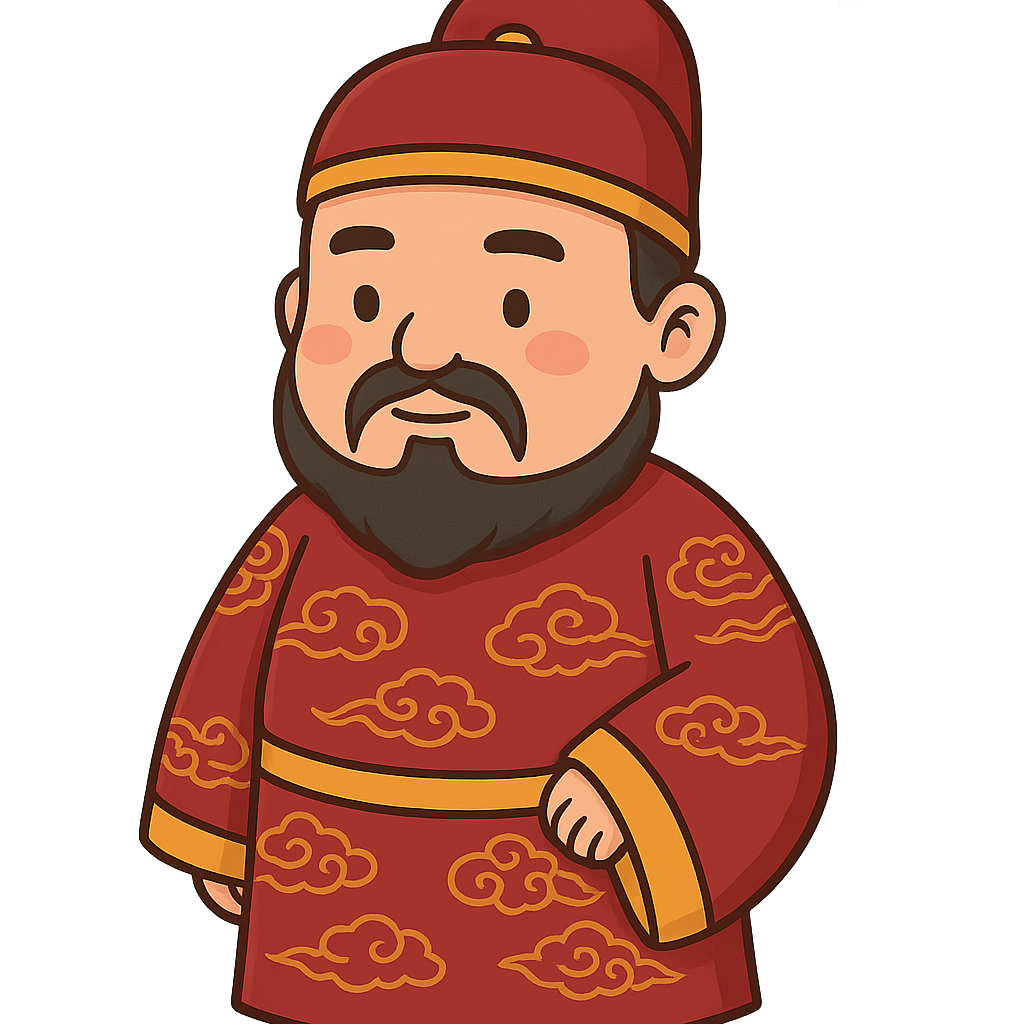
Hello! My name is Zhu Di, but history remembers me as the Yongle Emperor. My story begins on May 2nd, 1360, when I was born as the fourth son of the great Hongwu Emperor, the man who founded the Ming Dynasty. Growing up as a prince was an education in leadership and strength. My father believed that his sons should be strong guardians of the empire. In 1370, when I was just a boy, he named me the Prince of Yan and gave me a territory in the north to govern. My home base was a city called Beiping, which you now know as Beijing. For many years, my duty was to defend our northern border from Mongol warriors. I spent my youth on horseback, learning the art of war and command. This time on the frontier shaped me into a tough and ambitious leader, ready to protect my father's legacy at all costs.
When my father passed away in 1398, he did not choose one of his sons to succeed him. Instead, the throne went to my nephew, Zhu Yunwen, who became the Jianwen Emperor. He was young and his advisors worried about the power that I and my brothers held. They began to strip us of our titles and armies, one by one. I knew that if I did not act, I would be next. I believed my nephew was being poorly advised and was undoing the stable empire my father had built. So, in 1399, I launched a military campaign to, as I saw it, rescue the throne from corrupt officials. This conflict is called the Jingnan Rebellion. After three years of difficult fighting, my armies captured the capital city of Nanjing in 1402. The imperial palace caught fire, and my nephew vanished. No one ever knew for certain what happened to him. With the throne empty, I became the new emperor, taking the era name 'Yongle,' which means 'Perpetual Happiness.'
The Yongle Emperor
Hello! My name is Zhu Di, but history remembers me as the Yongle Emperor. My story begins on May 2nd, 1360, when I was born as the fourth son of the great Hongwu Emperor, the man who founded the Ming Dynasty. Growing up as a prince was an education in leadership and strength. My father believed that his sons should be strong guardians of the empire. In 1370, when I was just a boy, he named me the Prince of Yan and gave me a territory in the north to govern. My home base was a city called Beiping, which you now know as Beijing. For many years, my duty was to defend our northern border from Mongol warriors. I spent my youth on horseback, learning the art of war and command. This time on the frontier shaped me into a tough and ambitious leader, ready to protect my father's legacy at all costs.
When my father passed away in 1398, he did not choose one of his sons to succeed him. Instead, the throne went to my nephew, Zhu Yunwen, who became the Jianwen Emperor. He was young and his advisors worried about the power that I and my brothers held. They began to strip us of our titles and armies, one by one. I knew that if I did not act, I would be next. I believed my nephew was being poorly advised and was undoing the stable empire my father had built. So, in 1399, I launched a military campaign to, as I saw it, rescue the throne from corrupt officials. This conflict is called the Jingnan Rebellion. After three years of difficult fighting, my armies captured the capital city of Nanjing in 1402. The imperial palace caught fire, and my nephew vanished. No one ever knew for certain what happened to him. With the throne empty, I became the new emperor, taking the era name 'Yongle,' which means 'Perpetual Happiness.'
As emperor, I knew I needed a capital that reflected my power and vision. Nanjing was the home of my political rivals, but my own power base was in the north. I decided to move the capital to my city, Beiping, and rename it Beijing, which means 'Northern Capital.' Starting around 1406, I began one of the greatest construction projects the world had ever seen. I ordered the building of a magnificent palace at the very heart of the city. We called it the Forbidden City because ordinary people were not allowed inside its walls. Thousands of craftsmen and millions of laborers worked for fourteen years to build its golden-roofed halls and deep red walls. In 1420, it was finally complete, and in 1421, I officially declared Beijing the new capital of the Ming Empire. It would remain the center of Chinese power for over 500 years.
I didn't just want to build a great empire at home; I wanted the whole world to know about the glory of the Ming Dynasty. To do this, I appointed a trusted admiral named Zheng He to lead a series of incredible sea expeditions. Starting in 1405, Zheng He commanded a massive 'treasure fleet' of hundreds of ships, some of which were the largest wooden ships ever built. These were not voyages of conquest, but of diplomacy and trade. Over the next two decades, his fleet sailed seven times across the Indian Ocean, visiting Southeast Asia, India, the Arabian Peninsula, and even the coast of Africa. They brought back exotic goods like spices and pearls, and amazing animals like giraffes and zebras. More importantly, they returned with ambassadors from many kingdoms, all wanting to establish friendly relations with China. These voyages were a testament to our naval power and our desire to engage with the wider world.
Besides building cities and sending out fleets, I wanted to preserve and organize all of our culture's knowledge. In 1403, I commissioned an enormous project: the Yongle Encyclopedia, or Yongle Dadian. I gathered more than two thousand scholars and ordered them to copy every important text ever written on subjects from history and science to art and philosophy into one single collection. When it was finished in 1408, it filled over 11,000 volumes—so huge it was never printed. It was the largest encyclopedia in the world for centuries. At the same time, I never forgot my duty as a warrior. I personally led five military campaigns into the northern grasslands to fight the Mongols and secure our borders, ensuring the empire was safe. I also ordered the Grand Canal to be rebuilt and expanded, which was vital for shipping grain and supplies to my new capital in Beijing.
My life was one of constant activity, from the battlefield to the throne room. During my final campaign against the Mongols, I fell ill and my journey ended in 1424. I lived to be 64 years old. Though my path to the throne was controversial, my reign was a time of great ambition and achievement for China. I am remembered for establishing Beijing as the capital, a city that remains the heart of China today. The Forbidden City I built still stands as a symbol of our culture's architectural genius. The voyages of Zheng He are legendary tales of exploration, and the great encyclopedia I commissioned preserved priceless knowledge for future generations. I hope my story shows that with bold vision and determination, one can shape the course of history for centuries to come.
Wow facts
About
The third emperor of China's Ming dynasty, reigning from 1402 to 1424. He moved the capital to Beijing, commissioned the construction of the Forbidden City, and sponsored the treasure voyages of Zheng He.
Take a Quiz
Question 1 of 5
What is the main idea of the section titled 'Sailing to the Horizon'?
Explore next




Want to do even more?
Go beyond exploring. Unlock tools that turn every story into real learning.

Storypie Plus for families
Full stories, quizzes, and printables. Nights and car rides, sorted.
- Unlimited audio stories
- Create Mode: your child stars in the story
- Offline downloads
- Printable worksheets & coloring pages

Why Storypie for Schools
Students engaged. Prep in seconds. Evenings back to you.
- Worksheets & Quizzes
- Classroom Management
- Formative Assessment
- Custom Curriculum & Lesson Plans
- 27 Languages

Why Storypie for Homeschool
Curriculum done. They'll ask for more. Hours back in your day.
- Worksheet Generator
- First-Person Audio Stories
- Built-in Comprehension Quizzes
- Custom Curriculum & Lesson Plans
- Print & Go Activities