English

Day and Night
Day and Night is the natural cycle of light and darkness on Earth…
Reads at Grades 6–8 Listens at Grades 4–8
Print & create
Answer keys·No prep·Free with an account
28 worksheets · answer keys · full story · quiz · Ages 10-12 · CEFR B2
Plus adds 102,000+ more stories in 27 languages, audio for every one, and printables for all of them.
Just want Day and Night?
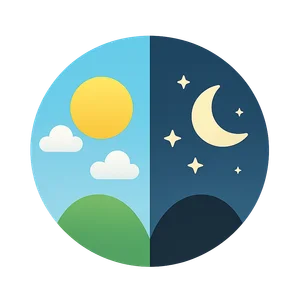
Imagine a warm, golden light spreading over the land, coaxing flowers to open and telling sleepy animals it's time to start their day. The world hums with energy. Then, just as steadily, a cool, quiet shadow arrives, tucking the world in under a blanket of deep velvet, dotted with diamond-like stars. I am that constant pulse, the planet's steady breath, in and out, in and out. I am the rhythm that guides everything from the smallest insect to the vastest ocean. Before people had clocks or calendars, they had me. I was their first way of measuring time, a reliable promise that light would always follow darkness, and darkness would always give way to light. Have you ever stood outside as the sky changes its clothes, shifting from brilliant blue to fiery orange and then to deep, starry indigo? That magnificent, daily transformation is my work. I am the grand performance that plays out across the sky every single day, without fail. I am the Cycle of Day and Night.
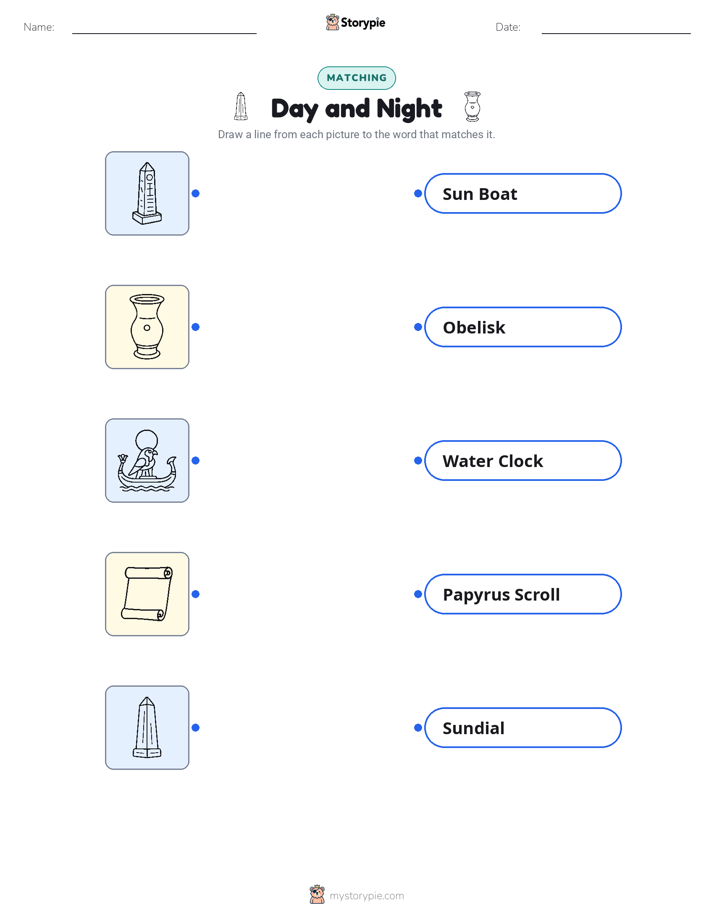
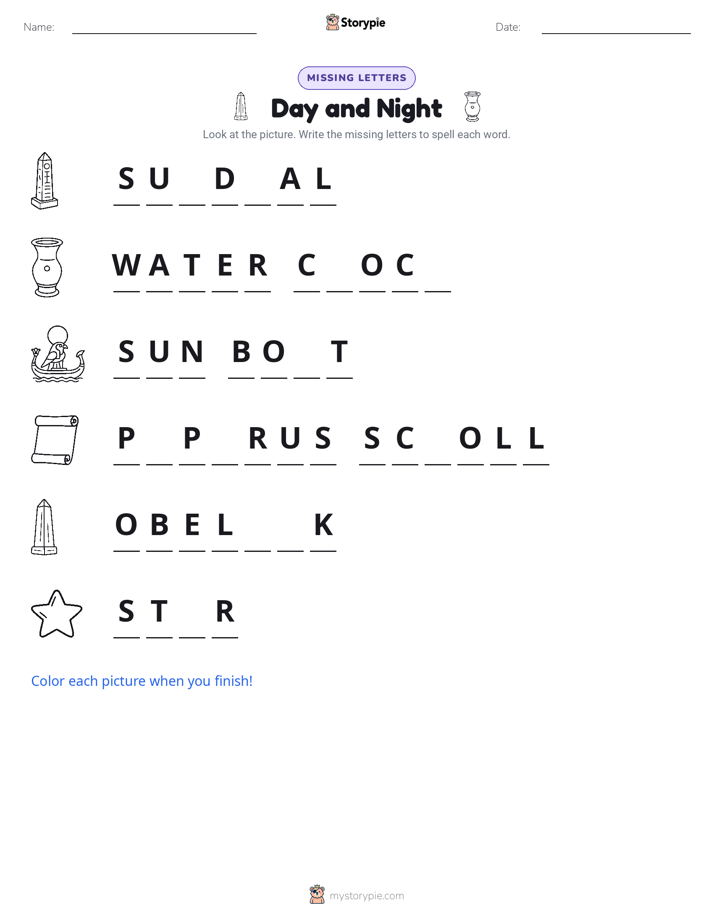
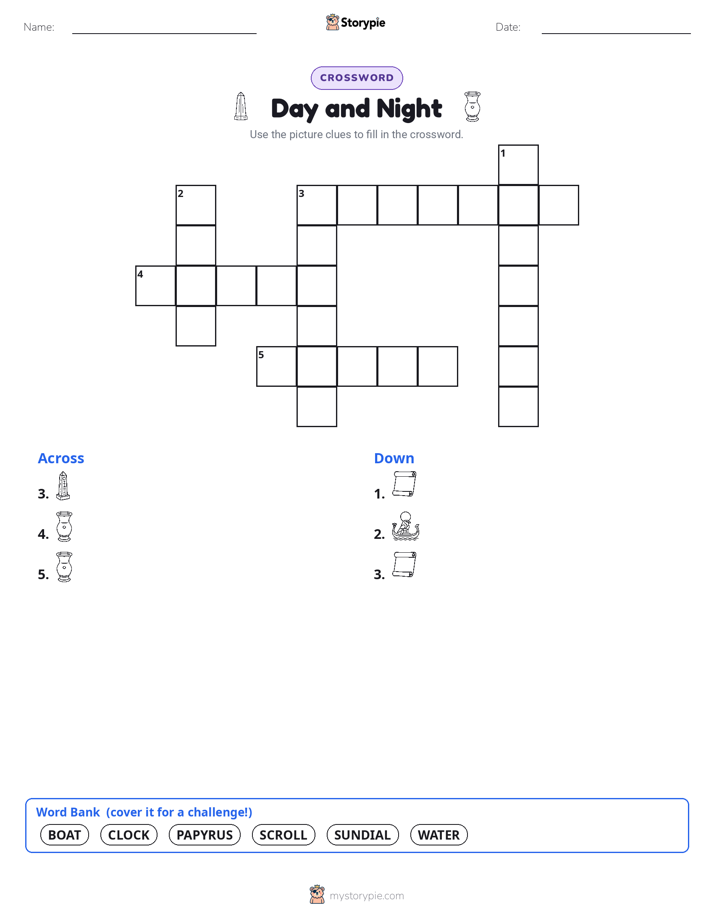
For thousands of years, the first people who watched my daily arrival and departure saw me as a profound mystery, a story told by the gods. They wove fantastic tales to make sense of my rhythm. In ancient Egypt, as far back as 1500 BCE, people imagined the sun as the god Ra, sailing his magnificent boat across the sky. This was my bright half. When darkness fell, they believed Ra had sailed into the Duat, the underworld, to battle monsters before he could be reborn with the dawn. But they didn't just tell stories; they were clever observers. To keep track of me, they built obelisks and sundials, tall stone pillars whose moving shadows marked the passing hours of my light-filled half. For my dark half, when shadows disappeared, they invented ingenious water clocks, or clepsydras, which measured time by the steady drip of water from one vessel to another. It was these brilliant Egyptian sky-watchers who first decided to divide my entire cycle into 24 parts—12 for the light and 12 for the dark. It’s a system so useful that you still use it every single day to organize your lives.
The Story of Day and Night
Imagine a warm, golden light spreading over the land, coaxing flowers to open and telling sleepy animals it's time to start their day. The world hums with energy. Then, just as steadily, a cool, quiet shadow arrives, tucking the world in under a blanket of deep velvet, dotted with diamond-like stars. I am that constant pulse, the planet's steady breath, in and out, in and out. I am the rhythm that guides everything from the smallest insect to the vastest ocean. Before people had clocks or calendars, they had me. I was their first way of measuring time, a reliable promise that light would always follow darkness, and darkness would always give way to light. Have you ever stood outside as the sky changes its clothes, shifting from brilliant blue to fiery orange and then to deep, starry indigo? That magnificent, daily transformation is my work. I am the grand performance that plays out across the sky every single day, without fail. I am the Cycle of Day and Night.
For thousands of years, the first people who watched my daily arrival and departure saw me as a profound mystery, a story told by the gods. They wove fantastic tales to make sense of my rhythm. In ancient Egypt, as far back as 1500 BCE, people imagined the sun as the god Ra, sailing his magnificent boat across the sky. This was my bright half. When darkness fell, they believed Ra had sailed into the Duat, the underworld, to battle monsters before he could be reborn with the dawn. But they didn't just tell stories; they were clever observers. To keep track of me, they built obelisks and sundials, tall stone pillars whose moving shadows marked the passing hours of my light-filled half. For my dark half, when shadows disappeared, they invented ingenious water clocks, or clepsydras, which measured time by the steady drip of water from one vessel to another. It was these brilliant Egyptian sky-watchers who first decided to divide my entire cycle into 24 parts—12 for the light and 12 for the dark. It’s a system so useful that you still use it every single day to organize your lives.
As civilizations grew, some people started looking for answers beyond the myths of gods and monsters. The ancient Greeks were incredible thinkers who used logic and observation to question everything. Around 500 BCE, a philosopher and mathematician named Pythagoras looked at the curved shadow of the Earth on the moon during an eclipse and had a radical thought: what if the world wasn't a flat plate, but a giant sphere? This was a huge leap in understanding. A couple of centuries later, in the 3rd century BCE, a brilliant astronomer from the island of Samos named Aristarchus took that idea even further. He watched the stars and planets and proposed something truly mind-boggling for his time: what if the Earth itself was spinning, turning like a top once every day? That constant turn, he reasoned, is what created me. He even suggested the Earth orbited the Sun. But his idea was so revolutionary, so far ahead of its time, that almost no one believed him. It was much easier to believe what you could see with your own eyes. For nearly 1,500 years, most people accepted the model put forth by the astronomer Ptolemy in the 2nd century CE, which placed a motionless Earth at the very center of everything, with the Sun, Moon, and stars all dutifully circling around it.
For more than a thousand years, Ptolemy's view of the universe held firm. But then came a time of great change and discovery, the Renaissance. In 1543, a Polish astronomer named Nicolaus Copernicus published a book that would change everything. He had spent decades carefully observing the heavens, and he bravely proposed that Aristarchus had been right all along: the Sun was the center of our solar system, and the Earth was just one of several planets orbiting it. This turning of the Earth on its axis, he argued, was the true cause of my daily cycle. A few decades later, in the early 17th century, an Italian scientist named Galileo Galilei built one of the first powerful telescopes. When he pointed it at the planet Jupiter, he saw something astonishing: four tiny moons orbiting it. This was the proof everyone needed. If other planets had their own moons, then clearly not everything in the universe revolved around the Earth. Galileo’s discovery supported Copernicus’s theory and shook the old ideas to their core. Finally, in 1687, the English genius Sir Isaac Newton explained the 'why' of it all. He described a universal force called gravity. It is gravity that keeps the Earth in its perfect orbit around the Sun, and it is the Earth's momentum that keeps it spinning so steadily, creating my perfect, predictable rhythm for all of time.
Today, you understand me not as a god's journey or a celestial mystery, but as the beautiful, physical result of our planet's rotation. This scientific understanding has shaped your modern world in countless ways. Because you know the Earth is a spinning globe, you have created time zones, an ingenious system that allows people on opposite sides of the planet to coordinate their lives, from phone calls to global business. Your own body is deeply connected to me. You have an internal clock, known as a circadian rhythm, which is finely tuned to my cycle of light and dark. It tells you when to feel awake and energetic and when it's time to rest and recharge. I give you bright, sunlit hours for school, for playing with friends, and for discovering new things. And I give you quiet, dark hours for rest, for dreaming, and for your body to grow. I am more than just a clock that measures your day. I am a constant, comforting reminder that you live on a magnificent, spinning planet, dancing its way through the cosmos. Every sunrise is a fresh start, and every sunset is a promise of peace, all thanks to our planet's wonderful, endless turn.
Wow facts
About
Day and Night is the natural cycle of light and darkness on Earth, caused by the planet's rotation on its axis, which alternately exposes one hemisphere to the Sun's light and then turns it away.
Take a Quiz
Question 1 of 5
Which of these best describes the progression of ideas about the Day and Night Cycle presented in the story?
Explore next






Want to do even more?
Go beyond exploring. Unlock tools that turn every story into real learning.

Storypie Plus for families
Full stories, quizzes, and printables. Nights and car rides, sorted.
- Unlimited audio stories
- Create Mode: your child stars in the story
- Offline downloads
- Printable worksheets & coloring pages

Why Storypie for Schools
Students engaged. Prep in seconds. Evenings back to you.
- Worksheets & Quizzes
- Classroom Management
- Formative Assessment
- Custom Curriculum & Lesson Plans
- 27 Languages

Why Storypie for Homeschool
Curriculum done. They'll ask for more. Hours back in your day.
- Worksheet Generator
- First-Person Audio Stories
- Built-in Comprehension Quizzes
- Custom Curriculum & Lesson Plans
- Print & Go Activities