English

Day and Night
Day and Night is the natural cycle of light and darkness on Earth…
Reads at Grades 3–5 Listens at Grades 1–5
Print & create
Answer keys·No prep·Free with an account
28 worksheets · answer keys · full story · quiz · Ages 8-10 · CEFR B1
Plus adds 102,000+ more stories in 27 languages, audio for every one, and printables for all of them.
Just want Day and Night?
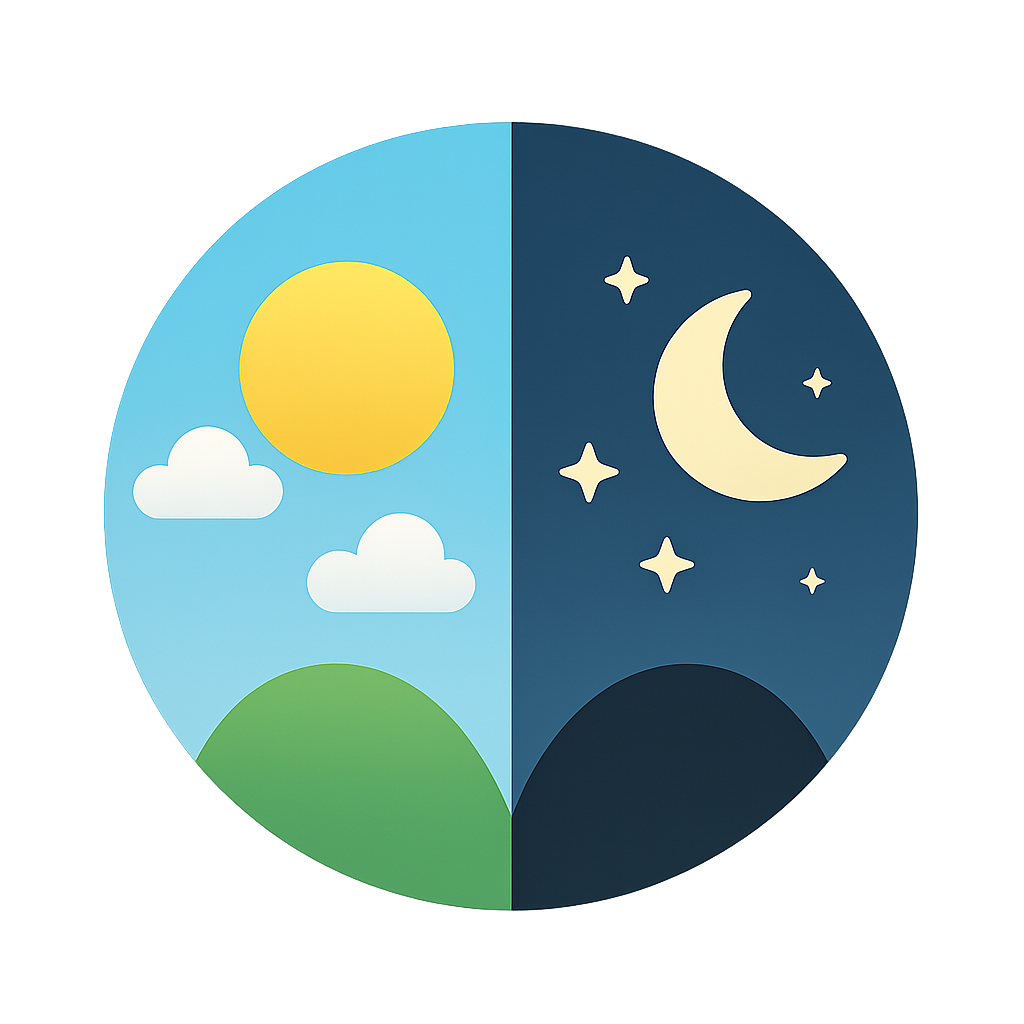
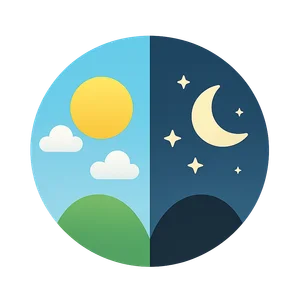
I paint the sky with soft pinks and oranges as birds begin to sing. Then, I slowly pull a warm, golden blanket over your side of the world, waking up the flowers and warming the playgrounds. But my job is never done. As one side of the world says hello to the morning, I’m getting the other side ready for bed. I trade my golden blanket for a deep blue, velvet one, dotted with glittering stars and a glowing moon. I hush the world to sleep, letting crickets chirp their lullabies. I am the planet’s oldest rhythm, the first clock, the reason for waking up and the reason for dreaming. Can you guess who I am? I am Day and Night.
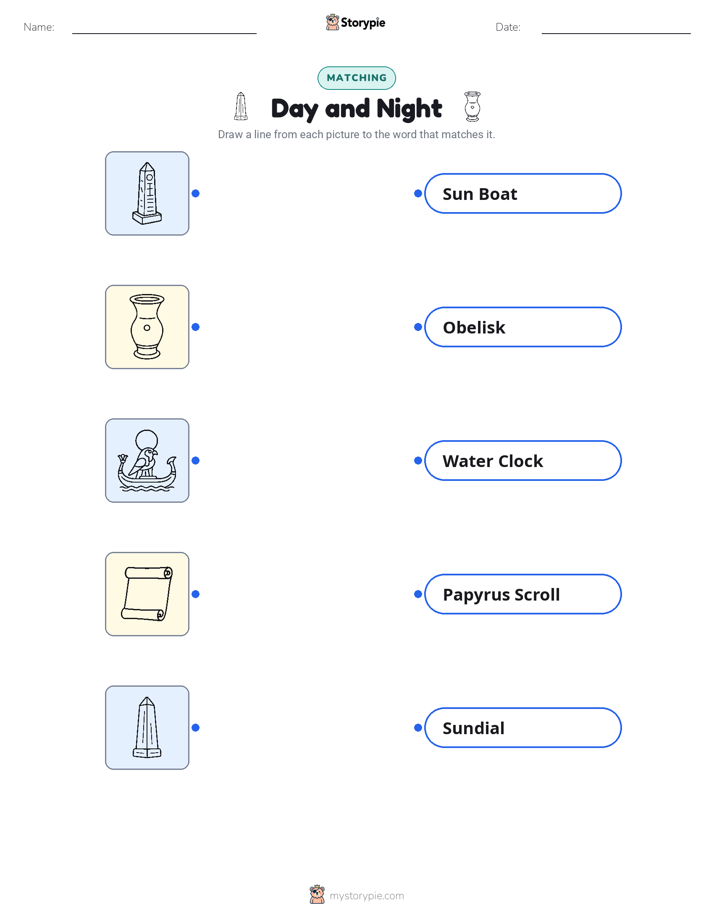
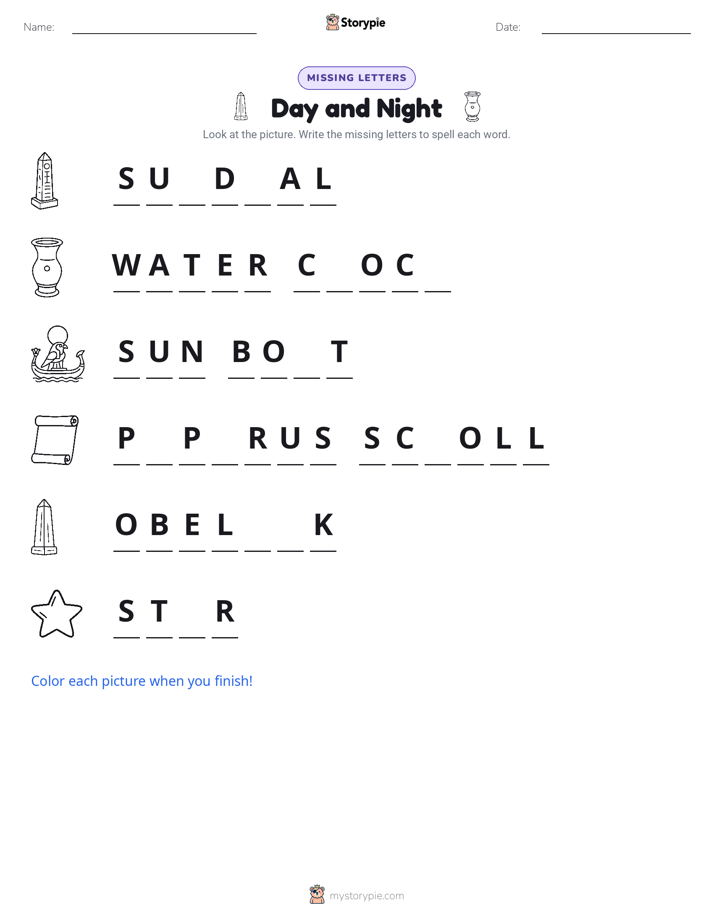
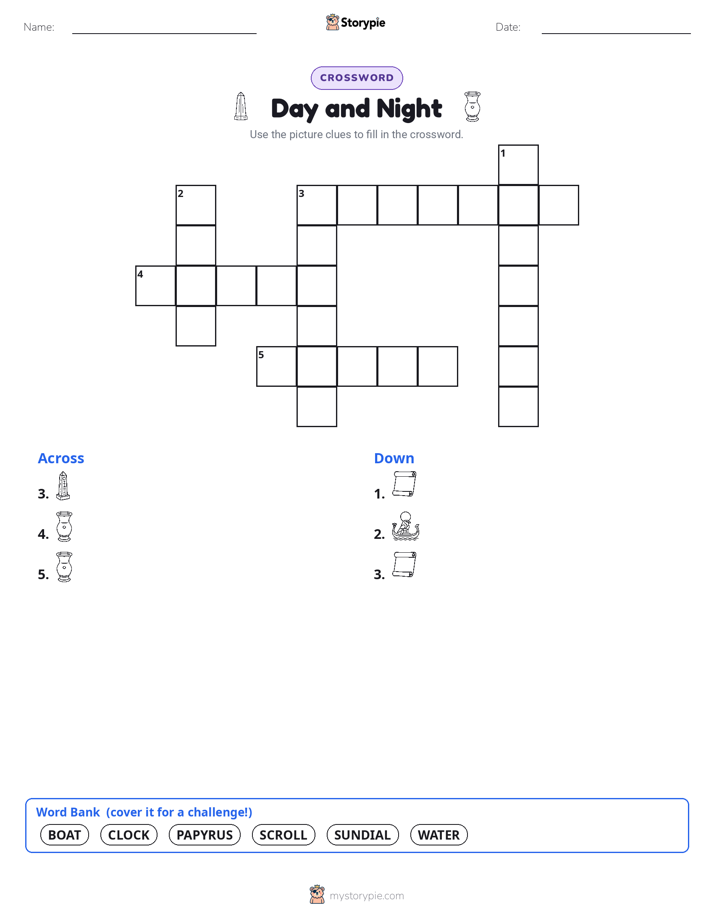
For thousands of years, people watched me and wondered. They saw the Sun travel across the sky and the Moon follow. Ancient people in places like Egypt and Mesopotamia, as far back as 3500 BCE, built special clocks to follow my patterns. The Egyptians created sundials to track the Sun's shadow, telling time during the day. They also invented stories to explain my daily switch. One popular story told of the sun god, Ra, sailing across the sky in a boat. In ancient Greece, thinkers weren't just telling stories; they were asking big questions. Around the 3rd century BCE, a brilliant astronomer named Aristarchus of Samos suggested that maybe the Earth was the one moving, spinning around the Sun. But it was a very new idea, and for a long, long time, most people continued to believe that the Sun and stars moved around a still Earth.
It took many more centuries of sky-watching before the big secret was revealed. The real reason for my daily costume change wasn't the Sun flying across the sky, but the Earth itself doing a slow, steady spin. A Polish astronomer named Nicolaus Copernicus spent years studying the planets and stars. In 1543, he shared his incredible idea: the Earth was spinning on its axis once every 24 hours while also circling the Sun. This spin is what creates me. When your part of the Earth faces the Sun, it’s daytime. When it spins away from the Sun, it’s nighttime. A few decades later, in the early 1600s, an Italian scientist named Galileo Galilei built a powerful telescope. He saw that other planets had moons circling them, which helped prove that not everything in the universe moved around the Earth. His discoveries helped show that Copernicus was right. People finally understood that I am the beautiful result of our planet's constant, graceful dance.
A Giant, Gentle Turn
I paint the sky with soft pinks and oranges as birds begin to sing. Then, I slowly pull a warm, golden blanket over your side of the world, waking up the flowers and warming the playgrounds. But my job is never done. As one side of the world says hello to the morning, I’m getting the other side ready for bed. I trade my golden blanket for a deep blue, velvet one, dotted with glittering stars and a glowing moon. I hush the world to sleep, letting crickets chirp their lullabies. I am the planet’s oldest rhythm, the first clock, the reason for waking up and the reason for dreaming. Can you guess who I am? I am Day and Night.
For thousands of years, people watched me and wondered. They saw the Sun travel across the sky and the Moon follow. Ancient people in places like Egypt and Mesopotamia, as far back as 3500 BCE, built special clocks to follow my patterns. The Egyptians created sundials to track the Sun's shadow, telling time during the day. They also invented stories to explain my daily switch. One popular story told of the sun god, Ra, sailing across the sky in a boat. In ancient Greece, thinkers weren't just telling stories; they were asking big questions. Around the 3rd century BCE, a brilliant astronomer named Aristarchus of Samos suggested that maybe the Earth was the one moving, spinning around the Sun. But it was a very new idea, and for a long, long time, most people continued to believe that the Sun and stars moved around a still Earth.
It took many more centuries of sky-watching before the big secret was revealed. The real reason for my daily costume change wasn't the Sun flying across the sky, but the Earth itself doing a slow, steady spin. A Polish astronomer named Nicolaus Copernicus spent years studying the planets and stars. In 1543, he shared his incredible idea: the Earth was spinning on its axis once every 24 hours while also circling the Sun. This spin is what creates me. When your part of the Earth faces the Sun, it’s daytime. When it spins away from the Sun, it’s nighttime. A few decades later, in the early 1600s, an Italian scientist named Galileo Galilei built a powerful telescope. He saw that other planets had moons circling them, which helped prove that not everything in the universe moved around the Earth. His discoveries helped show that Copernicus was right. People finally understood that I am the beautiful result of our planet's constant, graceful dance.
Today, knowing how I work is part of everything you do. My predictable rhythm helps farmers know when to plant seeds and when to harvest crops. It allows us to create time zones so someone in Tokyo can wake up for breakfast while someone in New York is eating dinner. Every satellite we send into space and every mission to another planet depends on understanding the Earth’s spin and its journey around the Sun. But I’m more than just a clock. I am a promise. A promise that after every dark night, there will be a bright morning full of new chances to learn, play, and explore. I am the balance of rest and energy, of quiet dreams and busy adventures. So next time you see a sunrise or wish upon a star, remember the amazing, spinning planet you live on, and the rhythm we share every single day.
Wow facts
About
Day and Night is the natural cycle of light and darkness on Earth, caused by the planet's rotation on its axis, which alternately exposes one hemisphere to the Sun's light and then turns it away.
Take a Quiz
Question 1 of 5
The story says ancient people built clocks to follow my 'patterns.' What does the word 'patterns' mean in this sentence?
Explore next





Want to do even more?
Go beyond exploring. Unlock tools that turn every story into real learning.

Storypie Plus for families
Full stories, quizzes, and printables. Nights and car rides, sorted.
- Unlimited audio stories
- Create Mode: your child stars in the story
- Offline downloads
- Printable worksheets & coloring pages

Why Storypie for Schools
Students engaged. Prep in seconds. Evenings back to you.
- Worksheets & Quizzes
- Classroom Management
- Formative Assessment
- Custom Curriculum & Lesson Plans
- 27 Languages

Why Storypie for Homeschool
Curriculum done. They'll ask for more. Hours back in your day.
- Worksheet Generator
- First-Person Audio Stories
- Built-in Comprehension Quizzes
- Custom Curriculum & Lesson Plans
- Print & Go Activities