English

Fact vs. Opinion
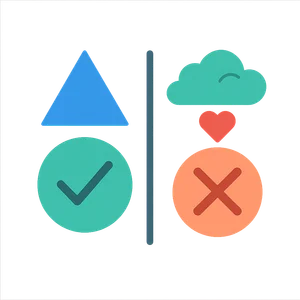
The distinction between a statement that can be proven true or false (a fact) and a personal belief, feeling…
Reads at Grades K-2 Listens at K–3
Print & create
Answer keys·No prep·Free with an account
28 worksheets · answer keys · full story · quiz · Ages 6-8 · CEFR A2
Plus adds 244,000+ more stories in 27 languages, audio for every one, and printables for all of them.
Just want Fact vs. Opinion?

Imagine someone says, 'A dog has four legs.' You can count them, right? One, two, three, four. It’s something you can prove. Now, what if that same person says, 'Dogs are the best pets in the whole wide world'? That’s a feeling deep inside their heart. Maybe your friend thinks cats are the best, or maybe you think a hamster is the perfect pet. One of these sentences is like a solid, shiny pebble you can hold in your hand—it’s the same for everyone. The other is like a beautiful, sparkly bubble that floats in the air—it’s special to the person who imagined it. How do you tell which is which? It can be tricky, but that’s my job. Hello. I’m the super-tool that helps your brain tell the difference. My name is Fact vs. Opinion.
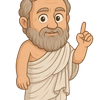
My story begins a very, very long time ago, in a sunny place called Ancient Greece. This was way back in the 4th century BCE, long before cars or computers. There were brilliant thinkers there, like a man named Plato and his student, Aristotle. They loved to walk around and ask big questions about the world. They noticed that some things they talked about were true no matter who said them, like 'The sky is above us.' But other things were just what one person believed, like 'Blue is the prettiest color.' Plato and Aristotle were some of the first people to really think about me and understand that not all ideas are the same. They helped people see that some thoughts could be proven, while others were feelings.
Hundreds and hundreds of years zipped by. Then I traveled to a time called the Enlightenment, during the 17th and 18th centuries. People got super excited about science and learning. They wanted to understand everything. Scientists and thinkers decided that for something to be a real, true fact, you needed proof. You had to be able to see it, measure it, or test it in an experiment. An opinion was still important—it’s what you feel—but a fact needed evidence, like a detective solving a mystery.
The Tale of Fact vs. Opinion
Imagine someone says, 'A dog has four legs.' You can count them, right? One, two, three, four. It’s something you can prove. Now, what if that same person says, 'Dogs are the best pets in the whole wide world'? That’s a feeling deep inside their heart. Maybe your friend thinks cats are the best, or maybe you think a hamster is the perfect pet. One of these sentences is like a solid, shiny pebble you can hold in your hand—it’s the same for everyone. The other is like a beautiful, sparkly bubble that floats in the air—it’s special to the person who imagined it. How do you tell which is which? It can be tricky, but that’s my job. Hello. I’m the super-tool that helps your brain tell the difference. My name is Fact vs. Opinion.
My story begins a very, very long time ago, in a sunny place called Ancient Greece. This was way back in the 4th century BCE, long before cars or computers. There were brilliant thinkers there, like a man named Plato and his student, Aristotle. They loved to walk around and ask big questions about the world. They noticed that some things they talked about were true no matter who said them, like 'The sky is above us.' But other things were just what one person believed, like 'Blue is the prettiest color.' Plato and Aristotle were some of the first people to really think about me and understand that not all ideas are the same. They helped people see that some thoughts could be proven, while others were feelings.
Hundreds and hundreds of years zipped by. Then I traveled to a time called the Enlightenment, during the 17th and 18th centuries. People got super excited about science and learning. They wanted to understand everything. Scientists and thinkers decided that for something to be a real, true fact, you needed proof. You had to be able to see it, measure it, or test it in an experiment. An opinion was still important—it’s what you feel—but a fact needed evidence, like a detective solving a mystery.
After that, in the 19th and 20th centuries, something new came along: newspapers. People who wrote for newspapers, called journalists, learned that using me was very important for being fair. They decided to put things that were proven—the facts—in their news stories. For example, 'A new bridge opened on October 2nd.' But what people thought about the bridge, like 'The new bridge is beautiful,' they put on a different page called the opinions page. This way, everyone could read the news and know what was a fact and what was someone’s personal idea.
So, why do I matter to you today? Because I am one of your brain's most amazing super-tools. You can use me every single day. When you read a book for school, I help you find the important facts you need to learn. When you listen to your friends, I help you understand that what they feel—their opinions—are special to them, even if you feel differently. Knowing the difference between a fact and an opinion helps you make smart choices. It helps you ask good questions and figure things out for yourself. Using me makes your brain grow stronger, and it helps your heart stay kind and curious about all the wonderful people and ideas in the world.
Wow facts
About
The distinction between a statement that can be proven true or false (a fact) and a personal belief, feeling, or judgment that cannot be proven (an opinion).
Take a Quiz
Question 1 of 4
Why did newspapers in the 19th and 20th centuries use Fact vs. Opinion?
Explore next





Want to do even more?
Go beyond exploring. Unlock tools that turn every story into real learning.

Storypie Plus for families
Full stories, quizzes, and printables. Nights and car rides, sorted.
- Unlimited audio stories
- Create Mode: your child stars in the story
- Offline downloads
- Printable worksheets & coloring pages

Why Storypie for Schools
Students engaged. Prep in seconds. Evenings back to you.
- Worksheets & Quizzes
- Classroom Management
- Formative Assessment
- Custom Curriculum & Lesson Plans
- 27 Languages

Why Storypie for Homeschool
Curriculum done. They'll ask for more. Hours back in your day.
- Worksheet Generator
- First-Person Audio Stories
- Built-in Comprehension Quizzes
- Custom Curriculum & Lesson Plans
- Print & Go Activities