English

Fact vs. Opinion
The distinction between a statement that can be proven true or false (a fact) and a personal belief, feeling…
Reads at Grades 3–5 Listens at Grades 1–5
Print & create
Answer keys·No prep·Free with an account
28 worksheets · answer keys · full story · quiz · Ages 8-10 · CEFR B1
Plus adds 244,000+ more stories in 27 languages, audio for every one, and printables for all of them.
Just want Fact vs. Opinion?

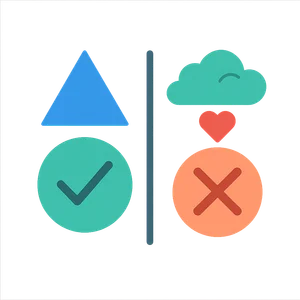
Have you ever noticed how people talk about the world in two different ways? Someone might say, “That dog has four legs and a tail,” and everyone would nod. It’s something you can see and count. But then, someone else might say, “That is the cutest dog in the entire world!” and their friend might shake their head and say, “No, my dog is the cutest!” See what happened? You can’t prove which dog is the cutest, because it’s a feeling. I live inside everyone’s mind, helping you sort these thoughts. Imagine you have two big baskets. In one basket, you put all the things that can be proven true or false, like “Spiders have eight legs” or “The Earth revolves around the sun.” In the other basket, you put all the feelings, beliefs, and ideas that can change from person to person, like “Pizza is the best food” or “Blue is a calming color.” I am the invisible line that separates those two baskets. I am the important line between a Fact and an Opinion.
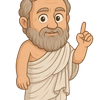
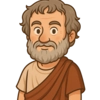
My journey began a very, very long time ago, in a sunny place called Ancient Greece during the 4th century BCE. People were starting to think deeply about how they knew what they knew. A wise teacher named Plato talked about me a lot. He told his students a story to help them understand. He said that opinions were like shadows dancing on a cave wall; they looked real, but they were just copies of the real thing. The facts were the actual objects outside in the sunlight, casting the shadows. He believed that to find the truth, you had to step out of the cave and into the light. One of his brightest students was a man named Aristotle. Around 350 BCE, Aristotle decided that the best way to find the facts was to go out and see the world for himself. He encouraged people to use their eyes and ears, to observe everything carefully and gather proof. He loved sorting animals and plants into groups based on what he could prove about them. After that, I took a long nap for many centuries, but I woke up during a very exciting time called the Scientific Revolution in the 16th and 17th centuries. Scientists all over Europe were using me to make amazing discoveries. They didn’t just believe things; they tested them. They built telescopes to prove that planets moved in certain ways and mixed chemicals to see what would happen. They knew that to unlock the secrets of the universe, they had to separate what they thought from what they could prove. They used me to build a strong foundation of knowledge that we still use today.
The Line Between Fact and Opinion
Have you ever noticed how people talk about the world in two different ways? Someone might say, “That dog has four legs and a tail,” and everyone would nod. It’s something you can see and count. But then, someone else might say, “That is the cutest dog in the entire world!” and their friend might shake their head and say, “No, my dog is the cutest!” See what happened? You can’t prove which dog is the cutest, because it’s a feeling. I live inside everyone’s mind, helping you sort these thoughts. Imagine you have two big baskets. In one basket, you put all the things that can be proven true or false, like “Spiders have eight legs” or “The Earth revolves around the sun.” In the other basket, you put all the feelings, beliefs, and ideas that can change from person to person, like “Pizza is the best food” or “Blue is a calming color.” I am the invisible line that separates those two baskets. I am the important line between a Fact and an Opinion.
My journey began a very, very long time ago, in a sunny place called Ancient Greece during the 4th century BCE. People were starting to think deeply about how they knew what they knew. A wise teacher named Plato talked about me a lot. He told his students a story to help them understand. He said that opinions were like shadows dancing on a cave wall; they looked real, but they were just copies of the real thing. The facts were the actual objects outside in the sunlight, casting the shadows. He believed that to find the truth, you had to step out of the cave and into the light. One of his brightest students was a man named Aristotle. Around 350 BCE, Aristotle decided that the best way to find the facts was to go out and see the world for himself. He encouraged people to use their eyes and ears, to observe everything carefully and gather proof. He loved sorting animals and plants into groups based on what he could prove about them. After that, I took a long nap for many centuries, but I woke up during a very exciting time called the Scientific Revolution in the 16th and 17th centuries. Scientists all over Europe were using me to make amazing discoveries. They didn’t just believe things; they tested them. They built telescopes to prove that planets moved in certain ways and mixed chemicals to see what would happen. They knew that to unlock the secrets of the universe, they had to separate what they thought from what they could prove. They used me to build a strong foundation of knowledge that we still use today.
Today, I am more important than ever. Can you imagine scrolling on a phone or watching videos? You see a million pieces of information every day. Knowing the difference between me is like having a superpower for thinking. Facts are the strong, steady bricks you use to build your tower of knowledge. You can stack them up, one on top of the other, to understand how the world works. They help you in school when you learn about history, science, and math. Opinions are the beautiful, colorful flags you fly from the top of your tower. They show the world who you are. They are your favorite songs, your feelings about a movie, and your ideas for making the world a better place. You can share your opinions with others and listen to theirs, too. Understanding me helps everyone learn new things, share their own special thoughts respectfully, and see the world with clear, curious eyes. I help you build a smart brain and a kind heart, and that’s the best combination of all.
Wow facts
About
The distinction between a statement that can be proven true or false (a fact) and a personal belief, feeling, or judgment that cannot be proven (an opinion).
Take a Quiz
Question 1 of 5
Who was the teacher in Ancient Greece that described opinions as being like shadows on a cave wall?
Explore next




Want to do even more?
Go beyond exploring. Unlock tools that turn every story into real learning.

Storypie Plus for families
Full stories, quizzes, and printables. Nights and car rides, sorted.
- Unlimited audio stories
- Create Mode: your child stars in the story
- Offline downloads
- Printable worksheets & coloring pages

Why Storypie for Schools
Students engaged. Prep in seconds. Evenings back to you.
- Worksheets & Quizzes
- Classroom Management
- Formative Assessment
- Custom Curriculum & Lesson Plans
- 27 Languages

Why Storypie for Homeschool
Curriculum done. They'll ask for more. Hours back in your day.
- Worksheet Generator
- First-Person Audio Stories
- Built-in Comprehension Quizzes
- Custom Curriculum & Lesson Plans
- Print & Go Activities