English

Trans-Saharan Trade
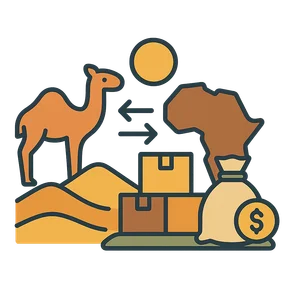
A vast network of trade routes that connected West and North Africa across the Sahara Desert…
Reads at Grades 6–8 Listens at Grades 4–8
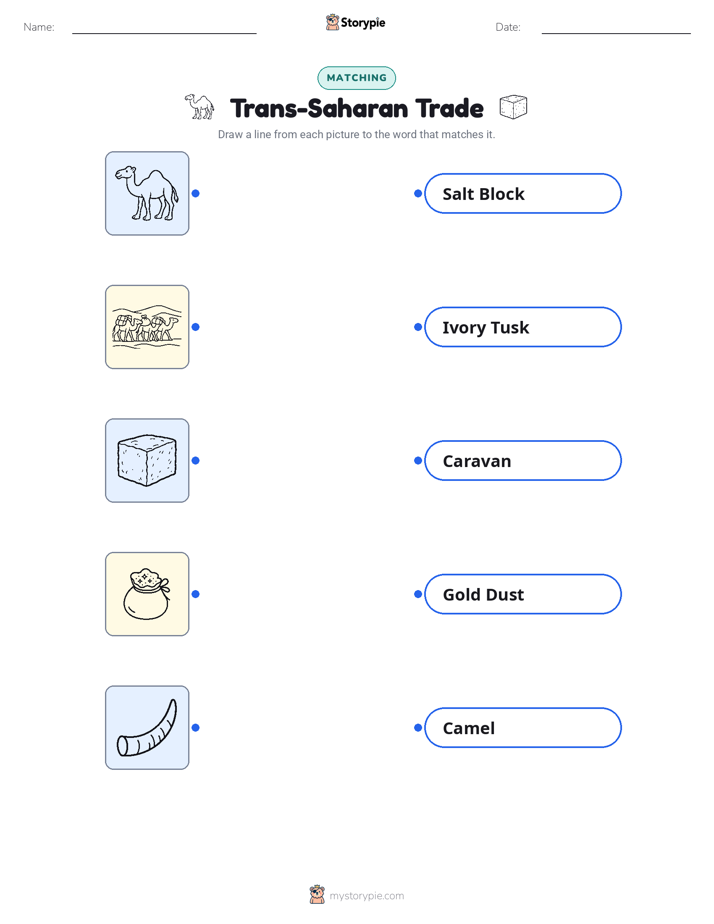
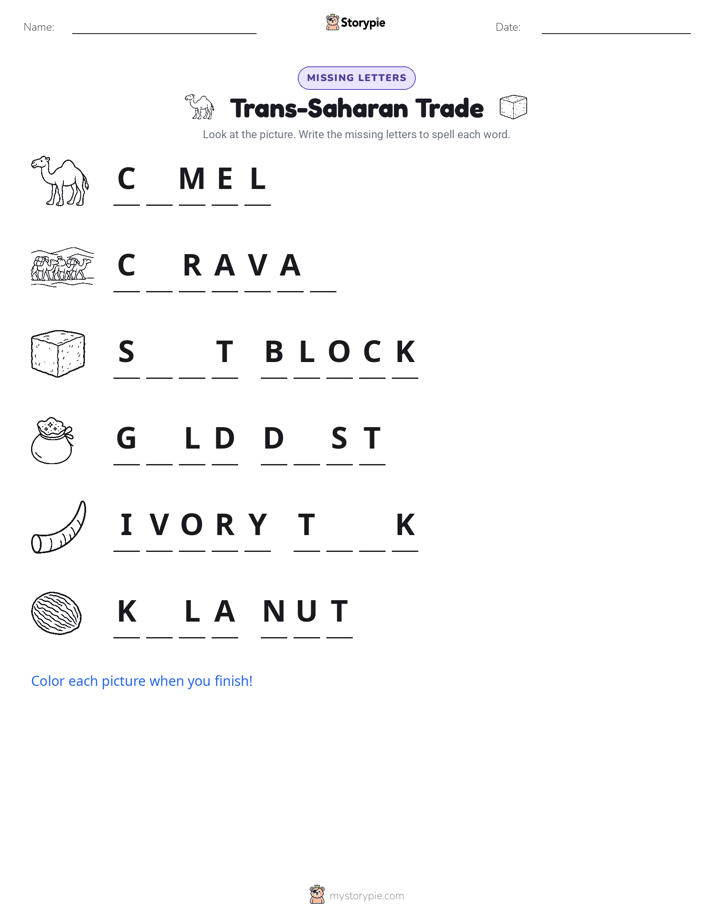
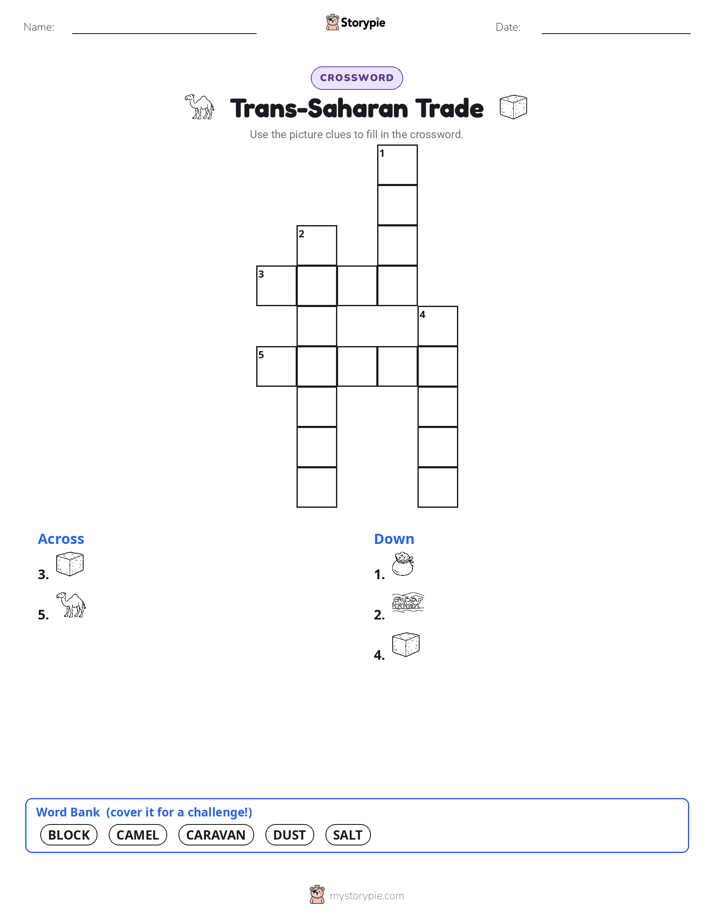
Print & create
Answer keys·No prep·Free with an account
28 worksheets · answer keys · full story · quiz · Ages 10-12 · CEFR B2
Plus adds 102,000+ more stories in 27 languages, audio for every one, and printables for all of them.
Just want Trans-Saharan Trade?
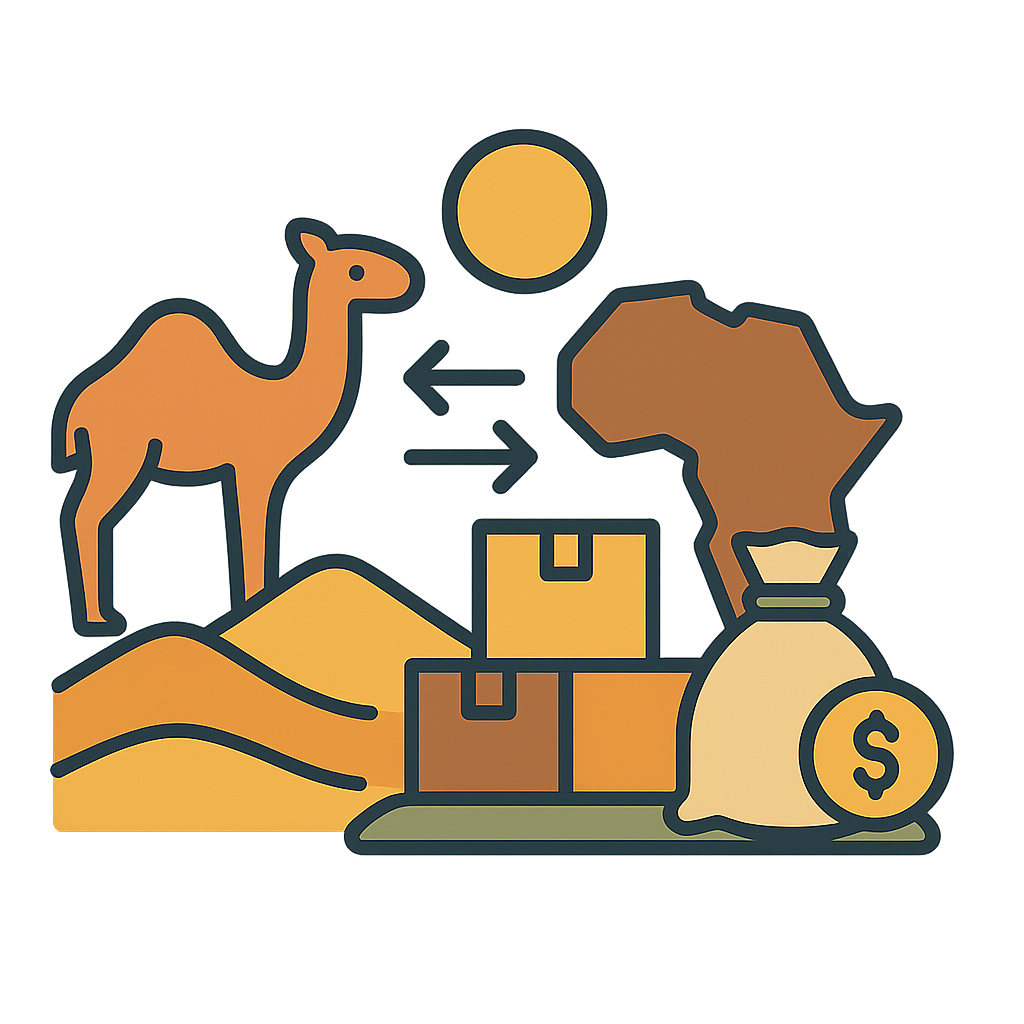
Imagine a sea made not of water, but of shimmering, endless sand. For centuries, this ocean of dunes, the great Sahara Desert, was a massive barrier. To the north, in cities like Sijilmasa, were libraries filled with books, bustling markets with fine cloth, and skilled craftspeople. To the south, in West Africa, lay kingdoms brimming with gold, strong kola nuts, and precious ivory. They were two different worlds, separated by one of the harshest places on Earth. How could they ever connect? The key was not a ship, but an animal perfectly designed for my world: the dromedary camel. With their wide feet that didn't sink into the sand and their ability to travel for days without water, they were the vessels of the desert. At first, the journeys were small, just a whisper on the wind. A few brave merchants, a handful of camels, a trickle of goods. But that trickle was the beginning of a great river of commerce, culture, and ideas that would reshape empires. I am the Trans-Saharan Trade, the golden bridge across the sea of sand.
My golden age began in earnest around the 3rd century CE. It was the Berber people, masters of the desert, who truly brought me to life. They were expert guides who knew the sand sea like a sailor knows the ocean. They could read the stars to find their way and knew the location of every life-saving oasis, those precious islands of green in a world of brown. A caravan journey with them was an incredible sight. Imagine a line of thousands of camels, sometimes stretching for miles, loaded with goods and swaying rhythmically across the dunes. The journey was long and perilous, taking months to complete, but the rewards were worth the risk. From the south, the caravans carried gold dust so pure it dazzled the eye, along with ivory for carving and kola nuts that gave energy. Heading south from North Africa, the camels carried things the West African kingdoms desperately needed. The most important of all was salt. In the hot climate of West Africa, salt was essential for preserving food and for health, but it was scarce. My caravans brought giant blocks of it, mined from the desert itself. Salt became so valuable that it was sometimes traded for its exact weight in gold. I helped great empires rise. The Ghana Empire, the Mali Empire, and later the Songhai Empire all grew fantastically wealthy and powerful by controlling my routes. The world learned just how rich they were on the 14th of April, 1324, when Mansa Musa, the king of Mali, began his famous pilgrimage to Mecca. His caravan was so vast and carried so much gold that when he passed through Egypt, he gave away enough to change the value of gold there for years. I didn't just carry goods; I carried knowledge and faith. Cities like Timbuktu and Djenné blossomed into legendary centers of learning, with grand mosques and universities where scholars from all over the world came to study. I turned desert outposts into global crossroads of wealth and wisdom.
The Golden Bridge of Sand
Imagine a sea made not of water, but of shimmering, endless sand. For centuries, this ocean of dunes, the great Sahara Desert, was a massive barrier. To the north, in cities like Sijilmasa, were libraries filled with books, bustling markets with fine cloth, and skilled craftspeople. To the south, in West Africa, lay kingdoms brimming with gold, strong kola nuts, and precious ivory. They were two different worlds, separated by one of the harshest places on Earth. How could they ever connect? The key was not a ship, but an animal perfectly designed for my world: the dromedary camel. With their wide feet that didn't sink into the sand and their ability to travel for days without water, they were the vessels of the desert. At first, the journeys were small, just a whisper on the wind. A few brave merchants, a handful of camels, a trickle of goods. But that trickle was the beginning of a great river of commerce, culture, and ideas that would reshape empires. I am the Trans-Saharan Trade, the golden bridge across the sea of sand.
My golden age began in earnest around the 3rd century CE. It was the Berber people, masters of the desert, who truly brought me to life. They were expert guides who knew the sand sea like a sailor knows the ocean. They could read the stars to find their way and knew the location of every life-saving oasis, those precious islands of green in a world of brown. A caravan journey with them was an incredible sight. Imagine a line of thousands of camels, sometimes stretching for miles, loaded with goods and swaying rhythmically across the dunes. The journey was long and perilous, taking months to complete, but the rewards were worth the risk. From the south, the caravans carried gold dust so pure it dazzled the eye, along with ivory for carving and kola nuts that gave energy. Heading south from North Africa, the camels carried things the West African kingdoms desperately needed. The most important of all was salt. In the hot climate of West Africa, salt was essential for preserving food and for health, but it was scarce. My caravans brought giant blocks of it, mined from the desert itself. Salt became so valuable that it was sometimes traded for its exact weight in gold. I helped great empires rise. The Ghana Empire, the Mali Empire, and later the Songhai Empire all grew fantastically wealthy and powerful by controlling my routes. The world learned just how rich they were on the 14th of April, 1324, when Mansa Musa, the king of Mali, began his famous pilgrimage to Mecca. His caravan was so vast and carried so much gold that when he passed through Egypt, he gave away enough to change the value of gold there for years. I didn't just carry goods; I carried knowledge and faith. Cities like Timbuktu and Djenné blossomed into legendary centers of learning, with grand mosques and universities where scholars from all over the world came to study. I turned desert outposts into global crossroads of wealth and wisdom.
But like a river, my course was destined to change. My power began to wane in the 15th and 16th centuries. From the coasts of Europe, explorers in great wooden ships learned to sail the Atlantic Ocean. They established new sea routes and built trading posts directly on the West African coast. Suddenly, the long, difficult, and expensive journey across my sands was no longer the only way to trade for gold and other treasures. The sea was a new, often faster, highway of commerce. My paths also grew more dangerous. In 1591, an army from Morocco invaded and conquered the Songhai Empire, throwing my central routes into chaos and making travel less secure. The flow of caravans slowed from a mighty river to a gentle stream. But I never truly vanished. My legacy is etched into the culture of Africa. I built cities that still stand today. I carried ideas, art, and the faith of Islam across the continent, connecting people who had never met. My spirit lives on every time people from different cultures find a way to connect, to share goods and ideas, and to learn from one another. My story is a timeless reminder that with courage and ingenuity, even the most impossible barriers can be crossed, and that the greatest treasures we can exchange are not just gold or salt, but knowledge and friendship.
Wow facts
About
A vast network of trade routes that connected West and North Africa across the Sahara Desert, facilitating the exchange of goods like gold and salt and fostering cultural and intellectual growth from the 8th century to the early 17th century CE.
Take a Quiz
Question 1 of 5
What is the main idea of this story, told from the perspective of the Trans-Saharan Trade?
Explore next


Want to do even more?
Go beyond exploring. Unlock tools that turn every story into real learning.

Storypie Plus for families
Full stories, quizzes, and printables. Nights and car rides, sorted.
- Unlimited audio stories
- Create Mode: your child stars in the story
- Offline downloads
- Printable worksheets & coloring pages

Why Storypie for Schools
Students engaged. Prep in seconds. Evenings back to you.
- Worksheets & Quizzes
- Classroom Management
- Formative Assessment
- Custom Curriculum & Lesson Plans
- 27 Languages

Why Storypie for Homeschool
Curriculum done. They'll ask for more. Hours back in your day.
- Worksheet Generator
- First-Person Audio Stories
- Built-in Comprehension Quizzes
- Custom Curriculum & Lesson Plans
- Print & Go Activities