English

Trans-Saharan Trade
A vast network of trade routes that connected West and North Africa across the Sahara Desert…
Reads at Grades 3–5 Listens at Grades 1–5
Print & create
Answer keys·No prep·Free with an account
28 worksheets · answer keys · full story · quiz · Ages 8-10 · CEFR B1
Plus adds 102,000+ more stories in 27 languages, audio for every one, and printables for all of them.
Just want Trans-Saharan Trade?
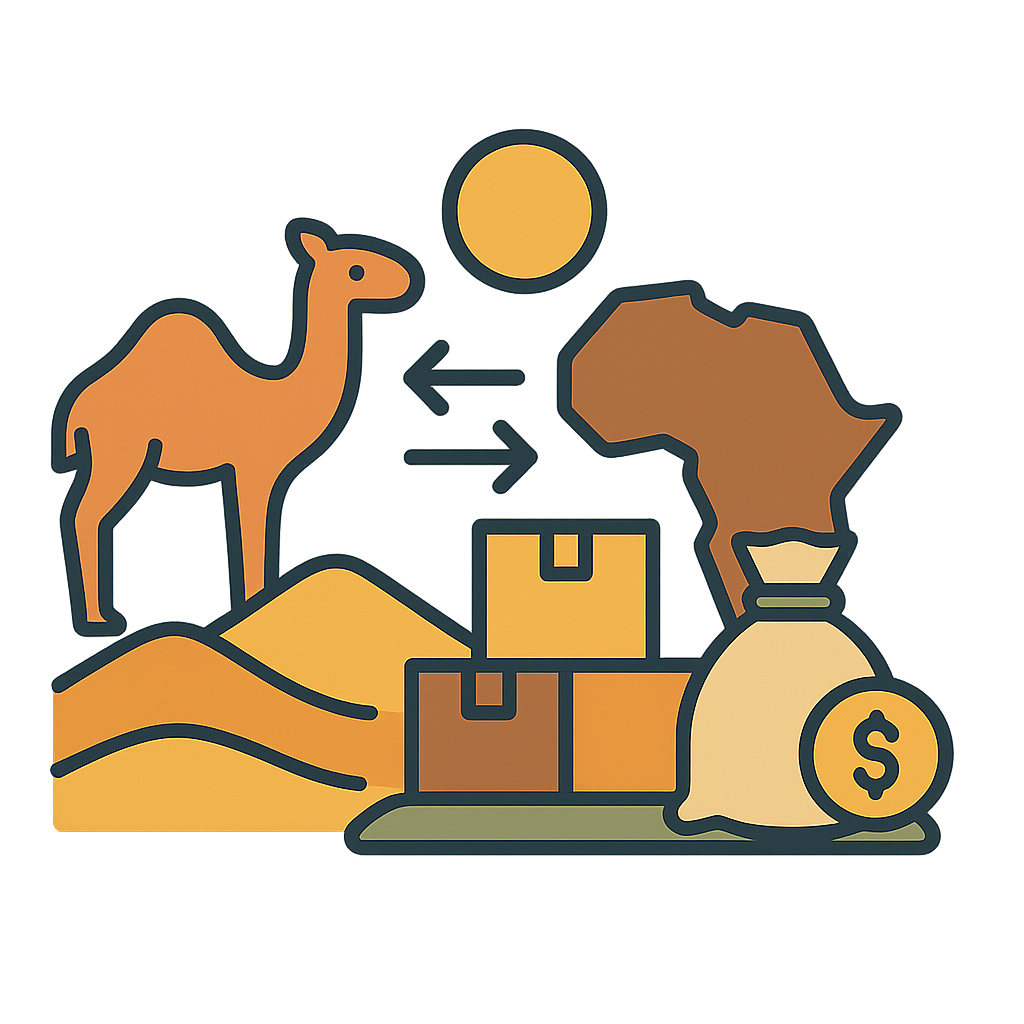
I am a golden path stretching across a sea of sand. For thousands of years, the giant Sahara Desert was like an ocean that kept people apart. In the south, in West Africa, there were kingdoms bursting with life, music, and sparkling gold. In the north, along the Mediterranean Sea, were bustling cities filled with books, spices, and colorful cloth. They knew little of each other, separated by my endless dunes. But I had a secret. I knew that even the biggest barriers can be crossed. I am the footsteps of a million camels, the chatter of traders, and the jingle of goods carried for a thousand miles. I am a bridge made of courage, curiosity, and a very special animal. Before people gave me a name, I was just an idea: what if we could connect these worlds? What if we could share our treasures and our stories? I am the answer to that question.
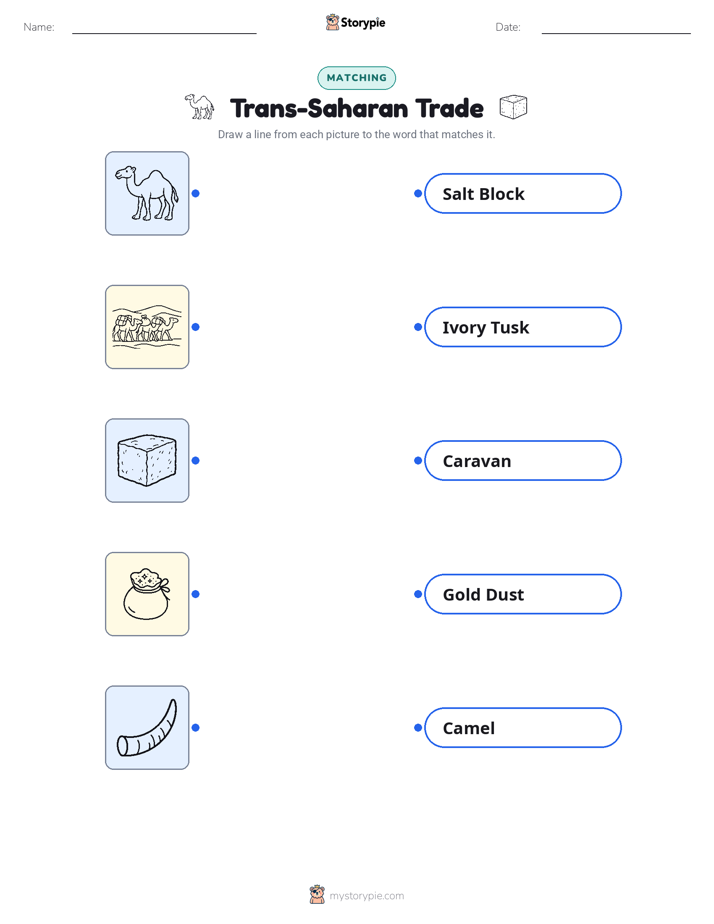
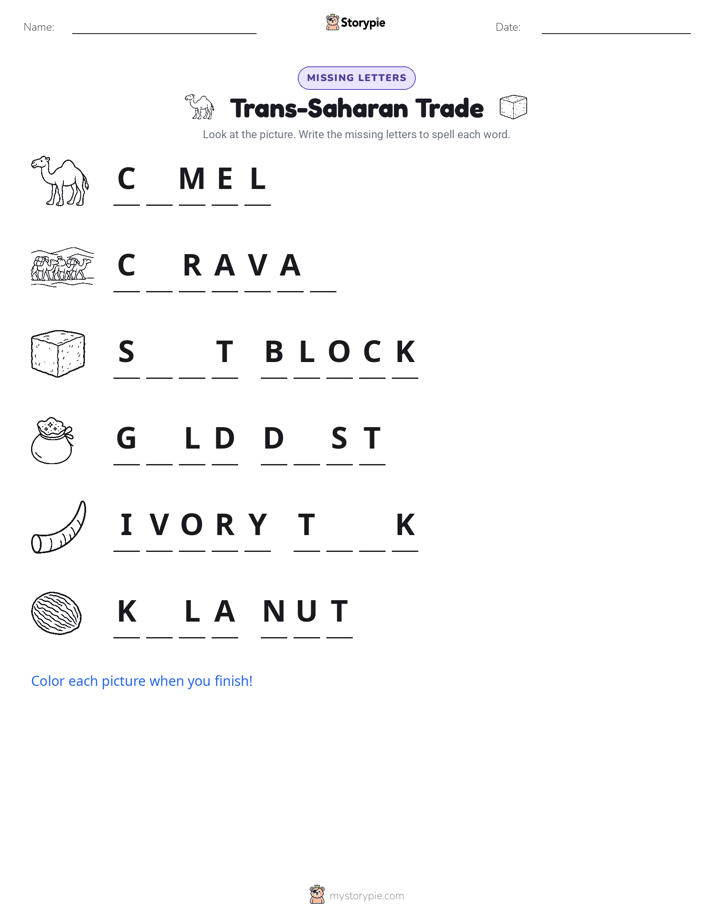
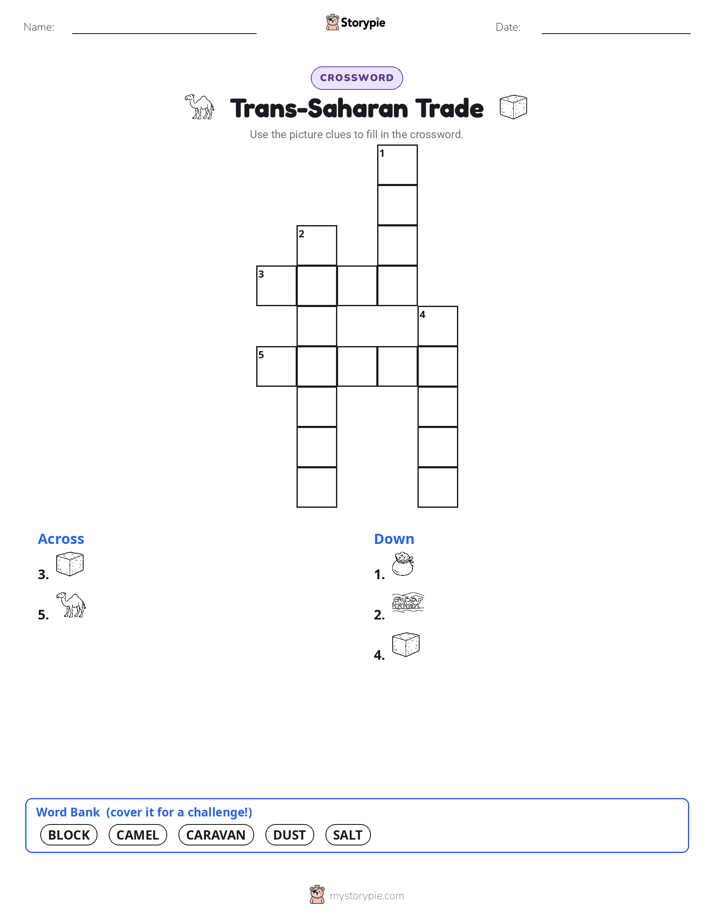
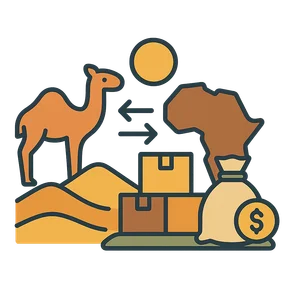
You can call me the Trans-Saharan Trade. My story truly came alive around the 3rd century CE when my best friends arrived: dromedary camels. People called them 'ships of the desert' because they could carry heavy loads and travel for ten days without water. With these amazing animals, the trickle of trade became a mighty river. By the 8th century, huge caravans, sometimes with a thousand camels, began their long journey. Can you imagine the sight? From the south, they carried gold that shimmered like the sun, ivory from mighty elephants, and special kola nuts that gave people energy. But one of the most important things they brought from the desert itself was salt. In the hot lands of West Africa, people needed salt to stay healthy and preserve their food. It was so precious that it was often traded for its exact weight in gold. In return, caravans from the north brought the salt, along with fine fabrics, shiny copper, strong horses, and books filled with new ideas. This exchange made great kingdoms powerful. The Ghana Empire became rich by controlling my paths, and later, the Mali Empire became one of the wealthiest in the world. Its most famous king, Mansa Musa, made a spectacular pilgrimage to Mecca in 1324, bringing so much gold that he amazed everyone he met and put West Africa on maps around the globe.
The Golden Path
I am a golden path stretching across a sea of sand. For thousands of years, the giant Sahara Desert was like an ocean that kept people apart. In the south, in West Africa, there were kingdoms bursting with life, music, and sparkling gold. In the north, along the Mediterranean Sea, were bustling cities filled with books, spices, and colorful cloth. They knew little of each other, separated by my endless dunes. But I had a secret. I knew that even the biggest barriers can be crossed. I am the footsteps of a million camels, the chatter of traders, and the jingle of goods carried for a thousand miles. I am a bridge made of courage, curiosity, and a very special animal. Before people gave me a name, I was just an idea: what if we could connect these worlds? What if we could share our treasures and our stories? I am the answer to that question.
You can call me the Trans-Saharan Trade. My story truly came alive around the 3rd century CE when my best friends arrived: dromedary camels. People called them 'ships of the desert' because they could carry heavy loads and travel for ten days without water. With these amazing animals, the trickle of trade became a mighty river. By the 8th century, huge caravans, sometimes with a thousand camels, began their long journey. Can you imagine the sight? From the south, they carried gold that shimmered like the sun, ivory from mighty elephants, and special kola nuts that gave people energy. But one of the most important things they brought from the desert itself was salt. In the hot lands of West Africa, people needed salt to stay healthy and preserve their food. It was so precious that it was often traded for its exact weight in gold. In return, caravans from the north brought the salt, along with fine fabrics, shiny copper, strong horses, and books filled with new ideas. This exchange made great kingdoms powerful. The Ghana Empire became rich by controlling my paths, and later, the Mali Empire became one of the wealthiest in the world. Its most famous king, Mansa Musa, made a spectacular pilgrimage to Mecca in 1324, bringing so much gold that he amazed everyone he met and put West Africa on maps around the globe.
I didn't just carry goods; I carried ideas, stories, and beliefs. As traders from North Africa traveled south, they brought the religion of Islam with them. Rulers and people in the West African empires learned about new ways of thinking and worshiping. My paths turned cities into shining stars. The most famous was Timbuktu. By the 14th and 15th centuries, Timbuktu wasn't just a place to trade gold for salt; it was a world-famous center for learning. It had great universities and huge libraries filled with beautiful, handwritten books about mathematics, science, medicine, and poetry. Scholars and students traveled from all over Africa and the Middle East to study there. I helped create a place where knowledge was the greatest treasure of all. I showed that when different cultures meet, they don't just trade objects—they trade wisdom, art, and friendship. I helped build a world that was more connected and understood each other a little bit better.
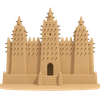
For nearly a thousand years, I was the main highway connecting these two amazing parts of the world. But over time, things changed. Around the 16th century, new ships from Europe began sailing along the coast of Africa. It became easier and faster to trade by sea, and slowly, my sandy paths grew quiet. The great camel caravans faded into legend. But my spirit never left. My legacy lives on in the great stories of the Ghana, Mali, and Songhai empires. You can see it in the architecture of ancient cities and hear it in the music that carries influences from across the desert. I am a reminder that people are always looking for ways to connect. I showed that even across the toughest landscapes, we can build bridges of understanding and create amazing things together. And that spirit of connection is still alive today, helping us share and learn from one another all across the world.
Wow facts
About
A vast network of trade routes that connected West and North Africa across the Sahara Desert, facilitating the exchange of goods like gold and salt and fostering cultural and intellectual growth from the 8th century to the early 17th century CE.
Take a Quiz
Question 1 of 5
The story calls camels 'ships of the desert.' What does this comparison mean?
Explore next


Want to do even more?
Go beyond exploring. Unlock tools that turn every story into real learning.

Storypie Plus for families
Full stories, quizzes, and printables. Nights and car rides, sorted.
- Unlimited audio stories
- Create Mode: your child stars in the story
- Offline downloads
- Printable worksheets & coloring pages

Why Storypie for Schools
Students engaged. Prep in seconds. Evenings back to you.
- Worksheets & Quizzes
- Classroom Management
- Formative Assessment
- Custom Curriculum & Lesson Plans
- 27 Languages

Why Storypie for Homeschool
Curriculum done. They'll ask for more. Hours back in your day.
- Worksheet Generator
- First-Person Audio Stories
- Built-in Comprehension Quizzes
- Custom Curriculum & Lesson Plans
- Print & Go Activities