English

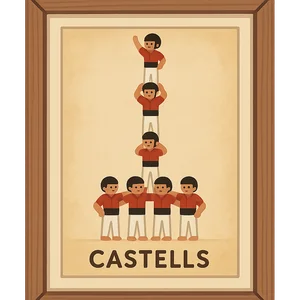
Castells
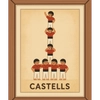
Castells are human towers built as a cultural tradition in Catalonia, Spain, symbolizing community, strength…
Reads at Grades 6–8 Listens at Grades 4–8
Print & create
Answer keys·No prep·Free with an account
28 worksheets · answer keys · full story · quiz · Ages 10-12 · CEFR B2
Plus adds 164,000+ more stories in 27 languages, audio for every one, and printables for all of them.
Just want Castells?
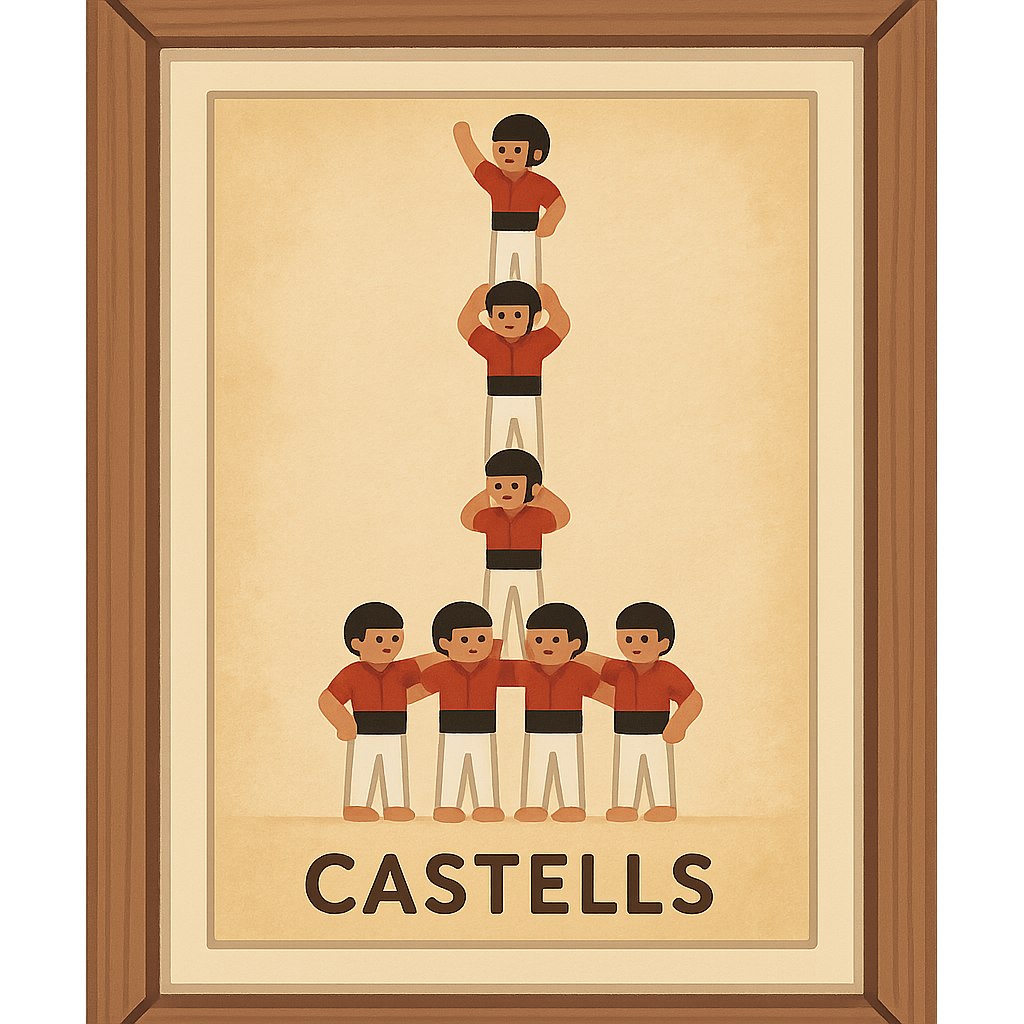
The air in the town square buzzes with a special kind of energy, a feeling that settles deep in your bones. Above the roar of the crowd, you can hear the sharp, soaring melody of the gralles, our traditional Catalan pipes, signaling that the moment has arrived. I am not a structure of stone or steel, built by machines. My foundation is living, breathing, and determined. Watch as it forms. Hundreds of people press together, a sea of shoulders and arms locking tight to create the pinya, a strong, stable base that will support everything to come. It is a human net, designed to catch and to hold. From this dense core, my journey to the sky begins. The first castellers, the strongest and most experienced, begin their careful climb onto the shoulders of the pinya. They form the first level of my trunk, their bodies perfectly still, their focus absolute. Then another level rises, and another, and another. With each new layer, I grow taller, a testament to pure human collaboration. My heart is the combined heartbeat of every person who forms me. My strength is their shared breath. I am a tower of voices, a column of courage, reaching for the clouds, crowned by the smallest and bravest climber of all. They are light and quick, the final piece of the puzzle. At the very top, a tiny hand is raised, a quick salute to the sky and the cheering crowd below. I am complete. I am the Castells, the human towers of Catalonia.
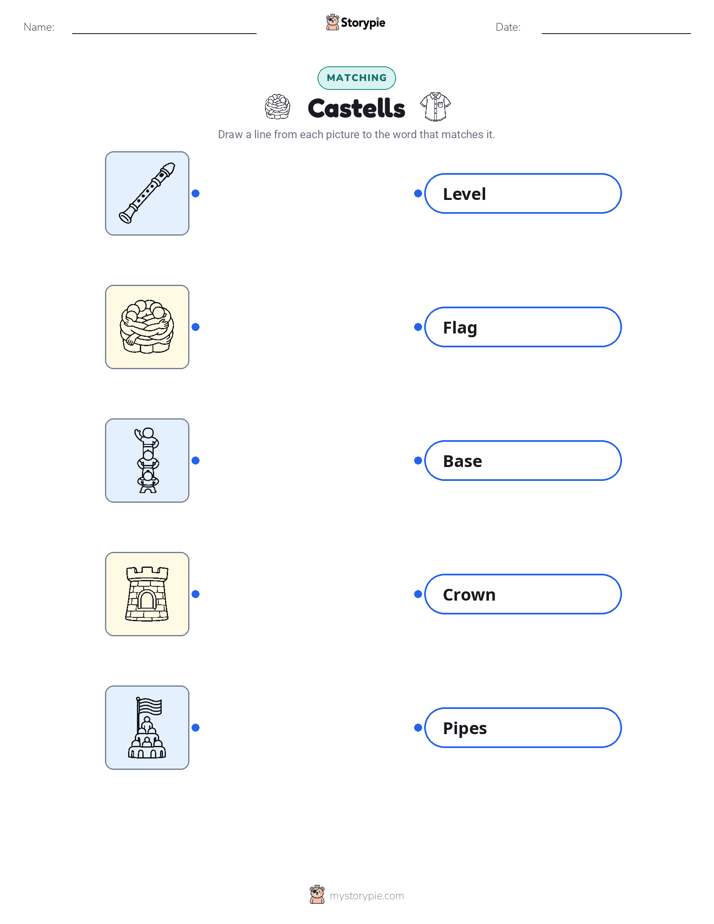
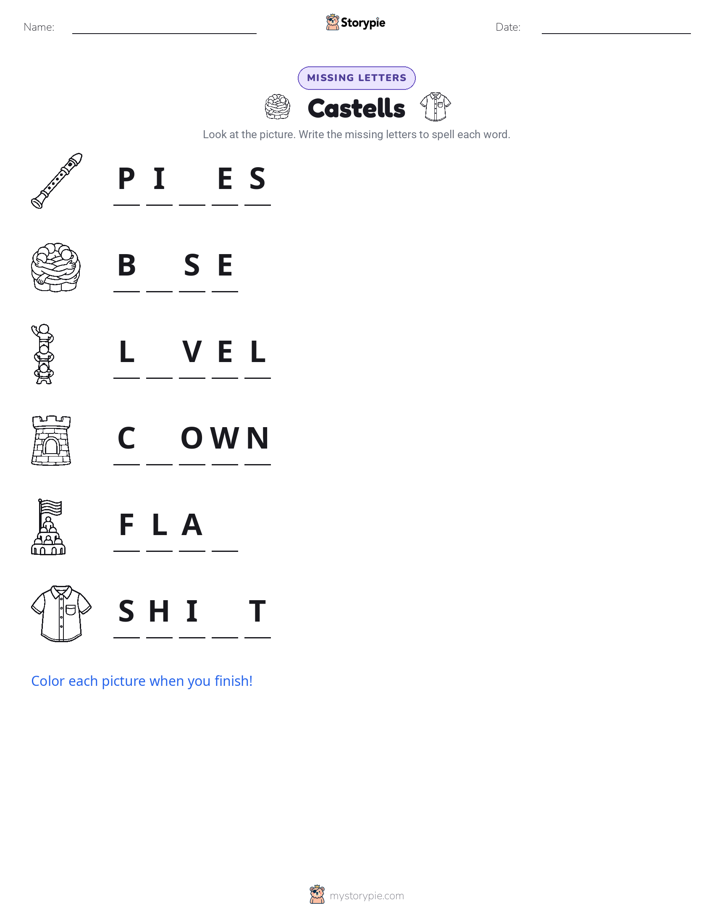
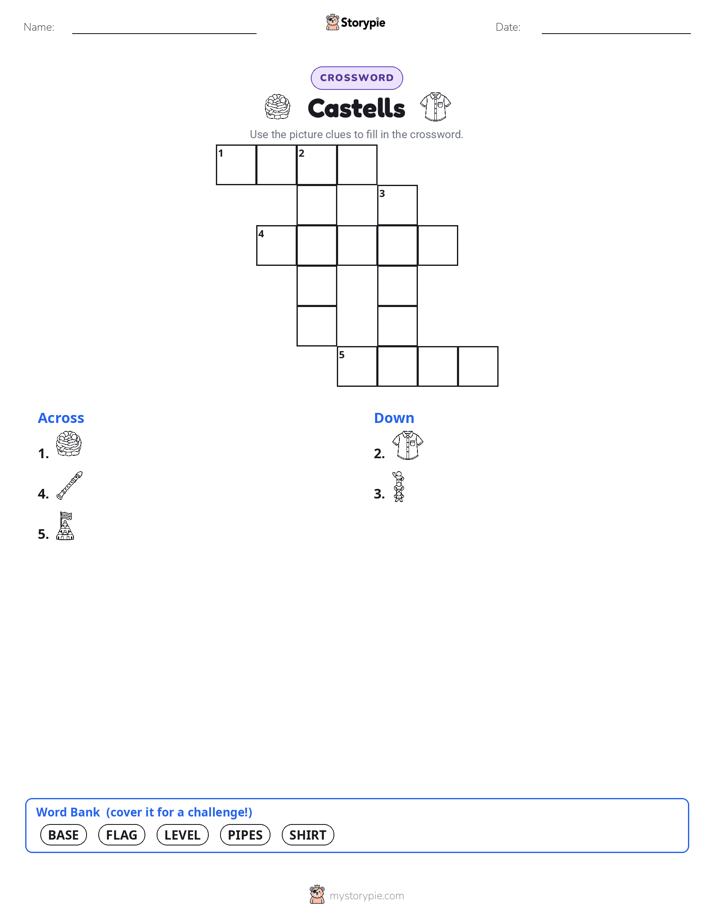
My story begins not as a tower, but as a dance. In the late 18th century, in the town of Valls, Catalonia, a popular dance called the 'Ball de Valencians' would often end with a small, human pyramid. Over time, people became fascinated with this finale. They wondered, 'How high could we go?'. This question sparked a friendly rivalry, and soon, the tower-building part of the dance became a tradition all on its own. That is how my spirit was born. To understand me, you must understand my anatomy. My foundation, the pinya, is the most critical part; it is a marvel of social engineering, where hundreds of community members, from grandparents to teenagers, lend their strength to support the tower and ensure its safety. Above the pinya rises the tronc, or trunk, which is the main body of the tower, built level by level with castellers of different sizes and strengths. At the very top is the pom de dalt, the crown of the tower, made up of the three highest levels and composed entirely of children, who are lighter and more agile. The youngest of all is the enxaneta, the child who makes the final ascent and completes me with a gesture called the aleta—a quick wave of the hand. We live by a motto: 'Força, equilibri, valor i seny.' This means 'Strength, Balance, Courage, and Common Sense.' Strength is needed in the base, balance in the trunk, courage in the children who climb to the top, and common sense from everyone, especially the leaders who plan the tower and decide when it is safe to proceed. This motto is the blueprint for our success. It is a formula built on absolute trust. The climbers in the tronc trust the pinya below them, and the enxaneta trusts every single person beneath them on their daring journey to the sky.
I Am the Castells
The air in the town square buzzes with a special kind of energy, a feeling that settles deep in your bones. Above the roar of the crowd, you can hear the sharp, soaring melody of the gralles, our traditional Catalan pipes, signaling that the moment has arrived. I am not a structure of stone or steel, built by machines. My foundation is living, breathing, and determined. Watch as it forms. Hundreds of people press together, a sea of shoulders and arms locking tight to create the pinya, a strong, stable base that will support everything to come. It is a human net, designed to catch and to hold. From this dense core, my journey to the sky begins. The first castellers, the strongest and most experienced, begin their careful climb onto the shoulders of the pinya. They form the first level of my trunk, their bodies perfectly still, their focus absolute. Then another level rises, and another, and another. With each new layer, I grow taller, a testament to pure human collaboration. My heart is the combined heartbeat of every person who forms me. My strength is their shared breath. I am a tower of voices, a column of courage, reaching for the clouds, crowned by the smallest and bravest climber of all. They are light and quick, the final piece of the puzzle. At the very top, a tiny hand is raised, a quick salute to the sky and the cheering crowd below. I am complete. I am the Castells, the human towers of Catalonia.
My story begins not as a tower, but as a dance. In the late 18th century, in the town of Valls, Catalonia, a popular dance called the 'Ball de Valencians' would often end with a small, human pyramid. Over time, people became fascinated with this finale. They wondered, 'How high could we go?'. This question sparked a friendly rivalry, and soon, the tower-building part of the dance became a tradition all on its own. That is how my spirit was born. To understand me, you must understand my anatomy. My foundation, the pinya, is the most critical part; it is a marvel of social engineering, where hundreds of community members, from grandparents to teenagers, lend their strength to support the tower and ensure its safety. Above the pinya rises the tronc, or trunk, which is the main body of the tower, built level by level with castellers of different sizes and strengths. At the very top is the pom de dalt, the crown of the tower, made up of the three highest levels and composed entirely of children, who are lighter and more agile. The youngest of all is the enxaneta, the child who makes the final ascent and completes me with a gesture called the aleta—a quick wave of the hand. We live by a motto: 'Força, equilibri, valor i seny.' This means 'Strength, Balance, Courage, and Common Sense.' Strength is needed in the base, balance in the trunk, courage in the children who climb to the top, and common sense from everyone, especially the leaders who plan the tower and decide when it is safe to proceed. This motto is the blueprint for our success. It is a formula built on absolute trust. The climbers in the tronc trust the pinya below them, and the enxaneta trusts every single person beneath them on their daring journey to the sky.
Through the centuries, I have grown from a local spectacle into a powerful symbol of Catalan culture and identity. I am the centerpiece of every major festival, a moment of shared pride where entire towns come together to cheer for their colla, or team. The friendly competition between different colles pushes them to build more complex and taller towers, constantly innovating while honoring the traditions passed down through generations. My significance reached a global stage on a very important day. On November 16th, 2010, the world took notice. UNESCO, the United Nations Educational, Scientific and Cultural Organization, officially recognized me as a Masterpiece of the Oral and Intangible Heritage of Humanity. This is a very special honor. It means that I am not just a physical performance, but a living tradition—a cultural treasure that includes the music, the language, the community spirit, and the technical knowledge passed from person to person. It means the world has promised to help protect and celebrate me. I am more than just a tower that stands for a few breathtaking moments before being carefully dismantled. I am a living, breathing example of what people can achieve when they lift each other up. I am a monument to teamwork, trust, and shared purpose. As long as people believe in the incredible power of working together, I promise to keep rising, touching the sky, and showing the world the beauty of human connection.
Wow facts
About
Castells are human towers built as a cultural tradition in Catalonia, Spain, symbolizing community, strength, and balance. The practice dates back to the 18th century and is recognized by UNESCO.
Take a Quiz
Question 1 of 5
In your own words, retell the process of building a Castell, mentioning the pinya, tronc, and enxaneta.
Explore next

Want to do even more?
Go beyond exploring. Unlock tools that turn every story into real learning.

Storypie Plus for families
Full stories, quizzes, and printables. Nights and car rides, sorted.
- Unlimited audio stories
- Create Mode: your child stars in the story
- Offline downloads
- Printable worksheets & coloring pages

Why Storypie for Schools
Students engaged. Prep in seconds. Evenings back to you.
- Worksheets & Quizzes
- Classroom Management
- Formative Assessment
- Custom Curriculum & Lesson Plans
- 27 Languages

Why Storypie for Homeschool
Curriculum done. They'll ask for more. Hours back in your day.
- Worksheet Generator
- First-Person Audio Stories
- Built-in Comprehension Quizzes
- Custom Curriculum & Lesson Plans
- Print & Go Activities