English

Don Quixote
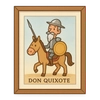
Don Quixote is a Spanish novel by Miguel de Cervantes, published in two parts in 1605 and 1615.
Reads at Grades 3–5 Listens at Grades 1–5
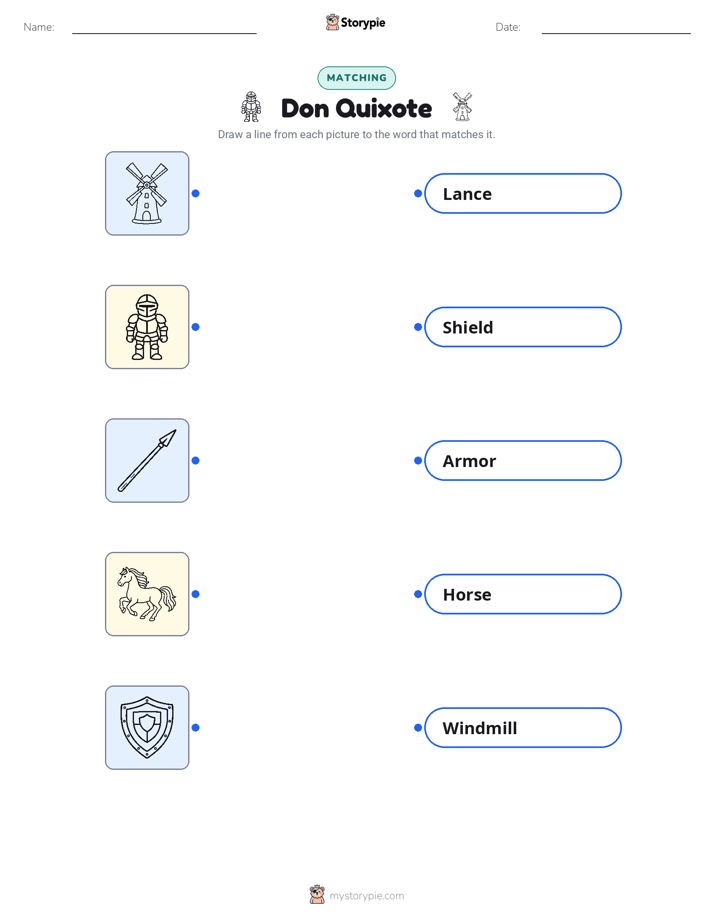
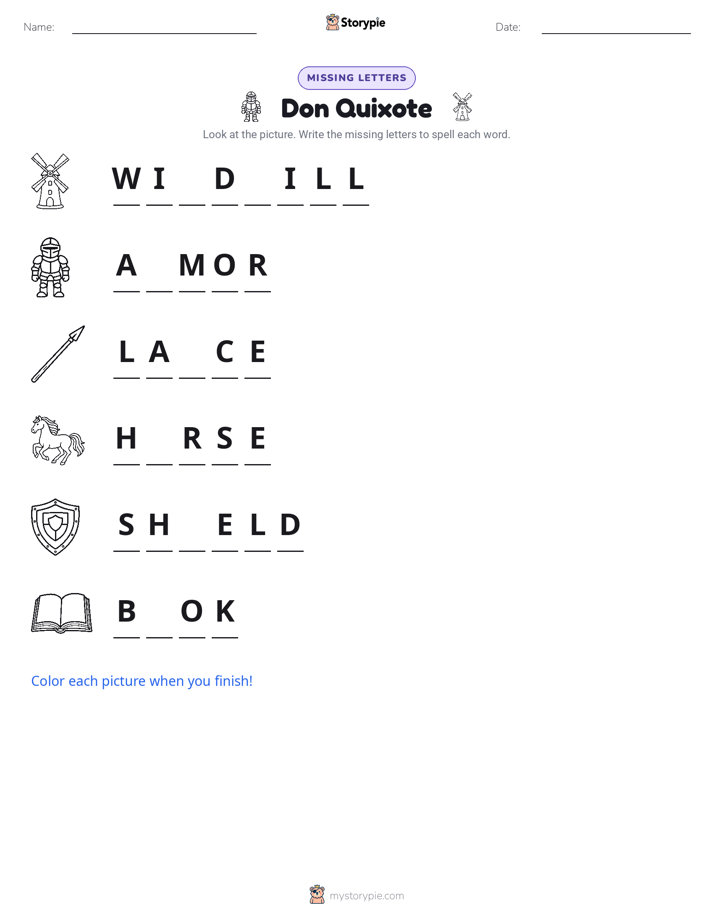
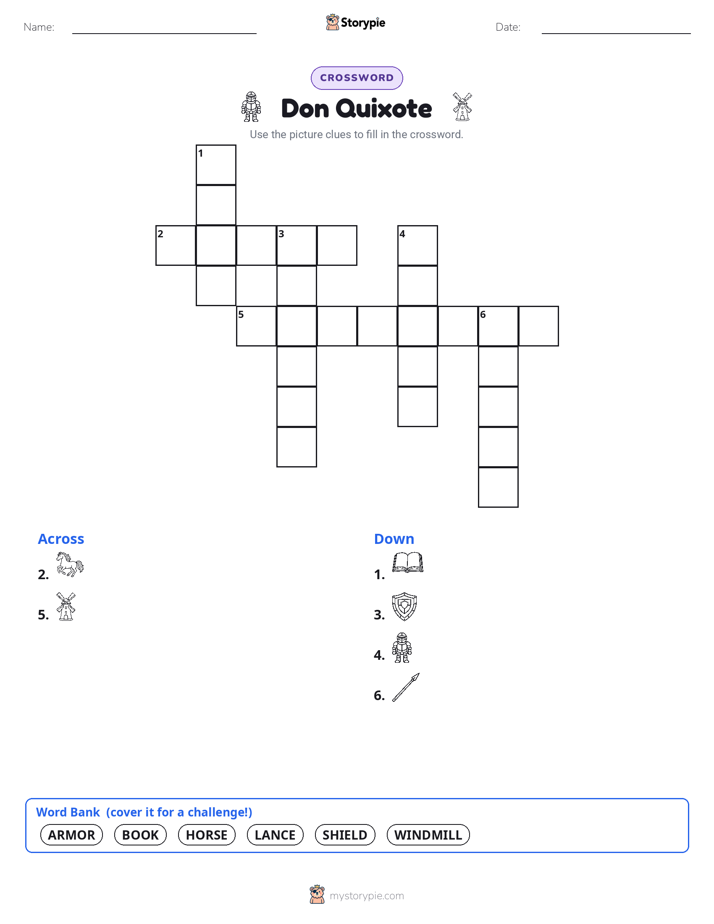
Print & create
Answer keys·No prep·Free with an account
28 worksheets · answer keys · full story · quiz · Ages 8-10 · CEFR B1
Plus adds 164,000+ more stories in 27 languages, audio for every one, and printables for all of them.
Just want Don Quixote?
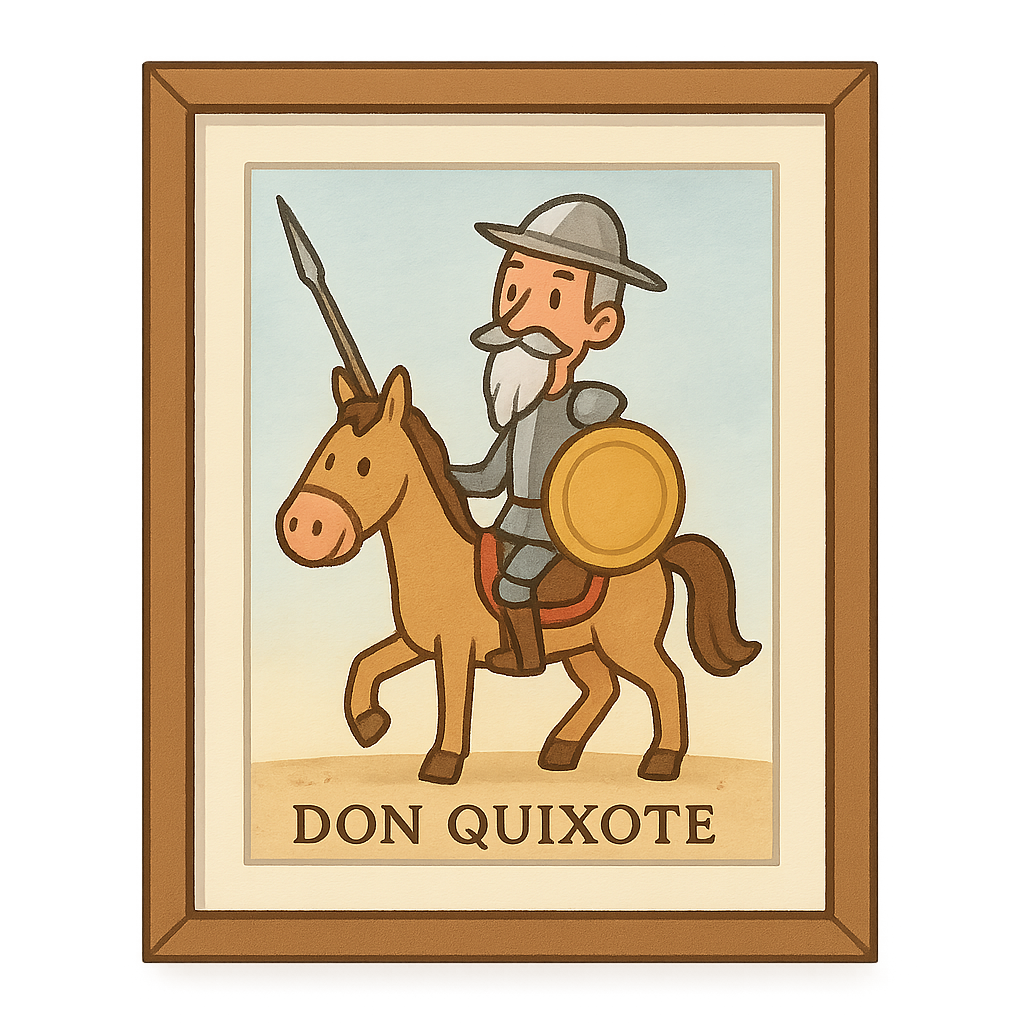
Before I was a book with a cover and pages, I was an idea flickering in a man's mind. Imagine the scratch of a quill pen on paper, the scent of fresh ink, and a story bubbling up about a gentleman who loved books more than anything. He read so many tales of brave knights, fearsome dragons, and enchanted castles that his brain became filled with adventure. Can you imagine reading so much that you start to believe the stories are real? That’s what happened to him. One day, he decided he wouldn't just read about heroes—he would become one. He polished up an old, rusty suit of armor that belonged to his great-grandfather, named his skinny old horse Rocinante, and declared himself a knight-errant, ready to roam the world and fix all its problems. I am that gentleman's story. I am the tale of Don Quixote of La Mancha, and my pages hold all of his daring, and sometimes very silly, adventures.
My creator was a man named Miguel de Cervantes Saavedra, who lived in Spain a very long time ago. His own life was packed with adventures, almost as many as my hero's. He was a brave soldier who fought in a great sea battle on October 7th, 1571, and was even captured by pirates and spent five years in prison. Some people say that it was in a prison cell that he first dreamed me up, a story that would poke fun at all the wild, unbelievable knight tales that everyone was reading. On January 16th, 1605, my first part was published in Madrid, Spain. People loved me immediately. They laughed out loud at Don Quixote’s quest to fight giant windmills that his imagination turned into fearsome, four-armed giants. But he wasn’t alone on his journey; he persuaded a farmer named Sancho Panza to be his squire. Sancho was a practical man who rode a donkey and offered funny, down-to-earth advice, which made their friendship special. Ten years later, in 1615, Cervantes wrote my second part, completing the adventures that would soon travel far beyond Spain.
Don Quixote: The Knight of the Imagination
Before I was a book with a cover and pages, I was an idea flickering in a man's mind. Imagine the scratch of a quill pen on paper, the scent of fresh ink, and a story bubbling up about a gentleman who loved books more than anything. He read so many tales of brave knights, fearsome dragons, and enchanted castles that his brain became filled with adventure. Can you imagine reading so much that you start to believe the stories are real? That’s what happened to him. One day, he decided he wouldn't just read about heroes—he would become one. He polished up an old, rusty suit of armor that belonged to his great-grandfather, named his skinny old horse Rocinante, and declared himself a knight-errant, ready to roam the world and fix all its problems. I am that gentleman's story. I am the tale of Don Quixote of La Mancha, and my pages hold all of his daring, and sometimes very silly, adventures.
My creator was a man named Miguel de Cervantes Saavedra, who lived in Spain a very long time ago. His own life was packed with adventures, almost as many as my hero's. He was a brave soldier who fought in a great sea battle on October 7th, 1571, and was even captured by pirates and spent five years in prison. Some people say that it was in a prison cell that he first dreamed me up, a story that would poke fun at all the wild, unbelievable knight tales that everyone was reading. On January 16th, 1605, my first part was published in Madrid, Spain. People loved me immediately. They laughed out loud at Don Quixote’s quest to fight giant windmills that his imagination turned into fearsome, four-armed giants. But he wasn’t alone on his journey; he persuaded a farmer named Sancho Panza to be his squire. Sancho was a practical man who rode a donkey and offered funny, down-to-earth advice, which made their friendship special. Ten years later, in 1615, Cervantes wrote my second part, completing the adventures that would soon travel far beyond Spain.
From the moment my pages were printed, I galloped across the globe. I was one of the very first books to be translated into many different languages, and people everywhere, from England to Italy, recognized a little of themselves in the dreamer Don Quixote and the practical Sancho Panza. I showed the world that a hero could be both foolish and wise, and that true friendship could be found between the most unlikely of pairs. For over 400 years, I have inspired artists to paint my scenes, musicians to compose operas about my quests, and filmmakers to bring my adventures to the screen. Even a phrase from my story, 'tilting at windmills,' is used today. It means to fight imaginary enemies. I am more than just a book; I am a reminder that it is wonderful to have big dreams, to see the world with imagination, and to believe in the good of humanity, even if others think you're being a little bit silly. I am the story that proves that the greatest adventure of all is the one you dare to imagine.
Wow facts
About
Don Quixote is a Spanish novel by Miguel de Cervantes, published in two parts in 1605 and 1615. It is considered one of the most influential works of literature from the Spanish Golden Age and the entire Western literary canon.
Take a Quiz
Question 1 of 5
In the story, the book says it 'galloped across the globe.' What does the word 'galloped' mean here?
Explore next


Want to do even more?
Go beyond exploring. Unlock tools that turn every story into real learning.

Storypie Plus for families
Full stories, quizzes, and printables. Nights and car rides, sorted.
- Unlimited audio stories
- Create Mode: your child stars in the story
- Offline downloads
- Printable worksheets & coloring pages

Why Storypie for Schools
Students engaged. Prep in seconds. Evenings back to you.
- Worksheets & Quizzes
- Classroom Management
- Formative Assessment
- Custom Curriculum & Lesson Plans
- 27 Languages

Why Storypie for Homeschool
Curriculum done. They'll ask for more. Hours back in your day.
- Worksheet Generator
- First-Person Audio Stories
- Built-in Comprehension Quizzes
- Custom Curriculum & Lesson Plans
- Print & Go Activities