English

Samba
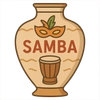
Samba is a Brazilian musical genre and dance style with its roots in Africa…
Reads at Grades 3–5 Listens at Grades 1–5
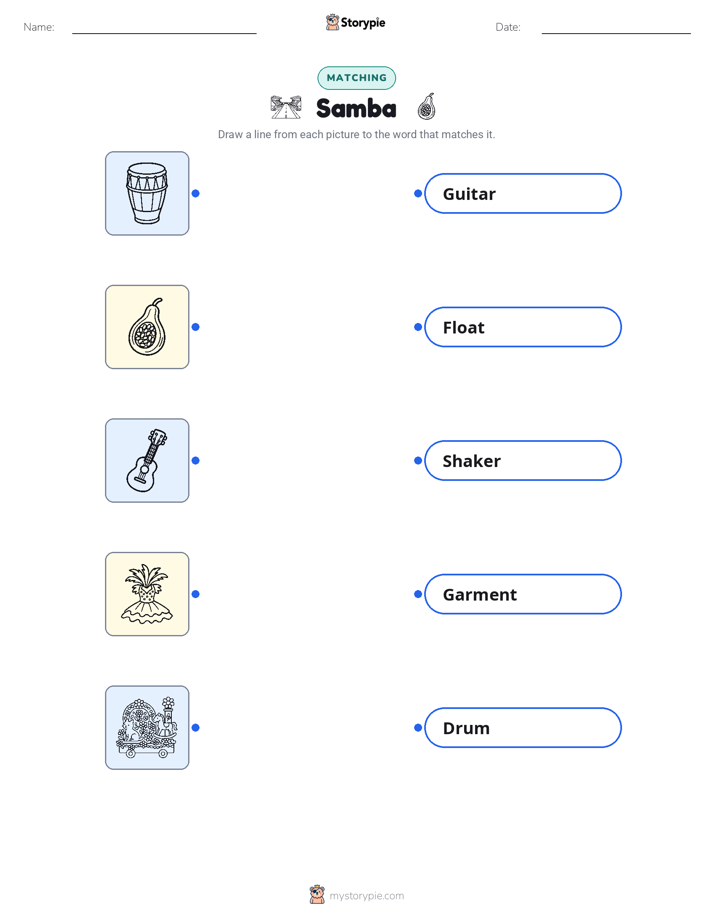
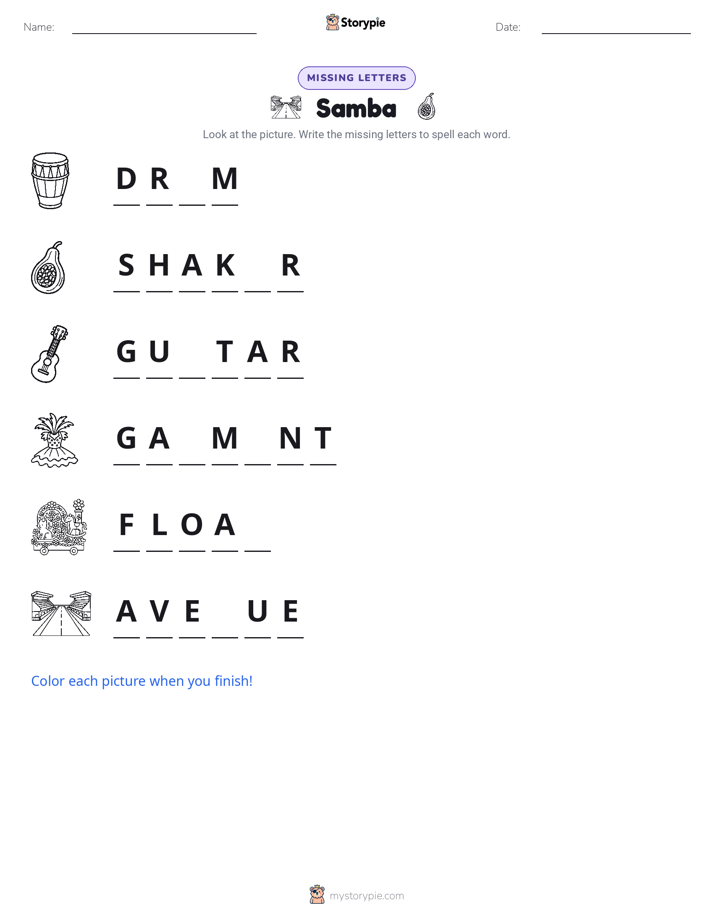
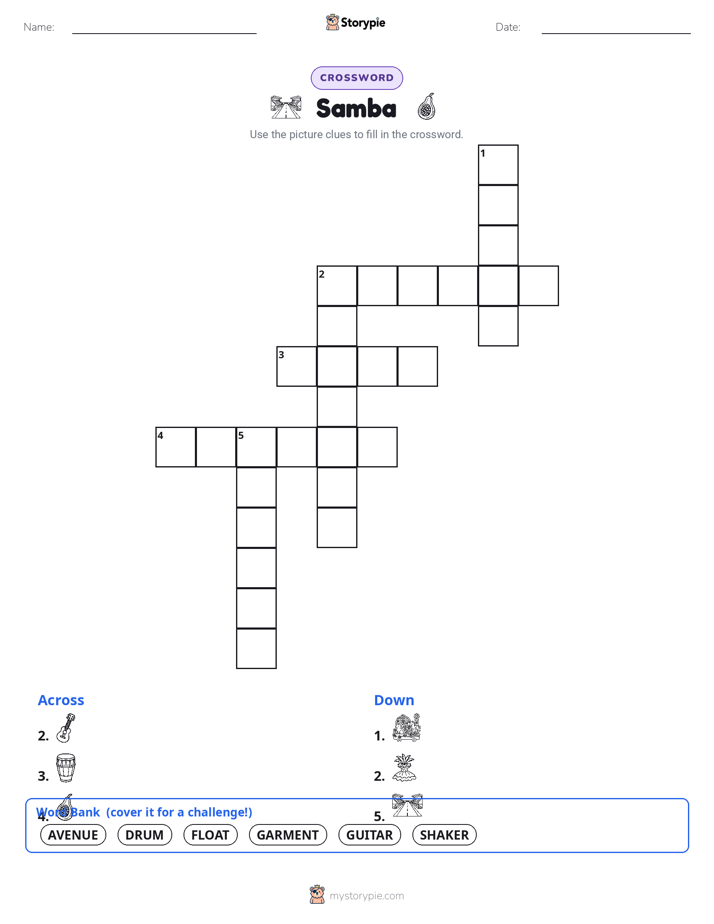
Print & create
Answer keys·No prep·Free with an account
28 worksheets · answer keys · full story · quiz · Ages 8-10 · CEFR B1
Plus adds 164,000+ more stories in 27 languages, audio for every one, and printables for all of them.
Just want Samba?
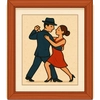
Can you hear that? It’s the sound of drums beating like a giant, happy heart. It’s the swish and rustle of a thousand colorful costumes and the shuffling of feet that just can’t stay still. Feel that energy in the air? The rhythm that makes your shoulders want to wiggle and a smile spread across your face? That’s me. I am born in laughter and community, under the warm Brazilian sun. Before you even know my name, you can feel me. I am the sound of a party, the music of joy, a story told with dancing feet and clapping hands. I am Samba.
My story begins a very long time ago, not in the sunny streets of Brazil, but across a wide ocean in Africa. Starting in the 16th century, people were brought from their homes in Africa to Brazil as enslaved workers. It was a time of great sadness, but they carried something inside them that could not be taken away: their music. They held onto the rhythms of their homes, the powerful beat of their drums, and the spirit of their celebrations. In a part of Brazil called Bahia, they would gather in circles, called ‘samba de roda,’ to dance, clap, and sing songs that told their stories. This was my first breath. When slavery was finally ended in Brazil on May 13th, 1888, many of these families moved to the big city of Rio de Janeiro. They built new homes on the hillsides and filled them with their culture. The backyards of wise women they called ‘Tias Baianas,’ or ‘Bahian Aunts,’ became my cradle. Musicians would gather there, mixing the African rhythms they had protected for so long with new Brazilian sounds. It was in these joyful, crowded backyards that I grew from a secret folk tradition into the music of a city.
I Am Samba
Can you hear that? It’s the sound of drums beating like a giant, happy heart. It’s the swish and rustle of a thousand colorful costumes and the shuffling of feet that just can’t stay still. Feel that energy in the air? The rhythm that makes your shoulders want to wiggle and a smile spread across your face? That’s me. I am born in laughter and community, under the warm Brazilian sun. Before you even know my name, you can feel me. I am the sound of a party, the music of joy, a story told with dancing feet and clapping hands. I am Samba.
My story begins a very long time ago, not in the sunny streets of Brazil, but across a wide ocean in Africa. Starting in the 16th century, people were brought from their homes in Africa to Brazil as enslaved workers. It was a time of great sadness, but they carried something inside them that could not be taken away: their music. They held onto the rhythms of their homes, the powerful beat of their drums, and the spirit of their celebrations. In a part of Brazil called Bahia, they would gather in circles, called ‘samba de roda,’ to dance, clap, and sing songs that told their stories. This was my first breath. When slavery was finally ended in Brazil on May 13th, 1888, many of these families moved to the big city of Rio de Janeiro. They built new homes on the hillsides and filled them with their culture. The backyards of wise women they called ‘Tias Baianas,’ or ‘Bahian Aunts,’ became my cradle. Musicians would gather there, mixing the African rhythms they had protected for so long with new Brazilian sounds. It was in these joyful, crowded backyards that I grew from a secret folk tradition into the music of a city.
For many years, I was a private joy, a special rhythm shared among the communities who created me. But then, something incredible happened that let my voice be heard by everyone. A talented musician named Donga, along with his friends, wrote down a song and, for the first time ever, officially registered it as a ‘samba.’ The song was called ‘Pelo Telefone,’ which means ‘On the Telephone,’ and it was recorded on November 27th, 1916. Suddenly, I wasn't just in the backyards anymore. I was on the radio. My catchy beat traveled through the airwaves into homes all across Brazil. A few years later, in 1928, another amazing thing happened: the very first ‘samba school’ was created. Can you imagine going to a school just for music and parades? It wasn't a school for math or reading, but a place for a whole community to prepare for the biggest party in Brazil: Carnival. These schools would practice all year long to create amazing parades with fantastic costumes, giant, colorful floats, and hundreds of drummers, all moving together to my powerful rhythm.
From those humble backyards in Rio, I danced my way into the heart of Brazil and became a symbol for the entire country. Today, when people think of Brazil, they often hear my music in their minds. I am the sound of the world-famous Carnival, where millions of people celebrate in the streets. But I’m also the music you hear at birthday parties, family cookouts, and exciting soccer games. My rhythm has traveled all over the globe, and people on every continent have learned my steps and felt my joy. I am more than just music and dance. I am a story of strength, of finding happiness in hard times, and of the power that comes from people joining together. I am a reminder that no matter what, you can always find a reason to dance.
Wow facts
About
Samba is a Brazilian musical genre and dance style with its roots in Africa, which developed in the communities of former enslaved people in Brazil and became a symbol of Brazilian national identity.
Take a Quiz
Question 1 of 5
What was the name of the first samba song to be officially registered, and in what year did it happen?
Explore next


Want to do even more?
Go beyond exploring. Unlock tools that turn every story into real learning.

Storypie Plus for families
Full stories, quizzes, and printables. Nights and car rides, sorted.
- Unlimited audio stories
- Create Mode: your child stars in the story
- Offline downloads
- Printable worksheets & coloring pages

Why Storypie for Schools
Students engaged. Prep in seconds. Evenings back to you.
- Worksheets & Quizzes
- Classroom Management
- Formative Assessment
- Custom Curriculum & Lesson Plans
- 27 Languages

Why Storypie for Homeschool
Curriculum done. They'll ask for more. Hours back in your day.
- Worksheet Generator
- First-Person Audio Stories
- Built-in Comprehension Quizzes
- Custom Curriculum & Lesson Plans
- Print & Go Activities