English

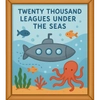
Twenty Thousand Leagues Under the Seas
A classic science fiction adventure novel written by French author Jules Verne, serialized in 1869–1870…
Reads at Grades 6–8 Listens at Grades 4–8
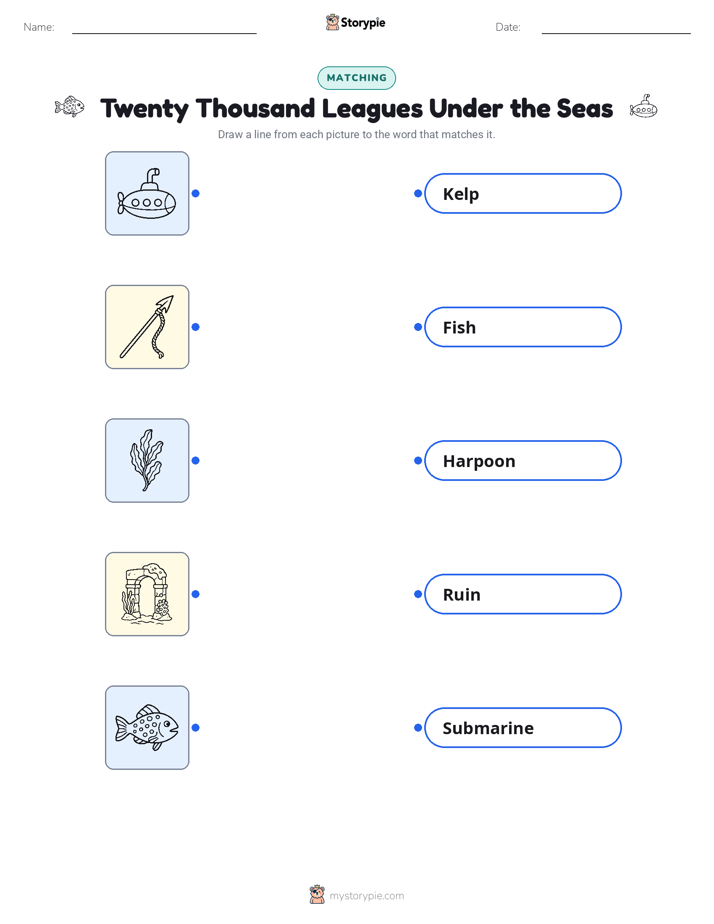
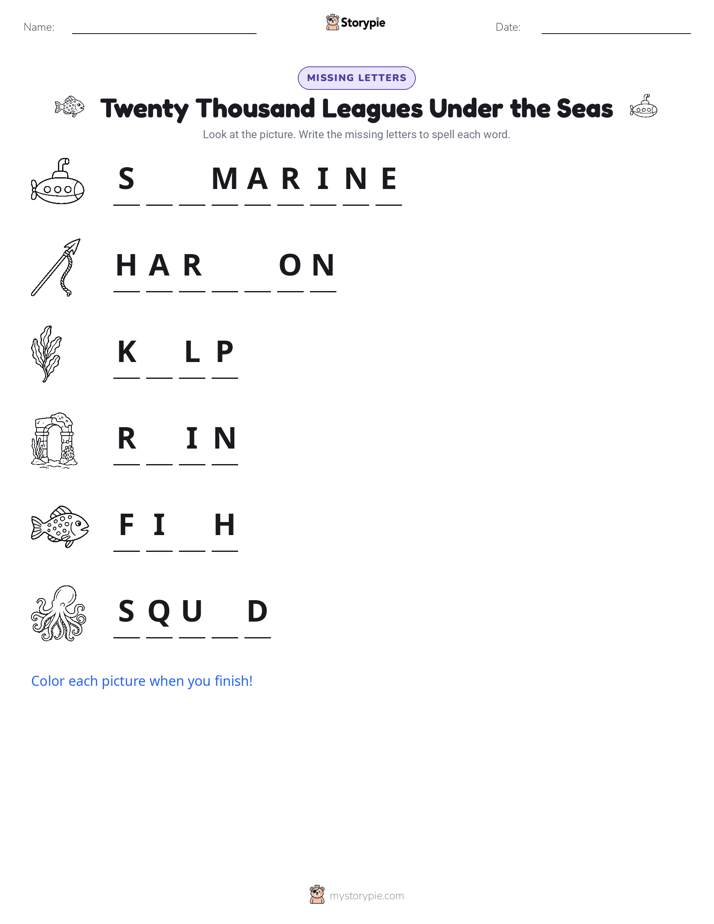
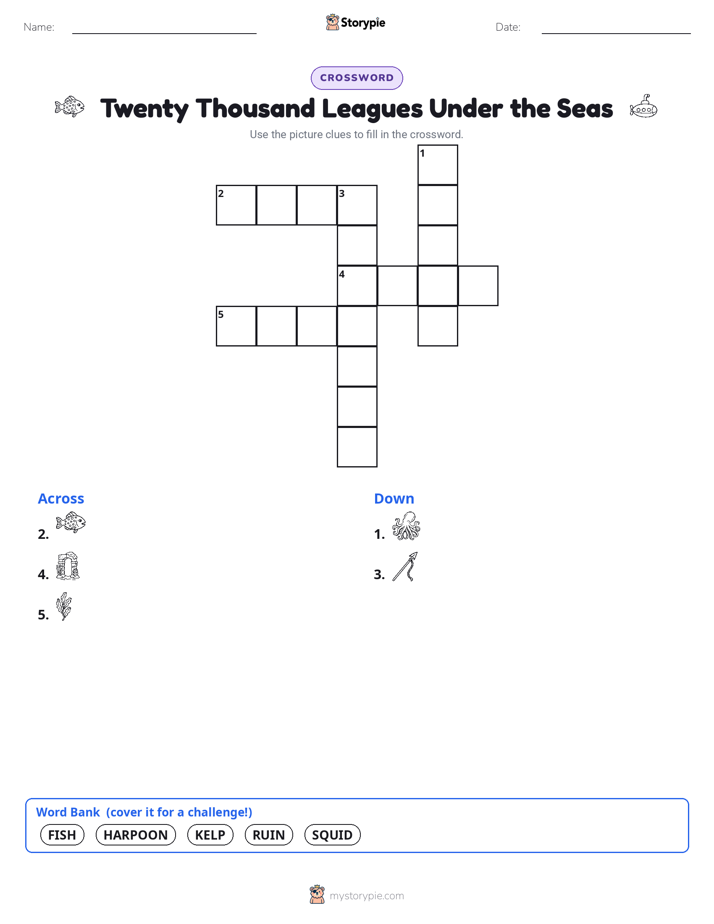
Print & create
Answer keys·No prep·Free with an account
28 worksheets · answer keys · full story · quiz · Ages 10-12 · CEFR B2
Plus adds 164,000+ more stories in 27 languages, audio for every one, and printables for all of them.
Just want Twenty Thousand Leagues Under the Seas?
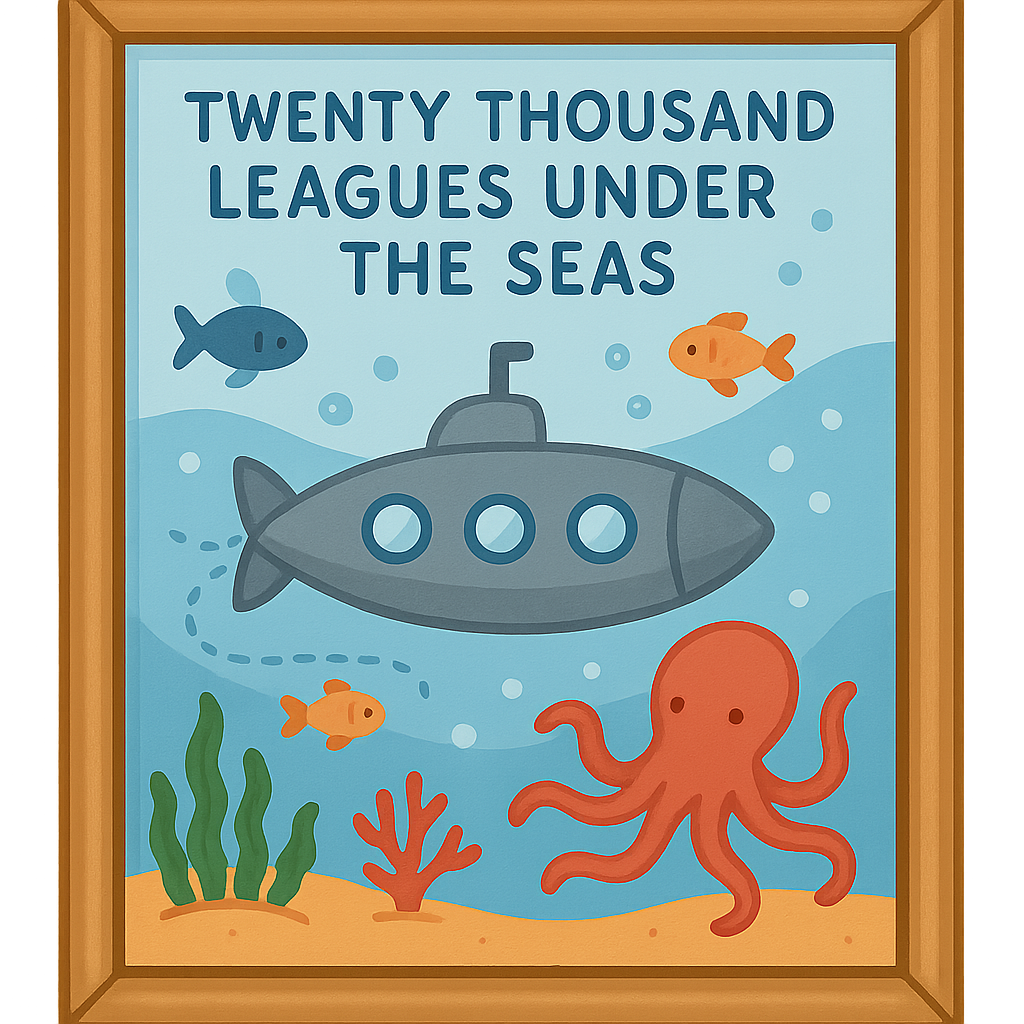
My pages rustle with a sound like distant waves, and the ink that forms my words is as dark as the midnight zone of the sea. I am not made of wood or steel, yet I contain a world. Within me is an entire universe that glides silently beneath the waves, a vessel of impossible technology powered by the very electricity of the sea. I hold the secrets of a brilliant, mysterious man named Captain Nemo, a self-declared exile from the world of men. He commands his incredible ship through a realm of glowing fish, forests of giant kelp, ancient underwater ruins, and colossal creatures that defy belief. I offer a glimpse into a place no human had ever truly seen, a world of both breathtaking beauty and terrifying danger. Before you turn my first page, you can feel the pull of the current, the promise of discovery. I am a journey bound in paper and ink, an adventure waiting to be opened. My name is Twenty Thousand Leagues Under the Seas.
My creator, the man who dreamed me into existence, was Jules Verne. He lived in France, in a time of steam engines and gas lamps, long before the world knew of submarines like the one I carry in my pages. He was a man who looked at the science of his day and saw not just what was, but what could be. He was a visionary, a dreamer with a deep passion for geography, science, and exploration. He decided to share my story with the world not all at once, but piece by piece. Between March 20th, 1869, and June 20th, 1870, my chapters were published in a magazine called the Magasin d'éducation et de récréation. Readers across France had to wait anxiously for each new installment to find out what would happen next to the three men who found themselves aboard Captain Nemo's ship. It was only in 1870 that all my parts were finally gathered and bound together into a single book. My central marvel, the submarine Nautilus, was a creation of pure genius. It was powered by electricity, could produce its own air, and travel silently for months. In the 1870s, this was pure fantasy. Jules Verne imagined this decades before any real-world technology could come close. He filled my vessel with a reluctant crew: the thoughtful scientist Professor Pierre Aronnax, his ever-loyal servant Conseil, and the hot-headed Canadian harpooner Ned Land. They are at once prisoners and privileged guests on a voyage that will change their understanding of the world forever.
I Am an Ocean in a Book
My pages rustle with a sound like distant waves, and the ink that forms my words is as dark as the midnight zone of the sea. I am not made of wood or steel, yet I contain a world. Within me is an entire universe that glides silently beneath the waves, a vessel of impossible technology powered by the very electricity of the sea. I hold the secrets of a brilliant, mysterious man named Captain Nemo, a self-declared exile from the world of men. He commands his incredible ship through a realm of glowing fish, forests of giant kelp, ancient underwater ruins, and colossal creatures that defy belief. I offer a glimpse into a place no human had ever truly seen, a world of both breathtaking beauty and terrifying danger. Before you turn my first page, you can feel the pull of the current, the promise of discovery. I am a journey bound in paper and ink, an adventure waiting to be opened. My name is Twenty Thousand Leagues Under the Seas.
My creator, the man who dreamed me into existence, was Jules Verne. He lived in France, in a time of steam engines and gas lamps, long before the world knew of submarines like the one I carry in my pages. He was a man who looked at the science of his day and saw not just what was, but what could be. He was a visionary, a dreamer with a deep passion for geography, science, and exploration. He decided to share my story with the world not all at once, but piece by piece. Between March 20th, 1869, and June 20th, 1870, my chapters were published in a magazine called the Magasin d'éducation et de récréation. Readers across France had to wait anxiously for each new installment to find out what would happen next to the three men who found themselves aboard Captain Nemo's ship. It was only in 1870 that all my parts were finally gathered and bound together into a single book. My central marvel, the submarine Nautilus, was a creation of pure genius. It was powered by electricity, could produce its own air, and travel silently for months. In the 1870s, this was pure fantasy. Jules Verne imagined this decades before any real-world technology could come close. He filled my vessel with a reluctant crew: the thoughtful scientist Professor Pierre Aronnax, his ever-loyal servant Conseil, and the hot-headed Canadian harpooner Ned Land. They are at once prisoners and privileged guests on a voyage that will change their understanding of the world forever.
When I was finally whole, my impact was immediate and profound. I was not just another adventure tale; I was a portal to an unseen world. Readers were captivated. Through my words, they navigated the globe beneath the waves, witnessing wonders they had never imagined. I took them to the sunken, lost city of Atlantis. I showed them a forest of petrified trees and an underwater coal mine that fueled the Nautilus. I plunged them into a terrifying battle with a monstrous giant squid, its tentacles thrashing in the dark water. My story was thrilling, but it did something more important: it sparked curiosity on a massive scale. I made people wonder what was truly possible and what other secrets our planet held. My influence went beyond entertainment. I became an inspiration for real inventors and engineers. A man named Simon Lake, who designed and built some of the first practical submarines in the late 19th century, credited my story as a primary inspiration for his life's work. He had read about the Nautilus as a boy and was determined to make it a reality. In this way, I helped bridge the gap between fiction and fact. I also helped to define a whole new type of storytelling, a genre that would come to be known as 'science fiction,' where authors use scientific principles to explore imaginative and futuristic ideas.
For over 150 years, I have sailed on. My ink has been translated into more than one hundred languages, allowing me to carry readers from every corner of the globe on my underwater journey. My story has been adapted for the stage and transformed into thrilling movies, my Nautilus recreated with stunning special effects. Yet, I am still most at home as a book, sitting quietly on a shelf, waiting for a new reader to open my cover and dive in. The world has changed immensely since Jules Verne first put pen to paper, but the deep ocean still holds many of its mysteries. I remain a testament to the power of a single, brilliant idea. I am a reminder that the greatest journeys begin not with a ship, but with curiosity and the courage to ask, 'What if?'. I show every new generation that imagination is the most powerful vessel of all, ready to explore the endless ocean of what could be.
Wow facts
About
A classic science fiction adventure novel written by French author Jules Verne, serialized in 1869–1870, detailing the underwater voyages of the submarine Nautilus, commanded by the mysterious Captain Nemo.
Take a Quiz
Question 1 of 5
Which statement best summarizes the main purpose of this story?
Explore next






Want to do even more?
Go beyond exploring. Unlock tools that turn every story into real learning.

Storypie Plus for families
Full stories, quizzes, and printables. Nights and car rides, sorted.
- Unlimited audio stories
- Create Mode: your child stars in the story
- Offline downloads
- Printable worksheets & coloring pages

Why Storypie for Schools
Students engaged. Prep in seconds. Evenings back to you.
- Worksheets & Quizzes
- Classroom Management
- Formative Assessment
- Custom Curriculum & Lesson Plans
- 27 Languages

Why Storypie for Homeschool
Curriculum done. They'll ask for more. Hours back in your day.
- Worksheet Generator
- First-Person Audio Stories
- Built-in Comprehension Quizzes
- Custom Curriculum & Lesson Plans
- Print & Go Activities