English

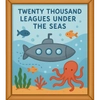
Twenty Thousand Leagues Under the Seas
A classic science fiction adventure novel written by French author Jules Verne, serialized in 1869–1870…
Reads at Grades 3–5 Listens at Grades 1–5
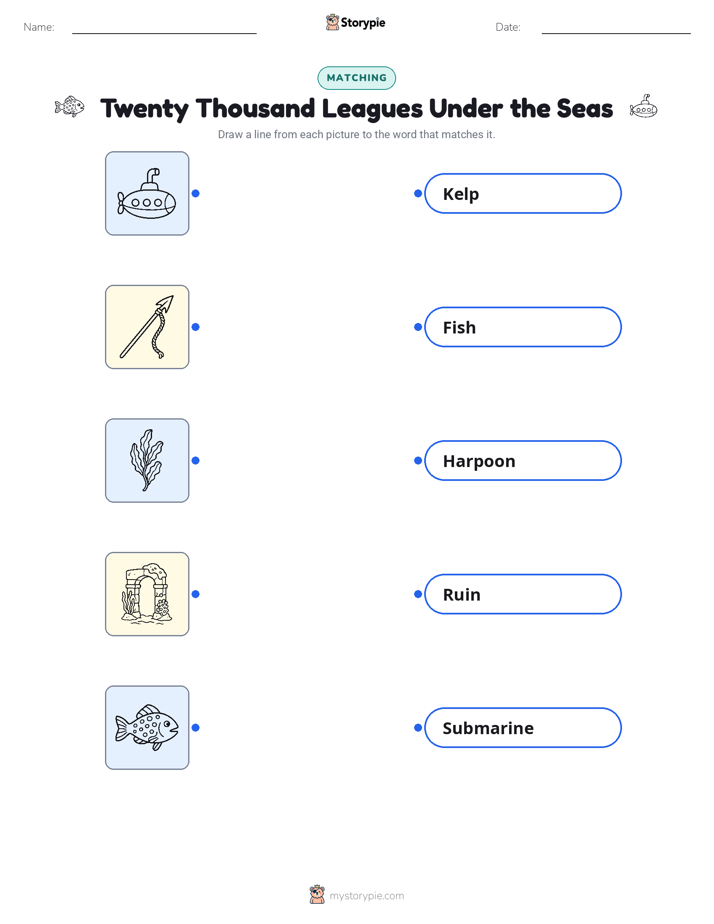
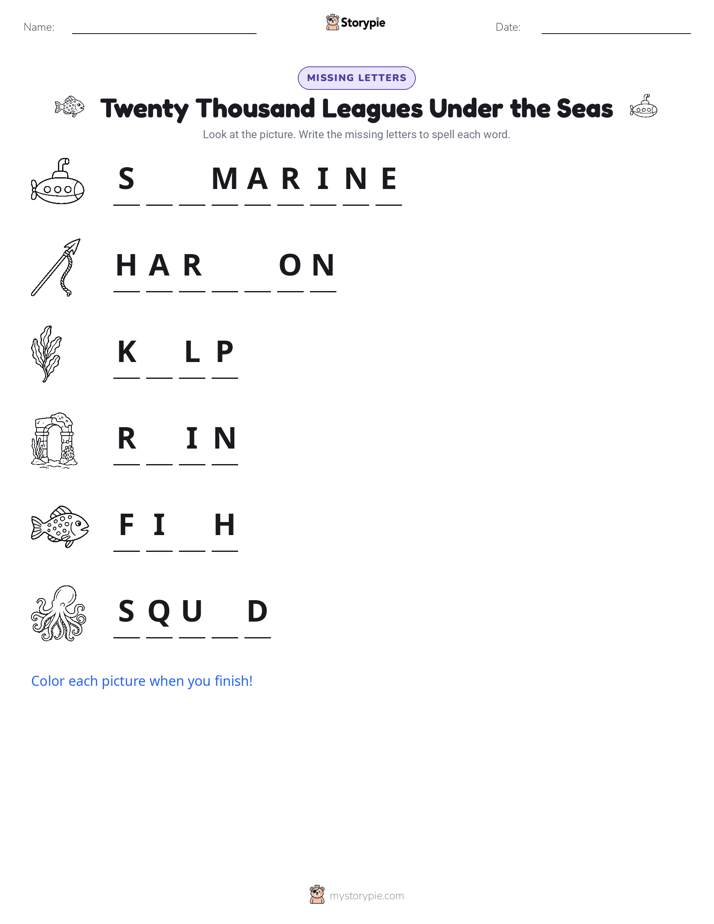
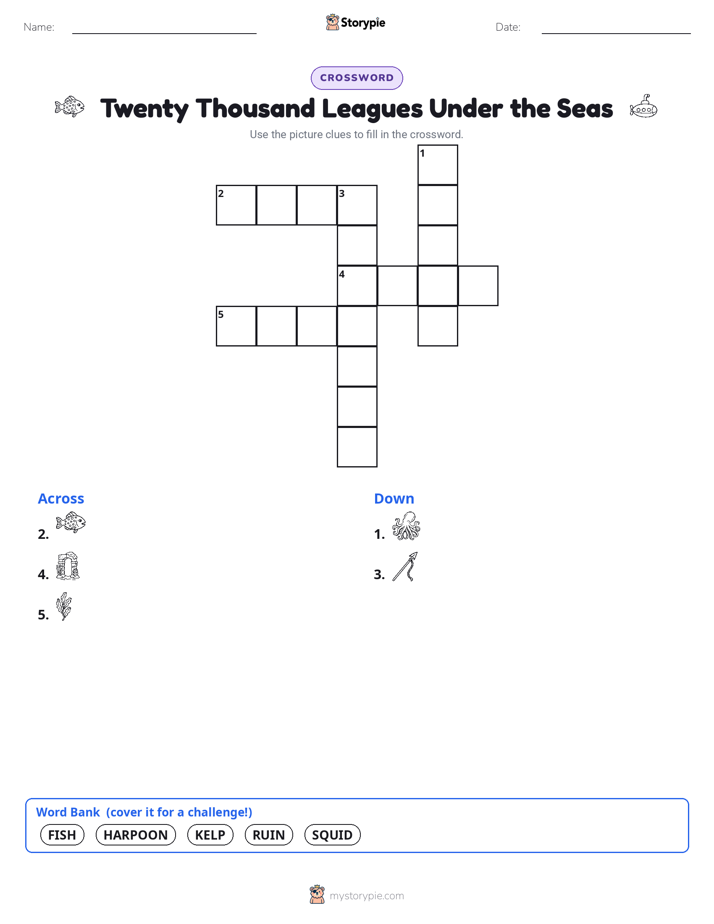
Print & create
Answer keys·No prep·Free with an account
28 worksheets · answer keys · full story · quiz · Ages 8-10 · CEFR B1
Plus adds 164,000+ more stories in 27 languages, audio for every one, and printables for all of them.
Just want Twenty Thousand Leagues Under the Seas?
Before I was opened, I sat quietly, a world bound in paper and ink. Can you imagine holding a secret universe inside you? If you pressed your ear to my cover, you might have heard the deep rumble of a powerful engine, the gentle whisper of ocean currents flowing over strange and beautiful plants, and the distant glimmer of unseen treasures. I held a mystery within my pages, the story of a brilliant but lonely captain, a fantastic ship, and a journey into the darkest, most unknown parts of the planet. I was more than just paper; I was a promise of adventure, a ticket to a place no human had ever seen. I waited for someone to turn my first page and dive in. I am a story, an adventure waiting to happen. I am Twenty Thousand Leagues Under the Seas.
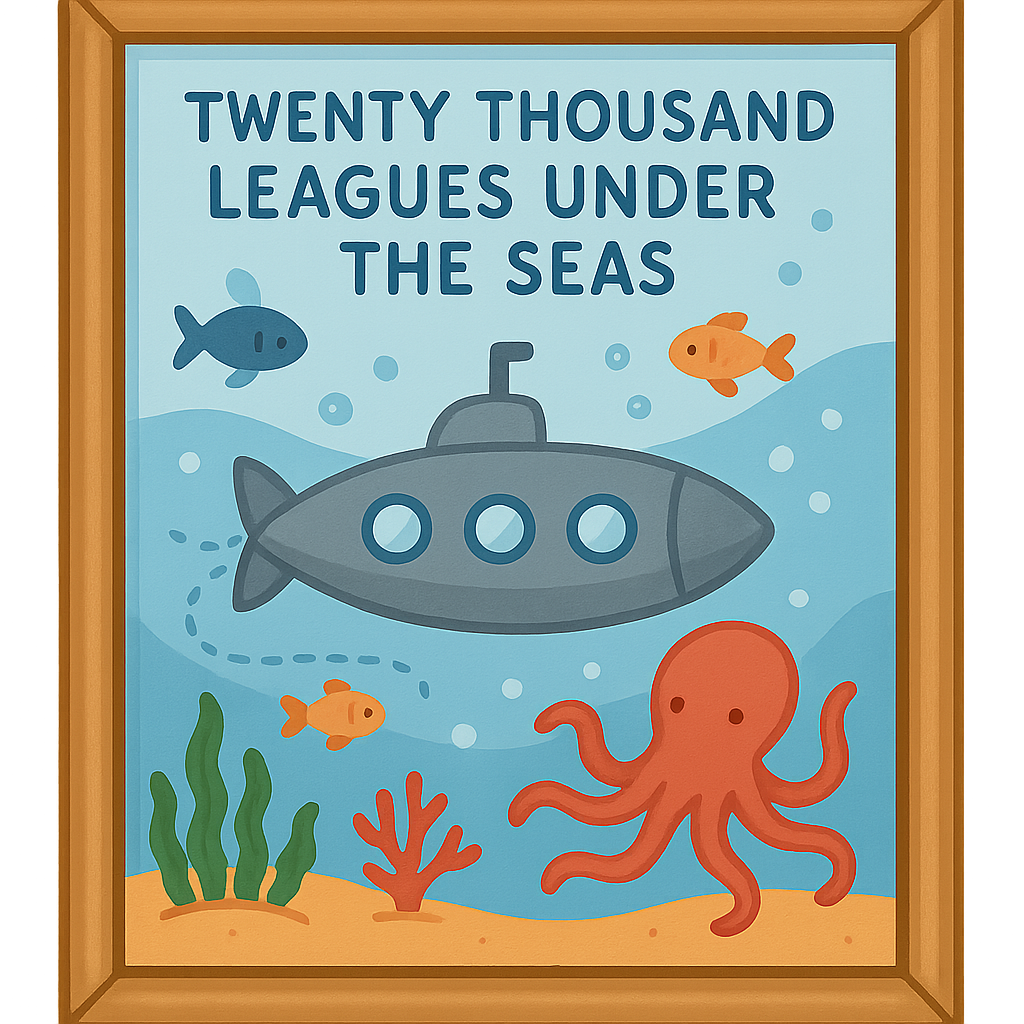
My creator was a man named Jules Verne, who lived in a busy city called Paris, France. But his mind wasn't on city streets; it was far away, deep beneath the waves. In his time, the bottom of the ocean was as mysterious as the surface of the moon. What was down there? He dreamed of a machine that could explore it all, and so, he dreamed me into existence. He didn't write me all at once. Instead, he released my story in exciting little parts, like episodes of a TV show, in a magazine for everyone to read. The first part appeared on March 20th, 1869, and the final adventure was published on June 20th, 1870. Readers met the thoughtful scientist, Professor Aronnax, who finds himself trapped on the most incredible ship ever imagined. And of course, they met the brilliant and secretive Captain Nemo, the ship's commander. The true star of my story, however, was their vessel: the Nautilus. It was a submarine powered by electricity, gliding silently through an underwater world of wonders, a marvel of science and engineering that was decades ahead of its time.
Twenty Thousand Leagues Under the Seas: My Story
Before I was opened, I sat quietly, a world bound in paper and ink. Can you imagine holding a secret universe inside you? If you pressed your ear to my cover, you might have heard the deep rumble of a powerful engine, the gentle whisper of ocean currents flowing over strange and beautiful plants, and the distant glimmer of unseen treasures. I held a mystery within my pages, the story of a brilliant but lonely captain, a fantastic ship, and a journey into the darkest, most unknown parts of the planet. I was more than just paper; I was a promise of adventure, a ticket to a place no human had ever seen. I waited for someone to turn my first page and dive in. I am a story, an adventure waiting to happen. I am Twenty Thousand Leagues Under the Seas.
My creator was a man named Jules Verne, who lived in a busy city called Paris, France. But his mind wasn't on city streets; it was far away, deep beneath the waves. In his time, the bottom of the ocean was as mysterious as the surface of the moon. What was down there? He dreamed of a machine that could explore it all, and so, he dreamed me into existence. He didn't write me all at once. Instead, he released my story in exciting little parts, like episodes of a TV show, in a magazine for everyone to read. The first part appeared on March 20th, 1869, and the final adventure was published on June 20th, 1870. Readers met the thoughtful scientist, Professor Aronnax, who finds himself trapped on the most incredible ship ever imagined. And of course, they met the brilliant and secretive Captain Nemo, the ship's commander. The true star of my story, however, was their vessel: the Nautilus. It was a submarine powered by electricity, gliding silently through an underwater world of wonders, a marvel of science and engineering that was decades ahead of its time.
When all my parts were finally gathered together and published as a single book in 1870, readers were completely amazed. They had never imagined anything like it. An electric submarine exploring underwater volcanoes, fighting giant squid, and discovering the lost city of Atlantis? It sounded like magic. But Jules Verne was clever. He filled my pages with real scientific ideas about electricity, pressure, and marine biology. This made the adventure feel so real that people started to wonder, 'What if this could actually happen?'. I did more than just entertain people. I planted a seed in the minds of inventors, engineers, and explorers. I made them believe that exploring the deep ocean wasn't just a fantasy. I showed them that sometimes, the most impossible-sounding dreams are just the first step toward making something real. I became a spark for a new age of underwater discovery.
My journey has lasted for over 150 years. Today, we have real submarines that can dive to the deepest parts of the ocean and send back videos of glowing creatures and strange landscapes. We know so much more about the sea than Jules Verne ever did. And yet, the sense of wonder in my pages is still as fresh and exciting as ever. New generations of adventurers open my cover and set sail with Captain Nemo. My story has inspired movies with amazing special effects, video games where you can pilot the Nautilus yourself, and countless other tales of exploration. I am proof that a single story can launch a thousand journeys. I remind everyone that no matter how much we discover, there are always new depths to explore, both in the world around us and in our own incredible imaginations.
Wow facts
About
A classic science fiction adventure novel written by French author Jules Verne, serialized in 1869–1870, detailing the underwater voyages of the submarine Nautilus, commanded by the mysterious Captain Nemo.
Take a Quiz
Question 1 of 5
In the story, the book says it 'planted a seed in the minds of inventors.' What does this phrase mean?
Explore next






Want to do even more?
Go beyond exploring. Unlock tools that turn every story into real learning.

Storypie Plus for families
Full stories, quizzes, and printables. Nights and car rides, sorted.
- Unlimited audio stories
- Create Mode: your child stars in the story
- Offline downloads
- Printable worksheets & coloring pages

Why Storypie for Schools
Students engaged. Prep in seconds. Evenings back to you.
- Worksheets & Quizzes
- Classroom Management
- Formative Assessment
- Custom Curriculum & Lesson Plans
- 27 Languages

Why Storypie for Homeschool
Curriculum done. They'll ask for more. Hours back in your day.
- Worksheet Generator
- First-Person Audio Stories
- Built-in Comprehension Quizzes
- Custom Curriculum & Lesson Plans
- Print & Go Activities