English

Cuban Revolution
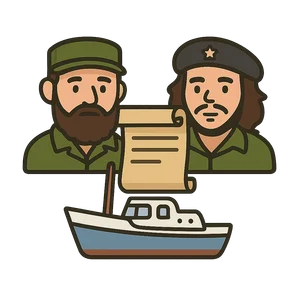
The Cuban Revolution was an armed revolt led by Fidel Castro's 26th of July Movement against the…
Reads at Grades 3–5 Listens at Grades 1–5
Print & create
Answer keys·No prep·Free with an account
28 worksheets · answer keys · full story · quiz · Ages 8-10 · CEFR B1
Plus adds 102,000+ more stories in 27 languages, audio for every one, and printables for all of them.
Just want Cuban Revolution?
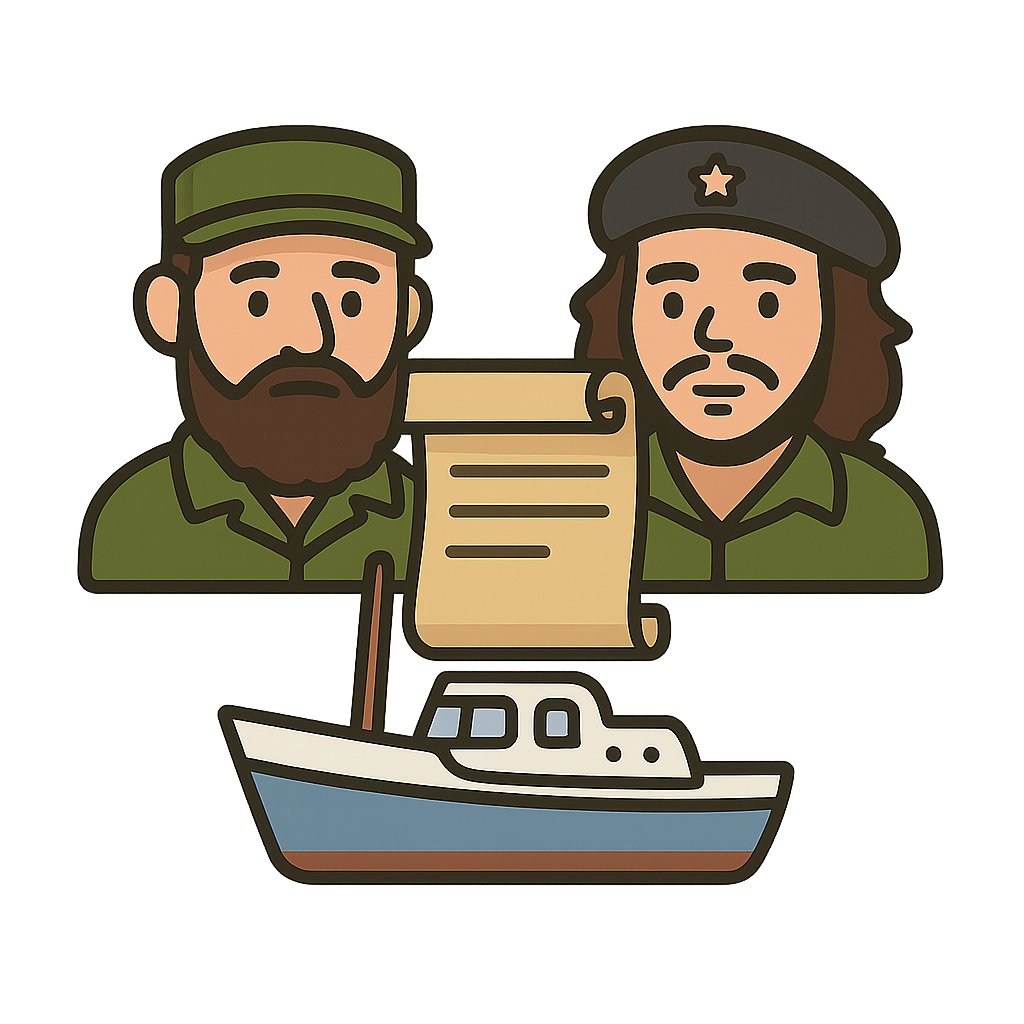
My name is Fidel Castro, and I want to tell you a story about my home. I have always loved my island of Cuba, with its warm sunshine, sweet-smelling sugar cane fields, and sparkling blue waters. But when I was a young man in the 1950s, my heart ached for my people. Our country was led by a man named President Fulgencio Batista, and while some people were very rich, most Cubans were very poor. I saw families living in small shacks with barely enough food to eat. I saw children who couldn't go to school because their parents needed them to work, and I saw people get sick with no doctors to help them. I believed this was terribly unfair. I had a dream for a different Cuba. I imagined an island where every single child could learn to read and write, where every person could see a doctor when they were ill, and where farmers who worked the land could own a piece of it for themselves. It was a big dream, but it filled me with a powerful feeling that we had to make a change, no matter how hard it would be. This dream was the seed that grew into a revolution.
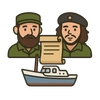
Our journey to make this dream a reality was long and full of challenges. We knew that just asking for change wouldn't be enough. So, on July 26th, 1953, a group of us made a brave but unsuccessful attack on the Moncada Barracks, a military fort. We were defeated, and I was sent away from my beloved Cuba into exile. But my spirit was not broken. I used my time away to plan. In Mexico, I met a brave doctor from Argentina named Che Guevara, who shared my dream. Along with my brother Raúl and about eighty other men, we decided it was time to return. We squeezed onto a small, leaky boat called the Granma and sailed through stormy seas back to Cuba. The journey was terribly difficult, and when we landed, we were not greeted with a celebration. We were attacked, and only a handful of us managed to escape into the thick forests of the Sierra Maestra mountains. We were a tiny group, but our belief was enormous. We lived like ghosts in the mountains, learning to survive in the wild. We spoke with the local farmers, the campesinos, who lived there. They shared their food with us and told us of their hardships. They saw that our dream was their dream, too. Slowly, men and women from the countryside began to join us. Our small band of fighters grew, becoming a true people's army. We fought a different kind of war, a guerrilla war, using our knowledge of the mountains to surprise our enemies. For two years, we fought from our mountain home, and our message of a fairer Cuba spread across the island like wildfire.
A New Dawn for Cuba
My name is Fidel Castro, and I want to tell you a story about my home. I have always loved my island of Cuba, with its warm sunshine, sweet-smelling sugar cane fields, and sparkling blue waters. But when I was a young man in the 1950s, my heart ached for my people. Our country was led by a man named President Fulgencio Batista, and while some people were very rich, most Cubans were very poor. I saw families living in small shacks with barely enough food to eat. I saw children who couldn't go to school because their parents needed them to work, and I saw people get sick with no doctors to help them. I believed this was terribly unfair. I had a dream for a different Cuba. I imagined an island where every single child could learn to read and write, where every person could see a doctor when they were ill, and where farmers who worked the land could own a piece of it for themselves. It was a big dream, but it filled me with a powerful feeling that we had to make a change, no matter how hard it would be. This dream was the seed that grew into a revolution.
Our journey to make this dream a reality was long and full of challenges. We knew that just asking for change wouldn't be enough. So, on July 26th, 1953, a group of us made a brave but unsuccessful attack on the Moncada Barracks, a military fort. We were defeated, and I was sent away from my beloved Cuba into exile. But my spirit was not broken. I used my time away to plan. In Mexico, I met a brave doctor from Argentina named Che Guevara, who shared my dream. Along with my brother Raúl and about eighty other men, we decided it was time to return. We squeezed onto a small, leaky boat called the Granma and sailed through stormy seas back to Cuba. The journey was terribly difficult, and when we landed, we were not greeted with a celebration. We were attacked, and only a handful of us managed to escape into the thick forests of the Sierra Maestra mountains. We were a tiny group, but our belief was enormous. We lived like ghosts in the mountains, learning to survive in the wild. We spoke with the local farmers, the campesinos, who lived there. They shared their food with us and told us of their hardships. They saw that our dream was their dream, too. Slowly, men and women from the countryside began to join us. Our small band of fighters grew, becoming a true people's army. We fought a different kind of war, a guerrilla war, using our knowledge of the mountains to surprise our enemies. For two years, we fought from our mountain home, and our message of a fairer Cuba spread across the island like wildfire.
After years of struggle from the mountains, the moment of victory finally arrived. The support for our cause had grown so strong that President Batista's government could no longer stand. On January 1st, 1959, he fled the country. The fight was over. I will never forget the feeling as we marched down from the mountains and into the cities. All along the roads, people came out to cheer for us. They waved flags and shouted with joy. When we finally entered Havana, the capital city, it felt like the entire island was celebrating a new beginning. But this was not the end of our work; it was the start. We immediately began to build thousands of new schools across the country, sending teachers to the most remote villages. We built hospitals and clinics so that everyone, rich or poor, could get medical care. We turned our dream of a better Cuba into a real plan. Looking back, I see that our revolution was more than just a fight; it was an act of hope. It taught me that when people unite for a shared dream, they have the power to change their world and build a new future.
Wow facts
About
The Cuban Revolution was an armed revolt led by Fidel Castro's 26th of July Movement against the authoritarian government of Cuban President Fulgencio Batista, which led to Batista's overthrow in 1959.
Take a Quiz
Question 1 of 5
In the story, Fidel says he went into 'exile'. What does the word 'exile' most likely mean?
Explore next



Want to do even more?
Go beyond exploring. Unlock tools that turn every story into real learning.

Storypie Plus for families
Full stories, quizzes, and printables. Nights and car rides, sorted.
- Unlimited audio stories
- Create Mode: your child stars in the story
- Offline downloads
- Printable worksheets & coloring pages

Why Storypie for Schools
Students engaged. Prep in seconds. Evenings back to you.
- Worksheets & Quizzes
- Classroom Management
- Formative Assessment
- Custom Curriculum & Lesson Plans
- 27 Languages

Why Storypie for Homeschool
Curriculum done. They'll ask for more. Hours back in your day.
- Worksheet Generator
- First-Person Audio Stories
- Built-in Comprehension Quizzes
- Custom Curriculum & Lesson Plans
- Print & Go Activities