English

Cuban Revolution
The Cuban Revolution was an armed revolt led by Fidel Castro's 26th of July Movement against the…
Reads at Grades 6–8 Listens at Grades 4–8
Print & create
Answer keys·No prep·Free with an account
28 worksheets · answer keys · full story · quiz · Ages 10-12 · CEFR B2
Plus adds 102,000+ more stories in 27 languages, audio for every one, and printables for all of them.
Just want Cuban Revolution?
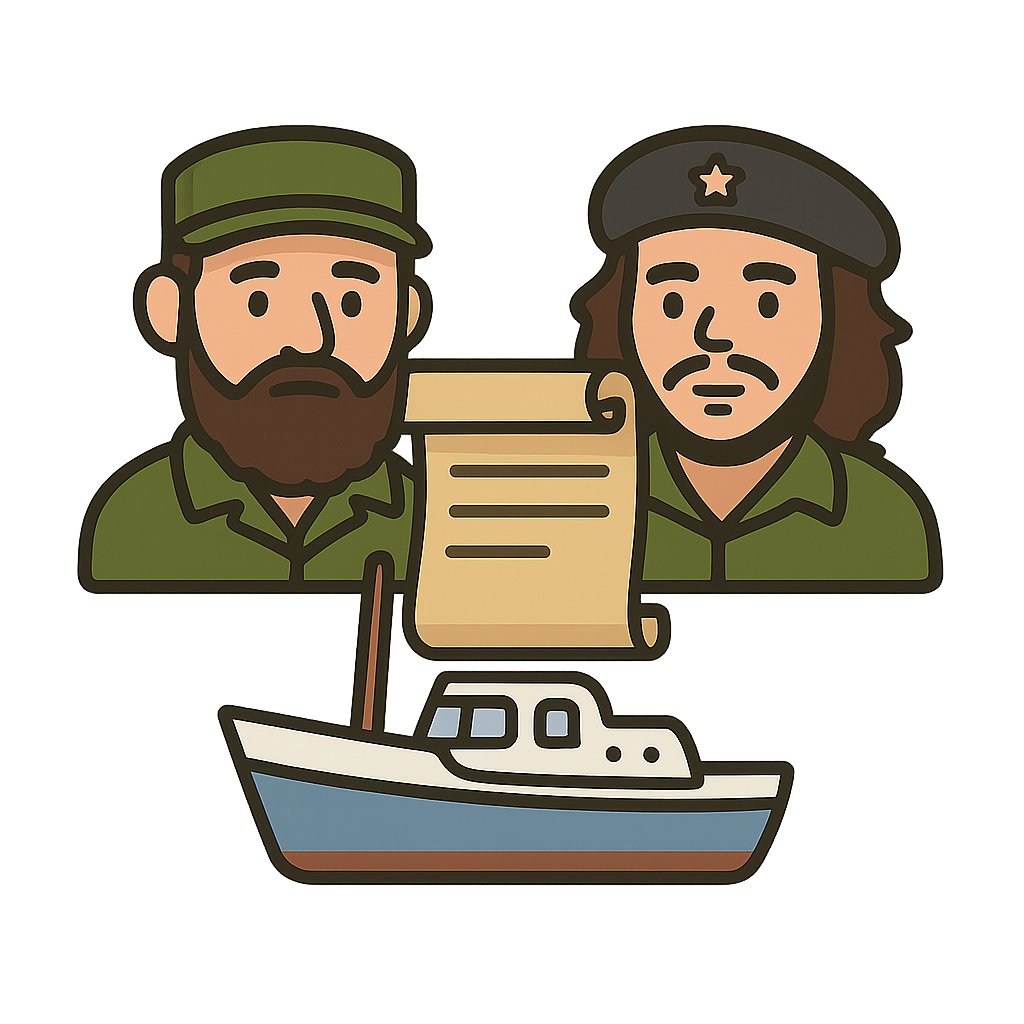
My name is Fidel Castro, and my story is deeply connected to the island I have always called home: Cuba. I grew up surrounded by its beauty—the sugarcane fields swaying in the breeze and the warm Caribbean Sea. But as I grew older and became a lawyer, I saw another side of my country. This was a Cuba where a few people were very wealthy, while most worked hard for very little. Our president at the time, Fulgencio Batista, led a government that I believed was corrupt and served the interests of the rich, not the people. Farmers struggled to own their land, many children couldn't go to school, and if you got sick, you might not be able to see a doctor. I felt a fire of injustice burning inside me. I dreamed of a different Cuba, one where every person had dignity, an education, and the care they needed. This dream wasn't just a quiet wish. it was a call to action. On July 26th, 1953, I led a group of about one hundred and sixty brave men in an attack on the Moncada Barracks in the city of Santiago de Cuba. We hoped to seize weapons and spark a nationwide uprising against Batista. The plan was bold, but it failed. The attack was unsuccessful, and many of my comrades were lost. I was captured and put on trial, but even then, I knew our fight had just begun. That day was not an end, but the first step on a long and difficult road.
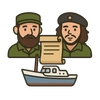
After my trial, I was eventually released and forced into exile in Mexico. But being away from Cuba only made my determination stronger. It was there I met other revolutionaries who shared my vision, including a thoughtful and daring doctor from Argentina named Ernesto, whom the world would come to know as Che Guevara. Together, we planned our return. In late 1956, eighty-two of us crowded onto a small, leaky yacht called the Granma. The journey across the Gulf of Mexico was treacherous, tossed by storms and running low on supplies. We finally landed in Cuba on December 2nd, 1956, but not as we had planned. We were spotted immediately by Batista's forces. In the chaos that followed, our small group was scattered. Only a handful of us, perhaps twenty, managed to escape and find each other again, deep in the rugged wilderness of the Sierra Maestra mountains. We were exhausted, poorly armed, and outnumbered, but we had hope. The mountains became our sanctuary and our training ground. We were no longer a conventional army. we were guerrilla fighters. We lived off the land, learned to navigate the dense forests, and conducted small, swift attacks on army outposts. The local farmers, the campesinos, became our greatest allies. They gave us food, shelter, and information. They joined our ranks, believing in our promise of a better future. Slowly, our small band of survivors grew. We established a hidden radio station, Radio Rebelde, to broadcast our message of revolution across the island. We were not just fighting a war. we were building a movement, one victory, one new recruit at a time, from our stronghold in the mountains of hope.
Fidel Castro and the Cuban Revolution
My name is Fidel Castro, and my story is deeply connected to the island I have always called home: Cuba. I grew up surrounded by its beauty—the sugarcane fields swaying in the breeze and the warm Caribbean Sea. But as I grew older and became a lawyer, I saw another side of my country. This was a Cuba where a few people were very wealthy, while most worked hard for very little. Our president at the time, Fulgencio Batista, led a government that I believed was corrupt and served the interests of the rich, not the people. Farmers struggled to own their land, many children couldn't go to school, and if you got sick, you might not be able to see a doctor. I felt a fire of injustice burning inside me. I dreamed of a different Cuba, one where every person had dignity, an education, and the care they needed. This dream wasn't just a quiet wish. it was a call to action. On July 26th, 1953, I led a group of about one hundred and sixty brave men in an attack on the Moncada Barracks in the city of Santiago de Cuba. We hoped to seize weapons and spark a nationwide uprising against Batista. The plan was bold, but it failed. The attack was unsuccessful, and many of my comrades were lost. I was captured and put on trial, but even then, I knew our fight had just begun. That day was not an end, but the first step on a long and difficult road.
After my trial, I was eventually released and forced into exile in Mexico. But being away from Cuba only made my determination stronger. It was there I met other revolutionaries who shared my vision, including a thoughtful and daring doctor from Argentina named Ernesto, whom the world would come to know as Che Guevara. Together, we planned our return. In late 1956, eighty-two of us crowded onto a small, leaky yacht called the Granma. The journey across the Gulf of Mexico was treacherous, tossed by storms and running low on supplies. We finally landed in Cuba on December 2nd, 1956, but not as we had planned. We were spotted immediately by Batista's forces. In the chaos that followed, our small group was scattered. Only a handful of us, perhaps twenty, managed to escape and find each other again, deep in the rugged wilderness of the Sierra Maestra mountains. We were exhausted, poorly armed, and outnumbered, but we had hope. The mountains became our sanctuary and our training ground. We were no longer a conventional army. we were guerrilla fighters. We lived off the land, learned to navigate the dense forests, and conducted small, swift attacks on army outposts. The local farmers, the campesinos, became our greatest allies. They gave us food, shelter, and information. They joined our ranks, believing in our promise of a better future. Slowly, our small band of survivors grew. We established a hidden radio station, Radio Rebelde, to broadcast our message of revolution across the island. We were not just fighting a war. we were building a movement, one victory, one new recruit at a time, from our stronghold in the mountains of hope.
By the end of 1958, our rebel army had grown strong and disciplined, and our message had spread throughout Cuba. The people were tired of Batista’s rule, and support for our cause was overwhelming. Our forces, led by commanders like Che Guevara and my brother Raúl, began to win major victories, taking control of towns and cities. Batista’s army began to crumble as soldiers lost the will to fight. The end came swiftly. On January 1st, 1959, Fulgencio Batista, realizing his power was gone, fled the country. The war was over. We had won. A few days later, on January 8th, I began a victory march into Havana, the capital city. The journey was incredible. All along the roads, thousands upon thousands of people came out to greet us, waving flags, cheering, and crying with joy. When we finally entered Havana, the city erupted in celebration. It was a moment I will never forget—the culmination of years of struggle, sacrifice, and unwavering belief in our cause. Standing before the massive crowds, I spoke of the future. I reminded them of our promises: to give land to the farmers, to build thousands of new schools so that every person could learn to read and write, and to create a healthcare system that would care for all Cubans, not just the wealthy. The revolution was not just about changing a ruler. it was about changing a country. My role in this historic event was to lead a people who were ready for change, and its impact was to set Cuba on a new path, one guided by the idea that a nation’s greatest resource is the well-being of its people.
Wow facts
About
The Cuban Revolution was an armed revolt led by Fidel Castro's 26th of July Movement against the authoritarian government of Cuban President Fulgencio Batista, which led to Batista's overthrow in 1959.
Take a Quiz
Question 1 of 5
Based on the first section, what were Fidel Castro's main motivations for starting a revolution?
Explore next


Want to do even more?
Go beyond exploring. Unlock tools that turn every story into real learning.

Storypie Plus for families
Full stories, quizzes, and printables. Nights and car rides, sorted.
- Unlimited audio stories
- Create Mode: your child stars in the story
- Offline downloads
- Printable worksheets & coloring pages

Why Storypie for Schools
Students engaged. Prep in seconds. Evenings back to you.
- Worksheets & Quizzes
- Classroom Management
- Formative Assessment
- Custom Curriculum & Lesson Plans
- 27 Languages

Why Storypie for Homeschool
Curriculum done. They'll ask for more. Hours back in your day.
- Worksheet Generator
- First-Person Audio Stories
- Built-in Comprehension Quizzes
- Custom Curriculum & Lesson Plans
- Print & Go Activities