English

Mechanical Clock
A device that measures the passage of time using a system of gears, weights or springs…
Reads at Grades 3–5 Listens at Grades 1–5
Print & create
Answer keys·No prep·Free with an account
28 worksheets · answer keys · full story · quiz · Ages 8-10 · CEFR B1
Plus adds 164,000+ more stories in 27 languages, audio for every one, and printables for all of them.
Just want Mechanical Clock?
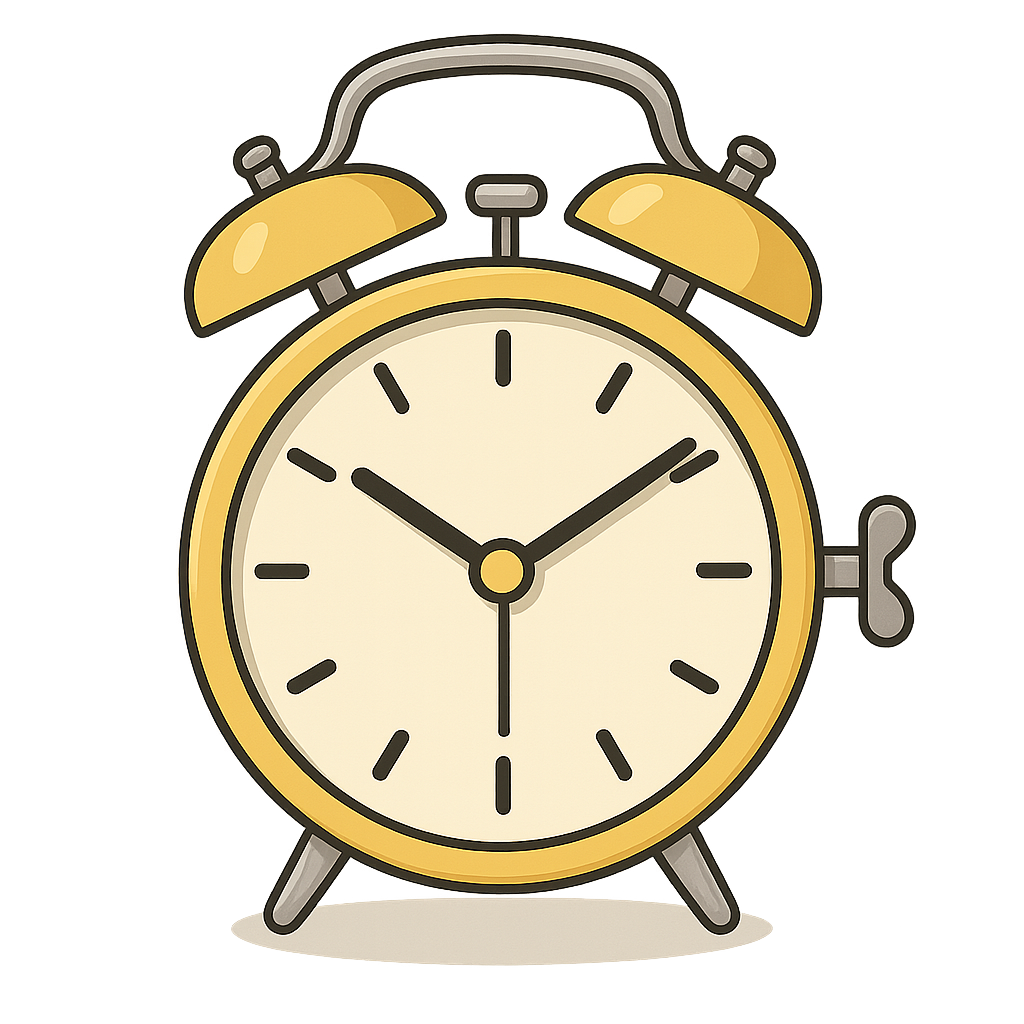
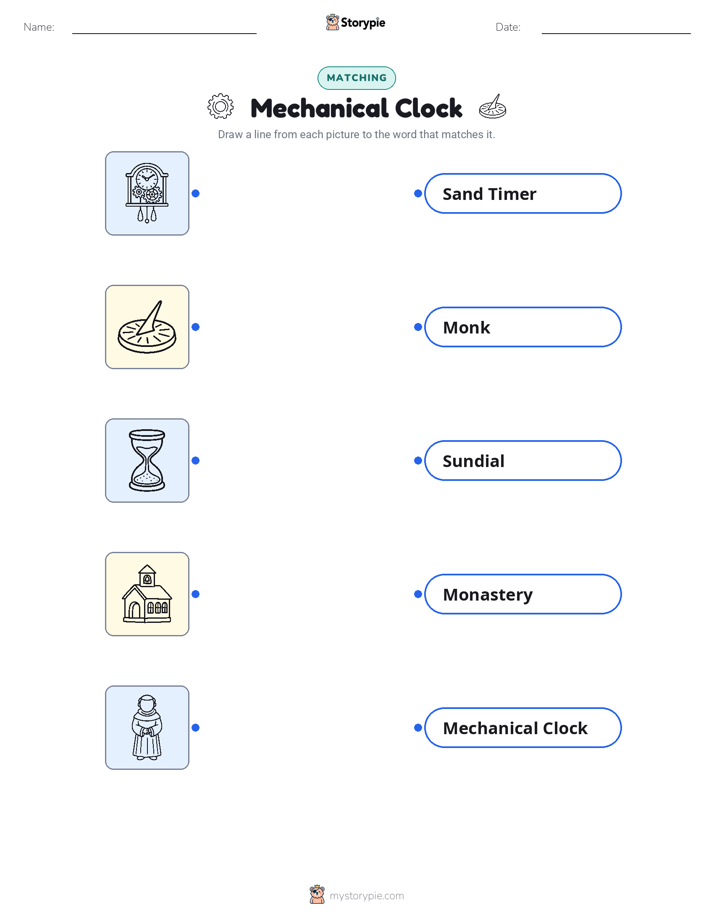
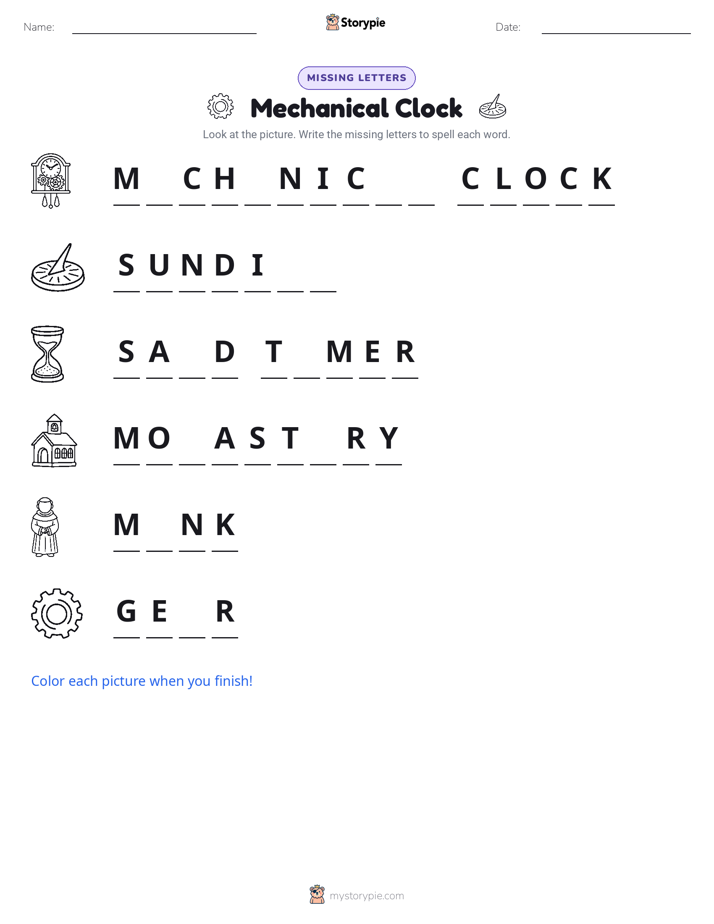
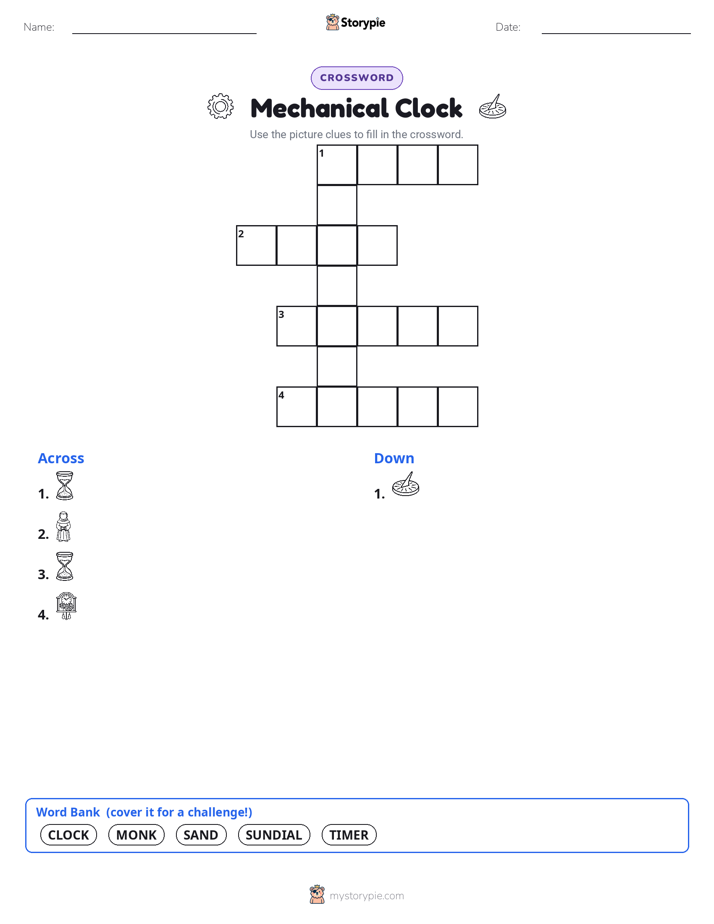
Hello there. You might know me by the steady tick-tock sound I make. I am the Mechanical Clock, and for hundreds of years, I have helped people keep track of their days. Before I came along, telling time was a very tricky business. People would look at the sun’s shadow on a sundial, but what happened on a cloudy day? The shadow would disappear, and so would the time. They also used water clocks, which dripped water from one container to another, but in the chilly winters of Europe, the water would freeze solid. Imagine trying to tell time with an ice cube. In the monasteries of medieval Europe, around the 13th century, monks needed a better way. They had to know when to gather for prayers, even in the middle of a dark night or during a stormy afternoon. They needed a timekeeper that was reliable, one that didn't depend on the sun or flowing water. They needed a machine that could keep a steady beat all on its own. They needed me.
My story begins in Europe, sometime in the late 1200s. I don’t have just one inventor; many clever people worked together to figure out how to build me. I was a completely new kind of machine for my time. I didn't need sunlight or water, and I certainly didn't have batteries or electricity. My heart was a system of weights and gears. A heavy weight would be hung from a rope, and as gravity pulled it down, it would turn a series of interlocking metal wheels, my gears. The most important part was a clever little device called an escapement. It would catch and release the gears with a steady rhythm, creating my signature "tick-tock" sound and controlling my speed. At first, I was enormous. I was built into the tall towers of churches and town squares so everyone could hear me. One of my oldest relatives still ticking today is the clock in Salisbury Cathedral, which was built in 1386. I didn’t have a face with hands back then. Instead, I rang a loud bell every hour, sending the time echoing across the town for all to hear. I was the heartbeat of the city.
The Clock Who Taught the World Time
Hello there. You might know me by the steady tick-tock sound I make. I am the Mechanical Clock, and for hundreds of years, I have helped people keep track of their days. Before I came along, telling time was a very tricky business. People would look at the sun’s shadow on a sundial, but what happened on a cloudy day? The shadow would disappear, and so would the time. They also used water clocks, which dripped water from one container to another, but in the chilly winters of Europe, the water would freeze solid. Imagine trying to tell time with an ice cube. In the monasteries of medieval Europe, around the 13th century, monks needed a better way. They had to know when to gather for prayers, even in the middle of a dark night or during a stormy afternoon. They needed a timekeeper that was reliable, one that didn't depend on the sun or flowing water. They needed a machine that could keep a steady beat all on its own. They needed me.
My story begins in Europe, sometime in the late 1200s. I don’t have just one inventor; many clever people worked together to figure out how to build me. I was a completely new kind of machine for my time. I didn't need sunlight or water, and I certainly didn't have batteries or electricity. My heart was a system of weights and gears. A heavy weight would be hung from a rope, and as gravity pulled it down, it would turn a series of interlocking metal wheels, my gears. The most important part was a clever little device called an escapement. It would catch and release the gears with a steady rhythm, creating my signature "tick-tock" sound and controlling my speed. At first, I was enormous. I was built into the tall towers of churches and town squares so everyone could hear me. One of my oldest relatives still ticking today is the clock in Salisbury Cathedral, which was built in 1386. I didn’t have a face with hands back then. Instead, I rang a loud bell every hour, sending the time echoing across the town for all to hear. I was the heartbeat of the city.
For a few hundred years, I worked hard in my towers, but I wasn't perfect. I would sometimes lose or gain several minutes a day. Then, in the year 1656, a brilliant scientist from the Netherlands named Christiaan Huygens gave me a major upgrade. He realized that a pendulum—a weight swinging back and forth on a rod—swings at a very steady and predictable rate. He attached a pendulum to my gears, and suddenly, I became incredibly accurate. My timekeeping improved from being off by 15 minutes a day to just a few seconds. This amazing improvement meant I didn't have to be a giant anymore. The pendulum allowed me to shrink. I could finally leave my cold stone towers and come inside, into people's homes. Clockmakers gave me a face with numbers and hands to point to the hour and the new, exciting minute. I became a beautiful piece of furniture, a grandfather clock standing proudly in a hallway, or a smaller mantel clock sitting above a fireplace. I helped organize the world in a whole new way. With me in schools, classes started on time. In factories, workers knew exactly when their shifts began and ended. Most importantly, I helped the new, fast-moving trains run on a precise schedule, connecting cities and people like never before. Life became more synchronized, all thanks to my steady tick-tock.
Looking around today, you might not see my old-fashioned weights and gears very often, but my spirit is everywhere. Every wristwatch, every digital clock on your phone, and every computer keeping time is my descendant. They use tiny vibrating crystals or electrical pulses, but the core idea is the same one I was born with: using a steady, repeating beat to measure the passing moments. I am the ancestor of all modern timekeeping. From my first loud bell rings in a medieval tower to the silent numbers on your screen, I helped humanity organize its world, schedule its dreams, and make incredible scientific discoveries possible. I gave people the power to measure their moments precisely. So the next time you check the time, remember me, the Mechanical Clock. I am the reason you know exactly when it’s time to learn, time to play, and time to rest.
Wow facts
About
A device that measures the passage of time using a system of gears, weights or springs, and an oscillating mechanism, without using electricity. It revolutionized how societies organized their day.
Take a Quiz
Question 1 of 5
The story says, 'Life became more synchronized, all thanks to my steady tick-tock.' What does the word 'synchronized' mean in this sentence?
Explore next




Want to do even more?
Go beyond exploring. Unlock tools that turn every story into real learning.

Storypie Plus for families
Full stories, quizzes, and printables. Nights and car rides, sorted.
- Unlimited audio stories
- Create Mode: your child stars in the story
- Offline downloads
- Printable worksheets & coloring pages

Why Storypie for Schools
Students engaged. Prep in seconds. Evenings back to you.
- Worksheets & Quizzes
- Classroom Management
- Formative Assessment
- Custom Curriculum & Lesson Plans
- 27 Languages

Why Storypie for Homeschool
Curriculum done. They'll ask for more. Hours back in your day.
- Worksheet Generator
- First-Person Audio Stories
- Built-in Comprehension Quizzes
- Custom Curriculum & Lesson Plans
- Print & Go Activities