English

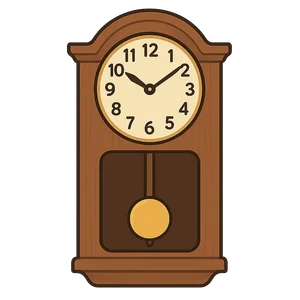
Pendulum Clock
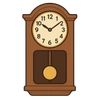
The pendulum clock was the first truly accurate mechanical timekeeping device…
Reads at Grades 6–8 Listens at Grades 4–8
Print & create
Answer keys·No prep·Free with an account
28 worksheets · answer keys · full story · quiz · Ages 10-12 · CEFR B2
Plus adds 164,000+ more stories in 27 languages, audio for every one, and printables for all of them.
Just want Pendulum Clock?
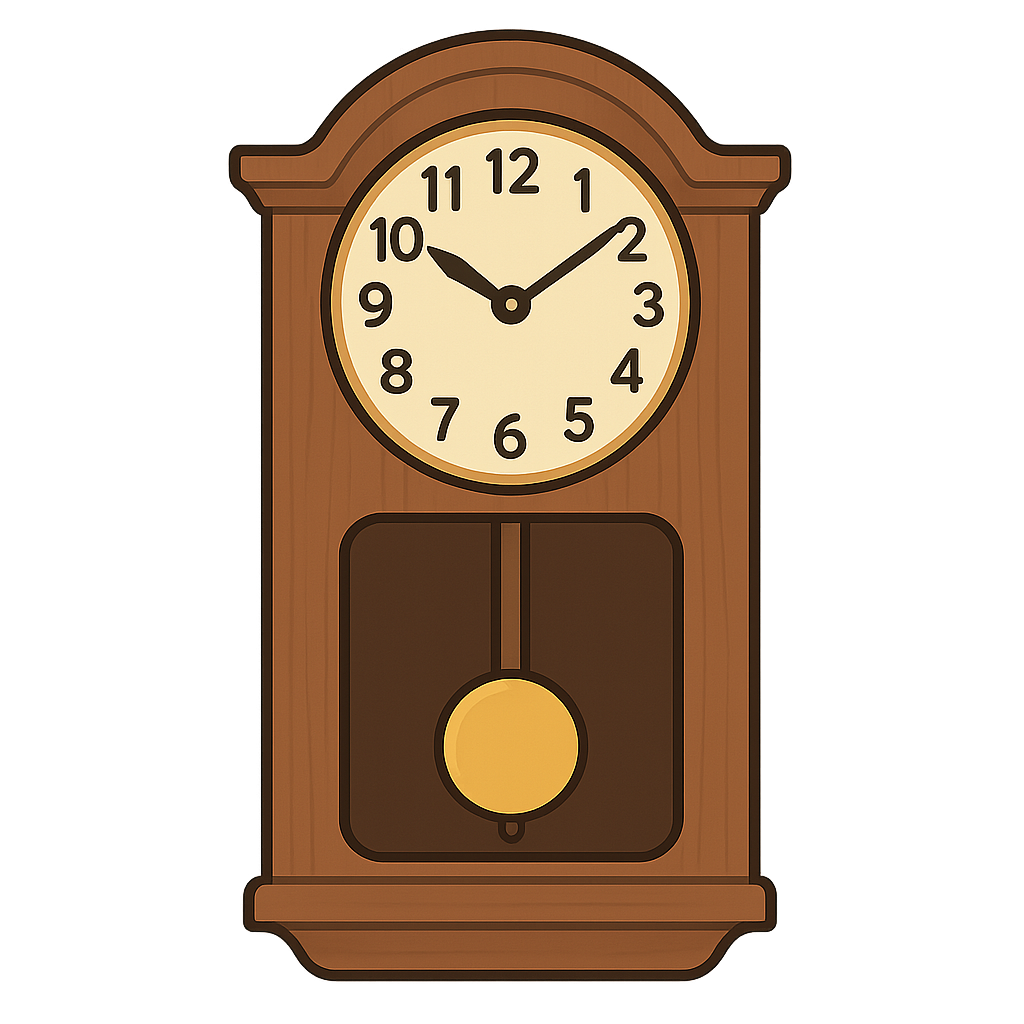
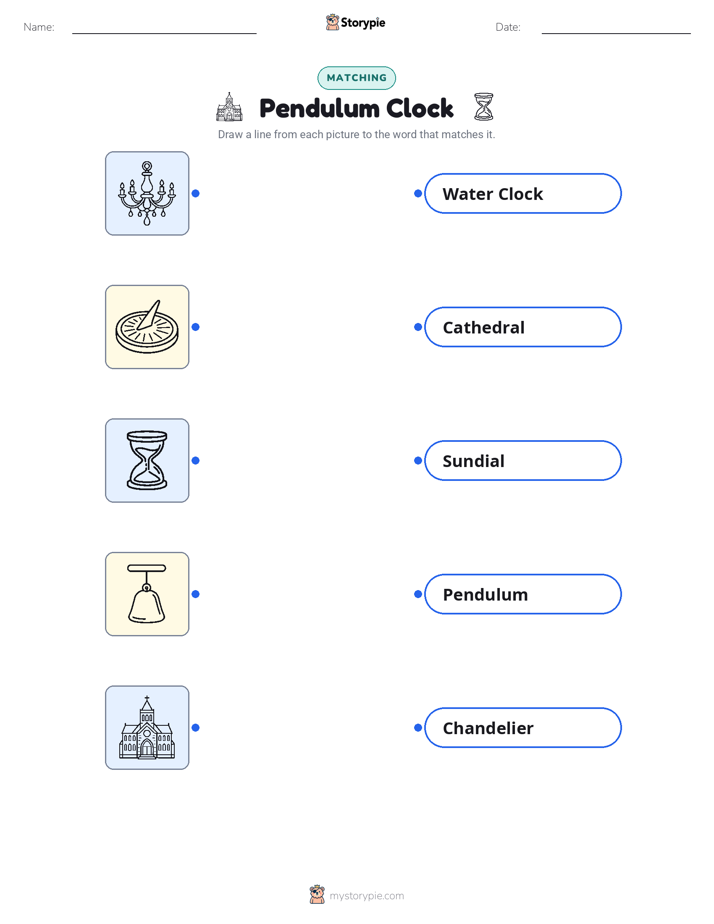
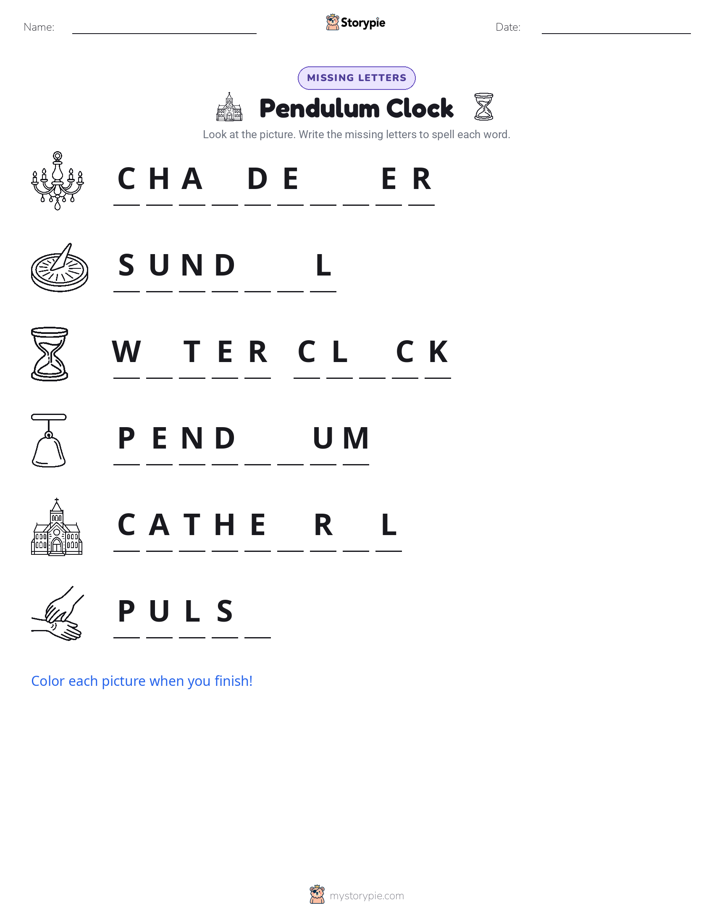
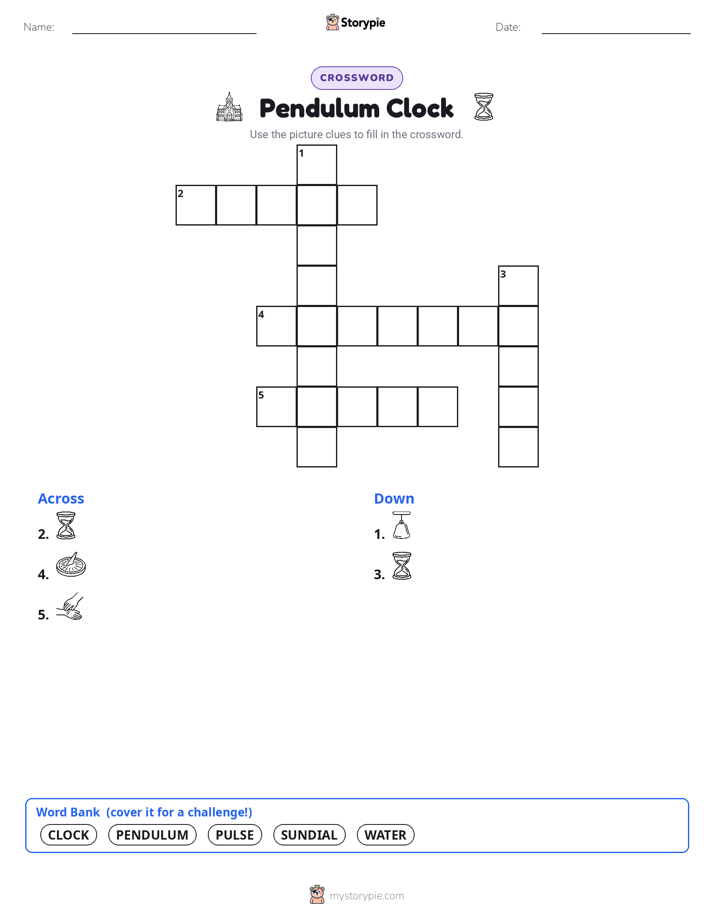
Before I existed, the world lived in a fuzzy, uncertain present. Imagine trying to catch a train when no one could agree on what time it was. People relied on my clumsy ancestors: the sundial, which was useless on a cloudy day; the water clock, which froze in winter; and early mechanical clocks, so imprecise they might lose fifteen minutes in a single day. My story, however, begins not with gears and springs, but with a quiet observation in a grand cathedral. Around the year 1583, a young Italian student named Galileo Galilei sat, perhaps bored by a long sermon, and watched a great chandelier swing back and forth. He noticed something profound. Using his own pulse to time the swings, he realized that whether the arc was wide or narrow, each swing took the exact same amount of time. He called this principle isochronism, and it was the soul I had been waiting for. Galileo dreamt of creating a timekeeper based on this perfect, steady rhythm, but he was an old man by then, his eyesight failing. He sketched out designs, but he never built a working version of me. The idea, the spark of my existence, was there, but I was still just a ghost, a whisper of a possibility waiting for another brilliant mind to give me a body and a voice.
That mind belonged to a Dutch astronomer and physicist named Christiaan Huygens. In the mid-1600s, Huygens was trying to map the heavens, a task that demanded a level of precision my ancestors could only dream of. To chart the paths of planets and stars, he needed to measure time not just in hours, but in minutes and seconds, flawlessly. He knew of Galileo's work with pendulums and was determined to bring the idea to life. In 1656, after much thought and experimentation in his workshop in The Hague, he had a breakthrough. He devised a clever mechanism called a verge escapement, which acted as a bridge between a swinging pendulum and the clock's gears. With each swing, my pendulum gave the escape wheel a tiny, precise nudge, allowing the gears to advance by just one tick. It was a perfect partnership. The pendulum's steady rhythm governed the gears, and the gears’ energy kept the pendulum swinging. I was born. My first form was a modest shelf clock, but my accuracy was revolutionary. I was off by less than a minute a day, a hundred times better than any clock before me. Huygens was so proud that in 1658, he published a book called *Horologium*, sharing my design with the world. My heartbeat, that steady tick-tock, was ready to regulate the life of humanity.
I Am the Pendulum Clock
Before I existed, the world lived in a fuzzy, uncertain present. Imagine trying to catch a train when no one could agree on what time it was. People relied on my clumsy ancestors: the sundial, which was useless on a cloudy day; the water clock, which froze in winter; and early mechanical clocks, so imprecise they might lose fifteen minutes in a single day. My story, however, begins not with gears and springs, but with a quiet observation in a grand cathedral. Around the year 1583, a young Italian student named Galileo Galilei sat, perhaps bored by a long sermon, and watched a great chandelier swing back and forth. He noticed something profound. Using his own pulse to time the swings, he realized that whether the arc was wide or narrow, each swing took the exact same amount of time. He called this principle isochronism, and it was the soul I had been waiting for. Galileo dreamt of creating a timekeeper based on this perfect, steady rhythm, but he was an old man by then, his eyesight failing. He sketched out designs, but he never built a working version of me. The idea, the spark of my existence, was there, but I was still just a ghost, a whisper of a possibility waiting for another brilliant mind to give me a body and a voice.
That mind belonged to a Dutch astronomer and physicist named Christiaan Huygens. In the mid-1600s, Huygens was trying to map the heavens, a task that demanded a level of precision my ancestors could only dream of. To chart the paths of planets and stars, he needed to measure time not just in hours, but in minutes and seconds, flawlessly. He knew of Galileo's work with pendulums and was determined to bring the idea to life. In 1656, after much thought and experimentation in his workshop in The Hague, he had a breakthrough. He devised a clever mechanism called a verge escapement, which acted as a bridge between a swinging pendulum and the clock's gears. With each swing, my pendulum gave the escape wheel a tiny, precise nudge, allowing the gears to advance by just one tick. It was a perfect partnership. The pendulum's steady rhythm governed the gears, and the gears’ energy kept the pendulum swinging. I was born. My first form was a modest shelf clock, but my accuracy was revolutionary. I was off by less than a minute a day, a hundred times better than any clock before me. Huygens was so proud that in 1658, he published a book called Horologium, sharing my design with the world. My heartbeat, that steady tick-tock, was ready to regulate the life of humanity.
My birth was just the beginning of my journey. Once the world saw what I could do, other inventors and clockmakers were eager to make me even better. Around the year 1670, an English clockmaker named William Clement made a crucial improvement. He invented the 'anchor escapement,' a mechanism far more efficient than my original design. This new escapement barely interfered with the pendulum's natural swing, which meant the pendulum could be made much longer and heavier. This led to the creation of my most famous form: the longcase clock. With a pendulum that was a full meter in length, each swing took exactly one second. I grew tall and elegant, housed in a handsome wooden case to protect my delicate pendulum and weights. You probably know me as the 'grandfather clock.' I was no longer just a scientific instrument; I became the heart of the home. Standing in the hall, I was a symbol of order, punctuality, and even wealth. My steady, calming tick-tock became the rhythm of domestic life. Shops opened and closed by my chimes, factories organized their workers to my schedule, and scientists conducted experiments with a newfound confidence in their measurements. I brought a new kind of order to the world, a shared sense of time that connected everyone.
For nearly three hundred years, I was the undisputed king of time. No other device could measure the passing moments with my reliability and grace. My reign saw the rise of empires, the dawn of the industrial revolution, and incredible leaps in scientific understanding, all of which I helped make possible. Of course, time marches on, and new technologies eventually surpassed me. The quartz clocks on your walls and the atomic clocks that run the internet are thousands of times more accurate than I ever was. But my story is not over. I may not be the most precise timekeeper anymore, but my legacy is immortal. The principle of the swinging pendulum that Galileo discovered and Huygens perfected is still a fundamental concept taught in every physics class. I stand as a monument to human ingenuity, a testament to our relentless quest to understand and measure the universe. So the next time you see one of my tall, wooden forms in an old house or a museum, listen closely. My tick-tock is more than just the sound of a clock; it is the sound of an idea, a reminder that with curiosity and perseverance, we can achieve the impossible, one second at a time.
Wow facts
About
The pendulum clock was the first truly accurate mechanical timekeeping device, invented in 1656 by Christiaan Huygens. Its use of a swinging pendulum as its timekeeping element revolutionized science and daily life for nearly 300 years.
Take a Quiz
Question 1 of 5
What is the main theme of the story?
Explore next






Want to do even more?
Go beyond exploring. Unlock tools that turn every story into real learning.

Storypie Plus for families
Full stories, quizzes, and printables. Nights and car rides, sorted.
- Unlimited audio stories
- Create Mode: your child stars in the story
- Offline downloads
- Printable worksheets & coloring pages

Why Storypie for Schools
Students engaged. Prep in seconds. Evenings back to you.
- Worksheets & Quizzes
- Classroom Management
- Formative Assessment
- Custom Curriculum & Lesson Plans
- 27 Languages

Why Storypie for Homeschool
Curriculum done. They'll ask for more. Hours back in your day.
- Worksheet Generator
- First-Person Audio Stories
- Built-in Comprehension Quizzes
- Custom Curriculum & Lesson Plans
- Print & Go Activities