English

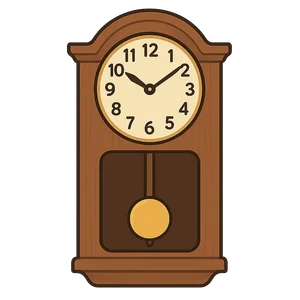
Pendulum Clock
The pendulum clock was the first truly accurate mechanical timekeeping device…
Reads at Grades 3–5 Listens at Grades 1–5
Print & create
Answer keys·No prep·Free with an account
28 worksheets · answer keys · full story · quiz · Ages 8-10 · CEFR B1
Plus adds 164,000+ more stories in 27 languages, audio for every one, and printables for all of them.
Just want Pendulum Clock?
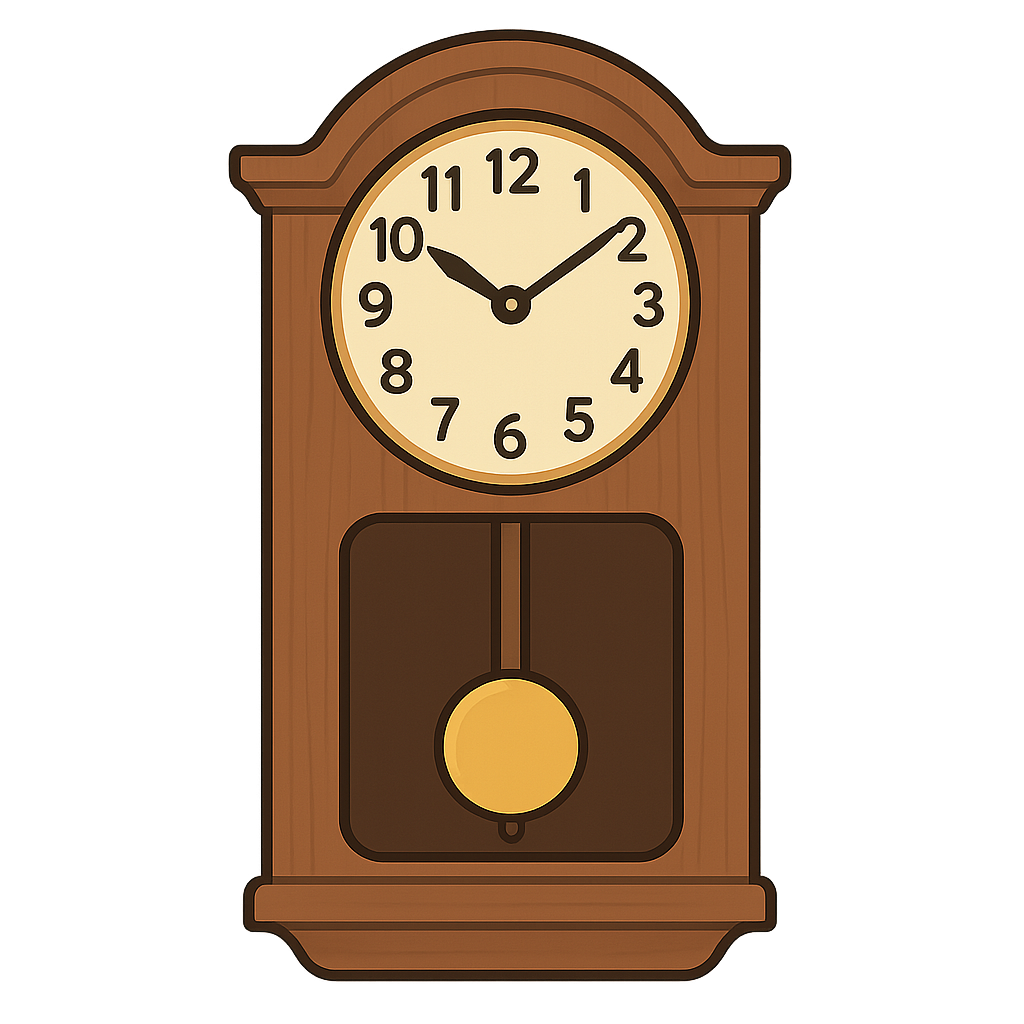
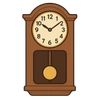
Tick-tock, tick-tock. That is the sound of my heart, a sound that brought order to the world. I am a pendulum clock, and if you saw me, you might notice my tall, polished wooden case and my long, golden pendulum swinging steadily behind a glass door. My face has numbers and two hands, one long and one short, that march in a perfect circle to mark the passing of hours and minutes. Before I was born in the 1600s, telling time accurately was like trying to catch water in your hands. The clocks that existed were clumsy and unreliable. They could lose many minutes, sometimes even a quarter of an hour, every single day. Imagine trying to meet a friend, but your clocks were fifteen minutes apart. For scientists trying to time their experiments, or for sailors navigating the vast, empty ocean, this wasn't just annoying, it was a huge problem. They needed a timekeeper they could trust, a pulse that was steady and true. They needed me.
My story really begins not with gears and springs, but with a simple observation. The idea for my steady heartbeat started with a brilliant Italian scientist named Galileo Galilei. Around the year 1602, while sitting in a cathedral, he watched a heavy lamp swing back and forth on a long chain. He noticed something amazing. Using his own pulse to time it, he realized that each swing, whether it was a big, wide arc or a tiny little one, took the exact same amount of time to complete. This steady rhythm was the secret to perfect timekeeping, but Galileo never built a clock based on his idea. That task fell to another clever man, a Dutch scientist named Christiaan Huygens. In the year 1656, he took Galileo's discovery and used it to design the very first version of me. He understood that a swinging weight, a pendulum, could be the perfect regulator for a clock. My pendulum swings back and forth, and with each complete swing, it lets a special gear inside me, called an escapement, turn just one tooth. Click. It's a tiny, precise movement. That little click allows my other gears to move forward just the right amount, pushing my hands around my face at a constant, unwavering speed. My swing controls everything, making sure that one second is always one second.
The Clock with a Swinging Heart
Tick-tock, tick-tock. That is the sound of my heart, a sound that brought order to the world. I am a pendulum clock, and if you saw me, you might notice my tall, polished wooden case and my long, golden pendulum swinging steadily behind a glass door. My face has numbers and two hands, one long and one short, that march in a perfect circle to mark the passing of hours and minutes. Before I was born in the 1600s, telling time accurately was like trying to catch water in your hands. The clocks that existed were clumsy and unreliable. They could lose many minutes, sometimes even a quarter of an hour, every single day. Imagine trying to meet a friend, but your clocks were fifteen minutes apart. For scientists trying to time their experiments, or for sailors navigating the vast, empty ocean, this wasn't just annoying, it was a huge problem. They needed a timekeeper they could trust, a pulse that was steady and true. They needed me.
My story really begins not with gears and springs, but with a simple observation. The idea for my steady heartbeat started with a brilliant Italian scientist named Galileo Galilei. Around the year 1602, while sitting in a cathedral, he watched a heavy lamp swing back and forth on a long chain. He noticed something amazing. Using his own pulse to time it, he realized that each swing, whether it was a big, wide arc or a tiny little one, took the exact same amount of time to complete. This steady rhythm was the secret to perfect timekeeping, but Galileo never built a clock based on his idea. That task fell to another clever man, a Dutch scientist named Christiaan Huygens. In the year 1656, he took Galileo's discovery and used it to design the very first version of me. He understood that a swinging weight, a pendulum, could be the perfect regulator for a clock. My pendulum swings back and forth, and with each complete swing, it lets a special gear inside me, called an escapement, turn just one tooth. Click. It's a tiny, precise movement. That little click allows my other gears to move forward just the right amount, pushing my hands around my face at a constant, unwavering speed. My swing controls everything, making sure that one second is always one second.
Once I arrived, everything changed. Suddenly, time wasn't so slippery anymore. I captured it with my steady swing. Where older clocks lost fifteen minutes a day, I lost less than one. This was a revolution. For the first time, scientists could conduct experiments that required precise timing, making discoveries that were impossible before. People in towns and cities could schedule their lives with new confidence, knowing that the time on the town hall clock was the same as the time on their neighbor's clock. I became the ancestor of all those tall, elegant grandfather clocks that stand like silent guardians in old homes and hallways. For nearly 300 years, I was the most accurate timekeeper in the world, my tick-tock the reliable rhythm of daily life. Looking back, I see that my simple, swinging heart brought a new kind of order and precision to the world. And even though you now have digital clocks on your phones and computers, the idea I was built on, the idea of keeping perfect, steady time, lives on in every single one of them.
Wow facts
About
The pendulum clock was the first truly accurate mechanical timekeeping device, invented in 1656 by Christiaan Huygens. Its use of a swinging pendulum as its timekeeping element revolutionized science and daily life for nearly 300 years.
Take a Quiz
Question 1 of 5
Why was it a big problem for sailors in the 1600s that clocks were 'unreliable'?
Explore next






Want to do even more?
Go beyond exploring. Unlock tools that turn every story into real learning.

Storypie Plus for families
Full stories, quizzes, and printables. Nights and car rides, sorted.
- Unlimited audio stories
- Create Mode: your child stars in the story
- Offline downloads
- Printable worksheets & coloring pages

Why Storypie for Schools
Students engaged. Prep in seconds. Evenings back to you.
- Worksheets & Quizzes
- Classroom Management
- Formative Assessment
- Custom Curriculum & Lesson Plans
- 27 Languages

Why Storypie for Homeschool
Curriculum done. They'll ask for more. Hours back in your day.
- Worksheet Generator
- First-Person Audio Stories
- Built-in Comprehension Quizzes
- Custom Curriculum & Lesson Plans
- Print & Go Activities