English

Pendulum Clock
The pendulum clock was the first truly accurate mechanical timekeeping device…
Reads at Grades K-2 Listens at K–3
Print & create
Answer keys·No prep·Free with an account
28 worksheets · answer keys · full story · quiz · Ages 6-8 · CEFR A2
Plus adds 164,000+ more stories in 27 languages, audio for every one, and printables for all of them.
Just want Pendulum Clock?
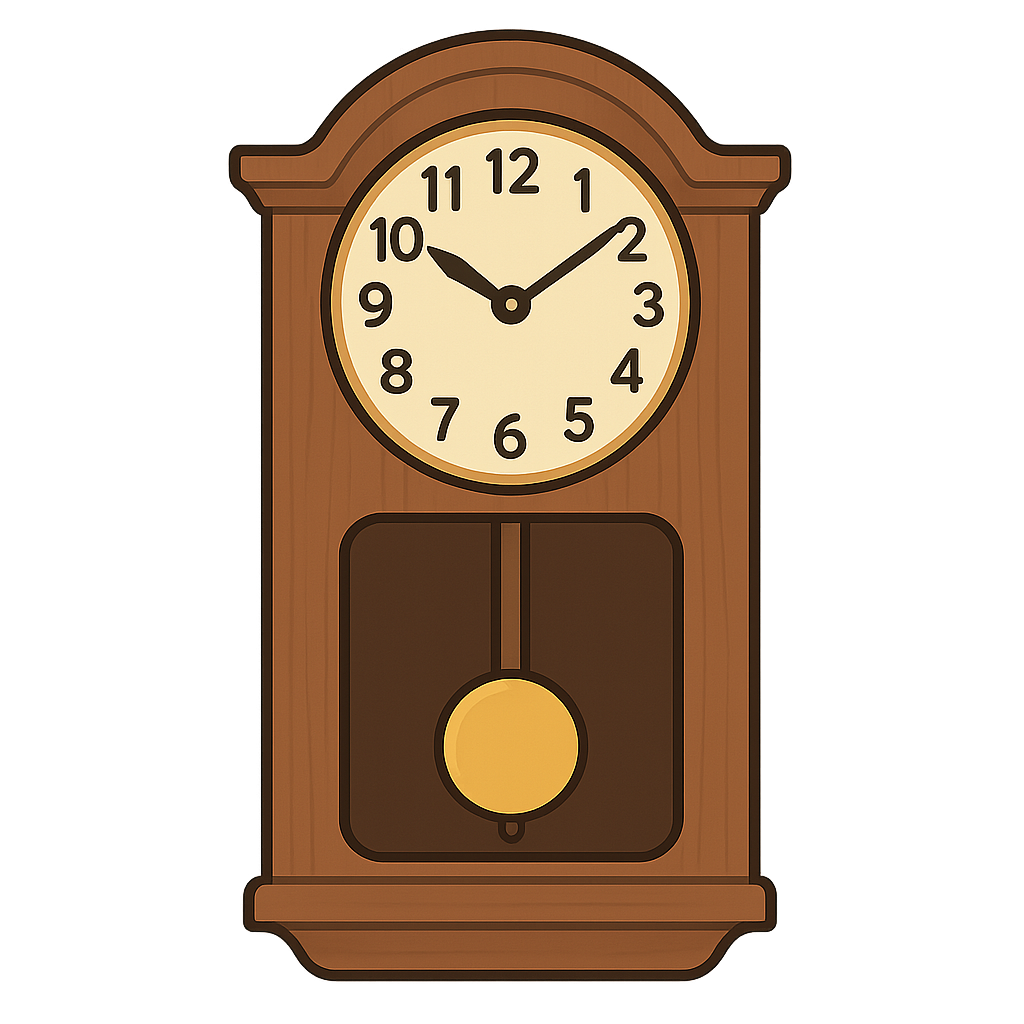
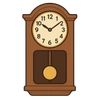
Hello there. Have you ever seen a tall clock standing in a big wooden case, maybe in a grandparent's house or an old movie. That's me. I am a Pendulum Clock. If you look closely through my glass door, you will see the most important part of me swinging back and forth, back and forth. I like to call it my heart. It’s a weight on a long stick, and it is called a pendulum. My job is to tell time, and I do it with a very steady sound: tick-tock, tick-tock. For a very long time, I was the best timekeeper in the whole world. Before I came along in the 1650s, people had clocks, but none of them were very good at keeping perfect time. It was a big puzzle, and everyone was hoping for a way to know the exact time of day.
My story really began with an idea, long before I was even built. A very curious man in Italy named Galileo Galilei was in a big church one day, way back around the year 1583. He wasn't listening to the speaker; he was watching a lamp swing from the ceiling. He noticed something amazing. No matter how wide or small the swing was, it always took the same amount of time to go back and forth. He thought, “This could be used to make a perfect clock.”. Many years passed, and another very clever scientist from a country called the Netherlands heard about this idea. His name was Christiaan Huygens. He was a brilliant inventor who loved to solve problems. He decided to take Galileo’s swinging idea and turn it into a real clock. In the year 1656, he did it. He built the very first pendulum clock, and I was born. Christiaan carefully designed me so that my swinging pendulum controlled my gears. Each swing would let my gears turn just a tiny bit, which moved my hands around my face at a perfect, steady pace. I was finally alive and ticking.
The Story of the Pendulum Clock
Hello there. Have you ever seen a tall clock standing in a big wooden case, maybe in a grandparent's house or an old movie. That's me. I am a Pendulum Clock. If you look closely through my glass door, you will see the most important part of me swinging back and forth, back and forth. I like to call it my heart. It’s a weight on a long stick, and it is called a pendulum. My job is to tell time, and I do it with a very steady sound: tick-tock, tick-tock. For a very long time, I was the best timekeeper in the whole world. Before I came along in the 1650s, people had clocks, but none of them were very good at keeping perfect time. It was a big puzzle, and everyone was hoping for a way to know the exact time of day.
My story really began with an idea, long before I was even built. A very curious man in Italy named Galileo Galilei was in a big church one day, way back around the year 1583. He wasn't listening to the speaker; he was watching a lamp swing from the ceiling. He noticed something amazing. No matter how wide or small the swing was, it always took the same amount of time to go back and forth. He thought, “This could be used to make a perfect clock.”. Many years passed, and another very clever scientist from a country called the Netherlands heard about this idea. His name was Christiaan Huygens. He was a brilliant inventor who loved to solve problems. He decided to take Galileo’s swinging idea and turn it into a real clock. In the year 1656, he did it. He built the very first pendulum clock, and I was born. Christiaan carefully designed me so that my swinging pendulum controlled my gears. Each swing would let my gears turn just a tiny bit, which moved my hands around my face at a perfect, steady pace. I was finally alive and ticking.
Once I arrived, I changed everything. For the first time, scientists could time their experiments down to the minute and second, which helped them make amazing discoveries. I said, “I can make everything more precise.”. People could set their schedules and know they would be on time. Big clocks like me were put in train stations to make sure the trains left at the exact right moment. For almost 300 years, I was the most accurate and important timekeeper in the world. Today, you have digital clocks on your phones and tiny watches on your wrists that don't need a swinging heart like mine. But my steady tick-tock was what first taught the world how to live by the minute. I am a reminder that a great discovery can come from just quietly watching the world around you.
Wow facts
About
The pendulum clock was the first truly accurate mechanical timekeeping device, invented in 1656 by Christiaan Huygens. Its use of a swinging pendulum as its timekeeping element revolutionized science and daily life for nearly 300 years.
Take a Quiz
Question 1 of 4
Who was the clever scientist that invented the very first pendulum clock?
Explore next






Want to do even more?
Go beyond exploring. Unlock tools that turn every story into real learning.

Storypie Plus for families
Full stories, quizzes, and printables. Nights and car rides, sorted.
- Unlimited audio stories
- Create Mode: your child stars in the story
- Offline downloads
- Printable worksheets & coloring pages

Why Storypie for Schools
Students engaged. Prep in seconds. Evenings back to you.
- Worksheets & Quizzes
- Classroom Management
- Formative Assessment
- Custom Curriculum & Lesson Plans
- 27 Languages

Why Storypie for Homeschool
Curriculum done. They'll ask for more. Hours back in your day.
- Worksheet Generator
- First-Person Audio Stories
- Built-in Comprehension Quizzes
- Custom Curriculum & Lesson Plans
- Print & Go Activities