English

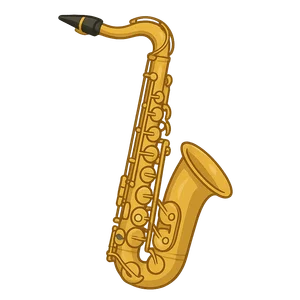
Saxophone
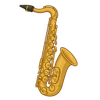
A musical instrument in the woodwind family, typically made of brass…
Reads at Grades 6–8 Listens at Grades 4–8
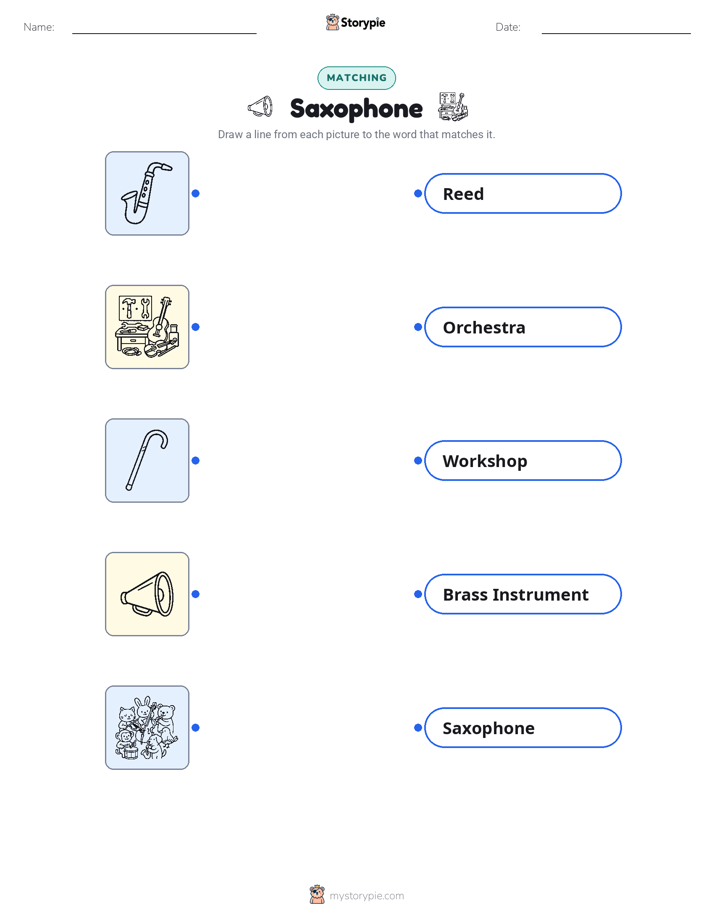
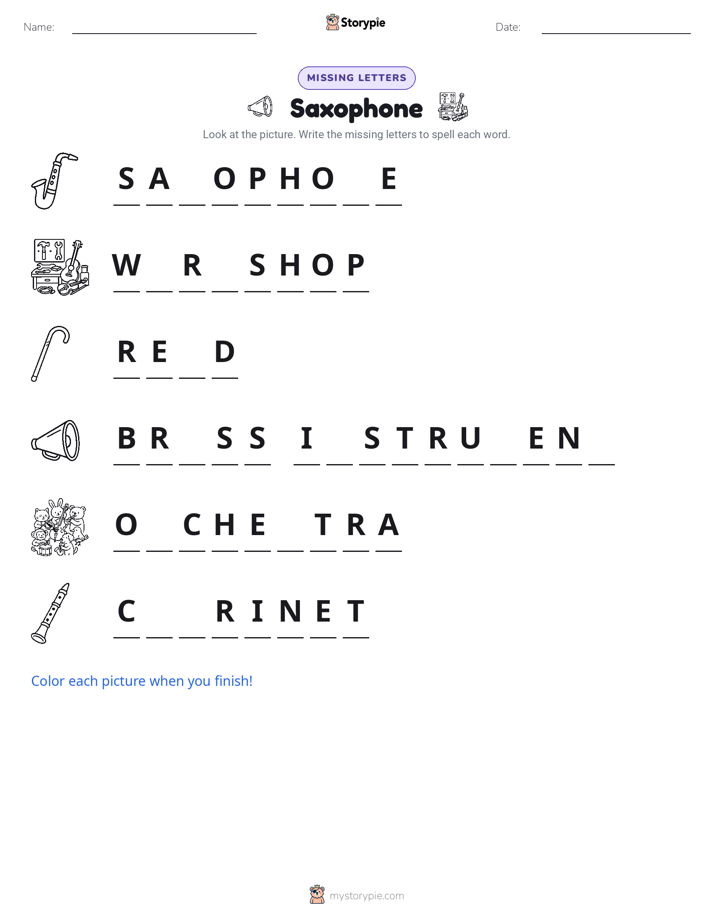
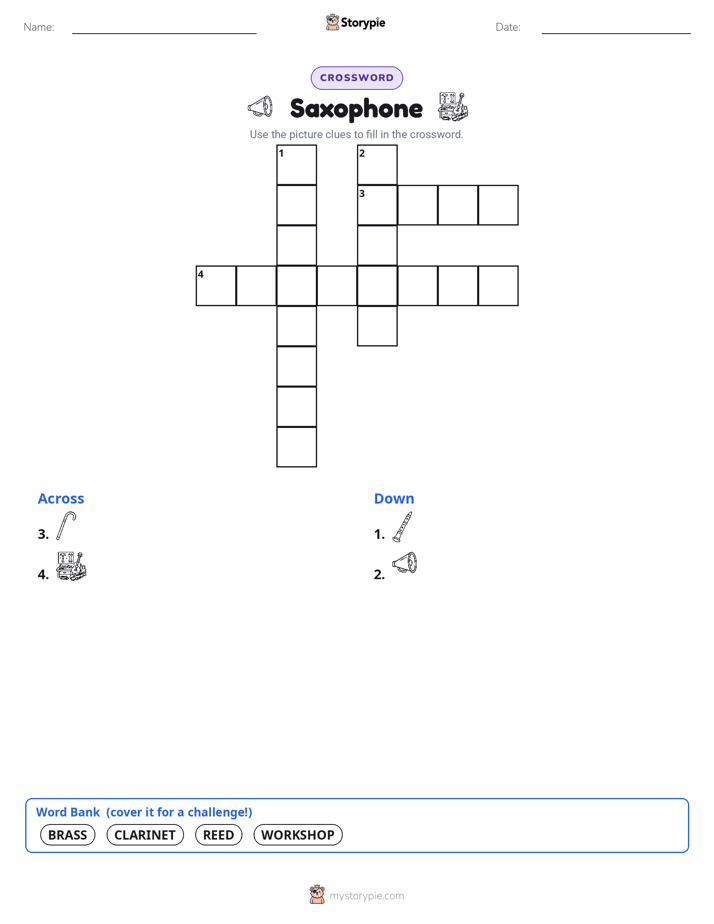
Print & create
Answer keys·No prep·Free with an account
28 worksheets · answer keys · full story · quiz · Ages 10-12 · CEFR B2
Plus adds 208,000+ more stories in 27 languages, audio for every one, and printables for all of them.
Just want Saxophone?
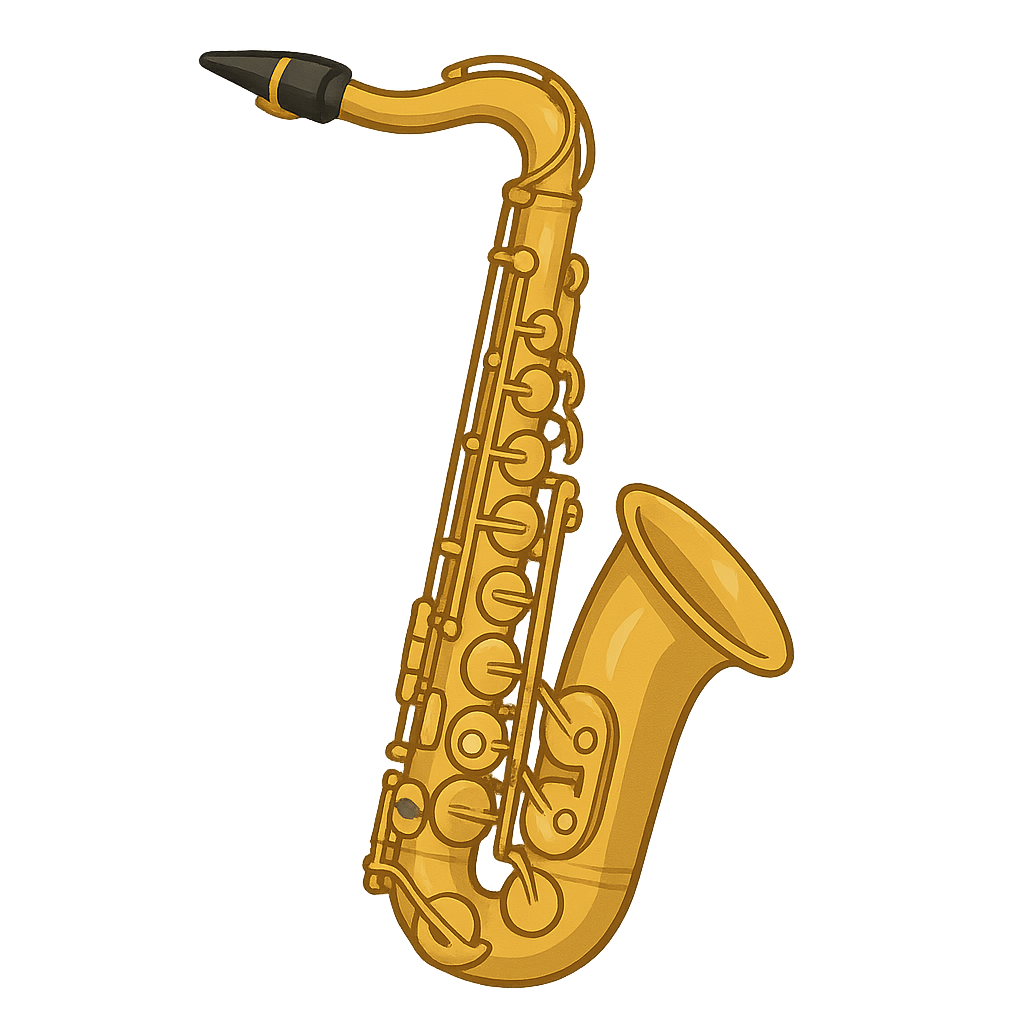
Before I could sing, I was just an idea in the mind of a brilliant, if somewhat clumsy, man. My story begins not on a stage, but in a dusty workshop in Brussels, Belgium, in the early 1840s. My creator was Antoine-Joseph Sax, though the world would come to know him as Adolphe Sax. He was a true artist, born into a family of instrument makers, but he was also famously accident-prone. He survived falls, explosions, and even accidental poisoning as a child. Perhaps it was his own unique, complicated life that inspired him to create something equally unique: me. I am the Saxophone, a gleaming instrument of brass with a curious, curving shape. I look like I belong to the powerful brass family, with my shiny, conical body. But my voice comes from a single, vibrating piece of cane wood called a reed, just like a clarinet. I am a hybrid, a bridge between two worlds. Adolphe saw a problem in the grand orchestras of his time. The gentle, woody voices of the clarinets and flutes were often drowned out by the thunderous roar of the trumpets and trombones. There was a gap, a missing sound that could be both powerful and gentle, bold and tender. He dreamed of a new voice that could stand up to the brass section but sing with the soul of a woodwind. That dream was me.
Crafting me was a delicate and challenging process. Adolphe Sax worked tirelessly in his Paris workshop, experimenting with different shapes and materials. He finally perfected my design by combining the conical body of a brass instrument, which allows my sound to grow louder and richer, with the single-reed mouthpiece of a clarinet, which gives me my uniquely expressive and flexible tone. I wasn't just one instrument; I was born as a whole family, from the tiny sopranino to the giant contrabass. On June 28th, 1846, Adolphe officially patented me in Paris. However, my arrival was not celebrated by everyone. Other instrument makers in the city were deeply jealous of Adolphe’s innovation. They saw me as a threat to their traditional instruments and did everything they could to stop my success. They filed lawsuits against him, spread rumors, and even tried to sabotage his workshop. But Adolphe was a fighter. To prove my worth, he entered me into musical competitions, sometimes called 'duels,' against other instruments. In 1845, before I was even patented, I competed in a famous 'battle of the bands' on the Champ de Mars in Paris. The French military needed to choose new instruments for their bands, and Adolphe’s ensemble, featuring me, faced off against a traditional military band. My powerful, versatile voice won the day, and soon I was proudly marching with French soldiers, my sound echoing through the streets. It was my first real job, and I proved I was more than just a novelty; I was a force to be reckoned with.
My Voice in Brass and Reed
Before I could sing, I was just an idea in the mind of a brilliant, if somewhat clumsy, man. My story begins not on a stage, but in a dusty workshop in Brussels, Belgium, in the early 1840s. My creator was Antoine-Joseph Sax, though the world would come to know him as Adolphe Sax. He was a true artist, born into a family of instrument makers, but he was also famously accident-prone. He survived falls, explosions, and even accidental poisoning as a child. Perhaps it was his own unique, complicated life that inspired him to create something equally unique: me. I am the Saxophone, a gleaming instrument of brass with a curious, curving shape. I look like I belong to the powerful brass family, with my shiny, conical body. But my voice comes from a single, vibrating piece of cane wood called a reed, just like a clarinet. I am a hybrid, a bridge between two worlds. Adolphe saw a problem in the grand orchestras of his time. The gentle, woody voices of the clarinets and flutes were often drowned out by the thunderous roar of the trumpets and trombones. There was a gap, a missing sound that could be both powerful and gentle, bold and tender. He dreamed of a new voice that could stand up to the brass section but sing with the soul of a woodwind. That dream was me.
Crafting me was a delicate and challenging process. Adolphe Sax worked tirelessly in his Paris workshop, experimenting with different shapes and materials. He finally perfected my design by combining the conical body of a brass instrument, which allows my sound to grow louder and richer, with the single-reed mouthpiece of a clarinet, which gives me my uniquely expressive and flexible tone. I wasn't just one instrument; I was born as a whole family, from the tiny sopranino to the giant contrabass. On June 28th, 1846, Adolphe officially patented me in Paris. However, my arrival was not celebrated by everyone. Other instrument makers in the city were deeply jealous of Adolphe’s innovation. They saw me as a threat to their traditional instruments and did everything they could to stop my success. They filed lawsuits against him, spread rumors, and even tried to sabotage his workshop. But Adolphe was a fighter. To prove my worth, he entered me into musical competitions, sometimes called 'duels,' against other instruments. In 1845, before I was even patented, I competed in a famous 'battle of the bands' on the Champ de Mars in Paris. The French military needed to choose new instruments for their bands, and Adolphe’s ensemble, featuring me, faced off against a traditional military band. My powerful, versatile voice won the day, and soon I was proudly marching with French soldiers, my sound echoing through the streets. It was my first real job, and I proved I was more than just a novelty; I was a force to be reckoned with.
My journey truly began when I crossed the Atlantic Ocean and arrived in America. For a while, I was used in vaudeville acts and military bands, but I hadn't found the music that spoke to my soul. Then, in the early 20th century, a new sound was born in the vibrant city of New Orleans: jazz. This music was about freedom, emotion, and improvisation. It needed a voice that could laugh, cry, and tell a story, and it found that voice in me. My ability to bend notes, to wail with passion, and to whisper with sorrow made me the perfect instrument for this revolutionary new genre. Musicians like Coleman Hawkins, in the 1920s and 1930s, showed the world how I could be a powerful solo instrument, his rich, full-bodied tone becoming a standard. Then came Lester Young, whose playing in the 1930s was lighter and more melodic, as if he were singing a story through me. They and many others unlocked my potential, and I became the heart of jazz. My journey didn't stop there. My voice has found a home in rock and roll, pop ballads, and even classical concert halls. I have shown that innovation isn't just about creating something new, but about finding where that new creation truly belongs. My story, from a workshop in Paris to stages around the world, is a reminder that every unique voice has a purpose, and with perseverance, it will eventually find its song.
Wow facts
About
A musical instrument in the woodwind family, typically made of brass, invented by Adolphe Sax in the 1840s and known for its powerful, expressive tone, especially in jazz music.
Take a Quiz
Question 1 of 5
In your own words, retell the main events of the saxophone's creation and its early challenges in Paris.
Explore next




Want to do even more?
Go beyond exploring. Unlock tools that turn every story into real learning.

Storypie Plus for families
Full stories, quizzes, and printables. Nights and car rides, sorted.
- Unlimited audio stories
- Create Mode: your child stars in the story
- Offline downloads
- Printable worksheets & coloring pages

Why Storypie for Schools
Students engaged. Prep in seconds. Evenings back to you.
- Worksheets & Quizzes
- Classroom Management
- Formative Assessment
- Custom Curriculum & Lesson Plans
- 27 Languages

Why Storypie for Homeschool
Curriculum done. They'll ask for more. Hours back in your day.
- Worksheet Generator
- First-Person Audio Stories
- Built-in Comprehension Quizzes
- Custom Curriculum & Lesson Plans
- Print & Go Activities