English

Knights of the Round Table
A legendary order of knights, led by King Arthur…
Reads at Grades 6–8 Listens at Grades 4–8
Print & create
Answer keys·No prep·Free with an account
28 worksheets · answer keys · full story · quiz · Ages 10-12 · CEFR B2
Plus adds 208,000+ more stories in 27 languages, audio for every one, and printables for all of them.
Just want Knights of the Round Table?
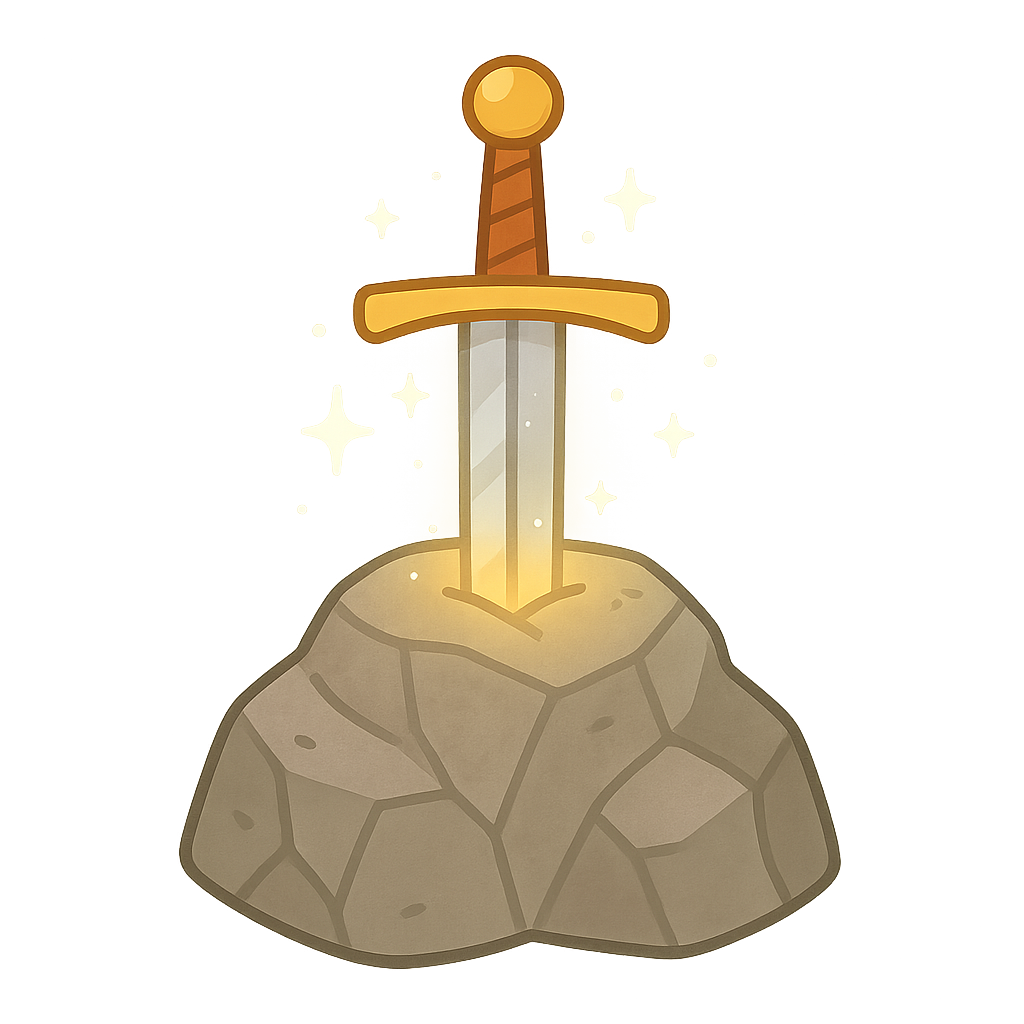
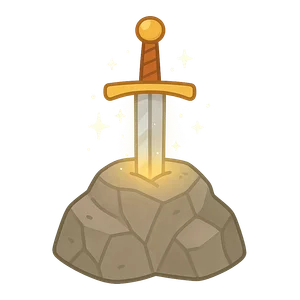
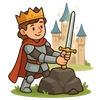
My name is Lancelot, and though my tale is now one whispered by firesides, there was a time when my sword gleamed in the sun of the world’s greatest kingdom. Under the high banners of Camelot, with its white towers piercing the clouds, a dream was born from the mind of a wise king and a powerful wizard. This was the time of King Arthur, his guide Merlin, and our fellowship, a story you might know as the legend of the Knights of the Round Table. Our court was a beacon of hope in a dark and fractured land. Arthur, with his legendary sword Excalibur, didn't want a kingdom where the strongest simply took what they wanted. He envisioned a realm built on justice, honor, and courage. To make this dream real, Merlin enchanted a great, circular table of oak, so vast it could seat one hundred and fifty knights. It was round for a reason: at this table, no man was greater than another. King, knight, lord, or squire—we were all equals in our service to the realm. I remember the day I took my seat, the Siege Perilous—the one seat reserved for the greatest knight—still empty, a silent challenge to us all. We swore an oath, the Code of Chivalry, that bound us together. We pledged to never do outrage or murder, to always flee treason, to give mercy unto him that asks mercy, and to always help ladies, damsels, and gentlewomen. It was more than a set of rules; it was a promise to be the best versions of ourselves, to use our strength for good. Camelot was alive with this purpose, a grand experiment in creating a perfect kingdom on Earth.
The Knights of the Round Table
My name is Lancelot, and though my tale is now one whispered by firesides, there was a time when my sword gleamed in the sun of the world’s greatest kingdom. Under the high banners of Camelot, with its white towers piercing the clouds, a dream was born from the mind of a wise king and a powerful wizard. This was the time of King Arthur, his guide Merlin, and our fellowship, a story you might know as the legend of the Knights of the Round Table. Our court was a beacon of hope in a dark and fractured land. Arthur, with his legendary sword Excalibur, didn't want a kingdom where the strongest simply took what they wanted. He envisioned a realm built on justice, honor, and courage. To make this dream real, Merlin enchanted a great, circular table of oak, so vast it could seat one hundred and fifty knights. It was round for a reason: at this table, no man was greater than another. King, knight, lord, or squire—we were all equals in our service to the realm. I remember the day I took my seat, the Siege Perilous—the one seat reserved for the greatest knight—still empty, a silent challenge to us all. We swore an oath, the Code of Chivalry, that bound us together. We pledged to never do outrage or murder, to always flee treason, to give mercy unto him that asks mercy, and to always help ladies, damsels, and gentlewomen. It was more than a set of rules; it was a promise to be the best versions of ourselves, to use our strength for good. Camelot was alive with this purpose, a grand experiment in creating a perfect kingdom on Earth.
Our days were filled with adventure. We rode out from Camelot to right wrongs across Britain. We fought dragons, challenged cruel giants, and unseated wicked lords who preyed on the innocent. Sir Gawain, noble and courteous; Sir Percival, earnest and kind; Sir Bors, loyal to the end—each of us had our own quests, our own tales of triumph. But the greatest test of our fellowship was the Quest for the Holy Grail. The Grail, said to be the cup used by Christ at the Last Supper, was a holy relic of immense power, visible only to the purest of heart. Its appearance at court filled us with a divine purpose, and one by one, the knights of the Round Table rode out to find it. This quest, however, both defined our glory and began our unraveling. Many knights were lost, and others returned disheartened, for the quest required not just strength of arms but purity of spirit. I myself, considered the greatest warrior, failed because of my own imperfections and my secret love for Queen Guinevere, Arthur's wife. It was my own son, the pure and noble Sir Galahad, who ultimately achieved the quest, taking his place at the Siege Perilous before ascending to the heavens. His success was a moment of immense pride, but it also cast a long shadow. While the best of us were away, darkness began to creep back into the kingdom. Arthur’s nephew, the treacherous Mordred, saw the cracks forming in our fellowship. He sowed seeds of doubt and jealousy among us, using my own failings and my devotion to the queen to drive a wedge between me and my king. The unity of the Round Table, once our greatest strength, began to fray. The bonds of loyalty, tested by secrets and betrayals, started to break.
The dream of Camelot ended in the clang of swords, not against monsters, but against our own brothers. The final conflict came at the Battle of Camlann, where Arthur faced Mordred. It was a day of profound sorrow, as the flower of chivalry fell, and our great king was mortally wounded. As he lay dying, he commanded his last loyal knight, Sir Bedivere, to return Excalibur to the Lady of the Lake. They say an arm rose from the water, caught the sword, and drew it beneath the waves. Arthur himself was taken by barge to the mystical Isle of Avalon, with the promise that he would one day return when Britain needed him most. And so, our kingdom fell, but our story did not die. It was carried on the wind by bards who sang of our deeds in great halls. It was written down centuries later by storytellers like Geoffrey of Monmouth around 1138 CE and Sir Thomas Malory, whose book 'Le Morte d'Arthur' was published on July 31st, 1485, gathering our tales into one grand epic. People didn’t just remember the battles; they remembered what we stood for. The Round Table became a powerful symbol of equality and fair leadership. The Code of Chivalry inspired ideals of how to live with honor and protect those in need. For centuries, our legend has fueled the imagination. It has been painted by artists, retold in countless books, and brought to life in movies and plays. The search for the Holy Grail has become a metaphor for any noble, difficult journey. Though Camelot is gone, the quest it began continues. The dream of a world where justice, courage, and compassion rule is a story that belongs to everyone, a legend that inspires us all to be knights in our own time.
Wow facts
About
A legendary order of knights, led by King Arthur, who swore an oath of chivalry and sat at a round table in Camelot to symbolize their equality.
Take a Quiz
Question 1 of 5
From Lancelot's perspective, what was his greatest personal failure, and how did it affect the Knights of the Round Table?
Explore next


Want to do even more?
Go beyond exploring. Unlock tools that turn every story into real learning.

Storypie Plus for families
Full stories, quizzes, and printables. Nights and car rides, sorted.
- Unlimited audio stories
- Create Mode: your child stars in the story
- Offline downloads
- Printable worksheets & coloring pages

Why Storypie for Schools
Students engaged. Prep in seconds. Evenings back to you.
- Worksheets & Quizzes
- Classroom Management
- Formative Assessment
- Custom Curriculum & Lesson Plans
- 27 Languages

Why Storypie for Homeschool
Curriculum done. They'll ask for more. Hours back in your day.
- Worksheet Generator
- First-Person Audio Stories
- Built-in Comprehension Quizzes
- Custom Curriculum & Lesson Plans
- Print & Go Activities